
M. J. Engh (1933–2024)
Author of Arslan
About the Author
Works by M. J. Engh
Penelope Comes Home 2 copies
The Oracle 1 copy
Moon Blood {short story} 1 copy
Arslan 1 copy
The House In The Snow 1 copy
Wheel Of The Winds 1 copy
Lord Moon 1 copy
Erslan 1 copy
Associated Works
Isaac Asimov's Science Fiction Magazine: Vol. 11, No. 2 [February 1987] (1987) — Contributor — 18 copies
Tagged
Common Knowledge
- Legal name
- Engh, Mary Jane
- Other names
- Beauclerk, Jane (pseudonym)
Beauclerck, Jane (pseudonym)
Gholson, Mary Jane (birth) - Birthdate
- 1933-01-26
- Date of death
- 2024-07-11
- Gender
- female
- Education
- University of Chicago (Bx)
University of Oklahoma (MLS) - Occupations
- librarian
science fiction writer
Roman scholar - Organizations
- Scott Foresman Company
Charles E. Tuttle
Oklahoma State University (science librarian)
Science Fiction and Fantasy Writers of America
Authors Guild
Washington State University (biology librarian) - Awards and honors
- Guest of Honor, MosCon XIV (1992)
Author Emeritus (Science Fiction and Fantasy Writers of America, 2009) - Nationality
- USA
- Birthplace
- McLeansboro, Illinois, USA
- Places of residence
- McLeansboro, Illinois, USA
Chicago, Illinois, USA
Japan
Stillwater, Oklahoma, USA
Garfield, Washington, USA - Place of death
- Pullman, Washington, USA
- Associated Place (for map)
- USA
Members
Discussions
M(ary) J(ane) Engh, anyone? in Feminist SF (August 2021)
Reviews
Arslan by M. J. Engh
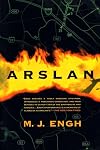
Man, am I starting off the new year with a brain-bang! I came across M.J. Engh's Arslan via a Google Plus discussion of New Scientist's curated list of "Brilliant SF Books that Got Away".* Arslan was not one of them, but my friend and fellow Wyoming sci-fi aficionado Walter Hawn** suggested that it should have been, and he's yet to steer me wrong, has Walter.
And, well, he still hasn't!
Caveat lector, though: this book should maybe come with a trigger warning, because the first public act of show more the titular warlord of this tale (I'll get to him in a moment) is the rape of two schoolchildren in the full view of his army and at least one of the children's conquered parents. I would urge those of you who will find this hard to handle to just soldier through it, though, because avoiding or putting this book aside just because of this scene, which is over very quickly and is barely described -- a quick rip off of a band-aid -- would really be a shame, because this is an amazing, amazing, book. And it's vital to the plot, that rape, almost as much, say, as the one that really starts events moving in The Jewel in the Crown (though that one spawns not one but four novels, the famous Raj Quartet). For the act snowballs in unexpected ways.
Arslan himself is a modern day Tamerlane, a Turkic warlord who takes over the world with a single gunshot but then has to travel it, more or less constantly, to consolidate his control and put in motion his plan for the planet, of which conquering it is only step one. What is step two, you might ask? Well, it involves undoing the industrial revolution (the information revolution had not yet taken place when the novel was written in 1976) and bringing the entire human race back to its agrarian village roots. As for step three... no, no, it is neither a question mark nor profit.
The narrative unfolds through Arslan's extended visits to a small farming town in Illinois, and is related by two very different characters: the principle of the primary school Arslan seizes when he and his army first come to town, and one of the two children Arslan publicly rapes his first night in town. The former, Franklin Bond, a humorlessly old-fashioned midwestern hardass whom you can just tell was a church deacon, maybe the Rotary Club president, is the only person in town whose authority Arslan will recognize (we learn he's had ample experience with elected officials), who tells the first half of the story in a stern and angry voice as he describes high school girls rounded up to serve as courtesans, dissenters publicly shot, mechanized farm equipment and electronics and herbicides and pesticides confiscated and destroyed, with Arslan living as a permanent and unwecome guest in the principal's own home. The latter... ah, the latter.
"First the rape, then the seduction," the unrepentant pederast Arslan says, explaining his strategy for molding the 13-year-old Hunt Morgan into his number one companion. He keeps Hunt around as a bed companion, sure, but also presses the boy into service as his reader. Having always sensed that his education was less than adequate, Arslan wants to learn everything. But he doesn't want to read it himself, so Hunt spends most of every evening reading aloud from everything from Greek and Roman classics to engineering texts to Paradise Lost. Which is to say that, in the process, Hunt becomes as autodidactically awesome as Arslan himself, and discovers in his reading that he is changing Arslan as much as Arslan is changing him, which is, in the end, even more seductive than Arslan's campaign to overawe the boy with his power and charisma -- and let him bask in the sheer presence of the guy whose presence overwhelmed world leaders. Watching Hunt's transformation from a bitter and helpless victim into a devotee/henchman who comes to view as a rival the nine-year-old girl Arslan takes up when Hunt gets too old for him is weird and disturbing, but always utterly convincing, as is his narrative voice, a ravishing and very convincing rendering of an autodidact's thought processes and associations that is often surprising in its loveliness, even when it's put to the service of rhapsodizing Hunt's systematized brutalization.
Interestingly and effectively, the book does not reveal how Arslan conquered the world until this second half, after we've spent a good dozen chapters dealing with the fait accompli of his triumph. Franklin Bond, in rural Illinois, is too busy dealing with consequences to spare much thought for how this could possibly be; it is left to Hunt with his agonizingly complex mix of emotions toward the warlord to explain how all this came to pass -- and by that time, the reader is so invested in Franklin's results narrative, in all its ugly, nihilistic glory, that Hunt's cause narrative of Arslan remaking the human world is utterly plausible. "I saw how Arslan with his square-nailed fingers worked at it, stretching and cutting and piecing and smoothing, so that someday, the scraps discarded, the web should fit neatly over every painted continent."
If I'm making this sound like a difficult book to take, well, good. And I'm not even giving away the whole disturbing enchilada. A lot of dystopian fiction is really pleasure-reading escapism; as I've talked about elsewhere, we read that kind of stuff to enjoy vicariously the idea of ourselves as survivors, as plucky rebels, as the lucky few. Arslan is not that kind of book. While its premise sounds a bit preposterous (though, I would argue, less so now than when it was written), it will convince you of its possibility, and then convince you of its inevitability. It might destroy your hope.
But all that, all that is evidence of a job very, very well done. And Engh didn't have to resort to sentence fragment gimmickry to do it either. Cormac McCarthy, I'm looking at you.
*I'm pretty sure I'm going to read all of these this year, or at least all of them that are available as ebooks, because they all sound amazevaries, you guys.
**Who also takes a mean eyeabetes-inducing photograph.
***Curiously, that appalling first rape scene features Arslan taking a girl first and then a boy, but the girl completely disappears from the story. I'm not sure what point Engh was making thereby. show less
And, well, he still hasn't!
Caveat lector, though: this book should maybe come with a trigger warning, because the first public act of show more the titular warlord of this tale (I'll get to him in a moment) is the rape of two schoolchildren in the full view of his army and at least one of the children's conquered parents. I would urge those of you who will find this hard to handle to just soldier through it, though, because avoiding or putting this book aside just because of this scene, which is over very quickly and is barely described -- a quick rip off of a band-aid -- would really be a shame, because this is an amazing, amazing, book. And it's vital to the plot, that rape, almost as much, say, as the one that really starts events moving in The Jewel in the Crown (though that one spawns not one but four novels, the famous Raj Quartet). For the act snowballs in unexpected ways.
Arslan himself is a modern day Tamerlane, a Turkic warlord who takes over the world with a single gunshot but then has to travel it, more or less constantly, to consolidate his control and put in motion his plan for the planet, of which conquering it is only step one. What is step two, you might ask? Well, it involves undoing the industrial revolution (the information revolution had not yet taken place when the novel was written in 1976) and bringing the entire human race back to its agrarian village roots. As for step three... no, no, it is neither a question mark nor profit.
The narrative unfolds through Arslan's extended visits to a small farming town in Illinois, and is related by two very different characters: the principle of the primary school Arslan seizes when he and his army first come to town, and one of the two children Arslan publicly rapes his first night in town. The former, Franklin Bond, a humorlessly old-fashioned midwestern hardass whom you can just tell was a church deacon, maybe the Rotary Club president, is the only person in town whose authority Arslan will recognize (we learn he's had ample experience with elected officials), who tells the first half of the story in a stern and angry voice as he describes high school girls rounded up to serve as courtesans, dissenters publicly shot, mechanized farm equipment and electronics and herbicides and pesticides confiscated and destroyed, with Arslan living as a permanent and unwecome guest in the principal's own home. The latter... ah, the latter.
"First the rape, then the seduction," the unrepentant pederast Arslan says, explaining his strategy for molding the 13-year-old Hunt Morgan into his number one companion. He keeps Hunt around as a bed companion, sure, but also presses the boy into service as his reader. Having always sensed that his education was less than adequate, Arslan wants to learn everything. But he doesn't want to read it himself, so Hunt spends most of every evening reading aloud from everything from Greek and Roman classics to engineering texts to Paradise Lost. Which is to say that, in the process, Hunt becomes as autodidactically awesome as Arslan himself, and discovers in his reading that he is changing Arslan as much as Arslan is changing him, which is, in the end, even more seductive than Arslan's campaign to overawe the boy with his power and charisma -- and let him bask in the sheer presence of the guy whose presence overwhelmed world leaders. Watching Hunt's transformation from a bitter and helpless victim into a devotee/henchman who comes to view as a rival the nine-year-old girl Arslan takes up when Hunt gets too old for him is weird and disturbing, but always utterly convincing, as is his narrative voice, a ravishing and very convincing rendering of an autodidact's thought processes and associations that is often surprising in its loveliness, even when it's put to the service of rhapsodizing Hunt's systematized brutalization.
Interestingly and effectively, the book does not reveal how Arslan conquered the world until this second half, after we've spent a good dozen chapters dealing with the fait accompli of his triumph. Franklin Bond, in rural Illinois, is too busy dealing with consequences to spare much thought for how this could possibly be; it is left to Hunt with his agonizingly complex mix of emotions toward the warlord to explain how all this came to pass -- and by that time, the reader is so invested in Franklin's results narrative, in all its ugly, nihilistic glory, that Hunt's cause narrative of Arslan remaking the human world is utterly plausible. "I saw how Arslan with his square-nailed fingers worked at it, stretching and cutting and piecing and smoothing, so that someday, the scraps discarded, the web should fit neatly over every painted continent."
If I'm making this sound like a difficult book to take, well, good. And I'm not even giving away the whole disturbing enchilada. A lot of dystopian fiction is really pleasure-reading escapism; as I've talked about elsewhere, we read that kind of stuff to enjoy vicariously the idea of ourselves as survivors, as plucky rebels, as the lucky few. Arslan is not that kind of book. While its premise sounds a bit preposterous (though, I would argue, less so now than when it was written), it will convince you of its possibility, and then convince you of its inevitability. It might destroy your hope.
But all that, all that is evidence of a job very, very well done. And Engh didn't have to resort to sentence fragment gimmickry to do it either. Cormac McCarthy, I'm looking at you.
*I'm pretty sure I'm going to read all of these this year, or at least all of them that are available as ebooks, because they all sound amazevaries, you guys.
**Who also takes a mean eyeabetes-inducing photograph.
***Curiously, that appalling first rape scene features Arslan taking a girl first and then a boy, but the girl completely disappears from the story. I'm not sure what point Engh was making thereby. show less
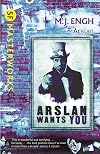
Supposedly an SF classic. I hope not. The world is taken over by a charismatic war lord, a sort of twentieth century Jingis Khan. Extremely nasty. The action concentrates on one small US town. At the beginning we have the balance between collaboration and resistance in the face of overwhelming power, rather more realistic than equivalent ones by Heinlein et al. We also see a mid-twentieth century America town descending into a subsistence existence and a narrowing of horizons to what amounts show more to one large village. The second half mostly concentrates on the man behind the world’s takeover and his vacillations. He is undoubtedly a monster but I think one is supposed to feel some kind of sympathy for him, mostly channelled through a local boy whom he breaks and remoulds in his own image. The whole book is probably meant to be a study in power but its constant improbable plots and actions tends only to suggest that if you have enough physical power and charisma you can do what you want. Hardly an amazing apercu. show less

This was an unexpected treat. I didn't expect much of the novel--it had sat on my bookshelf for years unread waiting for me to get to it. It's by an author I not only had never read, but never heard of--bought probably because the novel was shortlisted in the Promethean Awards. The narrative style and structure was simple and smooth, I liked the voice of the first person narrator, and above all I liked how this was very much a novel of ideas.
This book is very much set in a universe of show more Einstein Relativistic Physics without such devices as Faster Than Light travel--that's important, because space travel means that once you've left a planet for all intents and purposes you can't ever go back. Before much time has passed on board an interstellar ship, everyone on the planet you left behind would be dead. Thus leaving or staying on a planet has important consequences.
The narrator, Liss, is a starshipper looking to settle down, and she liked the look of Bimran, a planet that claimed it had no law. As a native puts it, it's a planet with "no war, no government oppression, no famines, no plagues, no overpopulation." But there's a dark side, hinted at right from the start when to her bemusement she finds out when registering at Migration Control--the seemingly only governmental organization--that as an infertile woman she's defined as a man. And with her colorful attire in a place where the natives affect shades of black and brown, she finds herself known at sight as "Rainbow Man."
The planet doesn't seem to have religion either--but that proves deceptive. What it has is a religion with Revelations and Commandments but without ritual and without a belief in Hell or Heaven--or more precisely they don't believe in leaving that up to God in some afterlife and that has chilling consequences. I don't think the novel came across as didactic, but the way it played with ideas about arguments for God from design, the problem of evil and suffering given a just God and monotheism made me think of arguments I've read in books by C.S. Lewis. The novel provides a thoughtful critique not just of theism but gender relations and sexual morality through the system of the world of Bimran and the events of the book. I liked how Engh handled the slow and ultimately shocking reveal of the nature of this society. I'd definitely would be happy to read more of the author. show less
This book is very much set in a universe of show more Einstein Relativistic Physics without such devices as Faster Than Light travel--that's important, because space travel means that once you've left a planet for all intents and purposes you can't ever go back. Before much time has passed on board an interstellar ship, everyone on the planet you left behind would be dead. Thus leaving or staying on a planet has important consequences.
The narrator, Liss, is a starshipper looking to settle down, and she liked the look of Bimran, a planet that claimed it had no law. As a native puts it, it's a planet with "no war, no government oppression, no famines, no plagues, no overpopulation." But there's a dark side, hinted at right from the start when to her bemusement she finds out when registering at Migration Control--the seemingly only governmental organization--that as an infertile woman she's defined as a man. And with her colorful attire in a place where the natives affect shades of black and brown, she finds herself known at sight as "Rainbow Man."
The planet doesn't seem to have religion either--but that proves deceptive. What it has is a religion with Revelations and Commandments but without ritual and without a belief in Hell or Heaven--or more precisely they don't believe in leaving that up to God in some afterlife and that has chilling consequences. I don't think the novel came across as didactic, but the way it played with ideas about arguments for God from design, the problem of evil and suffering given a just God and monotheism made me think of arguments I've read in books by C.S. Lewis. The novel provides a thoughtful critique not just of theism but gender relations and sexual morality through the system of the world of Bimran and the events of the book. I liked how Engh handled the slow and ultimately shocking reveal of the nature of this society. I'd definitely would be happy to read more of the author. show less
Arslan by M. J. Engh
This is a remarkable, unsettling, memorable novel. Arslan, the title character, is a young general from the ‘independent’ country of Turkistan. Arslan has an ambition: he wants to rule the world. As the book opens, he has just achieved his ambition, and has decided to set up his H.Q. in the small town of Kraftsville, Illinois.
It’s a measure of M.J. Engh’s skill that she can take this improbable premise and make it credible. Arslan is a remarkable character - brutal and charming by show more turns, tough as nails but with unexpected vulnerabilities, and with a reason for his ambition that makes him all the more terrifying. The core of the book is the relationship between Arslan, Hunt Morgan (the teenager he takes as his paramour), and Franklin L. Bond, the schoolmaster whose house he commandeers. Engh got the idea for the novel when, an elementary school teacher in a small town herself, she wondered what the town would do if suddenly confronted by a major natural or human catastrophe.
What the town does best is survive; in fact, its inhabitants sometimes seem quite unaffected by it all. Arslan has a larger purpose than survival (to say what it is would be to spoil the book), and in the course of his attempts to fulfil this purpose, the town, and the world, suffer much; yet, in the end, Arslan’s fate is that of most successful invaders. Kraftsville, Illinois, proves to be rather like the China of old in its ability to absorb invaders and transmute them into neo-natives.
About 2/3 of the book is told in Franklin Bond’s voice, a voice I enjoyed hearing. Hunt Morgan’s 1/3 I liked less; perhaps ‘his’ flowery, over-adjectival prose is appropriate to a bright but traumatised teenager, but it grated on my ears. Despite the (curious) lack of strong female characters, Engh does succeed in giving us remarkable potrayals of Arslan, Bond and Morgan, and half-a-dozen more besides, and the ways in which they hate and love each other.
Engh’s style is not ‘difficult’, but the brutality of the events she recounts and her refusal to take the easy options of blind heroism and craven villainy (Franklin Bond as Paul Revere, Arslan as the ‘Beast of Bukhara’) mean that this is a book which forces you to sit up and take notice. If you’re looking for SF with excellent characterisation, human insight and integrity, try Arslan.
(Review originally written for Warp magazine, New Zealand) show less
It’s a measure of M.J. Engh’s skill that she can take this improbable premise and make it credible. Arslan is a remarkable character - brutal and charming by show more turns, tough as nails but with unexpected vulnerabilities, and with a reason for his ambition that makes him all the more terrifying. The core of the book is the relationship between Arslan, Hunt Morgan (the teenager he takes as his paramour), and Franklin L. Bond, the schoolmaster whose house he commandeers. Engh got the idea for the novel when, an elementary school teacher in a small town herself, she wondered what the town would do if suddenly confronted by a major natural or human catastrophe.
What the town does best is survive; in fact, its inhabitants sometimes seem quite unaffected by it all. Arslan has a larger purpose than survival (to say what it is would be to spoil the book), and in the course of his attempts to fulfil this purpose, the town, and the world, suffer much; yet, in the end, Arslan’s fate is that of most successful invaders. Kraftsville, Illinois, proves to be rather like the China of old in its ability to absorb invaders and transmute them into neo-natives.
About 2/3 of the book is told in Franklin Bond’s voice, a voice I enjoyed hearing. Hunt Morgan’s 1/3 I liked less; perhaps ‘his’ flowery, over-adjectival prose is appropriate to a bright but traumatised teenager, but it grated on my ears. Despite the (curious) lack of strong female characters, Engh does succeed in giving us remarkable potrayals of Arslan, Bond and Morgan, and half-a-dozen more besides, and the ways in which they hate and love each other.
Engh’s style is not ‘difficult’, but the brutality of the events she recounts and her refusal to take the easy options of blind heroism and craven villainy (Franklin Bond as Paul Revere, Arslan as the ‘Beast of Bukhara’) mean that this is a book which forces you to sit up and take notice. If you’re looking for SF with excellent characterisation, human insight and integrity, try Arslan.
(Review originally written for Warp magazine, New Zealand) show less
Lists
Awards


You May Also Like


Associated Authors
Statistics
- Works
- 15
- Also by
- 12
- Members
- 735
- Popularity
- #34,565
- Rating
- 3.3
- Reviews
- 17
- ISBNs
- 23
- Languages
- 1