

C. E. Morgan
Author of The Sport of Kings
About the Author
C.E. Morgan is an American writer, born in 1976. She is a graduate of Berea College in Kentucky and of Harvard Divinity School (master's in theological studies). She has published several short stories and essays. 'All the Living' is her first novel and won a Whiting Writers' Award. She was awarded show more the 2016 Windham-Campbell Literature Prize in fiction and 2016 Kirkus Prize in fiction for her second novel, The Sport of Kings. (Bowker Author Biography) show less
Works by C. E. Morgan
Rge Sport Of Kings 1 copy
Associated Works
Tagged
Common Knowledge
- Birthdate
- 1976-06-23
- Gender
- female
- Education
- Berea College (BA)
Harvard Divinity School - Awards and honors
- Whiting Writers' Award (2013)
Windham–Campbell Literature Prize (2016)
National Book Foundation "5 Under 35" (2009) - Nationality
- USA
- Birthplace
- Cincinnati, Ohio, USA
- Places of residence
- Berea, Kentucky, USA
- Associated Place (for map)
- USA
Members
Reviews
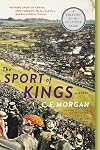
The title will suggest that the novel is about horse racing. Not really. Oh, there’s plenty of story, and a good deal of information, about the so-called “sport of Kings” in it. And if you’re not already appalled at the way animals are treated by owners, trainers and handlers, you will be if you read this. Further, you’ll probably summon up a bit of sympathy for the grooms and jockeys that you may not have known they had coming. But what this book is really about is breeding --- show more genetics, and Class, and sex, and every other connotation of that word. And it’s about race.
The Forge family is Kentucky nobility. Forebears traveled into the Virginia wilderness before it became Kentucky, and made themselves prosperous planters. For generations, acres of corn and tobacco filled the Forge barns and purses, as well as the state's Bourbon barrels and pipes. Until one rebellious scion decided he wanted to raise thoroughbred horses despite his father’s strong objection that it was a disreputable endeavor unworthy of his lineage. He would by god raise horses, notwithstanding. And so he did. He also raised a daughter in his own image...a woman who knew horses, knew breeding, and knew---in a Biblical sense---many many men. One of those men came from another long line---a long black line that could trace its existence on this continent back to that same wilderness trek. And here is where it becomes impossible to talk about the twists and turns of the modern and the historical stories intertwined in the novel without giving away elements that deserve to be discovered by the reader.
If you take Absalom, Absalom, shift a few things around but keep the core elements (obsession, possession, miscegenation both intentional and accidental, incest), extend the action into the current century, move it all to Kentucky and pretend it's about breeding horses, you’ll have a vague idea of the scope of The Sport of Kings.
C. E. Morgan has done a credible job of telling a mythic, Southern Gothic tale worthy of the master; she even has a talent for what one Faulkner critic called "hallucinated language". Neither she nor her editors, however, knew quite when to holler “Whoa!”, and there were spots when I really wanted to shake the book and let the excess fall out. An engrossing read, nonetheless, and one I’d recommend, if you’re up for this sort of thing. Do not expect to root for anyone (except maybe a horse), and do not look for a redemptive denouement. show less
The Forge family is Kentucky nobility. Forebears traveled into the Virginia wilderness before it became Kentucky, and made themselves prosperous planters. For generations, acres of corn and tobacco filled the Forge barns and purses, as well as the state's Bourbon barrels and pipes. Until one rebellious scion decided he wanted to raise thoroughbred horses despite his father’s strong objection that it was a disreputable endeavor unworthy of his lineage. He would by god raise horses, notwithstanding. And so he did. He also raised a daughter in his own image...a woman who knew horses, knew breeding, and knew---in a Biblical sense---many many men. One of those men came from another long line---a long black line that could trace its existence on this continent back to that same wilderness trek. And here is where it becomes impossible to talk about the twists and turns of the modern and the historical stories intertwined in the novel without giving away elements that deserve to be discovered by the reader.
If you take Absalom, Absalom, shift a few things around but keep the core elements (obsession, possession, miscegenation both intentional and accidental, incest), extend the action into the current century, move it all to Kentucky and pretend it's about breeding horses, you’ll have a vague idea of the scope of The Sport of Kings.
C. E. Morgan has done a credible job of telling a mythic, Southern Gothic tale worthy of the master; she even has a talent for what one Faulkner critic called "hallucinated language". Neither she nor her editors, however, knew quite when to holler “Whoa!”, and there were spots when I really wanted to shake the book and let the excess fall out. An engrossing read, nonetheless, and one I’d recommend, if you’re up for this sort of thing. Do not expect to root for anyone (except maybe a horse), and do not look for a redemptive denouement. show less
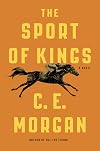
This is a gigantic, scary book of horrors and horses. Set in the Kentucky bluegrass country, it explores racism at its most painful, from pre Civil War to modern day. It's such an encompassing, sexual, violent, and painful book, told from the PoVs of the last scion of the white Forge family, the African American groom of a all-conquering Secretariat filly, and an escaped slave. There are other older voices, parents, grandparents, and a jockey who is both wise and incendiary. It all adds up show more to a tragedy with only the thinnest glimmer of hope and light and a mysterious conclusion. It is also a must-read, even better than The Goldfinch, which is the only other novel with which I can really make a comparison. Like Donna Tartt's book, The Sport of Kings could lose about 200 pages, but don't put it aside for that. Read it for its essential fire and beauty. show less
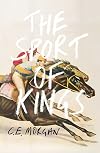
This is a great big tremendous sprawl of a novel about Kentucky thoroughbred racing, genetics, consanguinity, slavery, prison time, Cincinnati, bluegrass country and the Ohio River with some of most striking prose I've read in a long time. There are murders and revenge and love and incest across many generations. Survival is registered in different ways. I couldn't put it down but sometimes it took some pushing to pick it up. The book club struggled and agreed a tougher editor was needed but show more the writing took my breath away:
"The air was raucous and thick with birdsong, the afternoon's light refracted through a veil of pollen...cattle, sturdy on their legs and fattening...chewed their cud with the resignation of age... The youngest Miller...a girl of seven with violently red hair, a face mottled with freckles, and knees as fat as pickle jars."
Description of the Ohio River: "La belle riviere: the Great, the Sparkling, the White; coursing along the path of the ancient Teays, the child of Pleistocene glaciers and a thousand forgotten creeks run dry, formed in perpetuity by the confluence of two prattling streams, ancient predecessors of the Kentucky and Licking--maternal and paternal themes in the long tale of how the river became dream, conduit, divide, pawn, baptismal font, gate, graveyard, and snake slithering under a shelf of limestone and shale, where just now a boy is held aloft by his beautiful father, who points and says, "Look!" and the boy looks, and what he will remember later is not just the river like a snake but also the city crowding it, and what a city! A queen rising on seven hills over her Tiber, ringed hills forming the circlet of a crown. " show less
"The air was raucous and thick with birdsong, the afternoon's light refracted through a veil of pollen...cattle, sturdy on their legs and fattening...chewed their cud with the resignation of age... The youngest Miller...a girl of seven with violently red hair, a face mottled with freckles, and knees as fat as pickle jars."
Description of the Ohio River: "La belle riviere: the Great, the Sparkling, the White; coursing along the path of the ancient Teays, the child of Pleistocene glaciers and a thousand forgotten creeks run dry, formed in perpetuity by the confluence of two prattling streams, ancient predecessors of the Kentucky and Licking--maternal and paternal themes in the long tale of how the river became dream, conduit, divide, pawn, baptismal font, gate, graveyard, and snake slithering under a shelf of limestone and shale, where just now a boy is held aloft by his beautiful father, who points and says, "Look!" and the boy looks, and what he will remember later is not just the river like a snake but also the city crowding it, and what a city! A queen rising on seven hills over her Tiber, ringed hills forming the circlet of a crown. " show less
Oh man, how to unpack the levels of this book. First, I read it because I will read almost anything about horse racing. Except, this isn't really about the horses at all; it's about family, inheritance, race, slavery, mass incarceration, and what feels like the hopelessness of America's racial history.
The writing is drop-dead gorgeous and almost got me to five stars, but I just can't. I don't know if this is me being hyper-sensitive or unnecessarily white-guilty, but I had a hard time show more wrestling with the book's broader themes, knowing that the author is a white (looking) woman. Is that unfair? Is this the history black people experience? Or want told? Maybe yes? Is it for me to say? I just keep hearing Lin-Manuel Miranda asking "who tells your story" and thinking this is not my story to tell. I don't really know what to do with that as a white reader of a white writer. (ETA: this article on William Styron articulates some of what I'm feeling.)
Quotable:
"It was a wet Friday morning with continual, sourceless mist obscuring the lineaments of the buildings, so that the horses and grooms and riders seemed to traverse here and there behind a damp and billowing veil. They were quiet as librarians in the haze, shushed by the soft weather."
Little things:
-I'm confused about the timeline. Seconds Flat is foaled in 1990, but it seems like at the 1993 Derby, Henrietta is reminiscing about Silver Charm, Thunder Gulch, and others who are not around yet.
-By page 177, CEM has used the words karst or karsty at least four times. That seems higher than average. show less
The writing is drop-dead gorgeous and almost got me to five stars, but I just can't. I don't know if this is me being hyper-sensitive or unnecessarily white-guilty, but I had a hard time show more wrestling with the book's broader themes, knowing that the author is a white (looking) woman. Is that unfair? Is this the history black people experience? Or want told? Maybe yes? Is it for me to say? I just keep hearing Lin-Manuel Miranda asking "who tells your story" and thinking this is not my story to tell. I don't really know what to do with that as a white reader of a white writer. (ETA: this article on William Styron articulates some of what I'm feeling.)
Quotable:
"It was a wet Friday morning with continual, sourceless mist obscuring the lineaments of the buildings, so that the horses and grooms and riders seemed to traverse here and there behind a damp and billowing veil. They were quiet as librarians in the haze, shushed by the soft weather."
Little things:
-I'm confused about the timeline. Seconds Flat is foaled in 1990, but it seems like at the 1993 Derby, Henrietta is reminiscing about Silver Charm, Thunder Gulch, and others who are not around yet.
-By page 177, CEM has used the words karst or karsty at least four times. That seems higher than average. show less
Lists
Awards


You May Also Like


Associated Authors
Statistics
- Works
- 4
- Also by
- 2
- Members
- 781
- Popularity
- #32,596
- Rating
- 3.7
- Reviews
- 45
- ISBNs
- 41
- Languages
- 4
- Favorited
- 1


