

Salvatore Scibona
Author of The End
Works by Salvatore Scibona
Kraj 1 copy
Associated Works
Tagged
Common Knowledge
- Birthdate
- 1975-06-02
- Gender
- male
- Education
- St. John's College (Sante Fe ∙ BA)
Iowa Writer's Workshop - Awards and honors
- Whiting Writers' Award (2009)
the New Yorker's "20 Under 40" - Nationality
- USA
- Birthplace
- Cleveland, Ohio, USA
- Places of residence
- Provincetown, Massachusetts, USA
- Associated Place (for map)
- USA
Members
Reviews
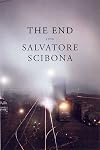
Salvatore Scibona expects a lot from his readers. One could say he expects too much. When form is more complex than the substance, when the answer is hidden for longer than the question could be remembered, when some characters and situations are not entirely necessary, a reader is likely to lose patience.
However, a patient reader of The End is rewarded. Not necessarily at the very end but throughout the book when sudden flashes of brilliant writing break through the elaborate net of the show more story and escape the difficult plot. Finding these is a real pleasure! show less
However, a patient reader of The End is rewarded. Not necessarily at the very end but throughout the book when sudden flashes of brilliant writing break through the elaborate net of the show more story and escape the difficult plot. Finding these is a real pleasure! show less
I remember reading in a review of Bellow's letters the idea that some writers can craft remarkable sentences, but can't write a paragraph to save their life. I guess you can broaden that theme: some people can write a great statements, but not much in the way of dialogue. Scibona is clearly a sentence and statement guy. Part of this is because this book is so overwhelmingly narrated as interior monologue. If he'd made it too ordered or comprehensible, some people would complain that it was show more unrealistic or too rational or something, and paragraphs and dialogue tend to be ordered and comprehensible. Part of it is that had he been born in the nineteenth century he would have been a poet, rather than writing prose, such is his love of words. Sadly, as with way too many literary writers, his characters think about words to an excessive and, to be honest, dull extent. To his credit, the character who thinks about words the most is a sociopath, which seems to me to be the logical outcome of thinking that the word/world relationship is really, really important. Is all this the effect of writing workshops? There's an idiotic English major term paper in that.
So, plot. A certain kind of reader will complain that 'nothing happens,' that there's too much reflection. A different kind of reader will applaud the fact that SS puts so much weight on thinking and memory. They're both wrong: this book's most remarkable characteristic is the incredible *density* of the plot. This is what a Victorian novel looks like if - as we've all wished had happened - it had been edited by a modernist. The plot remains, but it's told by memories and allusion rather than endless longeurs. Result: rather than 900 pages, 300. The touchstones? Woolf and Joyce. The problem? The structure becomes rebarbative and less rewarding than it could have been. Whereas Ulysses eases you in with the Daedalus chapters, The End gives you its Bloom (called Rocco) up front, with no warning, and no connection to the remainder of the book except for a couple of chance encounters. That's a tough start. Through the middle you get lots of logophilia and interior monologue. Ulysses ends in a bang with its famous 'feminine' stream of consciousness sentence; The End also closes with a feminine monologue, but here it's a whimper. Not much of an end.
All that said, it's nice that someone wants to write difficult, challenging fiction. I'll buy his next book the day it's released and dedicate a week to reading it, in the hope that the ambition remains, his logorrhea is cured and there's less hedging about undecidability or ambiguity or whatever the latest, hippest relativists are calling it.
PLOT SPOILERS: Based on the similarity in their structure, my utterly unfounded suspicion is that The End is a kind of answer to the optimism, if you will, of Ulysses. The main events here are war, abortion, rape, a lynching, a suicide and serial abandonment. The apolitical interracial love-in is replaced with racism and hatred. That makes it more honest than Joyce, which is a big tick in my book. I'd like to know what someone more familiar than I am with Ulysses makes of The End. show less
So, plot. A certain kind of reader will complain that 'nothing happens,' that there's too much reflection. A different kind of reader will applaud the fact that SS puts so much weight on thinking and memory. They're both wrong: this book's most remarkable characteristic is the incredible *density* of the plot. This is what a Victorian novel looks like if - as we've all wished had happened - it had been edited by a modernist. The plot remains, but it's told by memories and allusion rather than endless longeurs. Result: rather than 900 pages, 300. The touchstones? Woolf and Joyce. The problem? The structure becomes rebarbative and less rewarding than it could have been. Whereas Ulysses eases you in with the Daedalus chapters, The End gives you its Bloom (called Rocco) up front, with no warning, and no connection to the remainder of the book except for a couple of chance encounters. That's a tough start. Through the middle you get lots of logophilia and interior monologue. Ulysses ends in a bang with its famous 'feminine' stream of consciousness sentence; The End also closes with a feminine monologue, but here it's a whimper. Not much of an end.
All that said, it's nice that someone wants to write difficult, challenging fiction. I'll buy his next book the day it's released and dedicate a week to reading it, in the hope that the ambition remains, his logorrhea is cured and there's less hedging about undecidability or ambiguity or whatever the latest, hippest relativists are calling it.
PLOT SPOILERS: Based on the similarity in their structure, my utterly unfounded suspicion is that The End is a kind of answer to the optimism, if you will, of Ulysses. The main events here are war, abortion, rape, a lynching, a suicide and serial abandonment. The apolitical interracial love-in is replaced with racism and hatred. That makes it more honest than Joyce, which is a big tick in my book. I'd like to know what someone more familiar than I am with Ulysses makes of The End. show less
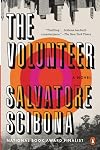
The Volunteer begins with an enigma--a young boy is left abandoned at an airport, speaking an unintelligible language, with his father nowhere to be found. Who is this boy? How did he get here? Why? The answers to all these questions begin many years earlier with the story of Vollie Frade, who joined the Marine Corps during the height of the Vietnam War. We follow Frade through the jungles of SEA as he witnesses and partakes in the horrors of war, and their lasting aftermath. Salvatore show more Scibona has created a great work of modern literature, with his lyrical use of language to captivate the reader and his insights into the effects of war and the fringes of society.
Full disclosure: I received a free advance reading copy of The Volunteer through Goodread's Giveaways, and my rating is based on an uncorrected proof. The Volunteer will be available in bookstores on March 15, 2019. show less
Full disclosure: I received a free advance reading copy of The Volunteer through Goodread's Giveaways, and my rating is based on an uncorrected proof. The Volunteer will be available in bookstores on March 15, 2019. show less
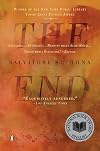
If the act of creation is the epitome of elegance, a waltz between the writer’s conscious and unconscious mind, then Salvatore Scibona has performed the dance perfectly. A telephone call to his grandmother on her birthday, a patch of conversation overheard and written down, the view from his writing desk of a clothesline drying laundry — these are this language artist’s broadest strokes, transformed by his conscious mind into crucial, telling details. In “The End,” Scibona’s show more award-winning first novel, the elaborate weave and turn of story through language whirls the reader through the overlapping lives of five unique characters: an elderly abortionist, an abandoned husband, a teenage boy, an absent mother, a dedicated baker, and a lonely jeweler. In rendering these characters’ lives, Scibona transitions from anecdote to anecdote with implicitly elaborate footwork, the dance of free indirect style, so the gesture comes bearing all the import of direct action, and the absence of events is as telling as their presence.
In “The End,” Scibona challenges his characters’ tangibility. He implicitly asks what it means to be perceived. ‘What are the consequences of community?’ The reader wonders, watching these ordinary, extraordinary lives. Is the reflection in the mirror one of comfort? Or does it manifest deep-seated regrets; repetition, routine, anonymity — by what are these broken? We discover, in “The End,” that tragedy is one disruptive mode.
Readers of “The End” will find this story about a community lost to time an opportunity for total reading immersion. By the last line, they will know this place and these people in the way they know their own, and they will find in it the satisfaction of particulars, an antidote to the mysterious void.
~Carlin M. Wragg, Editor, Open Loop Press show less
“The man on the bridge watches her ascending the hill. She is stooped by the weight of an enormous sack on her back, so touchingly like a mule, like an enduring animal that slowly carries on its back a burden as large as itself.
It would be impossibly sweet and satisfying to follow her. The sweetness of saying ’she’ is the intimation of somebody else, of something else that’s really out there being real, that isn’t an idea or a ghost but a person, definite, completed.
But he’s watching her now. He can’t not. And while he watches her, he is turning her back into an idea, so he must act fast. She has already begun to disappear.” (Pg. 112.)
In “The End,” Scibona challenges his characters’ tangibility. He implicitly asks what it means to be perceived. ‘What are the consequences of community?’ The reader wonders, watching these ordinary, extraordinary lives. Is the reflection in the mirror one of comfort? Or does it manifest deep-seated regrets; repetition, routine, anonymity — by what are these broken? We discover, in “The End,” that tragedy is one disruptive mode.
“How long do you have to live in a place before you notice it? The whole morning was a dream. Around every corner was a view that should have been same old, same old, but today impressed itself on his mind as if for the first time and for all time. As in, Look, there’s a kid licking the streetcar tracks, wearing short pants-only it seemed to Rocco that he’d never seen the tracks or a child in short pants before and he was never going to forget this. As on a day when the ruler dies and everybody, without even trying, holds on to the slightest spec of mental lint from that day for years.” (Pgs. 20 – 21.)
Readers of “The End” will find this story about a community lost to time an opportunity for total reading immersion. By the last line, they will know this place and these people in the way they know their own, and they will find in it the satisfaction of particulars, an antidote to the mysterious void.
~Carlin M. Wragg, Editor, Open Loop Press show less
Lists
Awards


You May Also Like


Associated Authors
Statistics
- Works
- 3
- Also by
- 4
- Members
- 364
- Popularity
- #66,013
- Rating
- 3.6
- Reviews
- 11
- ISBNs
- 28
- Languages
- 4