
Eugene Rogan
Author of The Fall of the Ottomans: The Great War in the Middle East
About the Author
Eugene Rogan is a professor of modern Middle Eastern history at the University of Oxford and director of the Middle East Centre, St Antony's College, Oxford.
Image credit: Eugene Rogan [credit: Oxford University]
Works by Eugene Rogan
Tagged
Common Knowledge
- Canonical name
- Rogan, Eugene
- Legal name
- Rogan, Eugene Lawrence
- Other names
- يوجين روجان
Роган, Юджин
ローガン・ユージン
罗根·尤金 - Birthdate
- 1960-10-31
- Gender
- male
- Education
- Harvard University (MA|1984|Ph.D|1991|Middle Eastern History)
Columbia University (BA|1982|Economics) - Occupations
- historian
- Organizations
- University of Oxford
Boston College
Sarah Lawrence College
St Antony's College, Oxford - Awards and honors
- Fellow, British Academy (2017)
- Agent
- Inkwell Management
Catherine Clarke (Felicity Bryan Associates) - Relationships
- Woods, Ngaire (spouse)
- Nationality
- USA
- Birthplace
- Burbank, California, USA
- Associated Place (for map)
- California, USA
Members
Reviews
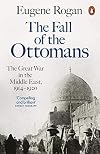
When ISIS swarmed into northern Iraq in the summer of 2014, the hashtag they were using on their social media posts was #SykesPicotOver. Using a First World War diplomatic agreement to get traction on your terrorism – now that's some legacy. Of all the books I've read on 1914-18 since I started this centennial reading project, this is by far the one that had the most unexpected and startling things to teach me about how the conflict's repercussions can be seen in today's world: here in the show more Middle East, in former Ottoman territory, the famously execrable diplomatic skills of 1910s Europe are still, and in very direct ways, playing out their grisly consequences.
Perhaps this took me by surprise because, before picking this book up, I had mainly associated the war in Ottoman territory with the Gallipoli campaign – and even there, my knowledge was sketchy (lots of Anzacs, Churchill's fault, Atatürk involved somewhere?). Rogan is very good on Gallipoli, giving eye-watering details of the clouds of flies that swarmed over the dead bodies in no-man's-land before landing on the men's food – not to mention the incredible callousness of the attacks that Entente forces were compelled to make on Turkish positions. This was symbolised especially by the assault on the Nek, where,
[a]fter watching the first wave of 150 men mowed down by Turkish gunfire within yards of their trenches, Australian officers blindly followed orders and sent two further waves over the top to near certain death. At least 435 of the 450 men who attempted to storm the Nek fell dead or wounded, without inflicting a single Turkish casualty.
Rogan mixes strategic descriptions of troop movements with worm's-eye views from diaries and letters to great effect here, and throughout the book. Some of the anecdotes are extraordinary. I was reduced to a sobbing wreck by the experiences of Private Robert Eardley, of the Lancashire Fusiliers, who intervened to protect a wounded Turkish soldier from being killed at the hands of an Englishman. Protesting that the Turk was injured and defenceless, Eardley convinced his comrade to back off, and then gave the Ottoman soldier some water, and a cigarette, and improvised a bandage for his head-wound.
A few days later, the Turks counterattacked and retook the trench. Eardley was bayonetted in the process, and left half-conscious in a ditch. He came to as the Turkish soldiers were preparing to bury him. Just as they were about to finish him off, a Turkish infantryman with a bandage around his head leapt out in front of the rifles and protected him with his own body – the same man Eardley had looked after a couple of days before. After some back-and-forth between the Turks, Eardley was told by the enemy sergeant that he would not be harmed: ‘You would have died only for this soldier—you gave him water, you gave him smoke…you very good Englishman’, as Eardley recorded in his diary:
“I shook hands with this Turk (and would give all I possessed to see this man again). As our hands clasped I could see he understood for he lifted his eyes and called ‘Allah’ and then kissed me (I can feel this kiss even now on my cheek as if it was branded there or was part of my blood).”
While there is much excellent material on Gallipoli, it's when Rogan turns to Mesopotamia and the Middle East that he becomes truly enlightening, at least for someone with my level of ignorance about how this part of the war went down. The British takeover of Basra, and slow advance down the Tigris to Baghdad, amidst an atmosphere of competing religious and denominational tensions, was revelatory to me. Both the Entente and the Central Powers were obsessed with the potential of Islamic solidarity, and this was what made the Ottoman Empire such a key player in the minds of European policy-makers: the Germans hoped that Turkish presence in the war would mobilise the world's Muslims in their support, while the British and French, who counted thousands of colonial Muslims among their armies, were extremely nervous about any prospect of jihad. Even to the point of trying to fudge onomastics: ‘the British systematically referred to [the Iraqi city] Salman Pak by its classical Sassanid name, Ctesiphon’, in order to blur the Islamic significance of the site to all their Muslim Indian soldiers.
It would be a mistake, though, to think that this Islampolitik (as the Germans call it) was a feature only of misguided Western European thinking. The Turks, too, had ‘a firm belief in the Ottoman Empire's power to deploy Islam against its enemies at home and abroad’. In their case, it came down to convincing the Arabs that they, the Ottomans, represented the true leaders of Islam – a difficult job when it came to the Shiite Iraqis, who did not see eye to eye with the Sunni Turks.
It is in this context that the Arab uprising, observed and partly fomented by TE Lawrence, takes on its full importance. Indeed having finished this book, I now can't help feeling that it was one of the most essential sequences of the whole war, not just in its immediate effects but in its dispiriting political after-effects. The British desperately wooed Sharif Hussein of Mecca to their side, knowing that his authority would do a lot to counter any jihadism from the Ottomans; eventually, with the help of various Arab tribes of the Hijaz, they got him to declare himself King of the Arabs and move militarily against the Ottomans, with decisive effect.
But in the process the British had promised Hussein a whole lot of territory to which, once the war was won, they were no longer inclined to commit. The vast kingdom promised to the Sharif slowly, and shamefully, dissolved under efforts to carve up the Middle East between British (Sykes) and French (Picot) interests. Meanwhile Hussein, unprotected and with dwindling resources, was eventually taken over by a rival tribe – the Saudis. This has had its own dramatic consequences for the region.
History of hindsight is a dangerous thing, and Rogan is careful not to be too censorious about the diplomatic manoeuvres that brought this state of affairs about – manoeuvres that were, as he points out, a matter of wartime expedience, a fact that's often forgotten. Nevertheless it should be instructive to see quite how disastrously these decisions have backfired. As Rogan mildly says,
Had the European powers been concerned with establishing a stable Middle East, one can't help but think they would have gone about drafting the boundaries in a very different way.
Well, quite. And that's before you even get on to the creation of the state of Israel, another world-historical event on which much light is shed by an Ottoman-oriented narrative. I should also mention – if only because it's a huge part of this book which I haven't referred to yet – that Rogan's history puts the Armenian genocide front and centre in the story of the Ottoman war. The whole thing feels, to me, like a completely new and vital window on the period, demonstrating in the clearest way how necessary it is to understand this context in order to understand the modern Middle East. Plus, it's full of all those lovely contemporary aristocratic names like
Colonel Friedrich Freiherr Kress von Kressenstein
which, as my wife pointed out, seems only a couple of steps away from Boaty McBoatface. Recommended for all history buffs, Middle East watchers, and anyone following ISIS's retweets. show less
Perhaps this took me by surprise because, before picking this book up, I had mainly associated the war in Ottoman territory with the Gallipoli campaign – and even there, my knowledge was sketchy (lots of Anzacs, Churchill's fault, Atatürk involved somewhere?). Rogan is very good on Gallipoli, giving eye-watering details of the clouds of flies that swarmed over the dead bodies in no-man's-land before landing on the men's food – not to mention the incredible callousness of the attacks that Entente forces were compelled to make on Turkish positions. This was symbolised especially by the assault on the Nek, where,
[a]fter watching the first wave of 150 men mowed down by Turkish gunfire within yards of their trenches, Australian officers blindly followed orders and sent two further waves over the top to near certain death. At least 435 of the 450 men who attempted to storm the Nek fell dead or wounded, without inflicting a single Turkish casualty.
Rogan mixes strategic descriptions of troop movements with worm's-eye views from diaries and letters to great effect here, and throughout the book. Some of the anecdotes are extraordinary. I was reduced to a sobbing wreck by the experiences of Private Robert Eardley, of the Lancashire Fusiliers, who intervened to protect a wounded Turkish soldier from being killed at the hands of an Englishman. Protesting that the Turk was injured and defenceless, Eardley convinced his comrade to back off, and then gave the Ottoman soldier some water, and a cigarette, and improvised a bandage for his head-wound.
A few days later, the Turks counterattacked and retook the trench. Eardley was bayonetted in the process, and left half-conscious in a ditch. He came to as the Turkish soldiers were preparing to bury him. Just as they were about to finish him off, a Turkish infantryman with a bandage around his head leapt out in front of the rifles and protected him with his own body – the same man Eardley had looked after a couple of days before. After some back-and-forth between the Turks, Eardley was told by the enemy sergeant that he would not be harmed: ‘You would have died only for this soldier—you gave him water, you gave him smoke…you very good Englishman’, as Eardley recorded in his diary:
“I shook hands with this Turk (and would give all I possessed to see this man again). As our hands clasped I could see he understood for he lifted his eyes and called ‘Allah’ and then kissed me (I can feel this kiss even now on my cheek as if it was branded there or was part of my blood).”
While there is much excellent material on Gallipoli, it's when Rogan turns to Mesopotamia and the Middle East that he becomes truly enlightening, at least for someone with my level of ignorance about how this part of the war went down. The British takeover of Basra, and slow advance down the Tigris to Baghdad, amidst an atmosphere of competing religious and denominational tensions, was revelatory to me. Both the Entente and the Central Powers were obsessed with the potential of Islamic solidarity, and this was what made the Ottoman Empire such a key player in the minds of European policy-makers: the Germans hoped that Turkish presence in the war would mobilise the world's Muslims in their support, while the British and French, who counted thousands of colonial Muslims among their armies, were extremely nervous about any prospect of jihad. Even to the point of trying to fudge onomastics: ‘the British systematically referred to [the Iraqi city] Salman Pak by its classical Sassanid name, Ctesiphon’, in order to blur the Islamic significance of the site to all their Muslim Indian soldiers.
It would be a mistake, though, to think that this Islampolitik (as the Germans call it) was a feature only of misguided Western European thinking. The Turks, too, had ‘a firm belief in the Ottoman Empire's power to deploy Islam against its enemies at home and abroad’. In their case, it came down to convincing the Arabs that they, the Ottomans, represented the true leaders of Islam – a difficult job when it came to the Shiite Iraqis, who did not see eye to eye with the Sunni Turks.
It is in this context that the Arab uprising, observed and partly fomented by TE Lawrence, takes on its full importance. Indeed having finished this book, I now can't help feeling that it was one of the most essential sequences of the whole war, not just in its immediate effects but in its dispiriting political after-effects. The British desperately wooed Sharif Hussein of Mecca to their side, knowing that his authority would do a lot to counter any jihadism from the Ottomans; eventually, with the help of various Arab tribes of the Hijaz, they got him to declare himself King of the Arabs and move militarily against the Ottomans, with decisive effect.
But in the process the British had promised Hussein a whole lot of territory to which, once the war was won, they were no longer inclined to commit. The vast kingdom promised to the Sharif slowly, and shamefully, dissolved under efforts to carve up the Middle East between British (Sykes) and French (Picot) interests. Meanwhile Hussein, unprotected and with dwindling resources, was eventually taken over by a rival tribe – the Saudis. This has had its own dramatic consequences for the region.
History of hindsight is a dangerous thing, and Rogan is careful not to be too censorious about the diplomatic manoeuvres that brought this state of affairs about – manoeuvres that were, as he points out, a matter of wartime expedience, a fact that's often forgotten. Nevertheless it should be instructive to see quite how disastrously these decisions have backfired. As Rogan mildly says,
Had the European powers been concerned with establishing a stable Middle East, one can't help but think they would have gone about drafting the boundaries in a very different way.
Well, quite. And that's before you even get on to the creation of the state of Israel, another world-historical event on which much light is shed by an Ottoman-oriented narrative. I should also mention – if only because it's a huge part of this book which I haven't referred to yet – that Rogan's history puts the Armenian genocide front and centre in the story of the Ottoman war. The whole thing feels, to me, like a completely new and vital window on the period, demonstrating in the clearest way how necessary it is to understand this context in order to understand the modern Middle East. Plus, it's full of all those lovely contemporary aristocratic names like
Colonel Friedrich Freiherr Kress von Kressenstein
which, as my wife pointed out, seems only a couple of steps away from Boaty McBoatface. Recommended for all history buffs, Middle East watchers, and anyone following ISIS's retweets. show less
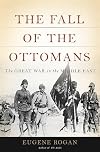
This is one of those history books that shouldn't be missed by anyone interested in understanding the Middle East today. My knowledge of WW1 was very limited when I opened the Introduction--some stories I had been able to pry out of my American grandfather who served in Europe 1917-1918 and told me of how they scavenged for insects and worms when they ran out of food in the fields of France, Lawrence of Arabia's [b:Seven Pillars of Wisdom: A Triumph|57936|Seven Pillars of Wisdom A Triumph show more (The Authorized Doubleday/Doran Edition)|T.E. Lawrence|https://d2arxad8u2l0g7.cloudfront.net/books/1393786656s/57936.jpg|56441] read in college, and a few concluding chapters in histories of the Middle East. But an insufficient background didn't hinder me in any way from being totally caught up in the spell-binding story author Rogan tells.
Other reviewers have covered the basic storyline so let me explain why this book is so outstanding: Rogan has not only made the history and key players easy to remember and follow, but through inserting short synopses and summaries along the way, ensures that no reader is left behind. Virtually every chapter opens, and ends, with a brief (2-3 paragraphs) summary that catches one up to date with what has happened, and reviews (most importantly) why it happened. It is as if his intent is that no one should read this book without really understanding what happened, what went right, what failed, and why. You read a difficult chapter and just when your mind begins to stray - a little summary appears explaining in a few sentences why the events just described happened, why they were important, and what they portend for the future. It is as if he needs us to understand.
Rogan narrates not only battle plans and statistics as recorded in official war records but also opens the pages of diaries and letters sent home from the front from its many combatants. No major story goes untold -- the Armenian massacres, the rise of Ataturk, the Ottoman triumph at Gallipoli, the Arab revolt, the enigmatic character of T. E. Lawrence, the horrors of the battlefield, the negotiations, the betrayals.
Early reviewers described this book as "thrilling, superb and colourful." I couldn't agree more. If you want to understand why the world is as it is today, find yourself a historical map of the Middle East and read this book. show less
Other reviewers have covered the basic storyline so let me explain why this book is so outstanding: Rogan has not only made the history and key players easy to remember and follow, but through inserting short synopses and summaries along the way, ensures that no reader is left behind. Virtually every chapter opens, and ends, with a brief (2-3 paragraphs) summary that catches one up to date with what has happened, and reviews (most importantly) why it happened. It is as if his intent is that no one should read this book without really understanding what happened, what went right, what failed, and why. You read a difficult chapter and just when your mind begins to stray - a little summary appears explaining in a few sentences why the events just described happened, why they were important, and what they portend for the future. It is as if he needs us to understand.
Rogan narrates not only battle plans and statistics as recorded in official war records but also opens the pages of diaries and letters sent home from the front from its many combatants. No major story goes untold -- the Armenian massacres, the rise of Ataturk, the Ottoman triumph at Gallipoli, the Arab revolt, the enigmatic character of T. E. Lawrence, the horrors of the battlefield, the negotiations, the betrayals.
Early reviewers described this book as "thrilling, superb and colourful." I couldn't agree more. If you want to understand why the world is as it is today, find yourself a historical map of the Middle East and read this book. show less
The best part about Rogan's history of the Arabs is its structure. The closer the narrative comes to the present age, the more text is allocated to it. This contrasts well with the usual approach where the near-present is given only a nod. Only the Gulf War of George Bush sr. is covered in too many pages. In the overall history of the Arabs, it is not that important an event and has now been superseded by the junior's actions.
Rogan writes classic, old-fashioned political history: It is all show more about kings, politicians and generals. It is a fire brigade account of a region: Look, a revolution there; quick, a coup is happening here; attention, war has just broken out. In all the coverage of events and actors, the underlying causes are lost that might answer the question why the Arab countries have a singularly spotted and violent history. The heavy hand of the British and French colonial administrators as well as the choking love spread by Uncle Sam certainly played a role. The main culprits are the local elites skimming off the wealth of the region and neglecting the education of the people. Years ago, the Economist featured a great article about how much of the region's problems can be traced back to the lack of education and rights of women. Rogan's account features quite a number of female voices - but almost all are part of the elite. Rogan's history thus is an account of the squabbles among the Arab elites (which managed to rid themselves of foreign domination) but failed to offer political participation to the people. While nations grew and copied Europe's nationalism. they failed to create good governance and an inclusive solidarity among the people. Recommended. show less
Rogan writes classic, old-fashioned political history: It is all show more about kings, politicians and generals. It is a fire brigade account of a region: Look, a revolution there; quick, a coup is happening here; attention, war has just broken out. In all the coverage of events and actors, the underlying causes are lost that might answer the question why the Arab countries have a singularly spotted and violent history. The heavy hand of the British and French colonial administrators as well as the choking love spread by Uncle Sam certainly played a role. The main culprits are the local elites skimming off the wealth of the region and neglecting the education of the people. Years ago, the Economist featured a great article about how much of the region's problems can be traced back to the lack of education and rights of women. Rogan's account features quite a number of female voices - but almost all are part of the elite. Rogan's history thus is an account of the squabbles among the Arab elites (which managed to rid themselves of foreign domination) but failed to offer political participation to the people. While nations grew and copied Europe's nationalism. they failed to create good governance and an inclusive solidarity among the people. Recommended. show less
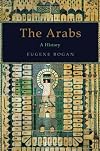
Eugene Rogan’s history of the Arabs is all at once expansive, exhausting, and exhilarating. It’s not easy to take a group of people whose history stretches back more than a millennium and package it for the general reading public. His history starts with the clash between Ottoman Sultan Selim I and Mamluk Sultan Qansuh in the early 16th century. Selim I emerged victorious and integrated Syria, Egypt, and most of the Arabian Peninsula into the Ottoman Empire. From there, we go to Egypt show more and outward to North Africa, then to the Middle East empires, and finally into Arab nationalism and the modern political situation. Over half the book is given to history after World War II, with modern events getting more thorough coverage. The Arabs is a sweeping book and helps the reader better understand their place in the world and how it got there in the first place. Rogan tries desperately to be a dispassionate observer, but in some situations, he cannot help but show a little bias. In many ways, this says more about the historian than the history, but the book is written well and covers a lot of territory, and so I enjoyed it just the same. show less
Lists
Awards


You May Also Like


Associated Authors
Statistics
- Works
- 12
- Members
- 1,981
- Popularity
- #12,977
- Rating
- 4.0
- Reviews
- 20
- ISBNs
- 89
- Languages
- 13
- Favorited
- 1

