
David Campany
Author of Art and Photography
About the Author
Image credit: FOTO8
Works by David Campany
D & A: Dialogue 1 copy
Walker Evans Revisited 1 copy
Associated Works
Tagged
Common Knowledge
- Birthdate
- 1967-10-08
- Gender
- male
- Nationality
- UK
- Associated Place (for map)
- UK
Members
Reviews
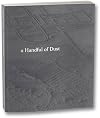
A Handful of Dust is David Campany’s speculative history of the last century, and a visual journey through some of its unlikeliest imagery. Let’s suppose the modern era begins in October of 1922. A little French avant-garde journal publishes a photograph of a sheet of glass covered in dust. The photographer is Man Ray, the glass is by Marcel Duchamp. At first they called it a view from an aeroplane. Then they called it Dust Breeding. It’s abstract, it’s realist. It’s an artwork, show more it’s a document. It’s revolting and compelling. Cameras must be kept away from dust but they find it highly photogenic. At the same time, a little English journal publishes TS Eliot’s poem The Waste Land. “I will show you fear in a handful of dust.”
And what if dust is really the key to the intervening years? Why do we dislike it? Is it cosmic? We are stardust, after all. Is it domestic? Inevitable and unruly, dust is the enemy of the modern order, its repressed other, its nemesis. But it has a story to tell from the other side.
Campany’s connections range far and wide, from aerial reconnaissance and the American dustbowl to Mussolini’s final car journey and the wars in Iraq. a Handful of Dust will accompany Campany’s exhibition of the same name, curated for Le Bal, Paris (16 October 2015 – 17 January 2016), with works by Man Ray, John Divola, Sophie Ristelhueber, Mona Kuhn, Gerhard Richter, Xavier Ribas, Nick Waplington, Jeff Wall and many others, alongside anonymous press photos, postcards, magazine spreads and movies.
This unusually bound book includes a separate, loose volume held in a well in the middle of the larger volume. show less
And what if dust is really the key to the intervening years? Why do we dislike it? Is it cosmic? We are stardust, after all. Is it domestic? Inevitable and unruly, dust is the enemy of the modern order, its repressed other, its nemesis. But it has a story to tell from the other side.
Campany’s connections range far and wide, from aerial reconnaissance and the American dustbowl to Mussolini’s final car journey and the wars in Iraq. a Handful of Dust will accompany Campany’s exhibition of the same name, curated for Le Bal, Paris (16 October 2015 – 17 January 2016), with works by Man Ray, John Divola, Sophie Ristelhueber, Mona Kuhn, Gerhard Richter, Xavier Ribas, Nick Waplington, Jeff Wall and many others, alongside anonymous press photos, postcards, magazine spreads and movies.
This unusually bound book includes a separate, loose volume held in a well in the middle of the larger volume. show less
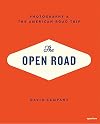
This gorgeous book surveys a very specific subgenre of photography -- photographic series based on road trips through America. It starts off with a short history of the American road, an even shorter history than I realized. At the start of the twentieth century, the road system had fallen into disuse (over 90% of intercity roads were unpaved) because of the dominance of trains. But as the auto came into use, the road trip came into being, and almost from the start photography was a key part show more of the road trip. The pictures in the early part of the book are fascinating, as is the history of the American road, and the American road trip.
The heart of the book, however, is the central section, which shows road trip photographs by 19 highly accomplished photographers. It tells us a little about each photographer, talks about each road trip, and then shows the pictures. Some of the photographers are giants in the field: the presentation starts with a group of photographs from Robert Frank's iconic "The Americans", proceeds through Lee Friedlander and Garry Winograd, and moves on to Ryan McGinley. Some are perhaps less well known -- at least they were to this reader -- but their work is stunning. Most of the photographers are American, but not not all of them, and a few are women. Having seen their work in this book, there are several photographers whose work I want to investigate further, especially Alec Soth and Taiyo Onorato+Nico Krebs.
And the book is definitely more than the sum of its part. Earlier photographers have influenced later ones, but the overall determinant is the American road, that great fact and great metaphor. Since we retired a decade ago, my husband and I have taken many road trips, all over the U.S. I suppose that part of what we were doing was looking for America. So are the photographers whose work is shown in this book, and their visions are unforgettable. show less
The heart of the book, however, is the central section, which shows road trip photographs by 19 highly accomplished photographers. It tells us a little about each photographer, talks about each road trip, and then shows the pictures. Some of the photographers are giants in the field: the presentation starts with a group of photographs from Robert Frank's iconic "The Americans", proceeds through Lee Friedlander and Garry Winograd, and moves on to Ryan McGinley. Some are perhaps less well known -- at least they were to this reader -- but their work is stunning. Most of the photographers are American, but not not all of them, and a few are women. Having seen their work in this book, there are several photographers whose work I want to investigate further, especially Alec Soth and Taiyo Onorato+Nico Krebs.
And the book is definitely more than the sum of its part. Earlier photographers have influenced later ones, but the overall determinant is the American road, that great fact and great metaphor. Since we retired a decade ago, my husband and I have taken many road trips, all over the U.S. I suppose that part of what we were doing was looking for America. So are the photographers whose work is shown in this book, and their visions are unforgettable. show less
Le catalogue 'Anonymes' accompagne une exposition au Bal à Paris, qui déploie les travaux de dix photographes et cinéastes qui interrogent la notion de l'individualité, particulièrement mise en valeur aux Etats-Unis depuis les années 1930. Anonymes mise sur un sujet plus que jamais actuel, l'anonymat, symptôme de notre ère moderne, qui va de pair avec la mondialisation de la culture ou encore la standardisation du travail.
Anonymes permet de découvrir entre autres les séries de show more Walker Evans sur les ouvriers de Detroit et les usagers du métro de New York, publiées dans les années 1940-50. Au programme également, les portraits de travailleurs de Chauncey Hare dans les années 1970, qui pointent les conséquences physiques et psychologiques de l'ère industrielle. À découvrir il y à aussi les photographies de la série The New Industrial Parks near Irvine, California (1974) de Lewis Baltz sur l'architecture industrielle ou encore les photographies de la rue d'Anthony Hernandez des années 1970 immortalisant l'attente de gens aux arrêts de bus.
Le livre contient un essay compréhensif de David Campany, qui traite aussi les filmes comme Necrology (1971) du cinéaste américain Standish Lawder ou Lunch Break (2008) de Sharon Lockhart, aussi présentés dans l'exposition. show less
Anonymes permet de découvrir entre autres les séries de show more Walker Evans sur les ouvriers de Detroit et les usagers du métro de New York, publiées dans les années 1940-50. Au programme également, les portraits de travailleurs de Chauncey Hare dans les années 1970, qui pointent les conséquences physiques et psychologiques de l'ère industrielle. À découvrir il y à aussi les photographies de la série The New Industrial Parks near Irvine, California (1974) de Lewis Baltz sur l'architecture industrielle ou encore les photographies de la rue d'Anthony Hernandez des années 1970 immortalisant l'attente de gens aux arrêts de bus.
Le livre contient un essay compréhensif de David Campany, qui traite aussi les filmes comme Necrology (1971) du cinéaste américain Standish Lawder ou Lunch Break (2008) de Sharon Lockhart, aussi présentés dans l'exposition. show less
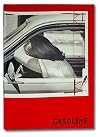
La station-service est l'un des bâtiments les plus emblématiques du XXe siècle. Reconnu à travers le monde, il est sans doute le plus établi sur le sol américain où la notion de voyage sur la route avec un réservoir plein de gaz est culturellement ancrée. Gasoline présente 35 images de presse d'archives de stations-service prises entre 1944 et 1995. Elles ont été collectées par l'écrivain David Campany, achetées dans les archives photographiques de plusieurs journaux show more américains qui ont jeté leurs collections imprimées analogiques et migré vers le .jpeg ou désormais omniprésent. Formats .tif. L'essence peut être lue comme un récit édifiant sur la dépendance moderne au pétrole, sur la photographie d'actualité, sur le passage du film à l'imagerie numérique, ou comme une petite histoire du design automobile et de l'architecture vernaculaire. Marquées avec les notations de stylo à graisse des directeurs artistiques des journaux, les photos parlent de pénuries de pétrole, de congestion routière, de crimes, d'accidents et d'étouffements dans les villes. Individuellement, les images sont des moments uniques dans le temps; collectivement, ils montrent une prise de conscience croissante des voitures, du commerce du pétrole et des préoccupations mondiales concernant la pollution. David Campany est un écrivain, conservateur et artiste basé à Londres. Il écrit sur le documentaire, le photojournalisme, l'art, le cinéma, la mode, les archives et l'architecture. Il a publié des essais sur de nombreux artistes et photographes, dont Paul Graham, Chris Killip, Edgar Martins et John Stezaker. Ses livres incluent Walker Evans: le magazine (2013), Art and Photography (2003), Photography and Cinema (2008) et The Open Road: photographic road trips in America (à paraître en 2014). Campany écrit régulièrement pour Aperture, Frieze, TATE, Source et Photoworks. En 2010, il a co-organisé Anonymes: Unnamed America in Photography and Film au Bal (Paris). En 2012, il a remporté le International Center of Photography Infinity Award for Writing. show less
Awards


You May Also Like


Associated Authors
Statistics
- Works
- 41
- Also by
- 1
- Members
- 678
- Popularity
- #37,271
- Rating
- 3.9
- Reviews
- 11
- ISBNs
- 54
- Languages
- 5