
Chandra Talpade Mohanty
Author of Feminism without Borders: Decolonizing Theory, Practicing Solidarity
About the Author
Chandra Talpade Mohanty is Professor of Women's Studies and Dean's Professor of the Humanities at Syracuse University
Works by Chandra Talpade Mohanty
Associated Works
Race, Class, and Gender in the United States: An Integrated Study (1992) — Contributor, some editions — 561 copies
Playing With Fire: Feminist Thought And Activism Through Seven Lives In India (2006) — Foreword — 33 copies
Tagged
Common Knowledge
- Birthdate
- 1955
- Gender
- female
- Education
- University of Delhi (BA|1974|English)
University of Delhi (MA|1976|English)
University of Illinois (MA|1980|Teaching of English)
University of Illinois, Urbana-Champaign (PhD|1987|Education) - Occupations
- professor (Syracuse University|Women's Studies)
- Organizations
- Centre for Feminist Foreign Policy
Centre for Intersectional Justice - Awards and honors
- Honorary Doctorate (Lund University|2008)
- Nationality
- India (birth)
- Birthplace
- Mumbai, India
- Places of residence
- India
USA - Map Location
- USA
Members
Reviews
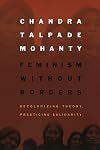
Nine refined essays collected from her two decades of scholarship and it's absolutely necessary reading for feminists who are interested in the subject of decolonization, third-world feminism, and to seriously grapple with the existing ways in which the social justice movements of feminism has been wielded even by the hands of power. Mohanty deals with epistemological and framing issues: the way the third world woman is represented and studied, & how her representation as purely victim who show more doesn't go above her object status thus posits the white woman as the liberated subject with agency. She wants to have an idea of solidarity that goes beyond the ahistorical idea of "sisterhood" that presumes a universal female experience that is insensitive to the reality of power relations even between women, especially int he context of global capitalism & the how the reality of the prison/corporate/military/academic complex consistently & disproportionately negatively affect women of colour. She thus critiques a narrow approach to identity-based praxis (my favourite part, personally) & calls for a more accountable, deeper vision of solidarity.
"The existence of Third World women's narratives in itself is not evidence of decentering hegemonic histories and subjectivities. It is the way in which they are read, understood, and located institutionally that is of paramount importance"
I really related and enjoyed the parts when she talked about how diversity, race, gender and these identity differences are "managed" & reduced to an individualist approach outsourced to diversity consultants or something, which in a way signals the co-optation of radical movements, & also the shift of looking at these injustices as an institutional & historical product that needs to be politically organised against, instead of simply about managing interpersonal, individual reactions. show less
"The existence of Third World women's narratives in itself is not evidence of decentering hegemonic histories and subjectivities. It is the way in which they are read, understood, and located institutionally that is of paramount importance"
I really related and enjoyed the parts when she talked about how diversity, race, gender and these identity differences are "managed" & reduced to an individualist approach outsourced to diversity consultants or something, which in a way signals the co-optation of radical movements, & also the shift of looking at these injustices as an institutional & historical product that needs to be politically organised against, instead of simply about managing interpersonal, individual reactions. show less
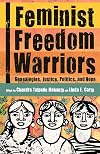
In the introduction, Monhanty and Carty quote Sara Ahmed, "It should not be possible to do feminist theory without being a feminist, which requires an active ongoing commitment to live one's life in a feminist way." What better way to learn how to live a feminist life than from a collection of conversations with women of color from the Global South? "Feminist Freedom Warriors" is a chocolate-covered feminist theory book. "Feminist Freedom Warriors" is engaging and you also get some solid show more feminist theory that will push you to question where you stand and if your brand of feminism is what the world needs right now.
Through these conversations we learn from praxis - how these women's feminisms performed in the world and why we need to adjust in order to try again. Some of the women featured have been feminist activists longer than most of you reading this. But instead of tossing their views in a battle of generations, we are given the gift of their perspective.
Margo Okazawa-Rey states that her "own birth signifies...something that was not supposed to exist" as her African-American father was part of the occupying force in Japan and her mother was part of middle-class Japanese family. Her shares how her existence and fight for liberation is the definition of intersectionality.
Aída Hernández-Castillo documents the challenges that occur when one's activism lacks intersectionality. Her conversation documents an attempt to address domestic violence in a small Mayan village solely through Guatemalan state law. She learns a lot from this misstep and by sharing it we do as well.
As feminists look towards the future and how to solve the multitude of problems we face from a global economy, toxic masculinity, and rampant xenophobia, we need to look to our past to understand how we got here and gain lessons we missed along the way. This is an excellent and thoughtful read. You won't agree with everything in this book, but you will walk away with a new view on the issues we grapple with every day.
Disclaimer: I received a review copy in exchange for an honest review. show less
Through these conversations we learn from praxis - how these women's feminisms performed in the world and why we need to adjust in order to try again. Some of the women featured have been feminist activists longer than most of you reading this. But instead of tossing their views in a battle of generations, we are given the gift of their perspective.
Margo Okazawa-Rey states that her "own birth signifies...something that was not supposed to exist" as her African-American father was part of the occupying force in Japan and her mother was part of middle-class Japanese family. Her shares how her existence and fight for liberation is the definition of intersectionality.
Aída Hernández-Castillo documents the challenges that occur when one's activism lacks intersectionality. Her conversation documents an attempt to address domestic violence in a small Mayan village solely through Guatemalan state law. She learns a lot from this misstep and by sharing it we do as well.
As feminists look towards the future and how to solve the multitude of problems we face from a global economy, toxic masculinity, and rampant xenophobia, we need to look to our past to understand how we got here and gain lessons we missed along the way. This is an excellent and thoughtful read. You won't agree with everything in this book, but you will walk away with a new view on the issues we grapple with every day.
Disclaimer: I received a review copy in exchange for an honest review. show less
This monograph relates feminist theory to politics and to political development and economic development and the rights of women in the developing world. It connects theory and pedagogy and questions of women's everyday life in the developing world, in the process decolonising feminism.
Awards

You May Also Like


Associated Authors
Statistics
- Works
- 11
- Also by
- 6
- Members
- 892
- Popularity
- #28,723
- Rating
- 4.1
- Reviews
- 3
- ISBNs
- 23
- Languages
- 2
- Favorited
- 1