
Dorothy Canfield Fisher (1879–1958)
Author of Understood Betsy
About the Author
Author Dorothy Canfield Fisher was born in Lawrence, Kansas on February 17, 1879. She received a Ph.D. in romance languages from Columbia University in 1904. She wrote novels, short stories, children's books, educational works, and memoirs. In 1912, she met Maria Montessori in Italy and was so show more impressed by the educator's theories that she wrote A Montessori Mother, The Montessori Manual, and Mothers and Children. She worked for many environmental, children's and education causes in the 1940s and 1950s. She died in Arlington, Vermont on November 9, 1958. (Bowker Author Biography) show less
Disambiguation Notice:
This author's works of fiction were under her birth name, Dorothy Canfield; works of non-fiction were published under her married name, Dorothy Canfield Fisher.
Image credit: Courtesy of the NYPL Digital Gallery (image use requires permission from the New York Public Library)
Works by Dorothy Canfield Fisher
Landmarks of American History, 10 Vol. Set (Voyages of Christopher Columbus, Landing of the Pilgrims, Paul Revere & (1950) 5 copies, 1 review
Vermont summer homes 2 copies
Memories of my home town, 2 copies
Corneille and Racine in England 2 copies
As ye sow 1 copy
Sex Education [short story] 1 copy
Seasoned timber 1 copy
Associated Works
World War I and America: Told by the Americans Who Lived It (1918) — Contributor — 222 copies, 1 review
Women's Magazines, 1940-1960: Gender Roles and the Popular Press (1998) — Contributor — 95 copies, 1 review
Women in the Trees: U.S. Women's Short Stories About Battering and Resistance, 1839-1994 (1996) — Contributor — 45 copies
Homo Faber: Work Through the Ages (1929) — Introduction, some editions; Translator, some editions — 7 copies
The Best Short Stories of 1936 and the Yearbook of the American Short Story (1936) — Contributor — 5 copies
The Best Short Stories of 1928 and the Yearbook of the American Short Story (1928) — Contributor — 3 copies
First Love: Stories by Sixteen of Today's Great Authors of Romantic Fiction (1948) — Contributor — 3 copies
Uncle Lisha's shop and A Danvis pioneer — Introduction — 2 copies
Stories for girls — Contributor — 1 copy
My Friend Flicka, The Apprentice, Old Ben — Contributor — 1 copy
Avon Modern Short Story Monthly No. 7 (14 Great stories by 14 Great Authors) (1943) — Contributor — 1 copy
Dynamo Farm: A 4-H Story — Foreword — 1 copy
Tagged
Common Knowledge
- Legal name
- Canfield, Dorothea Frances
- Other names
- Canfield, Dorothy (pen name)
- Birthdate
- 1879-02-17
- Date of death
- 1958-11-09
- Gender
- female
- Education
- Ohio State University (BA ∙ 1899)
The Sorbonne, Paris, France
Columbia University (PhD ∙ 1904) - Occupations
- educational reformer
children's book author
social activist
writer
translator
memoirist - Organizations
- American Academy of Arts and Letters (Literature, 1931)
Book-of-the-Month Club - Awards and honors
- Dorothy Canfield Fisher Children's Book Award
- Relationships
- Cather, Willa (friend)
- Short biography
- Dorothea Frances Canfield was born in Lawrence, Kansas, to James Hulme Canfield, an educator, and Flavia Camp, an artist and writer. Her father became a professor at the University of Kansas and later chancellor of the University of Nebraska and president of Ohio State University. As a child, she spent much time visiting her mother's family in Vermont, which served as the setting for many of her books. At age 10, she spent a year in Paris while her mother studied art, and became fluent in French. She graduated from Ohio State University and went on to study Romance languages at the Sorbonne in Paris and at Columbia University, where she earned a doctoral degree. She co-wrote the textbook English Rhetoric and Composition (1906). In 1907, she married John Redwood Fisher, with whom she had two children. In 1911, after visiting the "children's houses" in Rome established by Maria Montessori, she endeavored to introduce the Montessori method in the USA. She translated Montessori's books into English. She and their children accompanied her husband to France when he volunteered to work with the U.S. Army ambulance service and as an officer with the Medical Corps during World War I. She worked to establish a Braille press for blinded war veterans and the Bidart home for refugee children. In 1918, she published a memoir, Home Fires in France. She also wrote 22 novels, plus short stories, educational works, and literary criticism. She was renowned for her support of women's rights and racial equality. See also The Lady from Vermont: Dorothy Canfield Fisher's Life and World by Elizabeth Yates (1971) and Dorothy Canfield Fisher – A Biography by Ida H. Washington (1982).
- Nationality
- USA (birth)
- Birthplace
- Lawrence, Kansas, USA
- Places of residence
- Lawrence, Kansas, USA
Lincoln, Nebraska, USA
Columbus, Ohio, USA
Paris, France
Arlington, Vermont, USA - Place of death
- Arlington, Vermont, USA
- Disambiguation notice
- This author's works of fiction were under her birth name, Dorothy Canfield; works of non-fiction were published under her married name, Dorothy Canfield Fisher.
- Associated Place (for map)
- USA
Members
Discussions
AMERICAN AUTHORS CHALLENGE--OCTOBER 2023--DOROTHY CANFIELD FISHER in 75 Books Challenge for 2023 (October 2023)
Virago Monthly Reads: Feb 2018: Dorothy Canfield Fisher in Virago Modern Classics (March 2018)
old kids book, city girl on a farm in Name that Book (October 2012)
Reviews

I loved this 1920s book that flips the typical man/woman roles on its head. The Knapps are a family of five struggling to get by. Lester, the father, is hopeless at getting along at work, constantly making errors and not progressing at all. Eva, the mother, runs a beautifully functioning household on her husband's meager salary, but is constantly slaving away and feeling stifled by her housework and her needy children. Everyone in the family has healthy problems and their youngest child, show more Stephen, is acknowledged by all their acquaintances as a terror, despite Eva's excellent mothering.
Then all is flipped on its head when an accident leads to a role reversal, Eva going out to work and Lester staying home to mind the kids. Though all feel sorry for them, they end up flourishing in these circumstances. But what will happen if all goes back to "normal"?
This book powerfully examines society's expectations for men and women and what happens when those expectations just do not fit. I loved it. show less
Then all is flipped on its head when an accident leads to a role reversal, Eva going out to work and Lester staying home to mind the kids. Though all feel sorry for them, they end up flourishing in these circumstances. But what will happen if all goes back to "normal"?
This book powerfully examines society's expectations for men and women and what happens when those expectations just do not fit. I loved it. show less

Dorothy Canfield Fisher turned gender roles upside down in this novel about a dysfunctional family, set in small-town America in the 1920s. Eva Knapp is the epitome of the devoted housewife of the time. While she loves her husband and children, she is driven by a sense of duty to keep the household running like clockwork, and has little time for expressions of affection. She is plagued by eczema, and nothing the doctor prescribes seems to improve it. Her husband, Lester, is a forlorn show more bookkeeper with a going-nowhere job in the local department store. He's miserable with indigestion whenever he eats anything. Nothing the doctor prescribes seems to improve it. Their oldest child, Helen, is a mouse...always trying and failing to meet her mother's expectations, nervous and frail. Eleven-year-old Henry has inherited his father's weak stomach, and is often ill. All manner of special preparations and diets have been prescribed, but nothing seems to improve his condition either. And Stephen, the toddler...well, he's simply unmanageable. Prone to temper tantrums, to hiding under the stairs clutching his beloved Teddy Bear, and always, always tracking dirt into his mother's clean house. His mother faintly hopes he will one day grow out of it. When Lester fails to get a promotion, it appears that near-poverty is to be the family's permanent condition. But then a freak accident (or an opportunity seized to escape it all) lands Lester on his back...crippled and confined to a wheelchair. Out of necessity Eva seeks a job, and finds one in the ladies' wear department of the store where Lester had been employed. Lester and the children set about learning to keep house in her stead. Subtle changes begin to set in. Lester and Helen find they can quite well manage meals with the help of "cookery" books. Stephen has fewer tantrums, and is seen smiling at his father. Eva takes satisfaction in turning her organizational skills to tasks more suited to her nature. The family spends evenings together, sharing stories of their days, and playing whist. Some dust gathers in corners, but Eva's eczema disappears, and Henry becomes a boy who eats store-bought cookies without dire consequences. Everyone is obviously healthier and happier with the new arrangement. It's all cleverly laid out, from multiple perspectives, including the childrens', a nosy neighbor's, and the department store owner's. My only quibble is that there comes a day when it appears that Lester may "get well"...his spinal injury has healed to the point where he may actually walk again, and no one knows how to handle this. God forbid they carry on with what's working so well for them...what would people SAY? And not even the adults can discuss this honestly with one another. The ending felt a bit contrived, and at the same time underdone. Still well worth reading for an early take on role reversal, and understanding what it takes to make a happy life. show less

The virtue in Dorothy Canfield Fisher's writing is what I can only describe as experiencing the same bracing air I breathe every time I walk outside, for, as she was, I am privileged to live in Vermont. Part of her charm is the way her characters can shift from being as subtle and rational as anyone in a James novel, to being as wild and emotional and even as sensual as a Lawrence character, not as bluntly, to be sure but, like Wharton, she doesn't overlook the physicality of being alive and show more in love or suffering. So there is a mix and the work is anchored in a reality. I'm always astonished by how "modern" the early 19th century already was--how we have changed, since then, less than we like to think. I find people from true Victorian novels distant, exotic, even strange at times, but I recognize the young woman, Sylvia Marshall, as a contemporary. She would have been about contemporaneous with my grandmothers, in fact. Sylvia is brought up out West, in a big college town, a Madison, where her father is a professor of economics. Her parents both have Vermont roots, her father's very wealthy, her mother's yeomanly. Needless to say his choice of wife casts him out of the family and he believes in making his own way. Their children are brought up simply in a household that works and plays together--a bit idealized--but whatever. The conflict is in Sylvia herself, whether she will adopt her parents' values or if she will choose to marry someone wealthy and live a life of ease and luxury. No doubt Fisher was familiar with Marx, Veblen and etc. and was exploring how a young woman might come to a true understanding of what exploitation of others, both in private and public ways, consists of and what it can do to people. She is also unblinkingly straight about the fact that people choose for themselves--"society" per se, is not to blame for all ills-- and, same as we do now, she ponders the gray area between character and upbringing. How a functional and healthy upbringing might make the most difference of all to the more vulnerable characters (in which category the protagonist would include herself). The novel moves characteristic of its era, slowly, that is, building up a picture of this young woman and the choices she must face. I expect it is a Virago book, but I came across it for (almost) free in a library discard bin. She makes fun of James here and there, and I enjoyed that! I also detected that one of the characters is most likely modeled on Morton Fullerton, Edith Wharton's (very briefly) lover and life long friend. ***1/2 show less
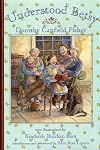
When this story begins, Elizabeth Ann, who is the heroine of it, was a little girl of nine, who lived with her Great-aunt Harriet in a medium-sized city in a mdedium-sized state in the midle of this country, and that's all you need to know about the place, for it's not the important thing in this story; and anyhow you know all about it because it was probably very much like the place you live in yourself.
The opening of Dorothy Canfield Fisher's Understood Betsy hooked me in, and I just show more wanted to keep reading – and when I'd finished I just wanted to go back to the beginning and start all over again. I wish I'd come across it as a child (it is a children's book, if you haven't already guessed), but it doesn't seem to be well known in the UK, although it may be more popular in America – after all, Canfield Fisher was an American writer. In places it reminded me of The Secret Garden, while the kindly, amused authorial voice is reminiscent of Edith Nesbit, and the description of life in Vermont in the early 20th century is as fascinating and delightful as anything written by Laura Ingalls Wilder. It really does deserve to be up there with classic children's authors like Edith Nesbit, Frances Hodgson Burnett, LM Montgomery and Laura Ingalls Wilder - if you like them I'm sure you will love this.
Anyway, in addition to Great-aunt Harriet (who is 'not very rich and not very poor'), Elizabeth Ann's household also includes her great-aunt's daughter Aunt Frances, who gives piano lessons to little girls, and Grace, their 'girl', who is nearer 50 than 40, suffers badly asthma, and does all the cooking and housework. They are all very small and very thin, even though get plenty to eat, and Elizabeth Ann has a pale face, with frightened, wistful eyes. Delicate and nervous, she's cared for by timid Aunt Frances, a spinster who has read all the books on child rearing and wants to give Elizabeth Ann every advantage. But much as she loves the child she only succeeds in passing on her own fears and anxieties. She proudly tells everyone that Elizabeth Ann tells her everything, and so she does – but there are signs that she may not be quite as meek and mild as she appears, because when there is nothing significent to tell she makes things up to keep her aunt happy.
Then Great-aunt Harriet falls ill and Elizabeth Ann ends up a thousand miles away, on a farm in Vermont, with her unknown Putney relatives, about whom she has never heard a good word. She is nervous about meeting them because she remembers being told that they showed 'such lack of sympathy, such perfect indifference to the sacred sensitivities of child-life, such a starving of the child-heart'. But Unclle Henry, Aunt Abigail and Cousin Ann know exactly how to treat a child like Elizabeth Ann – and it's not by molly coddling her and wrapping her in cotton wool. They are kind, loving, and wise, but too busy to run around after her and pander to whims and frightened fancies. They encourage, but expect her to look after herself and help around the house and farm – and that's just what she does. The fact that the Putneys are so casual and off-hand in their belief that she can do things gives her the confidence to do them.
They call her Betsy, a new name for her new life, and she learns to dress and undress herself, and to do her own her hair (tied back at the nape of the neck with a ribbon, a style she has always admired). She makes butter, apple sauce and maple syrup, lays the table, and learns to sew. For the first time she plays and laughs with other children and forms friendships. And she starts to think for herself, to solve problems, to notice what is happening in the world around her, and to care for others – a kitten, the family dog, a smaller child who needs a friend. She fills out, growing strong and sturdy, acquires a suntan, and loses the nightmares and delicate digestion that have always plagued her. There's a heart-stopping moment when Aunt Frances writes to say she is coming to take Elizabeth Ann home, but this is a kind of fairy tale so, naturally, there is a happy ending (and, as I've said before, I'm a sucker for a happy ending, and this is such a happy, transformative story).
I suspect that the book very much reflects Canfield Fisher's own views on child rearing and education, but she doesn't preach. I knew she was a supporter of the methods pioneered by Maria Montessori, which involved the development of a child's physical, social, emotional and cognitive well-being. But until I looked it up I had no idea how new this must have been in 1916 when Understood Betsy was published (the book is also set in that year). So I was surprised to find the small village school so child-centred, with each child assessed in each subject so work can be set according to their needs – Betsy, as we must now call her, is in the seventh grade for reading, the third for spelling, and the second for arithmetic. And the work carried out in school is part and parcel of Betsy's growth at the farm. I wondered if it was a device used by the author, or if small village schools really did work like that. show less
The opening of Dorothy Canfield Fisher's Understood Betsy hooked me in, and I just show more wanted to keep reading – and when I'd finished I just wanted to go back to the beginning and start all over again. I wish I'd come across it as a child (it is a children's book, if you haven't already guessed), but it doesn't seem to be well known in the UK, although it may be more popular in America – after all, Canfield Fisher was an American writer. In places it reminded me of The Secret Garden, while the kindly, amused authorial voice is reminiscent of Edith Nesbit, and the description of life in Vermont in the early 20th century is as fascinating and delightful as anything written by Laura Ingalls Wilder. It really does deserve to be up there with classic children's authors like Edith Nesbit, Frances Hodgson Burnett, LM Montgomery and Laura Ingalls Wilder - if you like them I'm sure you will love this.
Anyway, in addition to Great-aunt Harriet (who is 'not very rich and not very poor'), Elizabeth Ann's household also includes her great-aunt's daughter Aunt Frances, who gives piano lessons to little girls, and Grace, their 'girl', who is nearer 50 than 40, suffers badly asthma, and does all the cooking and housework. They are all very small and very thin, even though get plenty to eat, and Elizabeth Ann has a pale face, with frightened, wistful eyes. Delicate and nervous, she's cared for by timid Aunt Frances, a spinster who has read all the books on child rearing and wants to give Elizabeth Ann every advantage. But much as she loves the child she only succeeds in passing on her own fears and anxieties. She proudly tells everyone that Elizabeth Ann tells her everything, and so she does – but there are signs that she may not be quite as meek and mild as she appears, because when there is nothing significent to tell she makes things up to keep her aunt happy.
Then Great-aunt Harriet falls ill and Elizabeth Ann ends up a thousand miles away, on a farm in Vermont, with her unknown Putney relatives, about whom she has never heard a good word. She is nervous about meeting them because she remembers being told that they showed 'such lack of sympathy, such perfect indifference to the sacred sensitivities of child-life, such a starving of the child-heart'. But Unclle Henry, Aunt Abigail and Cousin Ann know exactly how to treat a child like Elizabeth Ann – and it's not by molly coddling her and wrapping her in cotton wool. They are kind, loving, and wise, but too busy to run around after her and pander to whims and frightened fancies. They encourage, but expect her to look after herself and help around the house and farm – and that's just what she does. The fact that the Putneys are so casual and off-hand in their belief that she can do things gives her the confidence to do them.
They call her Betsy, a new name for her new life, and she learns to dress and undress herself, and to do her own her hair (tied back at the nape of the neck with a ribbon, a style she has always admired). She makes butter, apple sauce and maple syrup, lays the table, and learns to sew. For the first time she plays and laughs with other children and forms friendships. And she starts to think for herself, to solve problems, to notice what is happening in the world around her, and to care for others – a kitten, the family dog, a smaller child who needs a friend. She fills out, growing strong and sturdy, acquires a suntan, and loses the nightmares and delicate digestion that have always plagued her. There's a heart-stopping moment when Aunt Frances writes to say she is coming to take Elizabeth Ann home, but this is a kind of fairy tale so, naturally, there is a happy ending (and, as I've said before, I'm a sucker for a happy ending, and this is such a happy, transformative story).
I suspect that the book very much reflects Canfield Fisher's own views on child rearing and education, but she doesn't preach. I knew she was a supporter of the methods pioneered by Maria Montessori, which involved the development of a child's physical, social, emotional and cognitive well-being. But until I looked it up I had no idea how new this must have been in 1916 when Understood Betsy was published (the book is also set in that year). So I was surprised to find the small village school so child-centred, with each child assessed in each subject so work can be set according to their needs – Betsy, as we must now call her, is in the seventh grade for reading, the third for spelling, and the second for arithmetic. And the work carried out in school is part and parcel of Betsy's growth at the farm. I wondered if it was a device used by the author, or if small village schools really did work like that. show less
Lists
Elevenses (1)
Out of Copyright (1)
Ambleside Books (1)
Female Author (1)
discontinued (1)
Awards


You May Also Like


Associated Authors
Statistics
- Works
- 57
- Also by
- 48
- Members
- 6,106
- Popularity
- #4,031
- Rating
- 4.0
- Reviews
- 89
- ISBNs
- 286
- Languages
- 4
- Favorited
- 9


