
Katrina Firlik
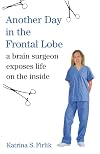
Author of Another Day in the Frontal Lobe: A Brain Surgeon Exposes Life on the Inside
About the Author
Works by Katrina Firlik
Another Day in the Frontal Lobe: A Brain Surgeon Exposes Life on the Inside (2006) 575 copies, 35 reviews
Tagged
Common Knowledge
- Gender
- female
- Education
- Cornell University
Case Western Reserve University - Occupations
- neurosurgeon
- Nationality
- USA
- Places of residence
- New Canaan, Connecticut, USA
Shaker Heights, Ohio, USA - Associated Place (for map)
- USA
Members
Reviews

Medical memoirs are my version of brain candy and being weeks away from earning my own M.D. from Dr. Firlik's alma mater, I thought this would be an apropos read. Unfortunately, I don't think I'm part of Dr. Firlik's intended audience. Granted most medical memoirs are written for the layperson, but being some what of a connoisseur of the genre, I can tell you that some are more interesting to those of us who have done are own time in the neurosurgical OR and some of them are less so.
All of show more this is not to say that I didn't find Dr. Firlik's book entertaining. It certainly was, and in particular Dr. Firlik has inherited a gift of storytelling -- her patient encounters are touching, detailed and never judgmental. This is clearly the strong point of the book.
The weaker parts of the book are that, while she is clearly trying to be, Dr. Firlik herself admits that she is no Dr. Sacks. She alludes to him frequently, but just as frequently apologizes for the lack of deep thought on the brain/mind dichotomy that she is interested in, explaining that as a neurosurgeon, her first commitment is to the operating room. Her honesty is appreciated, and at points it seems that she is doing herself a disservice, for she is a very introspective person. But at the end of the day, she's correct -- she sees interesting questions that arise from her profession, but has not explored them in depth. At no point is this more clear than the very weak closing two chapters, particularly the last chapter regarding the future of neurosurgery.
This chapter is rushed and wandering. It contains too many ideas for one chapter, ranging from neuro-enhancements to minimally invasive surgeries to a discussion of turf-wars that may, in fact, be too entrenched in medical politics to be comprehensible to the lay audience. Dr. Firlik should play to her strengths -- the ability to recount the daily life of a neurosurgeon and leave further exploration of the questions she raises on consciousness, the mind and neurological enhancements to the reader. show less
All of show more this is not to say that I didn't find Dr. Firlik's book entertaining. It certainly was, and in particular Dr. Firlik has inherited a gift of storytelling -- her patient encounters are touching, detailed and never judgmental. This is clearly the strong point of the book.
The weaker parts of the book are that, while she is clearly trying to be, Dr. Firlik herself admits that she is no Dr. Sacks. She alludes to him frequently, but just as frequently apologizes for the lack of deep thought on the brain/mind dichotomy that she is interested in, explaining that as a neurosurgeon, her first commitment is to the operating room. Her honesty is appreciated, and at points it seems that she is doing herself a disservice, for she is a very introspective person. But at the end of the day, she's correct -- she sees interesting questions that arise from her profession, but has not explored them in depth. At no point is this more clear than the very weak closing two chapters, particularly the last chapter regarding the future of neurosurgery.
This chapter is rushed and wandering. It contains too many ideas for one chapter, ranging from neuro-enhancements to minimally invasive surgeries to a discussion of turf-wars that may, in fact, be too entrenched in medical politics to be comprehensible to the lay audience. Dr. Firlik should play to her strengths -- the ability to recount the daily life of a neurosurgeon and leave further exploration of the questions she raises on consciousness, the mind and neurological enhancements to the reader. show less
A smart, insightful, and empathic peek into the superspecialized world of neurosurgery. Dr. Firlik's writing style is conversational and airy, even when covering some of the more horrorshow aspects of her job. Parts of the book almost read as if they were written as episodes of Scrubs, while others take the time to explore the changing role of the surgeon in a world where the technology for healing is simultaneously exploding and fracturing. A quick read, and while not exactly a primer on show more how to break into brain surgery, packs in sufficient information to make you want to get yourself an MRI, just so you know what's going on up there. show less
“When I walked into the infant’s hospital room for the first time the lights were off and the shades down, in the middle of the day. The pediatric neurology team was crowded around the crib. The senior neurologist was holding a flashlight up against the baby’s head, and all the residents and medical students stared at the resulting spectacle: a round, pinkish, glowing orb. Because most of the skull was filled with fluid and not brain, and a baby’s scalp and skull are normally show more relatively thin, the light was able to pass right through, lighting up the head in an eerie display.”
This is just one of the many stories Katrina Firlik relates in her new book, Another Day in the Frontal Lobe: A Brain Surgeon Exposes Life on the Inside. Firlik was the first woman to be accepted into the University of Pittsburgh Medical Center’s neurosurgery residency program. This book tells of her training and eventual mastery of the mind.
She is very humble throughout the book, explaining that her job isn’t rocket science. She sees her roll as more of a mechanic, using her hands to relieve pressure on the brain, as a grease monkey might loosen a bolt. She states, “If you have an expanding blood clot in your brain, you want a skilled brain mechanic, and preferably a swift one. You don’t care if your surgeon published a paper in Science or Nature.”
One could say her mantra throughout the book is “this is not rocket science,” but, hello, it is brain surgery. She reminds me of a certain person who can’t accept compliments without devaluing herself. Hum?
The book can be graphic at times; for instance, she tells about the removal of a flush, two-inch, carpentry nail. If you get a little woozy reading about maggots and pus, please reach for something else. If not, you will find Firlik humorous at times. She may even settle a bet about the movie Hannibal for you.
The title, and the fact that Firlik is one of only five percent of women serving in the neurosurgery field, might lead a reader to think the book encompasses male incompetent situations, but this is not the case. She never dishes the dirt of others, but rather tells of her own mistakes, which makes for a refreshing take that will win male and female readers alike. show less
This is just one of the many stories Katrina Firlik relates in her new book, Another Day in the Frontal Lobe: A Brain Surgeon Exposes Life on the Inside. Firlik was the first woman to be accepted into the University of Pittsburgh Medical Center’s neurosurgery residency program. This book tells of her training and eventual mastery of the mind.
She is very humble throughout the book, explaining that her job isn’t rocket science. She sees her roll as more of a mechanic, using her hands to relieve pressure on the brain, as a grease monkey might loosen a bolt. She states, “If you have an expanding blood clot in your brain, you want a skilled brain mechanic, and preferably a swift one. You don’t care if your surgeon published a paper in Science or Nature.”
One could say her mantra throughout the book is “this is not rocket science,” but, hello, it is brain surgery. She reminds me of a certain person who can’t accept compliments without devaluing herself. Hum?
The book can be graphic at times; for instance, she tells about the removal of a flush, two-inch, carpentry nail. If you get a little woozy reading about maggots and pus, please reach for something else. If not, you will find Firlik humorous at times. She may even settle a bet about the movie Hannibal for you.
The title, and the fact that Firlik is one of only five percent of women serving in the neurosurgery field, might lead a reader to think the book encompasses male incompetent situations, but this is not the case. She never dishes the dirt of others, but rather tells of her own mistakes, which makes for a refreshing take that will win male and female readers alike. show less
For a story of what it takes to perform neurosurgery - which is not just brain surgery - Katrina Firlik's memoir comes off as a breeze. But a deceptive breeze. At some point, you'll find yourself recounting anecdotes to friends and family on the performance tricks of drills, the differences between neurologists and neurosurgeons, why certain infamous film cannibals may have done the impossible and, of course, describing glioblastomas in terms of popcorn. These sprinklings of fact are show more effortless and incredibly engaging. Might I add that you'll feel the need to correct individuals on the 10% usage misnomer as well?
Firlik does an amazing job of humanizing what can be a job that is easily dehumanizing every day. She addresses the issues of delivering bad news on a regular basis, addresses the trickier aspects of what medical technology can do vs. what may or may not be best for a patient and will drive home the point of seeing your doctor as soon as possible and wearing your seat belt in graphic fashion. At the same time, she doesn't seem quite clear on how she's able to do some of the things she does - why she maintained so much positivity, how she really felt about being the first woman in her neurosurgery program, or how she really maintained her commitment to a program so many others find too demanding. In some cases, her chapters started out down these paths, but seemed to veer off either because the thoughts never manifested or maybe because the answers just never came. Thankfully, the brain offers plenty of fascinating backup stories to make up for these small holes. show less
Firlik does an amazing job of humanizing what can be a job that is easily dehumanizing every day. She addresses the issues of delivering bad news on a regular basis, addresses the trickier aspects of what medical technology can do vs. what may or may not be best for a patient and will drive home the point of seeing your doctor as soon as possible and wearing your seat belt in graphic fashion. At the same time, she doesn't seem quite clear on how she's able to do some of the things she does - why she maintained so much positivity, how she really felt about being the first woman in her neurosurgery program, or how she really maintained her commitment to a program so many others find too demanding. In some cases, her chapters started out down these paths, but seemed to veer off either because the thoughts never manifested or maybe because the answers just never came. Thankfully, the brain offers plenty of fascinating backup stories to make up for these small holes. show less
Awards

You May Also Like


Statistics
- Works
- 2
- Members
- 599
- Popularity
- #41,951
- Rating
- 3.6
- Reviews
- 35
- ISBNs
- 5