
Kanan Makiya
Author of Republic of Fear
About the Author
Kanan Makiya was born in Baghdad. He is the author of several works of nonfiction, including "Republic of Fear" & "The Monument" (both originally published under a pseudonym), & the award-winning "Cruelty & Silence". He currently directs the Iraq Research & Documentation Project at Harvard show more University & teaches at Brandeis University. He lives in Cambridge, Massachusetts. (Bowker Author Biography) show less
Disambiguation Notice:
Used pseudonym of Samir al-Khalil to avoid endangering family when he began to write in 1981
Works by Kanan Makiya
جمهورية الخوف 1 copy
abu qurrat al-muu'allifaat 1 copy
Tagged
Common Knowledge
- Canonical name
- Makiya, Kanan
- Other names
- Al-Khalil, Samir (pseudonym)
- Gender
- male
- Education
- Massachusetts Institute of Technology
- Occupations
- architect
writer - Organizations
- Brandeis University (Sylvia K. Hassenfeld Professor of Islamic and Middle Eastern Studies)
Makiya Associates
Iraq Memory Foundation (founder) - Nationality
- Iraq (birth)
UK (1982) - Places of residence
- Baghdad, Iraq (birthplace)
- Disambiguation notice
- Used pseudonym of Samir al-Khalil to avoid endangering family when he began to write in 1981
- Associated Place (for map)
- Baghdad, Iraq
Members
Reviews
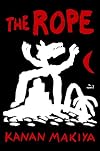
The Rope has turned out to be the kind of book I'll recommend that people read even if I didn't love it. It begins with a deeply disturbing, masterfully written scene of the execution of Saddam Hussein, then backtracks to give perspective on Iraq just after the US invaded and Saddam went into hiding. The novel has a lot to say about competing identities--what it means to identify as Iraqi, Baathist, Sunni or Shia, Pan-Arab, patriot, family member, and citizen of an occupied country. The way show more these loyalties shift and compete is the heart of this novel.
For my taste the writing trends toward overwrought, an easy mistake to make with this kind of material, except for the first scene which is very stripped down and works because of it. Another issue is that there is a lot of expository writing here--which is fair, given that Makiya's English-language version is for people not familiar with the facts on the ground--but the explaining sometimes got in the way of the storytelling and it made me wonder if the Arabic language version (the novel was published simultaneously in both languages) has less exposition.
I'm very glad to have read this novel in spite of my criticism. It's good to be reminded of what happened, to not forget the many disasters large and small that made up the Iraqi experience in these years. show less
For my taste the writing trends toward overwrought, an easy mistake to make with this kind of material, except for the first scene which is very stripped down and works because of it. Another issue is that there is a lot of expository writing here--which is fair, given that Makiya's English-language version is for people not familiar with the facts on the ground--but the explaining sometimes got in the way of the storytelling and it made me wonder if the Arabic language version (the novel was published simultaneously in both languages) has less exposition.
I'm very glad to have read this novel in spite of my criticism. It's good to be reminded of what happened, to not forget the many disasters large and small that made up the Iraqi experience in these years. show less
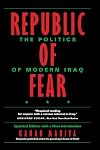
It may seem a little late to read a detailed, scholarly overview of the rise of Baathism and Saddam in Iraq from the late '60s to the Iran-Iraq War, but this updated edition has a lot to offer. One, it serves as a detailed analysis of centralized anti-communism turned into a fascistic dictatorship, ala Nazi Germany or Fascist Italy. Also, it explains a lot of the roots of the current patchwork of politico-religious issues in the mideast traced from the Ottoman millet system to post-WW II show more nation forming. show less

Explores the connection between art and totalitarianism, using Saddam Hussein's "Victory Arch" in Baghdad as a starting point for a discussion on how dictators use art to legitimize their regimes.
In Baghdad, an enormous monument nearly twice the size of the Arc de Triomphe towers over the city. Two huge forearms emerge from the ground, clutching two swords that clash overhead. Those arms are enlarged casts of those of Saddam Hussein, showing every bump and follicle. The 'Victory Arch' show more celebrates a victory over Iran (in their 8-year long war) that never happened. 'The Monument' is a study of the interplay between art and politics - of how culture, normally an unquestioned good, can play into the hands of power with devastating effects. Kanan Makiya uses the culture invented show less
In Baghdad, an enormous monument nearly twice the size of the Arc de Triomphe towers over the city. Two huge forearms emerge from the ground, clutching two swords that clash overhead. Those arms are enlarged casts of those of Saddam Hussein, showing every bump and follicle. The 'Victory Arch' show more celebrates a victory over Iran (in their 8-year long war) that never happened. 'The Monument' is a study of the interplay between art and politics - of how culture, normally an unquestioned good, can play into the hands of power with devastating effects. Kanan Makiya uses the culture invented show less
A harrowing enlightening morally scathing novel that examines the time in Iraq between Saddam Hussein’s downfall (2003) and his execution (2006) through the lens of a nameless fictional Shiite militiaman.
The reader will feel the anguish and frustration of the narrator as he moves for a state of unknowing naivety to awareness of how the sectarian violence is hindering the concept of a democratic Iraq and as his questions goes unanswered regarding his father’s disappearance in 1991 during show more the Saddam regime. These two storylines propel the action forward informing the reader of the many identities that a person might be and how which one is prominent in the person’s mind often is in conflict in moving towards a unified nation.
The author is known for being vocal on how Iraq missed the opportunity to heal from the ouster of Saddam and how the victims became the victimizer.
I was engaged for most the book but occasionally the stuffy prose, the dogmatic explanations of all of the rivalries whether religious, ethnic, military, or political overwhelmed me. When I finished reading this book I did feel a sense of hopelessness and helplessness.
Overall this is a powerful yet intimately searing account of violence, betrayals and despair of a particular time and place that unfortunately is becoming commonplace in too many other places. show less
The reader will feel the anguish and frustration of the narrator as he moves for a state of unknowing naivety to awareness of how the sectarian violence is hindering the concept of a democratic Iraq and as his questions goes unanswered regarding his father’s disappearance in 1991 during show more the Saddam regime. These two storylines propel the action forward informing the reader of the many identities that a person might be and how which one is prominent in the person’s mind often is in conflict in moving towards a unified nation.
The author is known for being vocal on how Iraq missed the opportunity to heal from the ouster of Saddam and how the victims became the victimizer.
I was engaged for most the book but occasionally the stuffy prose, the dogmatic explanations of all of the rivalries whether religious, ethnic, military, or political overwhelmed me. When I finished reading this book I did feel a sense of hopelessness and helplessness.
Overall this is a powerful yet intimately searing account of violence, betrayals and despair of a particular time and place that unfortunately is becoming commonplace in too many other places. show less
Lists
Awards


You May Also Like


Statistics
- Works
- 10
- Members
- 577
- Popularity
- #43,428
- Rating
- 3.6
- Reviews
- 7
- ISBNs
- 35
- Languages
- 4
- Favorited
- 2
