
Benjamin L. Carp
Author of Defiance of the Patriots: The Boston Tea Party and the Making of America
About the Author
Image credit: via author's website
Works by Benjamin L. Carp
Defiance of the Patriots: The Boston Tea Party and the Making of America (2010) 139 copies, 2 reviews
Associated Works
Reporting the Revolutionary War: Before It Was History, It Was News (2012) — Contributor — 158 copies, 4 reviews
Tagged
Common Knowledge
- Canonical name
- Carp, Benjamin L.
- Birthdate
- 1976
- Gender
- male
- Education
- University of Virginia (MA|1999|Ph.D|2004)
Yale University (BA|1998) - Occupations
- professor
historian - Organizations
- City University of New York Graduate Center
Brooklyn College, City University of New York
Tufts University
University of Edinburgh
American Historical Association
Organization of American Historians - Awards and honors
- Cox Book Prize (2013)
Fellow, New York Academy of History (2020) - Nationality
- USA
- Associated Place (for map)
- USA
Members
Reviews
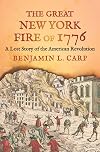
Benjamin Carp's The Great New York Fire of 1776 followed directly after my reading of The Cause: The American Revolution and Its Discontents by Joseph Ellis. Consequently, to a limited extent I did find some similarities of content here and there. However, because the two historians come to the story of the American Revolution from different vantages and with different emphases, I found such similarities helpful in reinforcing my understanding of the history and not at all repetitious. I show more suspect that Carp's book would be of interest to anyone curious about the rebellion of the North American colonies and the formation of a national governing body in the late 18th century regardless of what other books he or she may have read on the topic.
While Carp's purported focus is on the cause of the fire that destroyed about a fifth of New York City on 21 September 1776 shortly after the Continental Army retreated from the town and as the British were beginning to occupy it as their winter headquarters. However, the book goes well beyond that topic in its revelations of colonial society and the actual nature of a rebellion that was far more vicious, disorganized, and opposed by more of the citizenry than the popularly held national myth would have us believe today. I found these revelations to be the strong points of the book, the fire itself being little more than a unifying factor in the narrative, its true cause having never been determined nor being discoverable beyond doubt today.
A few examples of the revelations that I found of especial interest either because I had not been exposed to them before or, equally likely, that I had largely forgotten include the widespread use of incendiarism as a weapon of war and the fact that the British burned a number of colonial cities to destroy their ports, homes and businesses and to interrupt their sea-going trade. The reader is also reminded that the colonies were anything but united, New Englanders, for example, having no fondness for New Yorkers, whom they viewed as Tories and Anglicans, rendering the Yorkers anathema in both politics and religion. Then, of course, one finds the issue of slavery to be divisive and in no way restricted to the Civil War period eighty-five years later. While it is fairly common knowledge today that General and, later, President Washington was himself a slave owner, Carp reminds us of his Iroquois name of Conotocarious, meaning “Town Destroyer” thanks to his relentless destruction of Native property and lives. During the colonies' rebellion and following withdrawal of the British, rebels among the colonists saw their Loyalist neighbors as enemies, attacking their persons, forcing them to flee their homes and livelihoods, and either burning or confiscating their properties, thousands being forced to find asylum in British Canada.
I found Carp's book to show more clearly than any other the extent to which the British colonies in North America were disunited, how neighbor turned against neighbor, the surprisingly vast numbers of “Americans” driven out of the country because they had supported the "wrong” side in what was a civil war of the colonies against their British government, and the barbarism practiced by both British soldiers and colonial rebels against those whom they perceived as enemies. Carp rips the veneer of myth away from what we today call the American Revolution and exposes much of the trauma, torture, revenge, and regional hatreds that characterized the land that would become the United States.
If there is any nit that I would pick with this book it is that the topic of the fire is not really the most important contribution of the book to our knowledge of the North American colonists' rebellion, including its causation, in the late 1770s and early 1780s. Still, the book's description of the hostilities goes a long way in revealing the nature of internal colonial frictions and the horrors of the rebellion, so if the title encourages more readers to pick up the book, I shall not criticize it. I do note that there is more peritext in this book than usual, the notes, acknowledgments and index occupying 95 pages, leaving only 250 pages of historical discussion in this 345 page book; this is, please note, merely an observation and not a criticism, and I'd certainly recommend The Great New York Fire of 1776 to anyone who wishes to understand more of the reality behind the American Revolution. show less
While Carp's purported focus is on the cause of the fire that destroyed about a fifth of New York City on 21 September 1776 shortly after the Continental Army retreated from the town and as the British were beginning to occupy it as their winter headquarters. However, the book goes well beyond that topic in its revelations of colonial society and the actual nature of a rebellion that was far more vicious, disorganized, and opposed by more of the citizenry than the popularly held national myth would have us believe today. I found these revelations to be the strong points of the book, the fire itself being little more than a unifying factor in the narrative, its true cause having never been determined nor being discoverable beyond doubt today.
A few examples of the revelations that I found of especial interest either because I had not been exposed to them before or, equally likely, that I had largely forgotten include the widespread use of incendiarism as a weapon of war and the fact that the British burned a number of colonial cities to destroy their ports, homes and businesses and to interrupt their sea-going trade. The reader is also reminded that the colonies were anything but united, New Englanders, for example, having no fondness for New Yorkers, whom they viewed as Tories and Anglicans, rendering the Yorkers anathema in both politics and religion. Then, of course, one finds the issue of slavery to be divisive and in no way restricted to the Civil War period eighty-five years later. While it is fairly common knowledge today that General and, later, President Washington was himself a slave owner, Carp reminds us of his Iroquois name of Conotocarious, meaning “Town Destroyer” thanks to his relentless destruction of Native property and lives. During the colonies' rebellion and following withdrawal of the British, rebels among the colonists saw their Loyalist neighbors as enemies, attacking their persons, forcing them to flee their homes and livelihoods, and either burning or confiscating their properties, thousands being forced to find asylum in British Canada.
I found Carp's book to show more clearly than any other the extent to which the British colonies in North America were disunited, how neighbor turned against neighbor, the surprisingly vast numbers of “Americans” driven out of the country because they had supported the "wrong” side in what was a civil war of the colonies against their British government, and the barbarism practiced by both British soldiers and colonial rebels against those whom they perceived as enemies. Carp rips the veneer of myth away from what we today call the American Revolution and exposes much of the trauma, torture, revenge, and regional hatreds that characterized the land that would become the United States.
If there is any nit that I would pick with this book it is that the topic of the fire is not really the most important contribution of the book to our knowledge of the North American colonists' rebellion, including its causation, in the late 1770s and early 1780s. Still, the book's description of the hostilities goes a long way in revealing the nature of internal colonial frictions and the horrors of the rebellion, so if the title encourages more readers to pick up the book, I shall not criticize it. I do note that there is more peritext in this book than usual, the notes, acknowledgments and index occupying 95 pages, leaving only 250 pages of historical discussion in this 345 page book; this is, please note, merely an observation and not a criticism, and I'd certainly recommend The Great New York Fire of 1776 to anyone who wishes to understand more of the reality behind the American Revolution. show less
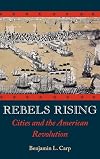
In Rebels Rising: Cities and the American Revolution, Benjamin L. Carp, Assistant Professor of History at Tufts University, examines the political activity in Colonial America’s five most populous cities (Boston, New York City, Newport, Charleston, and Philadelphia) on the eve of the American Revolution. As a main thesis, he shows that the contours of urban life made it possible for patriot mobilization to be ultimately more effective than imperial counter-mobilization.
The Boston show more waterfront was home to a cohesive and interdependent community of seamen, dockworkers, artisans, and merchants whose mobilization in times of imperial crises made the city a leader in the resistance to Great Britain. The radical waterfront coalition was in many ways a microcosm of the city itself. Generally the first feel the ill effects of imperial encroachment, the waterfront was uniquely situated both geographically and socioeconomically to play a pivotal role in revolutionary events. Carp details the circumstances begetting key waterfront actions and their ultimate consequences and significance. As radical ideas spread inland, the waterfront cause became a countryside cause, and ultimately an intercolonial cause. Other cities in the colonies looked to Boston as the vanguard of radical action. In this way as Carp notes, the waterfront revolution was a crucial and catalytic component of the urban revolution, which was in turn a crucial and catalytic component of the American Revolution as a whole.
During the imperial crisis, the taverns and public houses of New York City allowed for the mixing (and of course shaking and stirring) of inhabitants and visitors from different social groups and served as ideal staging grounds from which revolutionaries launched their opposition. To control the taverns was to control the populace. Organized drinking societies and tavern companies not only exchanged ideas among themselves, they initiated correspondence among tavern companies throughout the Atlantic seaboard. Thus, societies that began in the New York taverns served as a model for, and corresponded with, tavern societies that met in cities and towns throughout the American colonies.
More than any other major city in the colonies, pluralistic Newport was home to a multiplicity of religious groups – Anglicans, Congregationalists, Baptists, Quakers, Moravians, Jews, and secular nothingarians. Along with detailed descriptions of their meetinghouses, Carp provides the prevailing (and divergent) stances held within these groups and their ministers as they related to the resistance movement. In the end, Newporters proved to be reluctant revolutionaries, for the urban religious landscape allowed for communication and conflict, but not necessarily political mobilization.
Nine of the ten richest men in British North America were South Carolinians, and Charleston District was the richest in North America, with an average wealth per estate tripling that of its nearest rival. Such wealth afforded Carolina’s elite patriarchs a lifestyle of decadence and consumerism for imported British fineries, making them natural targets for supporters of non-importation and non-consumption policies. Their households became “miserably situated between two fires” – kingly tyranny for one, and popular tyranny the other. Henry Laurens felt the wrath of this popular tyranny firsthand. He and his fellow gentry would have to set about building a new republican household if they wished to continue dominating colonial politics, economy, and society. So in this way, the Charleston household became the predominant venue of political mobilization. However, initial progress and inroads toward revolutionary liberty made by the disenfranchised – blacks, women, and the middling and poor – would remain limited.
As a native of the Delaware Valley, this reader appreciates that Carp saved the best story – Philadelphia – for last (but of course I’m biased). In Pennsylvania, independence caught on slowly. Assembly members, those practicing politics “within doors,” were careful not to offend Parliament, the Crown, or the Ministry, as they were bent on replacing the proprietary charter with a royal government. Radicals in favor of independence would have to resort to politics “out of doors,” most often in the form of large gatherings in State House Yard, in order to muster the populace and influence public opinion. By 1774, these gatherings cleared the way for the meetings of the Continental Congresses and became the mechanism by which independence was popularized and affirmed.
The book is extensively referenced for scholars seeking more granularity on the subject, and the vivid narrative style is appealing to the general reader interested in learning more about urban politics and folkways during the American Revolution. show less
The Boston show more waterfront was home to a cohesive and interdependent community of seamen, dockworkers, artisans, and merchants whose mobilization in times of imperial crises made the city a leader in the resistance to Great Britain. The radical waterfront coalition was in many ways a microcosm of the city itself. Generally the first feel the ill effects of imperial encroachment, the waterfront was uniquely situated both geographically and socioeconomically to play a pivotal role in revolutionary events. Carp details the circumstances begetting key waterfront actions and their ultimate consequences and significance. As radical ideas spread inland, the waterfront cause became a countryside cause, and ultimately an intercolonial cause. Other cities in the colonies looked to Boston as the vanguard of radical action. In this way as Carp notes, the waterfront revolution was a crucial and catalytic component of the urban revolution, which was in turn a crucial and catalytic component of the American Revolution as a whole.
During the imperial crisis, the taverns and public houses of New York City allowed for the mixing (and of course shaking and stirring) of inhabitants and visitors from different social groups and served as ideal staging grounds from which revolutionaries launched their opposition. To control the taverns was to control the populace. Organized drinking societies and tavern companies not only exchanged ideas among themselves, they initiated correspondence among tavern companies throughout the Atlantic seaboard. Thus, societies that began in the New York taverns served as a model for, and corresponded with, tavern societies that met in cities and towns throughout the American colonies.
More than any other major city in the colonies, pluralistic Newport was home to a multiplicity of religious groups – Anglicans, Congregationalists, Baptists, Quakers, Moravians, Jews, and secular nothingarians. Along with detailed descriptions of their meetinghouses, Carp provides the prevailing (and divergent) stances held within these groups and their ministers as they related to the resistance movement. In the end, Newporters proved to be reluctant revolutionaries, for the urban religious landscape allowed for communication and conflict, but not necessarily political mobilization.
Nine of the ten richest men in British North America were South Carolinians, and Charleston District was the richest in North America, with an average wealth per estate tripling that of its nearest rival. Such wealth afforded Carolina’s elite patriarchs a lifestyle of decadence and consumerism for imported British fineries, making them natural targets for supporters of non-importation and non-consumption policies. Their households became “miserably situated between two fires” – kingly tyranny for one, and popular tyranny the other. Henry Laurens felt the wrath of this popular tyranny firsthand. He and his fellow gentry would have to set about building a new republican household if they wished to continue dominating colonial politics, economy, and society. So in this way, the Charleston household became the predominant venue of political mobilization. However, initial progress and inroads toward revolutionary liberty made by the disenfranchised – blacks, women, and the middling and poor – would remain limited.
As a native of the Delaware Valley, this reader appreciates that Carp saved the best story – Philadelphia – for last (but of course I’m biased). In Pennsylvania, independence caught on slowly. Assembly members, those practicing politics “within doors,” were careful not to offend Parliament, the Crown, or the Ministry, as they were bent on replacing the proprietary charter with a royal government. Radicals in favor of independence would have to resort to politics “out of doors,” most often in the form of large gatherings in State House Yard, in order to muster the populace and influence public opinion. By 1774, these gatherings cleared the way for the meetings of the Continental Congresses and became the mechanism by which independence was popularized and affirmed.
The book is extensively referenced for scholars seeking more granularity on the subject, and the vivid narrative style is appealing to the general reader interested in learning more about urban politics and folkways during the American Revolution. show less
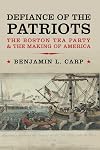
In this thorough, detailed telling of the Boston Tea Party in 1773, Carp covers practical details--a LOT of tea casks had to be unloaded from below decks, cracked open and heaved over the side--and the historical background and political situation. He also briefly covers what the event has come to mean, over time and to the various people claiming it as their own (or sweeping it under the rug) and does not shy away from describing the violence and anarchism of the party. I highly recommend show more the book. show less
Good history of the events and some analysis of the enduring legacy of the Tea Party.
Awards


You May Also Like


Associated Authors
Statistics
- Works
- 3
- Also by
- 1
- Members
- 287
- Popularity
- #81,378
- Rating
- 3.9
- Reviews
- 4
- ISBNs
- 15