
Richard Archer
Author of As If an Enemy's Country: The British Occupation of Boston and the Origins of Revolution
About the Author
Richard Archer is Professor of History Emeritus at Whittier College. He is the author of Fissures in the Rock: New England in the Seventeenth Century and As If an Enemy's Country: The British Occupation of Boston and the Origins of Revolution (OUP, 2010).
Works by Richard Archer
As If an Enemy's Country: The British Occupation of Boston and the Origins of Revolution (2010) 187 copies, 1 review
Tagged
Common Knowledge
- Birthdate
- 1941-11-22
- Gender
- male
- Map Location
- USA
Members
Reviews
As If an Enemy's Country: The British Occupation of Boston and the Origins of Revolution (Pivotal Moments in American History) by Richard Archer
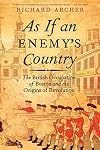
With a kind of sympathetic objectivity, Richard Archer provides the details--almost certain to have been vicious and unpleasant, but perhaps surprisingly not genocidal --of the British occupation of Boston just before the American Revolution. Archer clearly shows that there was very little Tory malice, and no Tory loyalist conspiracy to enslave the colonials, although that is what the insurgents loudly claimed. Even the "Boston Massacre" was simply a case of soldiers panicking in the midst show more of an un-armed but bold and willful crowd.
This 2012 reprint of the author's 2010 work only gets "timelier", as the current Tea Party is revealed as a false front for moneyed monopolist interests seeking to avoid regulations and taxes. The historian documents the fact that wealthy smugglers pretending to be "merchants" in Boston were clearly instigating the riots and assemblies around the "Liberty Tree". Rich smugglers like John Hancock were targeting the homes of the governors and the civic structures where they worked, for pillage and plunder. Archer's focus is in the period from 1768 to 1770, just before the 1773 Tea Party event itself.
At the time, George Washington and Ben Franklin were themselves declared Revolutionaries, with their own lives on the line. Yet they decried 1773 the Tea Party sponsored attack "as an act of violent Injustice on our part". Only rich plutocratic smugglers would think to paint their employees with Indian war paints and feathers -- to cast blame upon the Native people for their own criminal work! show less
This 2012 reprint of the author's 2010 work only gets "timelier", as the current Tea Party is revealed as a false front for moneyed monopolist interests seeking to avoid regulations and taxes. The historian documents the fact that wealthy smugglers pretending to be "merchants" in Boston were clearly instigating the riots and assemblies around the "Liberty Tree". Rich smugglers like John Hancock were targeting the homes of the governors and the civic structures where they worked, for pillage and plunder. Archer's focus is in the period from 1768 to 1770, just before the 1773 Tea Party event itself.
At the time, George Washington and Ben Franklin were themselves declared Revolutionaries, with their own lives on the line. Yet they decried 1773 the Tea Party sponsored attack "as an act of violent Injustice on our part". Only rich plutocratic smugglers would think to paint their employees with Indian war paints and feathers -- to cast blame upon the Native people for their own criminal work! show less
Lists
BOOK WISH LIST (1)
You May Also Like


Statistics
- Works
- 4
- Members
- 228
- Popularity
- #98,696
- Rating
- 3.7
- Reviews
- 1
- ISBNs
- 14