
Maya Jasanoff
Author of Liberty's Exiles: American Loyalists in the Revolutionary World
About the Author
Maya Jasanoff is currently assistant professor of British history at the University of Virginia.
Works by Maya Jasanoff
Tagged
Common Knowledge
- Legal name
- Jasanoff, Maya R.
- Birthdate
- 1974
- Gender
- female
- Education
- Harvard University (1996)
University of Oxford (M.A.)
Yale University (PhD)
University of Cambridge (Ph.D.) - Occupations
- historian
academic - Organizations
- Harvard University
- Awards and honors
- Windham–Campbell Literature Prize
- Relationships
- Jasanoff, Jay H. (father)
Jasanoff, Sheila (mother)
Colley, Linda (Ph.D. supervisor) - Nationality
- USA
- Places of residence
- Ithaca, New York, USA
England, UK - Associated Place (for map)
- USA
Members
Reviews
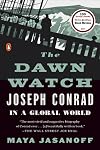
The Dawn Watch was first published in 2017. I learned of it when, looking for something else via an internet search a couple of years back, I came upon a positive review of the book in The Guardian. I found that review to be so well done that I considered simply posting a link here and leaving things at that. At any rate, I've included the link below. What Jasanoff has done is provide a biography of Conrad, revealing the important episodes/periods of his life that so strongly informed his show more writing. The most important of these include
* The dramatic events of his childhood in Poland, which was then ruled by Tsarist Russia in increasingly repressive fashion. Conrad's parents were Polish nobles, and his father was an important member of the resistance movement against Russian rule, also advocating the emancipation of Polish serfs. Eventually, the family was sent into exile, the harsh conditions of which ruined both parents' health, with Conrads' mother soon dying while Conrad was still a young boy, and his father following several years later.
* His time at sea, particularly throughout Asia
* His trip up the Nile captaining a riverboat through the Congo Free State
Jasanoff weaves these all skillfully with deep dives into four of Conrad's major works: The Secret Agent, Lord Jim, Heart of Darkness, and Nostromo. She also explores in depth the historical contexts of these works. So, for instance, the section on Heart of Darkness also includes a fairly detailed history of the Congo Free State as it came into being, as it existed when Conrad experienced it, and the ways in which it became even, horrifyingly, worse over the seven or eight years after Conrad's time there. She presents Lord Jim as a story about the ever-quickening and broadening of the reach of technology, as personified in the book by the inexorable shift in ocean-going trade from sailing ships to steam power, and the growing span and polluting effects of European encroachment into the remotest reaches of Asia. Heart of Darkness is presented as a look at the determined rapaciousness and cruelty of imperialism. And Jasanoff frames Nostromo as a story about the ever-growing influence of the international industrialists and, most alarmingly for Conrad, the growth of American power, both military and financial, specifically throughout Central and South America in the age of Theodore Roosevelt. The over-arching theme is of Conrad's serving as witness through his fiction of the world at a tipping point. From wind to steam is the simplest metaphor, but more importantly from a world of independent, multitudinous cultures to one ringed round and beginning to be squeezed dry by the debilitating nature of European/American technological and financial power.
In her introduction (and in the book's conclusion), Jasanoff describes China Achebe's famous, extremely critical essay about Heart of Darkness, which he called "an offensive and totally deplorable book" full of degrading stereotypes, labeling Conrad "a bloody racist." She also quotes a young Barak Obama, writing in his memoir Dreams from my Father, in which, challenged by college mates as to why he was reading such a racist book, says he replied "Because the book teaches me things . . . . About white people, I mean. See, the book's not really about Africa. Or black people. It's about the man who wrote it. The European. The American. A particular way of seeing the world."
Jasanoff then goes on the write:
"When I read {Heart of Darkness} and Achebe's essay with my own students at Harvard, I came to value Conrad's perspective for the same reasons Obama did: not just despite its blind spots but because of them. Conrad captured something about the way power operated across continents and races, something that seemed as important to engage with today as it had when he started to write."
Toward the end of that introductory chapter, Jasanoff has this to say:
"Often enough I've questioned my own attachment to this dead white man, perpetually depressed, incorrigibly cynical, alarmingly prejudiced by the standards of today. As a woman I balked at spending so much time with an author whose fiction was so short on plausible female characters it seemed like he barely realized that women were people too. As a half-Asian, I winced at Conrad's eroticized and often denigrating portrayals of Asians; as a half-Jew I bridled at his occasional but undeniable antiSemitism. . . . {But} whether I agreed with Conrad or not, I always found his company worthwhile. He brought to the page a more international and multiethnic assortment of voices than any other writer of his day that I knew. Like me, he was privileged to belong to the middle class of the leading world power of the age, and his books offered thoughtful engagements with the responsibilities and challenges that came with it. He was unafraid to reject truisms and call out exploitation, tyranny, and cant where he saw them. I remembered a phrase repeated mantra-like throughout Lord Jim: 'He was one of us.' For better and for worse, Joseph Conrad was one of us: a citizen of a global world."
Please understand that I am not here to claim that Jasanoff is "right." There are, of course, a lot of "right" ways to experience Conrad's work. My point in providing these too-long quotations is to make it clear where Jasanoff is coming from, as a way of creating, I hope, an accurate framework of what to expect from her book.
Whatever one might think of these opinions of hers, Jasanoff is an excellent writer, and her prose flows beautifully throughout this volume. As mentioned above, she seamlessly moves from straight bio, to her short descriptions of the books she covers, to engaging and sometimes fascinating historical expositions that provide greater context to the novels. Also, the book profits significantly from Jasanoff's frequent quoting from Conrad's letters, journals and memoirs that provide a greater depth of understanding of Conrad's own experiences, opinions and insights, both good and, from our perspective, frustrating and lamentable.
One important warning: in her descriptions of the four novels mentioned, and of others of Conrad's works, Jasanoff does not shy away from plot spoilers. Other than that, I highly recommend this book to anyone with an interest in Joseph Conrad and the world he lived in and wrote about. show less
* The dramatic events of his childhood in Poland, which was then ruled by Tsarist Russia in increasingly repressive fashion. Conrad's parents were Polish nobles, and his father was an important member of the resistance movement against Russian rule, also advocating the emancipation of Polish serfs. Eventually, the family was sent into exile, the harsh conditions of which ruined both parents' health, with Conrads' mother soon dying while Conrad was still a young boy, and his father following several years later.
* His time at sea, particularly throughout Asia
* His trip up the Nile captaining a riverboat through the Congo Free State
Jasanoff weaves these all skillfully with deep dives into four of Conrad's major works: The Secret Agent, Lord Jim, Heart of Darkness, and Nostromo. She also explores in depth the historical contexts of these works. So, for instance, the section on Heart of Darkness also includes a fairly detailed history of the Congo Free State as it came into being, as it existed when Conrad experienced it, and the ways in which it became even, horrifyingly, worse over the seven or eight years after Conrad's time there. She presents Lord Jim as a story about the ever-quickening and broadening of the reach of technology, as personified in the book by the inexorable shift in ocean-going trade from sailing ships to steam power, and the growing span and polluting effects of European encroachment into the remotest reaches of Asia. Heart of Darkness is presented as a look at the determined rapaciousness and cruelty of imperialism. And Jasanoff frames Nostromo as a story about the ever-growing influence of the international industrialists and, most alarmingly for Conrad, the growth of American power, both military and financial, specifically throughout Central and South America in the age of Theodore Roosevelt. The over-arching theme is of Conrad's serving as witness through his fiction of the world at a tipping point. From wind to steam is the simplest metaphor, but more importantly from a world of independent, multitudinous cultures to one ringed round and beginning to be squeezed dry by the debilitating nature of European/American technological and financial power.
In her introduction (and in the book's conclusion), Jasanoff describes China Achebe's famous, extremely critical essay about Heart of Darkness, which he called "an offensive and totally deplorable book" full of degrading stereotypes, labeling Conrad "a bloody racist." She also quotes a young Barak Obama, writing in his memoir Dreams from my Father, in which, challenged by college mates as to why he was reading such a racist book, says he replied "Because the book teaches me things . . . . About white people, I mean. See, the book's not really about Africa. Or black people. It's about the man who wrote it. The European. The American. A particular way of seeing the world."
Jasanoff then goes on the write:
"When I read {Heart of Darkness} and Achebe's essay with my own students at Harvard, I came to value Conrad's perspective for the same reasons Obama did: not just despite its blind spots but because of them. Conrad captured something about the way power operated across continents and races, something that seemed as important to engage with today as it had when he started to write."
Toward the end of that introductory chapter, Jasanoff has this to say:
"Often enough I've questioned my own attachment to this dead white man, perpetually depressed, incorrigibly cynical, alarmingly prejudiced by the standards of today. As a woman I balked at spending so much time with an author whose fiction was so short on plausible female characters it seemed like he barely realized that women were people too. As a half-Asian, I winced at Conrad's eroticized and often denigrating portrayals of Asians; as a half-Jew I bridled at his occasional but undeniable antiSemitism. . . . {But} whether I agreed with Conrad or not, I always found his company worthwhile. He brought to the page a more international and multiethnic assortment of voices than any other writer of his day that I knew. Like me, he was privileged to belong to the middle class of the leading world power of the age, and his books offered thoughtful engagements with the responsibilities and challenges that came with it. He was unafraid to reject truisms and call out exploitation, tyranny, and cant where he saw them. I remembered a phrase repeated mantra-like throughout Lord Jim: 'He was one of us.' For better and for worse, Joseph Conrad was one of us: a citizen of a global world."
Please understand that I am not here to claim that Jasanoff is "right." There are, of course, a lot of "right" ways to experience Conrad's work. My point in providing these too-long quotations is to make it clear where Jasanoff is coming from, as a way of creating, I hope, an accurate framework of what to expect from her book.
Whatever one might think of these opinions of hers, Jasanoff is an excellent writer, and her prose flows beautifully throughout this volume. As mentioned above, she seamlessly moves from straight bio, to her short descriptions of the books she covers, to engaging and sometimes fascinating historical expositions that provide greater context to the novels. Also, the book profits significantly from Jasanoff's frequent quoting from Conrad's letters, journals and memoirs that provide a greater depth of understanding of Conrad's own experiences, opinions and insights, both good and, from our perspective, frustrating and lamentable.
One important warning: in her descriptions of the four novels mentioned, and of others of Conrad's works, Jasanoff does not shy away from plot spoilers. Other than that, I highly recommend this book to anyone with an interest in Joseph Conrad and the world he lived in and wrote about. show less
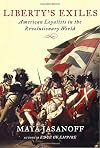
I'll just say right at the outset that Maya Jasanoff's Liberty's Exiles: American Loyalists in the Revolutionary World (Knopf, 2011) is going to be in my list of 2011's best books. As I read it, I couldn't help but make the comparison to Pauline Maier's Ratification: like Maier, Jasanoff has accomplished something remarkable, writing a concise and readable narrative account of a complex process that had been written about in small pieces before but never pulled together in a comprehensive show more way.
Jasanoff's subject is the loyalist diaspora, the emigration of some 60,000 free people (and another 15,000 slaves "exported" by their masters) from the rebellious American colonies during and after the American Revolution. By focusing on the entire spectrum of loyalist destinations, and by using specific individuals and families as case studies to frame the narrative, Jasanoff is able to tell the loyalists' stories in a way that no prior work has done, and no future work is likely to do nearly as well.
One of the most salient points from Liberty's Exiles is the heterogeneity of the loyalists' views: as Jasanoff writes, "They agreed on one thing: they upheld the authority of the king--at least as long as the king did his part by them in turn. ... [M]onarchism would be about the only principle binding together a disparate population of American refugees" (p. 199). Or, put another way, "A commitment to 'British rights' could be held with equal sincerity by people with otherwise divergent views of what those rights actually were" (p. 199). When certain loyalists came to feel that their rights as British citizens were being violated, they responded, often in ways that bear a striking resemblance to their patriot counterparts in the years leading up to the Revolution.
Peopling her tale with a cast of characters from across the loyalist spectrum, Jasanoff is able to put a human face on the diaspora. There are some familiar names, like Anglican minister Jacob Bailey of Maine, a Harvard classmate of John Adams' whose parishioners forced him from the pulpit and into exile in Nova Scotia, and Elizabeth Lichstenstein Johnston, whose peregrinations back and forth across the Atlantic in search of a happy and safe harbor for herself and her family make for heartbreaking reading. Then there's the large Robinson family of New York, members of which end up at all corners of the empire, as well as free black George Liele and escaped slave David George, whose travels lead them in very different directions.
Jasanoff examines loyalist migrations not just to Britain and Canada, but also to East Florida (from which residents were forced to leave again after the Treaty of Paris), the Bahamas (where, I was fascinated to learn, Lord Dunmore served as governor), Jamaica, and Sierra Leone. By including in her story the whole range of loyalists: white, black (free and slave), even Indian, the account becomes much richer and more interesting than most previous treatments.
In her conclusions, Jasanoff takes a wide-angle view of the diaspora, noting that while a shared folklore or language of lamentation about the departure from America never caught on among the loyalists (as there was with the exile of the Acadians, for example), and that by 1815 or so most had been absorbed into the empire in some way (or had returned to what was the United States), many had experienced severe hardship, oppressive authority, and recurring displacements. Just as there was no uniform brand of loyalism, there was no uniform experience among loyalist emigrants; some landed on their feet, while others struggled for years.
Liberty's Exiles is enhanced by Jasanoff's deep research, drawing on a wide variety of archival sources (including detailed records of slaves exported from the colonies and the later records of the Sierra Leone settlements, the claims filed by loyalists in London for compensation, and tax-exemption documents required for loyalists in Jamaica). An appendix gives new and useful quantitative information on the numbers of loyalist departures, while the notes and bibliography take up more than sixty pages; I've already found some great sources there for use with a few of my own projects.
While I think that in very few cases Jasanoff takes the loyalists' protestations of ill-treatment in the years leading up to the Revolution without the necessary grain of salt, overall this is as good a book on the loyalists and their lives as we're ever likely to see.
http://philobiblos.blogspot.com/2011/05/book-review-libertys-exiles.html show less
Jasanoff's subject is the loyalist diaspora, the emigration of some 60,000 free people (and another 15,000 slaves "exported" by their masters) from the rebellious American colonies during and after the American Revolution. By focusing on the entire spectrum of loyalist destinations, and by using specific individuals and families as case studies to frame the narrative, Jasanoff is able to tell the loyalists' stories in a way that no prior work has done, and no future work is likely to do nearly as well.
One of the most salient points from Liberty's Exiles is the heterogeneity of the loyalists' views: as Jasanoff writes, "They agreed on one thing: they upheld the authority of the king--at least as long as the king did his part by them in turn. ... [M]onarchism would be about the only principle binding together a disparate population of American refugees" (p. 199). Or, put another way, "A commitment to 'British rights' could be held with equal sincerity by people with otherwise divergent views of what those rights actually were" (p. 199). When certain loyalists came to feel that their rights as British citizens were being violated, they responded, often in ways that bear a striking resemblance to their patriot counterparts in the years leading up to the Revolution.
Peopling her tale with a cast of characters from across the loyalist spectrum, Jasanoff is able to put a human face on the diaspora. There are some familiar names, like Anglican minister Jacob Bailey of Maine, a Harvard classmate of John Adams' whose parishioners forced him from the pulpit and into exile in Nova Scotia, and Elizabeth Lichstenstein Johnston, whose peregrinations back and forth across the Atlantic in search of a happy and safe harbor for herself and her family make for heartbreaking reading. Then there's the large Robinson family of New York, members of which end up at all corners of the empire, as well as free black George Liele and escaped slave David George, whose travels lead them in very different directions.
Jasanoff examines loyalist migrations not just to Britain and Canada, but also to East Florida (from which residents were forced to leave again after the Treaty of Paris), the Bahamas (where, I was fascinated to learn, Lord Dunmore served as governor), Jamaica, and Sierra Leone. By including in her story the whole range of loyalists: white, black (free and slave), even Indian, the account becomes much richer and more interesting than most previous treatments.
In her conclusions, Jasanoff takes a wide-angle view of the diaspora, noting that while a shared folklore or language of lamentation about the departure from America never caught on among the loyalists (as there was with the exile of the Acadians, for example), and that by 1815 or so most had been absorbed into the empire in some way (or had returned to what was the United States), many had experienced severe hardship, oppressive authority, and recurring displacements. Just as there was no uniform brand of loyalism, there was no uniform experience among loyalist emigrants; some landed on their feet, while others struggled for years.
Liberty's Exiles is enhanced by Jasanoff's deep research, drawing on a wide variety of archival sources (including detailed records of slaves exported from the colonies and the later records of the Sierra Leone settlements, the claims filed by loyalists in London for compensation, and tax-exemption documents required for loyalists in Jamaica). An appendix gives new and useful quantitative information on the numbers of loyalist departures, while the notes and bibliography take up more than sixty pages; I've already found some great sources there for use with a few of my own projects.
While I think that in very few cases Jasanoff takes the loyalists' protestations of ill-treatment in the years leading up to the Revolution without the necessary grain of salt, overall this is as good a book on the loyalists and their lives as we're ever likely to see.
http://philobiblos.blogspot.com/2011/05/book-review-libertys-exiles.html show less
While I'm not sure that I buy the author's notion of a "spirit of 1783," which posits a Second British Empire run on centralized hierarchy, paternalism for its subjects, and global reach, it is interesting to read a 360-degree examination of the potential fates of those people who made their bet on London and lost. Jasanoff's most important point is that she views the American War as a civil war, having less to do with rights and more to do with divergent views on empire and rolls from show more there. You can also view the period 1783-1814 as a period of limbo before the Anglo-American commercial and social relationship crystallizes. Also, while I don't know about anyone else, Sir Guy Carleton blandly explaining to an incredulous General Washington that, yes, those Free Blacks in New York who placed their trust in him are going to sail away with the rest of the British evacuation always brings a smirk to my face; while I consider myself a patriotic American, I also believe that those espousing the "Spirit of 1776" were protesting a bit too loudly. show less
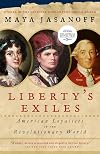
I had never really given much thought to the Loyalists during the American Revolution until this book. However, the number of people who went into exile surprised me - the author estimates around 60,000 - and the trials the various groups faced astounded me. One theme running through the book is the fate of black slaves during the revolution and exile. The slaves of patriots were offered their freedom in some cases by the British authorities and many took this opportunity to claim their show more freedom. However, these former slaves were at a clear disadvantage in subsequent treaties, claiming compensation and land in other British provinces, and in general treatment. While the trials of the former slaves are generally more severe, they were part of a larger exile that spanned the British Empire, with former American colonists finding new homes in Canada, the Caribbean, the west coast of Africa, and India. Fascinating reading! show less
Lists
Awards


You May Also Like


Associated Authors
Statistics
- Works
- 6
- Members
- 1,204
- Popularity
- #21,329
- Rating
- 4.0
- Reviews
- 18
- ISBNs
- 29
- Languages
- 6
- Favorited
- 2
