
Jakob Wassermann (1873–1934)
Author of Caspar Hauser
About the Author
Image credit: Image © ÖNB/Wien
Series
Works by Jakob Wassermann
Adam Urbas 3 copies
einfach klassisch: Das Gold von Caxamalca: Schülerheft: Schülerheft. einfach klassisch (2008) 3 copies
Der Wendekreis 3 copies
Christian Wahnschaffe. Bd 01 2 copies
Saken Maurizius 1 2 copies
Saken Maurizius 2 2 copies
Das Gold von Caxamalca : Erzählungen 2 copies
Olivia 2 copies
World's Ends 2 copies
Meistererzählungen 2 copies
Golovin y El crimen angélico 2 copies
Renate 2 copies
Laudin y los suyos. Golovin. El crimen angélico. — Author — 2 copies
Die Kunst der Erzählung — Author — 2 copies
Christian Wahnschaffe 3 2 copies
Años perdidos, Los 2 copies
O Processo Maurizius 2 copies
Christian Wahnschaffe. Bd 02 2 copies
Selbstbetrachtungen 1 copy
פרשת מאוריציוס חלק ב 1 copy
Christiaan Wahnschaffe 1 copy
Die Masken Erwin Reiners 1 copy
Melusina. Bula Matari. 1 copy
Sturreganz 1 copy
Geronimo de Aguilar 1 copy
Witberg 1 copy
En los dedos de una sílfide 1 copy
Der unbekannte Gast 1 copy
Suudlemata suu 1 copy
Die Geschichte des Grafen Erdmann Promnitz : / Jakob Wassermann. Radierungen von Robert Genin 1 copy
Imaginäre Brücken 1 copy
Případ Mauricius 1 copy
Caspar Hauser, avagy 1 copy
Kašpar Hauser aneb Cizí hoch 1 copy
Renate Fuchs 1 copy
Associated Works
Velhagen und Klasings Almanach 1909 — Contributor — 1 copy
Tagged
Common Knowledge
- Birthdate
- 1873-03-10
- Date of death
- 1934-01-01
- Gender
- male
- Occupations
- writer
theater critic
autobiographer - Organizations
- Young Vienna
- Relationships
- Karlweis, Marta (spouse)
Jacobowski, Ludwig (colleague)
Karlweis, Carl (father-in-law) - Short biography
- Jakob Wassermann was born to a Jewish family in Fürth, Bavaria, Germany. His father was a shopkeeper, He had an unhappy childhood after his mother died when he was young. He began to write at an early age and published pieces in small newspapers. After completing his military service, he stayed in southern Germany and worked for the satirical weekly Simplicissmus in Munich. In 1896, he published his first novel, Melusine. He moved to Vienna, Austria, where he became a theater critic. At this time, he got to know other writers in the Young Vienna circle such as Rainer Maria Rilke, Hugo von Hofmannsthal, and Thomas Mann. He first successful novel was Die Juden von Zirndorf (1897, English translation The Dark Pilgrimage), and he increased his reputation with Caspar Hauser (1908). His two-volume epic about European civilization on the brink of war, Christian Wahnschaffe (The World's Illusion, 1919), brought him international fame. His novel Der Fall Maurizius (The Maurizius Case, 1928), which introduced the detective Etzel Andergast, became the first volume of a popular trilogy that included Etzel Andergast (1931) and Joseph Kerkhovens dritte Existenz (Joseph Kerkhoven's Third Existence, 1934). Wassermann published an autobiography, Mein Weg als Deutscher und Jude (My Life as a German and a Jew) in 1921. His books were banned and burned by the Nazis in the 1930s.
- Nationality
- Austria
- Birthplace
- Fürth, Bayern, Deutschland
- Places of residence
- Furth, Bavaria, Germany (birth)
Altaussee, Austria (death) - Place of death
- Altaussee, Steiermark, Österreich
- Burial location
- Friedhof Altaussee, Österreich
Members
Reviews
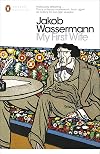
Kafka’s conception of bureaucracy is made manifest in the figure of Ganna, a pedantic, delusional woman who is aroused by the smell of ink and the dotted lines found on legal documents. Wonderful character study of a man who is totally incapable of escaping the sphere of a woman lost, perpetually enamoured (or perhaps more accurately myopically intrigued) by a woman whose inner fire and clawing tenacity is inextinguishable.
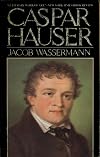
This novel is based on the story of the enigmatic story of Caspar Hauser, a mysterious young man who appeared on the streets of Nuremburg one day in 1828. He had apparently been kept imprisoned in a small cell for as long as he could remember. For a few years he was a national sensation, with his other worldly attitudes and snippets from his horrible childhood. There was speculation that he might be an unwanted aristocratic heir, though others thought he was a charlatan. He was murdered by show more an unknown person in December 1833. While the mystery of Caspar Hauser is fairly well known and intriguing, I thought this novel was overlong and the machinations of the various guardians of the young man were at times tedious and somewhat confusing. Though much of the novel is told from Caspar's point of view, his origins and motives are studiedly ambiguous and we are not clear what is real and what is his genuine or self-induced fantasy. show less

I usually love everything I read from NYRB Classics, but this one was a chore to finish with few rewards. In this book, a disguised memoir (and actually an excerpt from a trilogy), the author, against his better judgment, marries an unstable woman and pays for it for the rest of his life (literally).
Unfortunately, Wasserman shows very little awareness of his role in his wife's behavior, and just as little interest in considering her motivations. Instead, we get an endless litany of show more injustices and indignities inflicted on him and no resolution. It's a relief when the book arbitrarily comes to an end. show less
Unfortunately, Wasserman shows very little awareness of his role in his wife's behavior, and just as little interest in considering her motivations. Instead, we get an endless litany of show more injustices and indignities inflicted on him and no resolution. It's a relief when the book arbitrarily comes to an end. show less

In Christian Wahnschaffe (1919; The World’s Illusion), one of his most popular works, a millionaire’s son, after experiencing all that high life, love, travel, and art have to offer, dedicates himself to the service of humanity.
Lists
Awards


You May Also Like


Associated Authors
Statistics
- Works
- 120
- Also by
- 4
- Members
- 1,214
- Popularity
- #21,144
- Rating
- 3.6
- Reviews
- 20
- ISBNs
- 204
- Languages
- 12
- Favorited
- 1