

Franz Werfel (1890–1945)
Author of The Song of Bernadette
About the Author
Born in Prague of Jewish parents, Werfel served in World War I, then lived and wrote in Vienna until driven out by the Nazi occupation of Austria. And the Bridge Was Love: Memories of a Lifetime, by his wife, Alma Werfel, in collaboration with E. B. Ashton, is a deeply personal autobiography of a show more remarkable life in Vienna by the woman who was also married to the composer-conductor Mahler and the architect Gropius. Werfel escaped to the United States after the fall of France in 1940, where he won international recognition for his fiction. The most popular of Werfel's works was the novel The Song of Bernadette (1942), recounting the miraculous vision of the Virgin Mary granted to the young girl who founded Lourdes. Werfel said he wrote the story in honor of his "miraculous" escape from the Nazis but neither affirmed nor denied the miracle at Lourdes. Werfel also wrote lyrical poetry and drama. His comedy Jacobowsky and the Colonel (1944) was successfully produced in New York in 1944. In 1967 the Hamburg Opera presented Giselher Klebe's operatic version of the play at the Metropolitan Opera House in New York. (Bowker Author Biography) show less
Image credit: Image © ÖNB/Wien
Series
Works by Franz Werfel
Spiegelmensch : magische Trilogie 8 copies
Die Troerinnen des Euripides 5 copies
A np̀olyi testvřek 4 copies
Schweiger 3 copies
Beschwörungen 3 copies
Eternal road: a drama in four parts 2 copies
Realismus und Innerlichkeit 2 copies
Franz Werfel: Gesamtausgabe - Sämtliche Romane und Erzählungen: Neue überarbeitete Auflage (German Edition) (2020) 2 copies
Arien 2 copies
Gedichte 2 copies
Franz Werfel. Gesammelte Werke in Einzelbänden - Taschenbuch-Ausgabe: Die tanzenden Derwische (1989) 2 copies
Einander : Oden, Lieder, Gestalten 2 copies
Wir sind : neue Gedichte 2 copies
Gedichte aus dreissig Jahren 1 copy
Poems 1 copy
Esther, Kaiserin von Persien 1 copy
La Canción de Bernadette 1 copy
El Cielo A Buen Precio 1 copy
HThe Isong of Bernadette 1 copy
El cantico de Bernadette 1 copy
HI I40 giorni del Mussa Dagh 1 copy
Der Attentäter — Contributor — 1 copy
Poemas 1 copy
1990 1 copy
Der Gerichtstag 1 copy
Die Macht des Schicksals 1 copy
Casa de duelo. Relatos 1 copy
Werfel Franz 1 copy
2006 1 copy
Spielhof : eine Phantasie 1 copy
Hearken unto the voice / 40 days of Musa Dagh — Author — 1 copy
Der Besuch aus dem Elysium 1 copy
Associated Works
The Jewish caravan : great stories of twenty-five centuries (1965) — Composer, some editions — 140 copies
Menschheitsdämmerung : Ein Dokument des Expressionismus : mit Biographien und Bibliographien (1920) — Contributor, some editions — 101 copies, 2 reviews
Reader's Digest Condensed Books 1970 v03: Operation Sippacik / The Secret Woman / One Life / The Song of Bernadette / The Shattered Dream (1970) — Author — 35 copies
The Dedalus/Ariadne Book of Austrian Fantasy: The Meyrink Years 1890-1930 (1992) — Contributor — 28 copies
Selecciones Reader's Digest: (libros condensados) El Gran Robo del Tren. Un Hombre Contra un Crucero. La Canción de Bernadette. Habla la Tierra (1977) — Contributor — 6 copies
Transit : Oostenrijkse lyriek van de twintigste eeuw = Österreichische Lyrik des zwanzigsten Jahrhunderts. I: 1988 (1989) — Contributor — 3 copies
Halt auf freiem Felde : Eisenbahnabenteuer von Agatha Christie bis Tucholsky (1975) — Author — 2 copies
50 seltsame Geschichten — Contributor — 1 copy
Tagged
Common Knowledge
- Legal name
- Werfel, Franz Viktor
- Birthdate
- 1890-09-10
- Date of death
- 1945-08-26
- Gender
- male
- Occupations
- poet
playwright
novelist - Organizations
- Austro-Hungarian Army
Prague Circle - Awards and honors
- Academy Award for Writing Adapted Screenplay Nominee (1943)
American Academy of Arts and Letters (Foreign Honorary ∙ Literature ∙ 1943)
Austrian Cross of Honour for Science and Art, 1st class (1937)
Schiller Prize (1930)
Czechoslovak State Award (1927)
Grillparzer Prize (1926) - Relationships
- Mahler, Alma (wife)
Kornfeld, Paul (friend)
Kisch, Egon Erwin (colleague) - Nationality
- Austria (birth)
Czech - Birthplace
- Prague, Kingdom of Bohemia, Austro-Hungarian Empire
- Places of residence
- Prague, Austria-Hungary
Vienna, Austria
France
Los Angeles, California, USA
Leipzig, Germany - Place of death
- Beverly Hills, California, USA
- Burial location
- Zentralfriedhof, Vienna, Austria
Members
Reviews

There doesn't seem to be a specific name for that category of stories in which adult characters are confronted with the consequences of hateful things they did in adolescence, but there's a lot of that sort of thing about. Maybe writers are disproportionally drawn from the ranks of former school bullies with guilty consciences; more likely they are all former victims of bullying indulging in a bit of wishful thinking...
This is certainly one of those, as Werfel's subtitle confirms: on the show more afternoon before the 25-year reunion of the class of 1902, examining magistrate Dr Ernst Sebastian is made to realise that it could well have been his own selfish and irresponsible actions as a schoolboy that started his friend Adler on the path that led to him being arrested on suspicion of murdering a prostitute.
Needless to say, it isn't quite as simple as that, Werfel introduces a few ironic twists into the story, but what this is really about is the unravelling of the flimsy structure on which the self-satisfied, pompous Sebastian has built his life. Sebastian has got away with all his failings because he is from a rich, powerful, establishment family; Adler has been unable to realise his early promise because his borderline status as a poor, Jewish boy in a middle-class Catholic school makes him the automatic scapegoat for everything. show less
This is certainly one of those, as Werfel's subtitle confirms: on the show more afternoon before the 25-year reunion of the class of 1902, examining magistrate Dr Ernst Sebastian is made to realise that it could well have been his own selfish and irresponsible actions as a schoolboy that started his friend Adler on the path that led to him being arrested on suspicion of murdering a prostitute.
Needless to say, it isn't quite as simple as that, Werfel introduces a few ironic twists into the story, but what this is really about is the unravelling of the flimsy structure on which the self-satisfied, pompous Sebastian has built his life. Sebastian has got away with all his failings because he is from a rich, powerful, establishment family; Adler has been unable to realise his early promise because his borderline status as a poor, Jewish boy in a middle-class Catholic school makes him the automatic scapegoat for everything. show less
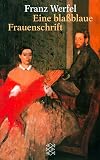
This novella was written in exile during the war, and it's a surprisingly delicate satirical view of the Austrian ruling classes in the years immediately before the Anschluss. Leonidas, son of an impoverished schoolmaster, is now a middle-aged senior civil servant with a villa in Hietzing and a beautiful wife from a patrician family, but still very conscious of the fact that he owes his membership of the élite to an improbable stroke of good luck (inheriting a suit of evening clothes from a show more student colleague who killed himself). When a letter addressed in a lady's hand in pale blue ink appears on the breakfast table one day in the autumn of 1936, he knows his past is about to catch up with him. And it does.
Obviously Werfel is showing off a bit, by taking what may well be the corniest of all possible plot-lines and turning it into something clever, charming and original. Despite the tenderness and finesse with which he handles poor old Leonidas, we can't fail to see the analogy between the political situation of Austria and Leonidas's cowardice and failure to grasp the slim chance of redemption he has been offered. You finish the book with a wry smile, but there is a shiver going down the back of your neck at the same time.
I couldn't help wondering how much of the description of Leonidas's relationship with his high-maintenance wife Amelie reflects the home-life of the Werfels, but I suspect that Alma must have been in a league of her own... show less
Obviously Werfel is showing off a bit, by taking what may well be the corniest of all possible plot-lines and turning it into something clever, charming and original. Despite the tenderness and finesse with which he handles poor old Leonidas, we can't fail to see the analogy between the political situation of Austria and Leonidas's cowardice and failure to grasp the slim chance of redemption he has been offered. You finish the book with a wry smile, but there is a shiver going down the back of your neck at the same time.
I couldn't help wondering how much of the description of Leonidas's relationship with his high-maintenance wife Amelie reflects the home-life of the Werfels, but I suspect that Alma must have been in a league of her own... show less
Le tre stelle si devono tutte alla scelta dell'argomento, in quanto se l'autore non avesse scelto di scrivere su una tematica delicata e sconosciuta come il genocidio armeno avrei dato ancora meno. Il tema appunto è veramente interessante, tra l'altro Werfel è un ebreo boemo che, dopo aver scritto questo libro, ebbe chiaro che le persecuzioni avrebbero investito anche gli ebrei europei e riuscì a salvarsi trasferendosi per tempo negli Usa. A scusante dell'autore faccio presente che il show more romanzo risale appunto al 1933, per cui alcuni difetti sono ovvi. L'ho trovato molto prolisso, lento all'inverosimile, con una quasi maniacalità di ricostruzione del contesto psicologico dei singoli personaggi, anche di quelli secondari, mentre da un romanzo storico con gesta guerresche io mi aspettavo un maggior movimento. In questo aspetto dell'approfondimento psicologico devo dire che è un romanzo veramente corale. Ma appunto per questo la storia principale si perde in mille rivoli, i capitoli sono lunghissimi, il punto di vista cambia continuamente. Inoltre, l'autore si pone come narratore onnisciente, ma con una presenza cupa, con un pessimismo cosmico, per così dire, e con il brutto vizio di preannunciare le sciagure future anche nei capitoli precedenti. Non che le descrizioni siano campate in aria, tutt'altro: magistrale la resa psicologica del popolo di cinquemila anime, costretto sulla montagna, e preda a volte di furie incontrollate che solo la figura venerata del sacerdote riesce a placare e mai del tutto. Mi ha poi particolarmente infastidito la parte "francese", cioè i personaggi della moglie e del figlio del protagonista, che si sono attirati tutta la mia antipatia. E se per certi aspetti la psicologia femminile è ben delineata, il ruolo della moglie lo trovo veramente insulso e contraddittorio. Il finale... beh, salvifico? Mica tanto... Insomma, dovessi rileggerlo non rifarei la fatica. Però devo dire che mi ha aperto una pagina di storia che non conoscevo bene e che di sicuro approfondirò. Consigliato solo a chi si interessa particolarmente del tema armeno. Come romanzo c'è di meglio. show less
The Forty Days of Musa Dagh by Franz Werfel, The Vikings Press (The Forty Days of Musa Dagh by Franz Werfel, The Vikings Press) by Franz Werfel
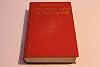
Upon my reading it as a teenager years ago, this novel held me spellbound; I had the same reaction upon this rereading, even with 800+ pages! This was my very first exposure to the fact of the Armenian Massacres of the 20th century. The story involves an Armenian, Gabriel Bagradian, who has returned to his family home in Syria from years of living in France, He is accompanied by his French wife, Juliette, and French-born son, Stephan. The devastating death marches of Armenians have begun. show more Gabriel leads the inhabitants of the seven villages in his area to Musa Dagh [Mount of Moses]; he is an Ottoman officer and has knowledge of military tactics. On Damyalik Plateau they set up a village under the leadership of some of the leading citizens. On the mountain, they for forty days carry out armed resistance against the Turks. Gabriel is their military commander and final word on other Council decisions lie with the Gregorian priest, Ter Haigasun. The book ends in a shattering climax. The last paragraph, and indeed the whole last chapter, left me breathless.
Translation was very readable, with excellent pacing. Not a word was wasted. Highly recommended show less
Translation was very readable, with excellent pacing. Not a word was wasted. Highly recommended show less
Lists
Awards


You May Also Like


Associated Authors
Statistics
- Works
- 111
- Also by
- 25
- Members
- 3,219
- Popularity
- #7,951
- Rating
- 3.9
- Reviews
- 46
- ISBNs
- 303
- Languages
- 18
- Favorited
- 6

