
Robert S. Wistrich (1945–2015)
Author of Hitler and the Holocaust
About the Author
Robert Wistrich is professor of modern Jewish history at Hebrew University of Jerusalem, visiting fellow at the Royal Institute of Advanced Studies in the Netherlands, and visiting professor of history at Brandeis and Harvard Universities. A regular contributor to the Times Literary Supplement, he show more is widely recognized as one of the world's foremost authorities on the history of anti-Semitism, and is the author of many books. (Publisher Provided) Robert Wistrich is professor of Modern Jewish History at the Hebrew University of Jerusalem, & visiting professor at Harvard University. A regular contributor to the "Times Literary Supplement", he is one of the world's foremost authorities on the history of anti-Semitism. He is the author of many books, among them "Antisemitism: The Longest Hatred". (Publisher Provided) Robert Solomon Wistrich (April 7, 1945 - May 19, 2015) was the Erich Neuberger Professor of European and Jewish history at the Hebrew University of Jerusalem, and the head of the University's Vidal Sassoon International Center for the Study of Antisemitism. According to Indiana University, Wistrich was "a leading scholar of the history of antisemitism." Wistrich was born in Lenger, in the Kazakh Soviet Socialist Republic on April 7, 1945. Wistrich received his Ph.D. from the University of London in 1974. Between 1974 and 1980, he was Director of Research at the Institute of Contemporary History and the Wiener Library. Between 1991 and 1995, Wistrich was appointed the first holder of the Chair of Jewish Studies at University College London, in addition to his position at the Hebrew University of Jerusalem.He was one of six scholars who sat on the International Catholic-Jewish Historical Commission from 1999 to 2001 to examine the wartime record of Pope Pius XII, with special reference to the Holocaust. From 2002, he was the director of the Vidal Sassoon International Center for the Study of Antisemitism, and edits its journal, Antisemitism International. Wistrich died of a heart attack on May 19, 2015 in Rome, Italy. (Bowker Author Biography) show less
Works by Robert S. Wistrich
The Jews of Vienna in the Age of Franz Joseph (Littman Library of Jewish Civilization) (1989) 31 copies
Socialism and the Jews: The Dilemmas of Assimilation in Germany and Austria-Hungary (Littman Library of Jewish Civilization) (1982) 5 copies
The Shaping of Israeli Identity: Myth, Memory and Trauma (Israeli History, Politics and Society) (1995) — Editor — 4 copies
Trotsky Fate of a Revolutionary 2 copies
The Shaping of Israeli Identity 2 copies
The myth of Zionist racism 1 copy
Tagged
Common Knowledge
- Canonical name
- Wistrich, Robert S.
- Legal name
- Wistrich, Robert Solomon
- Other names
- Ṿisṭrits, Roberṭ
Wîsṭrîṣ, Rôberṭ
Vistrih, Robert S. - Birthdate
- 1945-04-07
- Date of death
- 2015-05-19
- Gender
- male
- Education
- Stanford University
University of Cambridge (Queens College, BA ∙ MA)
University of London (PhD) - Occupations
- historian
scholar of anti-Semitism
university professor
scriptwriter - Organizations
- Hebrew University
Institute of Contemporary History, London
Wiener Holocaust Library - Awards and honors
- British Academy (Research Fellow)
- Short biography
- Robert Wistrich was born to a Polish Jewish family in Lenger, Kazakhstan (then the Kazakh Soviet Socialist Republic). His parents Sabina (Silbiger) and Jakob Wistreich, a doctor, had fled east in 1939 to escape the German invasion in World War II; however, they found Soviet rule to be little better. In 1942, Wistrich's father was imprisoned twice by the Soviet secret police. After the war ended, Robert and his parents were sent back to Poland. They soon fled to France and then to the UK. At age 17, Wistrich won a scholarship to study history at Cambridge University. He graduated in 1966 with a BA (Hons), which was raised to a MA degree in 1969. At Cambridge, he founded and co-edited Circuit, a literary and arts magazine. He also studied at Stanford University in California and for 16 months in Israel. He received his Ph.D. from the University of London in 1974. That year, he was named Director of Research at the Institute of Contemporary History and the Wiener Library for the Study of the Holocaust and Genocide in London, at that time the largest research library of its kind in Europe. In 1982, he received tenure at the Hebrew University of Jerusalem, where he held the Neuberger chair for modern European history. He was also appointed a Research Fellow at the British Academy. In his career, Prof. Wistrich published 29 books, including Socialism and the Jews (1985), which won the joint award of the Vidal Sassoon International Center for the Study of Antisemitism at Hebrew University and the American Jewish Committee. His 1989 book The Jews of Vienna in the Age of Franz Joseph received the Austrian State Prize in History. His monumental study Antisemitism: The Longest Hatred (1991) won the Jewish Quarterly-Wingate Literary Prize in the UK and was the basis for "The Longest Hatred," a three-hour British-American TV documentary mini-series shown on public television in the USA. In 1993, he also scripted Good Morning, Mr. Hitler, an award-winning documentary commissioned by the UK's Channel 4 on Nazi art. In 1991, Prof. Wistrich became the first holder of the Chair of Jewish Studies at University College London. He also wrote dramas for BBC Radio and Kol Israel on the lives of historical figures ranging from Leon Trotsky to Theodor Herzl. In 2003, he acted as chief historical consultant for the BBC documentary, "Blaming the Jews," and in 2006 he was the academic advisor for the film Obsession: Radical Islam's War Against the West.
- Nationality
- Israel
- Birthplace
- Lenger, Kazakhstan
- Places of residence
- Kazakhstan
Poland
London, England, UK
Israel - Place of death
- Rome, Italie
- Burial location
- Cimetière du mont des Répits , Israël
- Associated Place (for map)
- London, England, UK
Members
Reviews

This work completely ignores a very large anti-Zionist contingent – Jewish anti-Zionists. This reader wonders if Jewish anti-Zionists were left out of this book so as to paint as clear a connection as possible between anti-Zionism and anti-Semitism. Yet, if that is what happened, it is nothing short of manipulation and cannot be seen as truth-serving historical writing. Indeed, leaving out any contrary or counter arguments (that are not radical left or right wing in nature) dangerously show more presents a black and white portrait of history where anti-Zionists must not only be wrong, but are bad, because they are anti-Semites. This links a dislike for a political solution (Zionism) with a dislike of a people, and that is unfair. show less
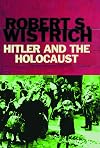
In Hitler and the Holocaust, part of the Modern Library Chronicles series, Robert S. Wistrich is less concerned with detailing the "what" and "how" of this century's most infamous genocide than he is in answering the seemingly unanswerable: "Why?"
World War II, Wistrich posits, was not only a German attempt to obtain territorial hegemony but simultaneously (and perhaps more importantly, in Hitler's eyes) a crusade against the "mythical Jewish enemy," those people he felt were the source of show more "all evils"--internationalism, pacifism, democracy, Marxism, and Christianity among them. Jews were nonpeople--vermin, bacteria, a contagion--and therefore "unworthy of life." This ideology was most immediately a reaction to Germany's defeat in World War I and the economic chaos and national humiliation that followed, but Wistrich suggests, this "apocalyptic theology" was only the ghastly tip of an anti-Jewish iceberg that had floated on European seas for the best part of two millennia. The Nazi agenda was aided and abetted, Wistrich goes on, as much by the indifference toward and abandonment of the Jews by most European Christian religious bodies (both Roman Catholic and Protestant) and American and British political exigencies as it was by modern technology.
This is a grave, dense book, one almost entirely unrelieved by anecdote. It is, as well, rigorous, adamant, and sure to generate controversy. Though it catalogues many individual trees, many of them difficult to behold, its primary value is to look upon the entire Holocaust forest and to describe that disturbing, grotesque panorama in eschatological terms. --H. O'Billovitch
From Publishers Weekly
Wistrich, professor of modern Jewish history at Hebrew University in Jerusalem, has masterfully condensed four decades of Holocaust research into an accessible and informative book that will benefit specialists and lay readers alike. This new addition to the Modern Library's Chronicles series of short histories is organized thematically, exploring 2,000 years of anti-Semitism, the context and events that yielded the Third Reich and what differentiates the Holocaust from other 20th-century genocides. As depicted here, the few rays of light offered by the noble actions of Denmark, Italy and Bulgaria are snuffed out by the Protestant and Catholic churches' inactivity, the shameful behavior of Britain and the U.S., and the atrocious actions of Germans and other Europeans, particularly the German allies. Wistrich (The Jews of Vienna in the Age of Franz Joseph) continually refers and responds to other Holocaust studies; of particular interest is the controversy concerning "ordinary men" and "ordinary Germans" that erupted with Daniel Jonah Goldhagen and Christopher Browning's studies. Wistrich draws a connection between the infamous Nazi euthanasia program and later developments, and briefly discusses the debate between "functionalists" (those who believe the Holocaust to be an outcome of the war) and "intentionalists" (those who believe Hitler always intended to exterminate the Jews). The general reader will be interested in Wistrich's detailed description of the decision to implement the "Final Solution." The most provocative chapter, though, is surely the last, on "Modernity and the Holocaust." Most commentators (secular and religious) have argued that the Holocaust represents the complete antithesis of Western civilization, but some scholars interpret it as the logical, brutal outcome of Western modernity's bureaucratic, technocratic and rationalist impulse. Wistrich's balanced, nuanced discussion is illuminating. show less
World War II, Wistrich posits, was not only a German attempt to obtain territorial hegemony but simultaneously (and perhaps more importantly, in Hitler's eyes) a crusade against the "mythical Jewish enemy," those people he felt were the source of show more "all evils"--internationalism, pacifism, democracy, Marxism, and Christianity among them. Jews were nonpeople--vermin, bacteria, a contagion--and therefore "unworthy of life." This ideology was most immediately a reaction to Germany's defeat in World War I and the economic chaos and national humiliation that followed, but Wistrich suggests, this "apocalyptic theology" was only the ghastly tip of an anti-Jewish iceberg that had floated on European seas for the best part of two millennia. The Nazi agenda was aided and abetted, Wistrich goes on, as much by the indifference toward and abandonment of the Jews by most European Christian religious bodies (both Roman Catholic and Protestant) and American and British political exigencies as it was by modern technology.
This is a grave, dense book, one almost entirely unrelieved by anecdote. It is, as well, rigorous, adamant, and sure to generate controversy. Though it catalogues many individual trees, many of them difficult to behold, its primary value is to look upon the entire Holocaust forest and to describe that disturbing, grotesque panorama in eschatological terms. --H. O'Billovitch
From Publishers Weekly
Wistrich, professor of modern Jewish history at Hebrew University in Jerusalem, has masterfully condensed four decades of Holocaust research into an accessible and informative book that will benefit specialists and lay readers alike. This new addition to the Modern Library's Chronicles series of short histories is organized thematically, exploring 2,000 years of anti-Semitism, the context and events that yielded the Third Reich and what differentiates the Holocaust from other 20th-century genocides. As depicted here, the few rays of light offered by the noble actions of Denmark, Italy and Bulgaria are snuffed out by the Protestant and Catholic churches' inactivity, the shameful behavior of Britain and the U.S., and the atrocious actions of Germans and other Europeans, particularly the German allies. Wistrich (The Jews of Vienna in the Age of Franz Joseph) continually refers and responds to other Holocaust studies; of particular interest is the controversy concerning "ordinary men" and "ordinary Germans" that erupted with Daniel Jonah Goldhagen and Christopher Browning's studies. Wistrich draws a connection between the infamous Nazi euthanasia program and later developments, and briefly discusses the debate between "functionalists" (those who believe the Holocaust to be an outcome of the war) and "intentionalists" (those who believe Hitler always intended to exterminate the Jews). The general reader will be interested in Wistrich's detailed description of the decision to implement the "Final Solution." The most provocative chapter, though, is surely the last, on "Modernity and the Holocaust." Most commentators (secular and religious) have argued that the Holocaust represents the complete antithesis of Western civilization, but some scholars interpret it as the logical, brutal outcome of Western modernity's bureaucratic, technocratic and rationalist impulse. Wistrich's balanced, nuanced discussion is illuminating. show less
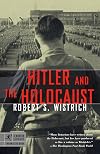
While well written, this book suffered from the extremes - in some cases going into so much detail that it became confusing to follow and then immediately jumping into vast generalizations making assumptions about knowledge the reader may not already have. Finally gave up with only about 50 pages to go.

No other prejudice has displayed such intensity and historic continuity, nor resulted in such devastating consequences, as anti-semitism. This book provides analysis of both the historical background of anti-semitism and its contemporary manifestations in Europe, the USA and the Middle East.
You May Also Like


Associated Authors
Statistics
- Works
- 36
- Members
- 904
- Popularity
- #28,379
- Rating
- 3.5
- Reviews
- 8
- ISBNs
- 90
- Languages
- 5


