
Jennie Shortridge
Author of Love Water Memory
About the Author
Image credit: Photo by MaryLynn Gillaspie
Works by Jennie Shortridge
Tagged
Common Knowledge
- Gender
- female
- Occupations
- novelist
musician - Birthplace
- Grand Forks, North Dakota, USA
- Places of residence
- Seattle, Washington, USA
Maryland, USA
Colorado, USA - Associated Place (for map)
- USA
Members
Reviews
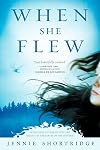
In 2004, a Vietnam vet and his 12-year-old daughter were discovered living in Portland Oregon's Forest Park. The man and girl had lived in the park for four years. According to police, they appeared clean, well fed and healthy, and the girl was well-spoken beyond her years. A police officer found the man a job and a place for the two to live on a friend's horse farm in Yamhill County.
Shortridge adapted the facts of this actual case to construct a very likeable story about Ray Wiggs (an Iraqi show more vet with Post Traumatic Stress Disorder), his daughter Lindy, and a female police officer who helped find them, thirty-eight-year-old single mom Jess Villereal.
The chapters alternate between the voices of Jess and of Lindy. Jess feels like she failed as a mother to her daughter Nina, who now is also a single mother. Nina still harbors resentments against her mother: for the divorce, for Jess’s demanding career, and for a lifetime of misunderstandings and slights. So the two are estranged, and it hurts Jess deeply. Thus Jess feels drawn to Lindy, almost as if she has gotten another chance to “do it right.”
Police procedure dictates that Ray be taken to a shelter and Lindy to social services for foster care placement; the two would be separated and there would be no guarantee Lindy would end up in a good situation. Jess is determined to help Lindy and Ray stay together, even though this would contravene her duties as a police officer.
Lindy has to navigate between her own needs and those of her dad. He has always taken the best care of her, and when he has episodes of PTSD, she wants to reciprocate for the care-giving she has received. If they are separated, there is no telling what would happen to Ray.
The story of the relationships among Jess, Nina, Jess’s mother, and Lindy interweave in the resolution of the struggle. The author reveals in an Afterward that the title “When She Flew” refers to the fact that “each of the female characters in this story tries out her wings – tries something different from usual – and each experiences a metamorphosis by doing so.”
Evaluation: I was very impressed with this book. The plot just had soap opera written all over it, yet the author did a great job in eschewing bathos and constructing a good story. The characters seem very realistic: likeable, yet human with moods and foibles and uncertainty and insecurity. Jess’s musing on her shortcomings as a parent will have most adults nodding in recognition. But this is not a book with a negative tone; on the contrary, it’s very upbeat, optimistic, and affirming. Overall, it is a very engaging novel. show less
Shortridge adapted the facts of this actual case to construct a very likeable story about Ray Wiggs (an Iraqi show more vet with Post Traumatic Stress Disorder), his daughter Lindy, and a female police officer who helped find them, thirty-eight-year-old single mom Jess Villereal.
The chapters alternate between the voices of Jess and of Lindy. Jess feels like she failed as a mother to her daughter Nina, who now is also a single mother. Nina still harbors resentments against her mother: for the divorce, for Jess’s demanding career, and for a lifetime of misunderstandings and slights. So the two are estranged, and it hurts Jess deeply. Thus Jess feels drawn to Lindy, almost as if she has gotten another chance to “do it right.”
Police procedure dictates that Ray be taken to a shelter and Lindy to social services for foster care placement; the two would be separated and there would be no guarantee Lindy would end up in a good situation. Jess is determined to help Lindy and Ray stay together, even though this would contravene her duties as a police officer.
Lindy has to navigate between her own needs and those of her dad. He has always taken the best care of her, and when he has episodes of PTSD, she wants to reciprocate for the care-giving she has received. If they are separated, there is no telling what would happen to Ray.
The story of the relationships among Jess, Nina, Jess’s mother, and Lindy interweave in the resolution of the struggle. The author reveals in an Afterward that the title “When She Flew” refers to the fact that “each of the female characters in this story tries out her wings – tries something different from usual – and each experiences a metamorphosis by doing so.”
Evaluation: I was very impressed with this book. The plot just had soap opera written all over it, yet the author did a great job in eschewing bathos and constructing a good story. The characters seem very realistic: likeable, yet human with moods and foibles and uncertainty and insecurity. Jess’s musing on her shortcomings as a parent will have most adults nodding in recognition. But this is not a book with a negative tone; on the contrary, it’s very upbeat, optimistic, and affirming. Overall, it is a very engaging novel. show less

Jennie Shortridge writes Women's Fiction with a bit of an edge. She often features characters who are slightly down on their luck, or who make spectacularly bad choices. When I realized that Love Water Memory utilized an amnesia plotline, I feared that she had jumped the shark. Not another "bump on the head turns a bitchy woman into a better person" story, I grumbled.
But fortunately Love Water Memory did not disappoint. True, amnesiac Lucie learns that in her former life she was a driven, show more shopaholic fashionista who didn't give her neighbors or her fiance Grady's family the time of day. But as she digs into her past, aided in part by her irascible Aunt Helen, the reader realizes that Lucie is dealing with something a lot more traumatic and painful than a simple personality adjustment.
Also, Lucie isn't the only character on a journey. Grady, whose overbearing mother and sisters have both loved and tormented him since his father's death many years ago, has to come to terms with both the new Lucie and the old, prickly Lucie whom he inexplicably loved. Like Lucie, he also has a past tragedy that in many ways he has never left behind. Even elderly Aunt Helen has some epiphanies about her actions and the ways she unintentionally contributed to Lucie's problems.
Lucie and Grady's relationship is engaging and tender, albeit occasionally frustrating, with several instances where they make assumptions about each other that could have been allayed with a little bit of communication. But it's easy to root for the couple, who obviously were meant for each other deep down, even though their relationship was doomed before Lucie's memory loss.
It has been three years since Jennie Shortridge's last release and I was overjoyed to see her back in print. I hope her next book won't take as long to reach my eager hands. show less
But fortunately Love Water Memory did not disappoint. True, amnesiac Lucie learns that in her former life she was a driven, show more shopaholic fashionista who didn't give her neighbors or her fiance Grady's family the time of day. But as she digs into her past, aided in part by her irascible Aunt Helen, the reader realizes that Lucie is dealing with something a lot more traumatic and painful than a simple personality adjustment.
Also, Lucie isn't the only character on a journey. Grady, whose overbearing mother and sisters have both loved and tormented him since his father's death many years ago, has to come to terms with both the new Lucie and the old, prickly Lucie whom he inexplicably loved. Like Lucie, he also has a past tragedy that in many ways he has never left behind. Even elderly Aunt Helen has some epiphanies about her actions and the ways she unintentionally contributed to Lucie's problems.
Lucie and Grady's relationship is engaging and tender, albeit occasionally frustrating, with several instances where they make assumptions about each other that could have been allayed with a little bit of communication. But it's easy to root for the couple, who obviously were meant for each other deep down, even though their relationship was doomed before Lucie's memory loss.
It has been three years since Jennie Shortridge's last release and I was overjoyed to see her back in print. I hope her next book won't take as long to reach my eager hands. show less
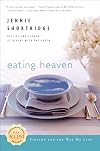
I absolutely loved this novel. Jennie Shortridge writes a gem of a book filled with a perfectly paced plot that seamlessly slides between Eleanor's present difficulties and ties them to past memories. The plot continually deepens the reader's understanding of Eleanor's character and actions. At the heart of the novel is a woman's journey to understand a healthy relationship with food in a society where butter and sugar are evil and feelings of guilt are tied to every forkful of spice cake. A show more beautiful book that reminds us to live everyday as if it is our last. show less
What our ancestors would have considered minimally acceptable living conditions greatly differs from what would be considered acceptable today. Houses are not a recent invention, but even in the early 1900s people in the United States lived in sod homes as the America expanded West. Those same ancestors survived and thrived, leading us to where we are today. Regardless, choosing to live in the outdoors on property you don't own is now against the law. If you do so with your minor child, you show more run the risk of having your family broken up by Social Services and being charged with neglect. Raymond Wiggs discovers just after bird watchers tip off the police after spotting his daughter Melinda alone after she wandered off too far entranced by a beautiful blue heron. After locating the two along with several of her fellow police officers from Columbia, Oregon, Jess Villareal questions whether the state is capable of determining what is best for this family. She questions whether she can actively participate in taking Lindy away from Ray - even for a short time. As divorced mother estranged from her only daughter and grandson, her career in the police force is the only thing that makes her feel whole. Is Jess willing to risk even that to ensure that this small, peculiar family remains together?
http://literatehousewife.com/2009/12/218-when-she-flew-book-tour-and-giveaway/
Birds play a prominent role in this novel. The title evokes flight and Lindy is fascinated by them, devouring all that she can about the birds native to the Pacific Northwest. It is not surprising that from the very beginning of this novel, which opens with Lindy's report on barn owls, I was reminded of the following verse from the Gospel of Matthew:
Look at the birds of the air, that they do not sow, nor reap nor gather into barns, and yet your heavenly Father feeds them. Are you not worth much more than they? ~ Matthew 6:26
While I might not want to live in a forest, many birds do and they are just fine. Ray and Lindy had made peace with nature and lived there happily for many years before they were discovered. Given that it has been done since the beginning of time, why couldn't - and why shouldn't - someone with the proper knowledge of the outdoors live in a well-constructed tree house? If that person is a loving parent who makes his child's well-being and education a priority, why shouldn't that person be left alone to raise his family as he sees fit? Yesterday's luxuries are today's requirements it seems. In another 100 years, would society find our homes and our parenting neglectful? Has society lost sight of what is truly important to sustain life? There isn't an easy answer to these questions, which are sure to spark some interesting and lively conversations.
Until agreeing to host this TLC Book Tour, I had never read any of Jennie Shortridge's fiction. I am so thrilled that I took a chance on her and on When She Flew. I found it to be thought-provoking, fast-paced, and fun to read. The plot never suffered as we learned more about Jess and Lindy's past, their insecurities, their regrets, and their joys. It felt right that a mother longing to be part of her own daughter's life again would fight so hard to see that Lindy and Ray stayed together. She provides Lindy with the strong and secure female role model her mother could never be. It also made me question my perceptions of what makes a home both physically and emotionally. I was as entertained throughout this novel as I was satisfied when I finished it. show less
http://literatehousewife.com/2009/12/218-when-she-flew-book-tour-and-giveaway/
Birds play a prominent role in this novel. The title evokes flight and Lindy is fascinated by them, devouring all that she can about the birds native to the Pacific Northwest. It is not surprising that from the very beginning of this novel, which opens with Lindy's report on barn owls, I was reminded of the following verse from the Gospel of Matthew:
Look at the birds of the air, that they do not sow, nor reap nor gather into barns, and yet your heavenly Father feeds them. Are you not worth much more than they? ~ Matthew 6:26
While I might not want to live in a forest, many birds do and they are just fine. Ray and Lindy had made peace with nature and lived there happily for many years before they were discovered. Given that it has been done since the beginning of time, why couldn't - and why shouldn't - someone with the proper knowledge of the outdoors live in a well-constructed tree house? If that person is a loving parent who makes his child's well-being and education a priority, why shouldn't that person be left alone to raise his family as he sees fit? Yesterday's luxuries are today's requirements it seems. In another 100 years, would society find our homes and our parenting neglectful? Has society lost sight of what is truly important to sustain life? There isn't an easy answer to these questions, which are sure to spark some interesting and lively conversations.
Until agreeing to host this TLC Book Tour, I had never read any of Jennie Shortridge's fiction. I am so thrilled that I took a chance on her and on When She Flew. I found it to be thought-provoking, fast-paced, and fun to read. The plot never suffered as we learned more about Jess and Lindy's past, their insecurities, their regrets, and their joys. It felt right that a mother longing to be part of her own daughter's life again would fight so hard to see that Lindy and Ray stayed together. She provides Lindy with the strong and secure female role model her mother could never be. It also made me question my perceptions of what makes a home both physically and emotionally. I was as entertained throughout this novel as I was satisfied when I finished it. show less
You May Also Like


Associated Authors
Statistics
- Works
- 6
- Members
- 910
- Popularity
- #28,189
- Rating
- 3.6
- Reviews
- 90
- ISBNs
- 34
- Languages
- 2
