
Garth Stein
Author of The Art of Racing in the Rain
About the Author
Garth Stein is the author of Raven Stole the Moon, How Evan Broke His Head and Other Secrets, The Art of Racing in the Rain and A Sudden Light. The Art of Racing in the Rain has sold more than 4 million copies in 35 languages, and spent more than three years on the New York Times bestseller list. show more It has inspired a Young Reader edition as well as a children's picture book adaptation (2014) and is currently in development with Universal Studios for a major motion picture. A sudden light made the New York Times bestseller list in 2014. Before turning to writing full-time, Garth was a documentary filmmaker, directing, editing, and/or producing several award-winning films, including The Lunch Date, winner of the Academy award for live action short in 1990, and The Last Party, starring Robert Downey, Jr. (Bowker Author Biography) show less
Image credit: Andrea Stein
Series
Works by Garth Stein
Associated Works
Alone Together: Love, Grief, and Comfort in the Time of COVID-19 (2020) — Foreword — 67 copies, 7 reviews
Chasing Darkness (R. Crais) | Rainwater (S. Brown) | Nowhere to Run (C. J. Box) | The Art of Racing in the Rain (G. Stein) (2011) — Author — 2 copies
Tagged
Common Knowledge
- Canonical name
- Stein, Garth
- Birthdate
- 1964-12-06
- Gender
- male
- Education
- Columbia University (BA|1987)
- Occupations
- producer
documentary filmmaker
playwright
teacher
author - Short biography
- Garth Stein is an American author and film producer from Seattle, Washington. Widely known as the author of the novel The Art of Racing in the Rain, Stein is also a documentary film maker, playwright, teacher, and amateur racer.
Stein has worked as a director, producer and/or writer of documentary films, several of which won awards. In 1991, he co-produced an Academy Award winning short film, The Lunch Date. He then co-produced The Last Party, a film commentating on the 1992 Democratic National Convention. Stein also produced and directed a documentary about his sister's brain surgery, entitled When Your Head's Not a Head, It's a Nut.
After films, Stein took up creative writing. At one time, he taught creative writing at Tacoma School of the Arts. His published works include three books and two plays. Brother Jones, his first play, was produced in Los Angeles, California in 2005. Garth wrote another play (No One Calls Me Mutt Anymore, 2010) for the theatrical department at his alma mater, Shorewood High School in Shoreline, WA.
Stein's third novel, The Art of Racing in the Rain (Harper, 2008) became a New York Times bestseller, a #1 BookSense Pick., and winner of a 2009 Pacific Northwest Booksellers Association Award.
The novel follows the story of Enzo, a race car-obsessed dog who believes he will be reincarnated as a human. While his owner, race car driver Denny Swift, teaches him about the art of racing, most of Enzo's ideas and knowledge— including the Mongolian legend that a dog who is prepared will be reincarnated in its next life as a human— come from watching television.
Stein was inspired to write the book after viewing a documentary on Mongolia called State of Dogs and after hearing a reading of the Billy Collins poem "The Revenant," told from a dog's point of view.
The racing experience and insights of the novel's protagonist, Enzo, and his owner Denny are based on Stein's own experience racing cars. Stein moved from New York City to Seattle in 2001 and became involved in "high performance driver education," received his racing license with the Sports Car Club of America (SCCA), won the points championship in the Northwest Region Spec Miata class in 2004, and left racing after a serious crash — while racing in the rain. - Nationality
- USA
- Birthplace
- Los Angeles, California, USA
- Places of residence
- Seattle, Washington, USA
Los Angeles, California, USA (birth) - Associated Place (for map)
- USA
Members
Reviews
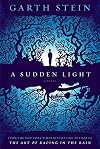
This book was amazing and worth all five out of five stars, without a doubt. 'A Sudden Light' is an American Gothic masterpiece that is centered around the Riddell family, chronicling their self-destructive demise over the decades. Garth Stein is able to expertly weave multiple stories into a cohesive tale that is as heartbreaking, as it is hopeful.
We step into the story through Trevor Riddell's eyes, the latest member of the Riddell family, as he joins his father, Jones, to the ancestral show more house in Washington state. Trevor is there to help his father "settle things," which at the start seems simple. Simply sell the property and divide the money so that Jones can reunite with his recently estranged wife and the three can be a family again. Matters become complicated when the history of the land reveals itself via ghosts and secret writings which plague Trevor, forcing him to choose between saving his parents' marriage and doing the right thing. He meets the ghost of his great grand-uncle, Ben, who died a tragic death at a young age. Ben makes himself visible to Trevor, pleading for him to help end the Riddell family misfortune and set him free. You see, after Ben's death, his father Elijah redrew his will explicitly stating his wishes that the land and home they owned, known as The North Estate, would be given back to nature. Once his descendants decided to move out of the house, it would be turned into a state park/nature preserve as a method of penance for forcing his son Ben to go against his nature, and for all of the land he helped destroy during the westward expansion. So far, his wishes have been grudgingly adhered to until recently.
Trevor's aunt, 'Simply' Serena, has been living at The North Estate her entire life, and became her father's caretaker upon the death of her mother. She summons her brother, Jones, to the house with the hope that he will be able to convince their father Samuel to either sell the property, or sign over the rights so that they could sell it. Throughout the novel, there is a feeling that something isn't right with Serena and that she has a hidden agenda with her desire to sell the property. Stein does a fantastic job in writing her character and creating the constant state of unease and suspicion readers feel when she appears. He truly shows his skill in handling Serena's character, as her problematic upbringing would automatically incite sympathy and understanding from readers, yet seen through her current actions, there is only a mild afterthought of pity.
A Sudden Light has all of the trappings of a typical American Gothic novel: family secrets, ghosts, the conflict of the rational and irrational, festering guilt, possible incest, and of course, a sprawling landscape in neglected decay reflecting the conflict and misery of its inhabitants, both living and deceased. It is a superb book that is so absorbing, readers will not be able to put it down until they reach the end. show less
We step into the story through Trevor Riddell's eyes, the latest member of the Riddell family, as he joins his father, Jones, to the ancestral show more house in Washington state. Trevor is there to help his father "settle things," which at the start seems simple. Simply sell the property and divide the money so that Jones can reunite with his recently estranged wife and the three can be a family again. Matters become complicated when the history of the land reveals itself via ghosts and secret writings which plague Trevor, forcing him to choose between saving his parents' marriage and doing the right thing. He meets the ghost of his great grand-uncle, Ben, who died a tragic death at a young age. Ben makes himself visible to Trevor, pleading for him to help end the Riddell family misfortune and set him free. You see, after Ben's death, his father Elijah redrew his will explicitly stating his wishes that the land and home they owned, known as The North Estate, would be given back to nature. Once his descendants decided to move out of the house, it would be turned into a state park/nature preserve as a method of penance for forcing his son Ben to go against his nature, and for all of the land he helped destroy during the westward expansion. So far, his wishes have been grudgingly adhered to until recently.
Trevor's aunt, 'Simply' Serena, has been living at The North Estate her entire life, and became her father's caretaker upon the death of her mother. She summons her brother, Jones, to the house with the hope that he will be able to convince their father Samuel to either sell the property, or sign over the rights so that they could sell it. Throughout the novel, there is a feeling that something isn't right with Serena and that she has a hidden agenda with her desire to sell the property. Stein does a fantastic job in writing her character and creating the constant state of unease and suspicion readers feel when she appears. He truly shows his skill in handling Serena's character, as her problematic upbringing would automatically incite sympathy and understanding from readers, yet seen through her current actions, there is only a mild afterthought of pity.
A Sudden Light has all of the trappings of a typical American Gothic novel: family secrets, ghosts, the conflict of the rational and irrational, festering guilt, possible incest, and of course, a sprawling landscape in neglected decay reflecting the conflict and misery of its inhabitants, both living and deceased. It is a superb book that is so absorbing, readers will not be able to put it down until they reach the end. show less
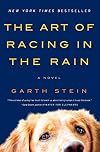
This was not a bad book and I can see why people liked it, but it was, unfortunately, a perfect storm of bad personal vibes, so even though I was enjoying it more than I thought I would enjoy a dog book (first-person definitely helped), I can't say I'll be keeping it.
This is going to be a spoilery commentary for major plot points but not for details--those are under a second cut. You have been informed!
First, this is also a cancer book. I am automatically skeptical and avoidant of cancer stories just because I feel like I've had enough real cancer in my life that no syrupy platitudes are going to soften me up--more like the opposite. (The only book I've read that got close was The Fault in Our Stars, but that's because it wasn't a cancer book even if cancer was such a big part of it [end digression].)
So that was a sour start. I was a little tempted to put the book down but I decided to go ahead and give it a chance, since I'd been wanting to read it for so long.
Then today, about halfway through the book, this become yet another book in which a woman falsely accuses a man of raping her, and that was the last straw. No way was this book getting my seal of approval. I did skim the rest out of perverse curiosity--yes, the woman wasn't even thinking about what she'd done while the guy was in court, and yes she had a public shaming when she dropped charges.
I'm so sick of this being used as a plot device. It's just perpetuating the idea this is a common occurrence when the reality is that the vast majority of cases of rape and sexual assault go unreported--in large part because our culture (exhibit A, this book) keeps telling us that it's common when it really, really isn't.
And to complete the trifecta, this is an everything-with-the-bow-on-top book. It's not just a happy ending, it's a perfect ending. Rainbows and butterflies! Oh gosh, ain't life always a marvel if you're just a good human being? And, er, dog. I'd have been more impressed ifDenny didn't end up a Formula One racer (because *magical things* always happen to good people to make up for the crap in their lives!) and Enzo (dude, we read the book--we'll understand who the kid is if you give him a different name) had just somehow happened to be a fan of this lesser-known driver. Not impossible, since his dad is clearly enough of a fan to name him after a racer. And really, giving your personal phone number to a 5-year-old boy because he has the same name as your dear old dead dog and he likes cars? I'm gagging on the sugar.
Wow. That ended up a lot more cynical than I expected. I swear I'm not actually that worked up about this book! Just slightly annoyed and looking forward to the next one...
The thing is, the perfect ending is so rarely satisfying...or rather the ending that satisfies all needs never really feels perfect for the story. Life doesn't always work out 100%, and people can find happiness they didn't even know to look for while in pursuit of a dream that they don't ultimately attain. I would rather have had just a little bit of the real-life humanity that Enzo the dog conveyed show up at the end.
Or maybe that too-perfect world doesn't exist...maybe that's just Enzo's heaven. I could more than live with that--so I think I will. Hey, it worked for me with Water for Elephants.
Oh, and if you're tired of books with dead dogs, hie thee to No More Dead Dogs
Quote Roundup
p. 17: Monkeys have thumbs. Practically the dumbest species on the planet, next to the duck-billed platypus, who make their dens underwater even though they breathe the air. The platypus is horribly stupid, but is only slightly dumber than a monkey. Yet monkeys have thumbs. Those monkey-thumbs were meant for dogs. Give me my thumbs, you fucking monkey!
> > > I love that Enzo has no idea that he wants to be reincarnated as a species related to the monkey. Does Seattle censor evolution shows?
p. 43: My thoughts turned to what he had just taught me. Such a simple concept, yet so true: that which we manifest is before us; we are the creators of our own destiny. Be it through intention or ignorance, our successes and our failures have been brought on by none other than ourselves.
> > > coughcheckyourcoughprivelegecough. Ahem. I'm always a bit disappointed in myself for thinking this kind of sentiment a little inspiring.
p. 43: I wasn't bored. I could have watched the race all that day and all the next. I was manifesting something. I lay down near the refrigerator, a favorite spot of mine, and rested.
p. 53: "I can't do this anymore," she cried... "You always go away, and I have to take care of Zoe and Enzo all by myself, and I can't do it! It's too much! I can barely take care of myself!"
> > > This moment reminded me of a short story I wrote back in my sophomore year in college, a real learning moment. My story was modeled on the frame of a William Trevor story (I think), but it was turning into another too-long monstrosity, so I cut to the chase. As a result, my conflict wasn't earned--my listeners didn't feel a connection to it. That's kind of how I felt with this scene. We knew via Enzo's nose that Eve had cancer, but the toll to her hadn't really been shown yet. In fact, this conversation was a result of the first time Enzo told us about that she really addressed her health issues. (Fun fact: I was also letting a hard-working, albeit healthy and Depression-Era, wife let off steam. These days I think she was trying to tell me that it should have been her story, not her husband's. And she's right.)
p. 65: Denny cut back his hours at work so he could take Zoe to her preschool. In the evenings after dinner, he read to her and helped her learn her numbers and letters. He took over all the grocery shopping and cooking. He took over the cleaning of the house. And he did it all excellently and without complaint. He wanted to relieve Eve of any burden, any job that could cause stress. What he couldn't do, though, with all of the extra he was doing, was continue to engage her in the same playful and physically affectionate way I had grown used to seeing. It was impossible for him to do everything: clearly, he had decided that the care of her organism would receive the topmost priority. Which I believe was the correct thing for him to do under the circumstances. Because he had me.
> > > You know, you never see a paragraph like this written about a woman. This is just expected, normal behavior, except they also have to be "playful and physically affectionate" or they're considered bad mothers. Can you say, "double standards"? But also, "perfect human being" (read as: "perfect white male")? And "perfect is rarely satisfying"?
p. 66: He would say, "Go take care of her for me, Enzo, please." And I did. I took care of her by curling up at her bedside, or, if she had collapsed on the floor, by curling up next to her there. Often, she would hold me close to her, hold me tight to her body, and when she did, she would tell me things about the pain.
p. 95: I rarely let myself go, practicing to be restrained like men are, but that summer, considering the joy of all that we had...I ran through those woods that day wildly, like a crazy dog, diving through the bushes, over the fallen trees, giving gentle chase to chipmunks, barking at the jays, rolling over and scratching my back on the sticks and leaves and needles and earth.
p. 104: Mike took me to our house to get my things. I was humiliated when he said, "Where's your dog?" I didn't want to admit that I still slept with a stuffed animal. But I did.
p. 123: What she didn't understand was Denny's ability to look beyond her physical condition. He was focusing on the next turn.
p. 156: It took me some time to realize that he was not even seeing [those reference points on the track]. He was living them! He had programmed the map of the racecourse into his brain and it was like a GPS navigational system; when we slowed for a turn, his head was up and looking at the next turn, not at the apex of the turn we were driving. The turn we were in was simply a state of existence for Denny. It was where we were, and he was happy to be there, and I could feel the joy emanating from him, the love of life. But his attention--and his intention--was far ahead, to the next turn and the one beyond that. show less
This is going to be a spoilery commentary for major plot points but not for details--those are under a second cut. You have been informed!
First, this is also a cancer book. I am automatically skeptical and avoidant of cancer
So that was a sour start. I was a little tempted to put the book down but I decided to go ahead and give it a chance, since I'd been wanting to read it for so long.
Then today, about halfway through the book, this become yet another book in which a woman falsely accuses a man of raping her, and that was the last straw. No way was this book getting my seal of approval. I did skim the rest out of perverse curiosity--yes, the woman wasn't even thinking about what she'd done while the guy was in court, and yes she had a public shaming when she dropped charges.
I'm so sick of this being used as a plot device. It's just perpetuating the idea this is a common occurrence when the reality is that the vast majority of cases of rape and sexual assault go unreported--in large part because our culture (exhibit A, this book) keeps telling us that it's common when it really, really isn't.
And to complete the trifecta, this is an everything-with-the-bow-on-top book. It's not just a happy ending, it's a perfect ending. Rainbows and butterflies! Oh gosh, ain't life always a marvel if you're just a good human being? And, er, dog. I'd have been more impressed if
Wow. That ended up a lot more cynical than I expected. I swear I'm not actually that worked up about this book! Just slightly annoyed and looking forward to the next one...
The thing is, the perfect ending is so rarely satisfying...or rather the ending that satisfies all needs never really feels perfect for the story. Life doesn't always work out 100%, and people can find happiness they didn't even know to look for while in pursuit of a dream that they don't ultimately attain. I would rather have had just a little bit of the real-life humanity that Enzo the dog conveyed show up at the end.
Or maybe that too-perfect world doesn't exist...maybe that's just Enzo's heaven. I could more than live with that--so I think I will. Hey, it worked for me with Water for Elephants.
Oh, and if you're tired of books with dead dogs, hie thee to No More Dead Dogs
Quote Roundup
p. 17: Monkeys have thumbs. Practically the dumbest species on the planet, next to the duck-billed platypus, who make their dens underwater even though they breathe the air. The platypus is horribly stupid, but is only slightly dumber than a monkey. Yet monkeys have thumbs. Those monkey-thumbs were meant for dogs. Give me my thumbs, you fucking monkey!
> > > I love that Enzo has no idea that he wants to be reincarnated as a species related to the monkey. Does Seattle censor evolution shows?
p. 43: My thoughts turned to what he had just taught me. Such a simple concept, yet so true: that which we manifest is before us; we are the creators of our own destiny. Be it through intention or ignorance, our successes and our failures have been brought on by none other than ourselves.
> > > coughcheckyourcoughprivelegecough. Ahem. I'm always a bit disappointed in myself for thinking this kind of sentiment a little inspiring.
p. 43: I wasn't bored. I could have watched the race all that day and all the next. I was manifesting something. I lay down near the refrigerator, a favorite spot of mine, and rested.
p. 53: "I can't do this anymore," she cried... "You always go away, and I have to take care of Zoe and Enzo all by myself, and I can't do it! It's too much! I can barely take care of myself!"
> > > This moment reminded me of a short story I wrote back in my sophomore year in college, a real learning moment. My story was modeled on the frame of a William Trevor story (I think), but it was turning into another too-long monstrosity, so I cut to the chase. As a result, my conflict wasn't earned--my listeners didn't feel a connection to it. That's kind of how I felt with this scene. We knew via Enzo's nose that Eve had cancer, but the toll to her hadn't really been shown yet. In fact, this conversation was a result of the first time Enzo told us about that she really addressed her health issues. (Fun fact: I was also letting a hard-working, albeit healthy and Depression-Era, wife let off steam. These days I think she was trying to tell me that it should have been her story, not her husband's. And she's right.)
p. 65: Denny cut back his hours at work so he could take Zoe to her preschool. In the evenings after dinner, he read to her and helped her learn her numbers and letters. He took over all the grocery shopping and cooking. He took over the cleaning of the house. And he did it all excellently and without complaint. He wanted to relieve Eve of any burden, any job that could cause stress. What he couldn't do, though, with all of the extra he was doing, was continue to engage her in the same playful and physically affectionate way I had grown used to seeing. It was impossible for him to do everything: clearly, he had decided that the care of her organism would receive the topmost priority. Which I believe was the correct thing for him to do under the circumstances. Because he had me.
> > > You know, you never see a paragraph like this written about a woman. This is just expected, normal behavior, except they also have to be "playful and physically affectionate" or they're considered bad mothers. Can you say, "double standards"? But also, "perfect human being" (read as: "perfect white male")? And "perfect is rarely satisfying"?
p. 66: He would say, "Go take care of her for me, Enzo, please." And I did. I took care of her by curling up at her bedside, or, if she had collapsed on the floor, by curling up next to her there. Often, she would hold me close to her, hold me tight to her body, and when she did, she would tell me things about the pain.
p. 95: I rarely let myself go, practicing to be restrained like men are, but that summer, considering the joy of all that we had...I ran through those woods that day wildly, like a crazy dog, diving through the bushes, over the fallen trees, giving gentle chase to chipmunks, barking at the jays, rolling over and scratching my back on the sticks and leaves and needles and earth.
p. 104: Mike took me to our house to get my things. I was humiliated when he said, "Where's your dog?" I didn't want to admit that I still slept with a stuffed animal. But I did.
p. 123: What she didn't understand was Denny's ability to look beyond her physical condition. He was focusing on the next turn.
p. 156: It took me some time to realize that he was not even seeing [those reference points on the track]. He was living them! He had programmed the map of the racecourse into his brain and it was like a GPS navigational system; when we slowed for a turn, his head was up and looking at the next turn, not at the apex of the turn we were driving. The turn we were in was simply a state of existence for Denny. It was where we were, and he was happy to be there, and I could feel the joy emanating from him, the love of life. But his attention--and his intention--was far ahead, to the next turn and the one beyond that. show less

"Touching, Clever Story Narrated by Enzo the Dog"The only thing that prevented me from giving this poignant novel 5 stars was the emphasis on car racing. I hate car racing. The fact that Garth Stein held my interest for ANY discussion of car racing is a testament to his storytelling skills, but sometimes I thought he went on a bit long about the finer points of speeding down a track.What I loved is the relationship between man and dog so beautifully portrayed in this story. Denny Swift is show more Enzo's master, and if a master ever deserves unadulterated loyalty, Denny is the one. He's full of integrity and full of love for his dog. Denny's family tragedies are heartbreaking and infuriating, but he and Enzo stick together no matter what. The lawsuit surrounding the family situation is quite suspenseful, and Enzo makes you crave justice for Denny.Telling the story from a lab/terrier's point of view is ingenious, and I really appreciated Enzo's little insights like reading a man's character from the smell of his hands or his maliciousness in feeding a dog a hot pepper. The hallucination with the stuffed zebra was hilarious! This dog is one of the smartest narrators I've ever met.Enzo seems like such a cool dude. I would love to be his friend one day. It would be an honor. show less
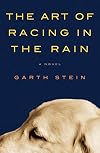
Every animal lover knows their pets have the ability to understand and communicate with us in their own way. In his novel The Art of Racing in the Rain, author Garth Stein takes this understanding and communication to a whole new level.
Enzo is a dog nearing the end of his life. He believes that when a dog dies, he will come back as a human. He looks back on the life he has led and the lessons he has learned, and tells his story from a dog's perspective with a surprisingly human voice:
"I'm show more stuffed into a dog's body, but that's just the shell. It's what's inside that's important. The soul. And my soul is very human." (pg. 3)
Enzo loves auto racing. This is largely due to the fact that his owner, Denny Swift, is a race car driver. The two of them spend countless hours watching race videos and the Speed Channel, and it is from Denny and racing that Enzo learns most of what he needs to know in order to cope with the various relationships and situations that occur to his human family and to him. Enzo describes his life - his being born on a farm; being chosen by Denny to be his companion; Denny's choosing Eve as his wife; the birth of Denny and Eve's child, Zoe; the aftermath of the sudden loss of Eve; and his wish for opposable thumbs. Denny and his family have a lot to learn from Enzo, too. Enzo is the embodiment of loyalty, companionship, and comfort, helping the Swifts through the bad times as well as the good as only an animal can.
This book is so much more than a book about a thinking dog (although that in itself is enough for me to want to read it) or about auto racing. The author's unique marriage of the two is where the beauty of this story lies:
"I know this much about racing in the rain. I know it is about balance. It is about anticipation and patience. I know all of the driving skills that are necessary for one to be successful in the rain. But racing in the rain is also about the mind! About believing that one's car is merely an extension of one's body. About believing that the track is an extension of the car, and the rain is an extension of the track, and the sky is an extension of the rain. It is about believing that you are not you; you are everything. And everything is you." [as thought by Enzo] (pg. 314)
Read this book. You will be glad you did. show less
Enzo is a dog nearing the end of his life. He believes that when a dog dies, he will come back as a human. He looks back on the life he has led and the lessons he has learned, and tells his story from a dog's perspective with a surprisingly human voice:
"I'm show more stuffed into a dog's body, but that's just the shell. It's what's inside that's important. The soul. And my soul is very human." (pg. 3)
Enzo loves auto racing. This is largely due to the fact that his owner, Denny Swift, is a race car driver. The two of them spend countless hours watching race videos and the Speed Channel, and it is from Denny and racing that Enzo learns most of what he needs to know in order to cope with the various relationships and situations that occur to his human family and to him. Enzo describes his life - his being born on a farm; being chosen by Denny to be his companion; Denny's choosing Eve as his wife; the birth of Denny and Eve's child, Zoe; the aftermath of the sudden loss of Eve; and his wish for opposable thumbs. Denny and his family have a lot to learn from Enzo, too. Enzo is the embodiment of loyalty, companionship, and comfort, helping the Swifts through the bad times as well as the good as only an animal can.
This book is so much more than a book about a thinking dog (although that in itself is enough for me to want to read it) or about auto racing. The author's unique marriage of the two is where the beauty of this story lies:
"I know this much about racing in the rain. I know it is about balance. It is about anticipation and patience. I know all of the driving skills that are necessary for one to be successful in the rain. But racing in the rain is also about the mind! About believing that one's car is merely an extension of one's body. About believing that the track is an extension of the car, and the rain is an extension of the track, and the sky is an extension of the rain. It is about believing that you are not you; you are everything. And everything is you." [as thought by Enzo] (pg. 314)
Read this book. You will be glad you did. show less
Lists
Carole's List (2)
Great Audiobooks (1)
Family Dynamics (1)
Favourite Books (1)
Cars and Racing (1)
Ghosts (1)
Awards


You May Also Like


Associated Authors
Statistics
- Works
- 13
- Also by
- 8
- Members
- 13,804
- Popularity
- #1,676
- Rating
- 4.0
- Reviews
- 751
- ISBNs
- 162
- Languages
- 17
- Favorited
- 15

