
David Wroblewski
Author of The Story of Edgar Sawtelle
About the Author
David Wroblewski is the author of the internationally bestselling novel The Story Of Edgar Sawtelle, a 2008 Oprah Book Club pick, a Barnes and Noble Discover Great New Writers selection, winner of the 2008 Colorado Book Award, Indie Choice Best Author Discovery award, and the Midwest Bookseller show more Association's Choice award. The Story of Edgar Sawtelle has been translated into over 25 languages. David holds a degree in computer science from the University of Wisconsin and an M.F.A. in Creative Writing from the Warren Wilson M.F.A. Program for Writers. (Bowker Author Biography) show less
Image credit: Larry D. Moore
Works by David Wroblewski
Tagged
Common Knowledge
- Birthdate
- 1959
- Gender
- male
- Education
- Warren Wilson College
- Occupations
- novelist
software engineer - Agent
- Eleanor Jackson (Queen Literary Agency)
- Relationships
- McClintock, Kimberly (partner)
- Short biography
- Lives with his partner, writer Kimberly McClintock
- Nationality
- USA
- Birthplace
- Oconomowoc, Wisconsin
- Places of residence
- Wisconsin, USA
Colorado, USA
Texas, USA - Associated Place (for map)
- USA
Members
Reviews
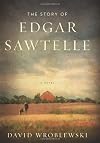
This is two completely different books. The first couple hundred pages develop a rich atmosphere with complex characters and an interesting look at dog breeding. Then, somewhere along the line the writing style changes. The characters degenerate into complete morons and the story begins to feels like contrived suspense. It’s all plot driven, as the concept of show, don’t tell is flipped backward to just tell everything, especially those critical little details that were left out in show more earlier parts for no reason and are brought up just as they become relevant. And this goes on for several hundred pages. It's a very strange change. It feels like it was written by two different authors, one exceptionally crafty and the other blindly hacking out a plot without regard to story. show less

I'm not going to do this novel justice, but I'll do my best.
I read this book when it first came out twelve (!) years ago. It had two strikes against it at the time, and one plus. The two strikes were that it was absolutely not a book I would normally read. A family that raises dogs? A mute protagonist? Based on Hamlet? Hell no, count me out. And count me out twice as hard, because it was an Oprah's Book Club selection (I'd read a couple of her other choices and despised them both).
The one show more plus (which is a dubious one at best) was that Stephen King liked it. Dubious plus, because a lot of the stuff he likes ain't that good either.
Regardless, for whatever reason (maybe it was deeply discounted? I can't remember now), I bought it, I read it, and I absolutely loved it.
Loved it more than any other book I'd ever read.
In the twelve years since, I've learned to adore Shakespeare, so that Hamlet thing doesn't bother me at all now. And I'd been recommending it in the past three years at the bookstore I work at. But, if I was being honest, I couldn't remember a lot about the book anymore.
And then I got talking to someone who's since turned into (in the words of Jim Croce) "my best old ex-friend" who will never read this, because I've defriended them everywhere. Anyway, we'd planned a read of it, but then they got stupid and I got fed up. The re-read on my end was put on hold.
And then, it was autumn, and it just seemed right to read it again.
And that's the Story of Tobin Elliott coming to the re-read of The Story of Edgar Sawtelle. I will say I was nervous to pick this up again. Would I like it as much?
I shouldn't have worried. This book tugs at my heart like no other book ever has. Wroblewski's writing is beautiful to read, with sublime word choices creating wonderfully real imagery in my mind. The book is so grounded in perfect observations of the world that Edgar's world (and Almondine, his faithful dog) is as real as our own.
Which works perfectly when the author introduces some slight supernatural elements. They become as real and believable as all the rest.
Throughout the reading of this book, I laughed at the silliness of the dog's antics at times. I teared up at the tragic events. But I've done that with books before. King's [b:The Green Mile|11566|The Green Mile|Stephen King|https://i.gr-assets.com/images/S/compressed.photo.goodreads.com/books/1373903563l/11566._SY75_.jpg|15599] crushed me on three separate occasions toward the end of that particular story.
But here, for the first time, Wroblewski held a new power over me. With a simple sentence, he would reveal something, and I would groan with the knowledge of what that observation would bring to the characters. With a few words, he would make me gasp in revelation, or fear, or agony. Characters don't just die in this book, you know these characters, so their passing is a grief-stricken event for the reader. You feel their passing. You hurt for those left behind to mourn their passing.
Others have stated that there's no story here. Respectfully, they're wrong. There's two stories. There's the passing of a boy into manhood, a child who loses his father, and learns to take on the weights of the world, and to try to do what's right.
But the other story is about the Sawtelle dogs. We learn about them in the first half through Almondine, but we get to know them in the second half, and to realize their fate at the end.
And Wroblewski does it with large nods to both the aforementioned Hamlet, but also (and I'd somehow forgotten this) through Kipling's The Jungle Book. Not just paying lip service to either story, but incorporating important elements from each into his own story and bending them to his service, brilliantly.
This is the closest I think I'll ever come to reading an absolutely perfect novel. Twelve years ago, I declared this my absolute favourite book of all time. Today, I will hold that declaration up as truth. It still stands.
This is my favourite book.
Ever. show less
I read this book when it first came out twelve (!) years ago. It had two strikes against it at the time, and one plus. The two strikes were that it was absolutely not a book I would normally read. A family that raises dogs? A mute protagonist? Based on Hamlet? Hell no, count me out. And count me out twice as hard, because it was an Oprah's Book Club selection (I'd read a couple of her other choices and despised them both).
The one show more plus (which is a dubious one at best) was that Stephen King liked it. Dubious plus, because a lot of the stuff he likes ain't that good either.
Regardless, for whatever reason (maybe it was deeply discounted? I can't remember now), I bought it, I read it, and I absolutely loved it.
Loved it more than any other book I'd ever read.
In the twelve years since, I've learned to adore Shakespeare, so that Hamlet thing doesn't bother me at all now. And I'd been recommending it in the past three years at the bookstore I work at. But, if I was being honest, I couldn't remember a lot about the book anymore.
And then I got talking to someone who's since turned into (in the words of Jim Croce) "my best old ex-friend" who will never read this, because I've defriended them everywhere. Anyway, we'd planned a read of it, but then they got stupid and I got fed up. The re-read on my end was put on hold.
And then, it was autumn, and it just seemed right to read it again.
And that's the Story of Tobin Elliott coming to the re-read of The Story of Edgar Sawtelle. I will say I was nervous to pick this up again. Would I like it as much?
I shouldn't have worried. This book tugs at my heart like no other book ever has. Wroblewski's writing is beautiful to read, with sublime word choices creating wonderfully real imagery in my mind. The book is so grounded in perfect observations of the world that Edgar's world (and Almondine, his faithful dog) is as real as our own.
Which works perfectly when the author introduces some slight supernatural elements. They become as real and believable as all the rest.
Throughout the reading of this book, I laughed at the silliness of the dog's antics at times. I teared up at the tragic events. But I've done that with books before. King's [b:The Green Mile|11566|The Green Mile|Stephen King|https://i.gr-assets.com/images/S/compressed.photo.goodreads.com/books/1373903563l/11566._SY75_.jpg|15599] crushed me on three separate occasions toward the end of that particular story.
But here, for the first time, Wroblewski held a new power over me. With a simple sentence, he would reveal something, and I would groan with the knowledge of what that observation would bring to the characters. With a few words, he would make me gasp in revelation, or fear, or agony. Characters don't just die in this book, you know these characters, so their passing is a grief-stricken event for the reader. You feel their passing. You hurt for those left behind to mourn their passing.
Others have stated that there's no story here. Respectfully, they're wrong. There's two stories. There's the passing of a boy into manhood, a child who loses his father, and learns to take on the weights of the world, and to try to do what's right.
But the other story is about the Sawtelle dogs. We learn about them in the first half through Almondine, but we get to know them in the second half, and to realize their fate at the end.
And Wroblewski does it with large nods to both the aforementioned Hamlet, but also (and I'd somehow forgotten this) through Kipling's The Jungle Book. Not just paying lip service to either story, but incorporating important elements from each into his own story and bending them to his service, brilliantly.
This is the closest I think I'll ever come to reading an absolutely perfect novel. Twelve years ago, I declared this my absolute favourite book of all time. Today, I will hold that declaration up as truth. It still stands.
This is my favourite book.
Ever. show less
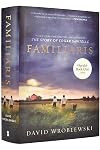
This book.
Damn.
It has a lot to live up to. Of all the books in the world that I've read up to now, its predecessor, THE STORY OF EDGAR SAWTELLE is a book that, for something like 16 years, I have labeled as my favourite novel of all time. The weird thing? I can't put my finger on exactly why. Maybe it's the characters. Maybe it's the story. Maybe it's the dogs. Maybe it's the gorgeous writing.
But it's my favourite book. So, FAMILIARIS has a lot of work to do.
And honestly, while there's no show more real plot beyond it being, in the first half, THE STORY OF JOHN SAWTELLE, it's truly enjoyable. It meanders here. It meanders there. It brings you to a certain point, then stops, jumps locations and characters, and starts all over again. The villains that show up are dispatched quickly and mostly off-stage. There's no slow build of tension as any reasonable book has, but there's tension throughout. Characters come and go. Some come back, some don't.
Then, in the second half, it kind of does all that again, but with Gar and Claude, John's sons. So, for a while, it becomes THE STORY OF GAR AND CLAUDE SAWTELLE. I will say I had a harder time with this section, primarily because of the business one of the sons was engaged in. I found it hard to believe he'd do this, raised in the Sawtelle home.
So, there's a good two to three hundred pages that I would rate more a 3.5 stars, rather than five.
And then, toward the end, it becomes THE DIARY OF JOHN SAWTELLE, which was both frustrating and illuminating.
But through it all, there was fear, and laughter, and anger, and frustration, and hope, and inspiration, and despair, and hate, and heartbreak.
Ultimately, this is a book about lives. About setting out to do something magical and, sometimes pulling it off, sometimes not.
This shouldn't work as a novel. But it does.
It does not supplant my ranking of EDGAR SAWTELLE as the best book I've ever read, but I'd say its a worthy successor to it, and an interesting prequel to that novel.
I can only hope we don't have to wait until 2040 for the next Wroblewski work. show less
Damn.
It has a lot to live up to. Of all the books in the world that I've read up to now, its predecessor, THE STORY OF EDGAR SAWTELLE is a book that, for something like 16 years, I have labeled as my favourite novel of all time. The weird thing? I can't put my finger on exactly why. Maybe it's the characters. Maybe it's the story. Maybe it's the dogs. Maybe it's the gorgeous writing.
But it's my favourite book. So, FAMILIARIS has a lot of work to do.
And honestly, while there's no show more real plot beyond it being, in the first half, THE STORY OF JOHN SAWTELLE, it's truly enjoyable. It meanders here. It meanders there. It brings you to a certain point, then stops, jumps locations and characters, and starts all over again. The villains that show up are dispatched quickly and mostly off-stage. There's no slow build of tension as any reasonable book has, but there's tension throughout. Characters come and go. Some come back, some don't.
Then, in the second half, it kind of does all that again, but with Gar and Claude, John's sons. So, for a while, it becomes THE STORY OF GAR AND CLAUDE SAWTELLE. I will say I had a harder time with this section, primarily because of the business one of the sons was engaged in. I found it hard to believe he'd do this, raised in the Sawtelle home.
So, there's a good two to three hundred pages that I would rate more a 3.5 stars, rather than five.
And then, toward the end, it becomes THE DIARY OF JOHN SAWTELLE, which was both frustrating and illuminating.
But through it all, there was fear, and laughter, and anger, and frustration, and hope, and inspiration, and despair, and hate, and heartbreak.
Ultimately, this is a book about lives. About setting out to do something magical and, sometimes pulling it off, sometimes not.
This shouldn't work as a novel. But it does.
It does not supplant my ranking of EDGAR SAWTELLE as the best book I've ever read, but I'd say its a worthy successor to it, and an interesting prequel to that novel.
I can only hope we don't have to wait until 2040 for the next Wroblewski work. show less

Occasionally, I forget I’m reading. Those rare, happy moments when the story completely transcends the page keep me coming back to the printed word again and again. [The Story of Edgar Sawtelle] captured my imagination in just such a way.
Advance praise for the book, and some early glowing reviews, created a level of hype that often does a book like this a disservice. Inevitably, the reading experience for every reader doesn’t match the hype. So, rather than lavish the book and its show more writer, David Wroblewski, with too many more superlatives, I just want to mention a couple of things in my encouragement to read this book.
One common thread for many of the negative reviews is a feeling that the ending cheats the reader in some way. My defense here is that the book is a re-working of Shakespere’s Hamlet. I am by no means a huge fan of the bard, but I know enough about his tragedies to know a little about what to expect in the last few scenes. And, while my expectations were met, the ending felt absolutely true to the themes of the book. Edgar, before setting himself on Hamlet’s fatal path, considers and decides that there are sometimes grave consequences for choices, even when those choices ring with sincere nobility and genuine goodness.
Another oft voiced complaint centers around Wroblewski’s narratives written from the perspectives of the dogs that are central to the story. In full disclosure, I am a dog person. But I found the short canine narratives compelling. They were balanced, neither over-humanized nor overly simplistic. Did Wroblewski accurately tap into the mind of a dog? Did he attribute too much or too little intelligence to their thought process? How are we to really know? But the short passages felt like an honest and instinctive attempt to describe how dogs relate to the world around them.
The final thing that should recommend this book to you is Wroblewski’s rare talent for language. The prose sings with a beauty that is rare in modern American literature. If anything breaks your reading trance, it will be the urge to pause and re-read, to bask in the talent of a true word-smith.
Five bones!!!!!
Another favorite read for the year. show less
Advance praise for the book, and some early glowing reviews, created a level of hype that often does a book like this a disservice. Inevitably, the reading experience for every reader doesn’t match the hype. So, rather than lavish the book and its show more writer, David Wroblewski, with too many more superlatives, I just want to mention a couple of things in my encouragement to read this book.
One common thread for many of the negative reviews is a feeling that the ending cheats the reader in some way. My defense here is that the book is a re-working of Shakespere’s Hamlet. I am by no means a huge fan of the bard, but I know enough about his tragedies to know a little about what to expect in the last few scenes. And, while my expectations were met, the ending felt absolutely true to the themes of the book. Edgar, before setting himself on Hamlet’s fatal path, considers and decides that there are sometimes grave consequences for choices, even when those choices ring with sincere nobility and genuine goodness.
Another oft voiced complaint centers around Wroblewski’s narratives written from the perspectives of the dogs that are central to the story. In full disclosure, I am a dog person. But I found the short canine narratives compelling. They were balanced, neither over-humanized nor overly simplistic. Did Wroblewski accurately tap into the mind of a dog? Did he attribute too much or too little intelligence to their thought process? How are we to really know? But the short passages felt like an honest and instinctive attempt to describe how dogs relate to the world around them.
The final thing that should recommend this book to you is Wroblewski’s rare talent for language. The prose sings with a beauty that is rare in modern American literature. If anything breaks your reading trance, it will be the urge to pause and re-read, to bask in the talent of a true word-smith.
Five bones!!!!!
Another favorite read for the year. show less
Lists
Awards


You May Also Like


Associated Authors
Statistics
- Works
- 4
- Members
- 9,419
- Popularity
- #2,548
- Rating
- 3.7
- Reviews
- 436
- ISBNs
- 81
- Languages
- 12
- Favorited
- 10
