
Robert J. Conley (1940–2014)
Author of Mountain Windsong: A Novel of the Trail of Tears
About the Author
Robert J. Conley was born in 1940 in Cushing Oklahoma. He is a Cherokee author and enrolled member of the United Keetoowah Band of Cherokee Indians, a federally recognized tribe of American Indians. He is noted for depictions of precontact and historical Cherokee figures. He is known for a series show more of books called the Real People Series. The sixth of the series, The Dark Island (1996) won the Spur Award for best Western novel in 1995. He has also won two other Spur Awards, in 1988 for the short story "Yellow Bird", and in 1992 for the novel Nickajack. In 2007, he received the Lifetime Achievement Award from the Native Writers' Circle of the Americas. (Bowker Author Biography) show less
Series
Works by Robert J. Conley
Wil Usdi: Thoughts from the Asylum, a Cherokee Novella (American Indian Literature and Critical Studies Series) (2015) 8 copies, 1 review
Three novels of the Real people: The Way of the Priests; The Dark Way; The White Path (1993) 7 copies
Plastic Indian: A Collection of Stories and Other Writings (American Indian Literature and Critical Studies Series Book 71) (2018) 4 copies, 1 review
Geronimo - Apache 1 copy
Associated Works
The Remembered Earth: An Anthology of Contemporary Native American Literature (1979) — Contributor — 77 copies
Songs from This Earth on Turtle's Back: Contemporary American Indian Poetry (1983) — Contributor — 73 copies
Song of the Turtle: American Indian Literature 1974-1994 (1996) — Contributor — 71 copies, 2 reviews
Earth Power Coming: Short Fiction in Native American Literature (1983) — Contributor — 37 copies, 1 review
Returning the Gift: Poetry and Prose from the First North American Native Writers' Festival (Sun Tracks) (1994) — Contributor — 25 copies
Aniyunwiya/Real Human Beings: An Anthology of Contemporary Cherokee Prose (1995) — Contributor — 18 copies
The Golden Spurs: The Best of Western Short Fiction (Western Writers of America ) (1991) — Contributor — 12 copies
Tagged
Common Knowledge
- Legal name
- Conley, Robert Jackson
- Birthdate
- 1940-12-29
- Date of death
- 2014-02-16
- Gender
- male
- Education
- Midwestern University (BA | Drama and Art | 1966 | MA | English | 1968)
- Occupations
- instructor (English)
director (Indian Studies, Eastern Montana College and others)
manager (Assistant Programs Manager, Cherokee Nation of Oklahoma)
writer
author
novelist - Organizations
- Easterm Montana College
Cherokee Nation - Awards and honors
- Ozark Creative Writers (1961)
Oklahoma writers Hall of Fame (1966)
Lifetime Achievement Award, Native Writers Circle of The Americas (2007) - Nationality
- Cherokee Nation
USA - Birthplace
- Cushing, Oklahoma, USA
- Places of residence
- Witchita Falls, Texas, USA
- Place of death
- Sylva, North Carolina, USA
- Associated Place (for map)
- USA
Members
Reviews
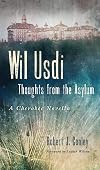
Mostly, I requested this from the library because Conley is a Native American writer.
It was a strange experience reading this. I went in wanting to like it, but...
The book is a mix of fact & fiction about William Holland Thomas, a white man who was adopted by a Cherokee chief. While Thomas/Wil Usdi may have done a lot for the Cherokees in western NC, he was also a racist Confederate who owned slaves. The book was published in 2015, but I wonder when the author actually wrote it (as he show more passed away in 2014).
From the Cherokee author's point of view, Wil Usdi did have respect for the Cherokees & he was considered highly among them for most of his lifetime. But, Black people and women do not fare as well in this book since the mentions of Black people are as slaves & women are mostly mentioned in sexual references. In addition, Wil Usdi is telling his story in this book as an old man, when he's suffering from dementia (probably Alzheimer's) & is locked up at the state mental hospital (which, ironically, he helped create during his time as a NC state senator); all this makes him a cranky, combative, and somewhat unreliable narrator for this historical narrative. When he's not terrorizing the hospital staff or his family or spinning off into some hallucinatory episodes, he spends time reminiscing on his olden days & exploits, sometimes in his head, other times when he's meeting with with a researcher wanting to record some of the history (ethnologist James Mooney of the Smithsonian Institution, who did actually meet with him in the mental hospital while conducting studies on Southeastern tribes). The writing itself is boringly average.
For me, there's just such a disconnect here between the parts of Wil Usdi's life where he helped Cherokees in his area vs. his racist, misogynist ways... all written (even lauded?) by a renowned Cherokee author. I mean, I understand that the dichotomy existed, but it made for very uncomfortable reading in 2021.
Uh, I can't recommend this one unless you have a very specific interest in the area or the person. show less
It was a strange experience reading this. I went in wanting to like it, but...
The book is a mix of fact & fiction about William Holland Thomas, a white man who was adopted by a Cherokee chief. While Thomas/Wil Usdi may have done a lot for the Cherokees in western NC, he was also a racist Confederate who owned slaves. The book was published in 2015, but I wonder when the author actually wrote it (as he show more passed away in 2014).
From the Cherokee author's point of view, Wil Usdi did have respect for the Cherokees & he was considered highly among them for most of his lifetime. But, Black people and women do not fare as well in this book since the mentions of Black people are as slaves & women are mostly mentioned in sexual references. In addition, Wil Usdi is telling his story in this book as an old man, when he's suffering from dementia (probably Alzheimer's) & is locked up at the state mental hospital (which, ironically, he helped create during his time as a NC state senator); all this makes him a cranky, combative, and somewhat unreliable narrator for this historical narrative. When he's not terrorizing the hospital staff or his family or spinning off into some hallucinatory episodes, he spends time reminiscing on his olden days & exploits, sometimes in his head, other times when he's meeting with with a researcher wanting to record some of the history (ethnologist James Mooney of the Smithsonian Institution, who did actually meet with him in the mental hospital while conducting studies on Southeastern tribes). The writing itself is boringly average.
For me, there's just such a disconnect here between the parts of Wil Usdi's life where he helped Cherokees in his area vs. his racist, misogynist ways... all written (even lauded?) by a renowned Cherokee author. I mean, I understand that the dichotomy existed, but it made for very uncomfortable reading in 2021.
Uh, I can't recommend this one unless you have a very specific interest in the area or the person. show less

This was a nice, homely collection of stories, short & satisfying. I felt like my father-in-law could have been telling these tales. the trio of young rowdies in "Plastic Indian" reminded me of some buckaroos I've known, yet the closing thought was a foreshadowing of the internal politics which are more overtly portrayed in "Belle Starr". Primarily set in the 1800's, and generally in either Oklahoma or North Carolina, each tale demonstrates some aspect of Cherokee culture without being show more didactic. One aspect which impressed me the most was how the men would back off if a woman said she was going to do something. Women weren't often in the story, but they were strong, and they were acknowledged...a woman wasn't just somenone's wife, she had a name of her own, even when she was only a minor part in the tale.
Some stories were written in the first person, which made it easy to believe it was Conley himself that the story was about--until you notice the year, or until you read in his acceptance speech that "...writers, painters, sculptors, musicians, actors, dancers, bank robbers, boxers...the writer is the most fortunate of the bunch, for he can write himself into any or all of these characters."
Otherwise, the four included speeches were nothing special. show less
Some stories were written in the first person, which made it easy to believe it was Conley himself that the story was about--until you notice the year, or until you read in his acceptance speech that "...writers, painters, sculptors, musicians, actors, dancers, bank robbers, boxers...the writer is the most fortunate of the bunch, for he can write himself into any or all of these characters."
Otherwise, the four included speeches were nothing special. show less
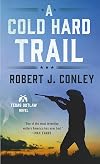
Kid Parmlee, his Paw and his buddy Zeb ride into Fosterville for drink, food and sex, but are immediately accused of having robbed a stagecoach and killed the driver. While the sheriff was a friend of the Kid, the description of the three bandits fit to a T the three men facing a shotgun in the hands of the sheriff. The three break out of jail with assistance of a female friend of the Kid's leaving the sheriff stark naked in his own jail cell to be discovered and embarrassed by the local show more citizens.
Once out, they decide to search for the three stage robbers who are now also robbing banks. Their quest is interrupted when they befriend the citizens of a mining town who are being harassed by claim jumpers and the Kid and Zeb start a shooting war against the claim jumpers.
Often the heroes of western novels have few weaknesses but the Kid has a couple that prove very embarrassing to him in the story. His fear of heights freezes him on a ledge 100's of feet up and he looks down. The consequences of his rescue are very embarrassing as is his low tolerance for whiskey which sees him black out in front of a full saloon.
Conley's style is to never have a slow moment and he adds characters who really have no role in the narrative but add flavour to the atmosphere. Read this on a wilderness canoe/camping trip in Algonquin Park. Not even the many horse and deer flies could interrupt the story. show less
Once out, they decide to search for the three stage robbers who are now also robbing banks. Their quest is interrupted when they befriend the citizens of a mining town who are being harassed by claim jumpers and the Kid and Zeb start a shooting war against the claim jumpers.
Often the heroes of western novels have few weaknesses but the Kid has a couple that prove very embarrassing to him in the story. His fear of heights freezes him on a ledge 100's of feet up and he looks down. The consequences of his rescue are very embarrassing as is his low tolerance for whiskey which sees him black out in front of a full saloon.
Conley's style is to never have a slow moment and he adds characters who really have no role in the narrative but add flavour to the atmosphere. Read this on a wilderness canoe/camping trip in Algonquin Park. Not even the many horse and deer flies could interrupt the story. show less
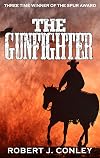
Marshall Baijack tells this story in first person and what a story it is – although it might take you a bit to get into the dialect Baijack uses it is a fun read all in all.
Marshall Baijack is not a learned man but he has managed to clean up Asininity by the time Herman Sly “The Widowmaker” rides into town. Sly kills for money but never draws his gun first and more than one person in town thinks he might have come to kill them. The story has gunfights, fistfights, drunks, a whore with show more a heart of gold, and a whole lot more. Part of the story is the development of the friendship between Sly and Baijack and what an interesting friendship it is. If you are looking for a sometimes humorous bawdy brawling Western then this book might be one you should pick up.
Thank you to Endeavour Press for the copy of this book to read and review. show less
Marshall Baijack is not a learned man but he has managed to clean up Asininity by the time Herman Sly “The Widowmaker” rides into town. Sly kills for money but never draws his gun first and more than one person in town thinks he might have come to kill them. The story has gunfights, fistfights, drunks, a whore with show more a heart of gold, and a whole lot more. Part of the story is the development of the friendship between Sly and Baijack and what an interesting friendship it is. If you are looking for a sometimes humorous bawdy brawling Western then this book might be one you should pick up.
Thank you to Endeavour Press for the copy of this book to read and review. show less
Lists
Awards

You May Also Like


Associated Authors
Statistics
- Works
- 58
- Also by
- 12
- Members
- 933
- Popularity
- #27,526
- Rating
- 3.5
- Reviews
- 16
- ISBNs
- 159
- Languages
- 3
- Favorited
- 1