
Mary Gribbin
Author of The Science of Philip Pullman's His Dark Materials
About the Author
Mary Gribbin is a science writer. (Bowker Author Biography)
Series
Works by Mary Gribbin
Fitzroy: The Remarkable Story of Darwin's Captain and the Invention of the Weather Forecast (2003) 107 copies, 1 review
On the Origin of Evolution: Tracing ‘Darwin’s Dangerous Idea’ from Aristotle to DNA (2020) 40 copies
Associated Works
Tagged
Common Knowledge
- Canonical name
- Gribbin, Mary
- Birthdate
- 1947-05-12
- Gender
- female
- Education
- University of Sussex, United Kingdom
- Relationships
- Gribbin, John (husband)
- Nationality
- UK
- Associated Place (for map)
- UK
Members
Reviews
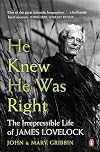
The question about this book is, "Is this the biography of James Lovelock, or of Gaia?"
For those who do not know, Gaia was the earth mother and had her name attached to Lovelock's hypothesis, now upgraded to a theory, that the geological planet, the plants and animals operate a feedback system keeping the weather conditions in check.
Lovelock, who is 94, at the time of this review, has worked tirelessly to bring credence to the concept. Scientists fought his ideas for some time. To me, a show more nonscientific type, they immediately appeared to be worthy of contemplation, so I took some time to search for reasons why the boffins should have taken so much convincing that it was worth perusal. I believe it is because it gets too close to admitting that there is a God. Interlinked systems are dangerously close to a creator. Lovelock is now careful to stress that each participant must see an advantage, there can be no altruism!
This book is only 227 pages so, it is astounding that, by the final page, one feels that one has read a full biography of Lovelock AND received a thorough background in Gaia theory. The book never preaches, it sets out the facts and leaves others to decide: just the sort of biography I like! This book comes highly recommended. show less
For those who do not know, Gaia was the earth mother and had her name attached to Lovelock's hypothesis, now upgraded to a theory, that the geological planet, the plants and animals operate a feedback system keeping the weather conditions in check.
Lovelock, who is 94, at the time of this review, has worked tirelessly to bring credence to the concept. Scientists fought his ideas for some time. To me, a show more nonscientific type, they immediately appeared to be worthy of contemplation, so I took some time to search for reasons why the boffins should have taken so much convincing that it was worth perusal. I believe it is because it gets too close to admitting that there is a God. Interlinked systems are dangerously close to a creator. Lovelock is now careful to stress that each participant must see an advantage, there can be no altruism!
This book is only 227 pages so, it is astounding that, by the final page, one feels that one has read a full biography of Lovelock AND received a thorough background in Gaia theory. The book never preaches, it sets out the facts and leaves others to decide: just the sort of biography I like! This book comes highly recommended. show less
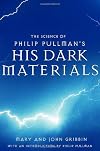
A quick read, written in an easily accessible style. The authors discuss the scientific basis behind the fantasy trilogy, and the theories that informed the book. A bit heavy on physics; there was almost no other science mentioned, though biology does have some play in this book. They touched briefly on the evolution of the wheeled creatures, but didn't even discuss some of the biological problems that were solved by the author in the technique he chose. The explanations of string theory show more were well written, and one of the better I've seen that make it more accessible to the layman; plus they do a reasonably good job of explaining the connection between the particles without dipping into metaphysical nonsense. My one complaint is that the title is misleading; it really should be The Physics of Philip Pullman's His Dark Materials; I was really hoping for a more balanced discussion, and one that recognizes other sciences besides physics - you know, like Chemistry and Biology. Otherwise, a fun and interesting read. show less
The Science of Philip Pullman's His Dark Materials: With an Introduction by Philip Pullman by Mary Gribbin
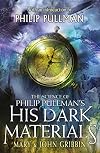
This book looks at the concepts in Pullman's famous fantasy series and how they are or might be reflected in the science and technology of our world, e.g. Northern Lights, Dust, the alethiometer, movement between worlds using the subtle knife, the amber spyglass, and so on. In doing so, the Gribbins discuss dark matter, sub-atomic physics, string theory, quantum probability, the Butterfly Effect and chaos, entanglement, the Many Worlds theory, Schrodinger's cat and more. The authors explain show more stuff as clearly as they can, there are some really tough scientific and philosophical concepts here in this short book. My only slight disappointment was the lack of coverage of the concept of daemons, which I always find one of the most appealing concepts in Lyra's world. show less
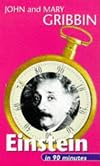
What it says on the tin.
In three sections, prelude, brief biography, and timeline. I do not understand why there was an "ultraviolet catastrophe" (this is just one of the things that are, necessarily, not explained well enough to be actually understood). But it gives a nice, birds-eye view, without any annoying asides.
Einstein's early work, while he worked at the patent office, was some of his most important. Both his work on Brownian motion and his thesis work required extensive statistical show more analysis. He received the Nobel prize for his work on the photoelectric effect. And he went off the rails and came up with special relativity and then with the equivalence of matter and energy (E = mc^2). Note that c isn't just the speed of light, it is the speed of any massless particle, of which the photon is just one example. In 1908 Einstein is just barely an academic, with a position as a Privatdozent at the University of Berne. Prudently, he keeps his day job. Minkowski's interest, and introduction of the four dimensional space-time gives him a boost, and he becomes a full professor at Zurich in 1909. After several more appointments, Einstein, now very desirable, is lured away to Berlin, but unfortunately WWI starts. He develops his theory of general relativity, and his health declines. The explanation of general relativity, while short, makes slightly more sense than in some other books. At the age of 40, Einstein becomes famous, in part because the verification of his theory is an English effort, and symbolic of the peace that was finally ensuing.
Cute detail, Einstein's divorce agreement included transferring the monetary portion of his Nobel prize award to his wife. He hadn't won it yet, but everybody knew it was due in a few years. Einstein was on a trip to Caltech when the Nazis came to power, he never went back.
Einstein came up with the idea of spooky action at a distance to show how ridiculous quantum theory was, regrettably, it seems to occur.
He could not believe that space was expanding or contracting, so he introduces a "comsological constant", which he subsequently regretted.
Overall, a nice straightforward book, which probably does only take 90 minutes to read. show less
In three sections, prelude, brief biography, and timeline. I do not understand why there was an "ultraviolet catastrophe" (this is just one of the things that are, necessarily, not explained well enough to be actually understood). But it gives a nice, birds-eye view, without any annoying asides.
Einstein's early work, while he worked at the patent office, was some of his most important. Both his work on Brownian motion and his thesis work required extensive statistical show more analysis. He received the Nobel prize for his work on the photoelectric effect. And he went off the rails and came up with special relativity and then with the equivalence of matter and energy (E = mc^2). Note that c isn't just the speed of light, it is the speed of any massless particle, of which the photon is just one example. In 1908 Einstein is just barely an academic, with a position as a Privatdozent at the University of Berne. Prudently, he keeps his day job. Minkowski's interest, and introduction of the four dimensional space-time gives him a boost, and he becomes a full professor at Zurich in 1909. After several more appointments, Einstein, now very desirable, is lured away to Berlin, but unfortunately WWI starts. He develops his theory of general relativity, and his health declines. The explanation of general relativity, while short, makes slightly more sense than in some other books. At the age of 40, Einstein becomes famous, in part because the verification of his theory is an English effort, and symbolic of the peace that was finally ensuing.
Cute detail, Einstein's divorce agreement included transferring the monetary portion of his Nobel prize award to his wife. He hadn't won it yet, but everybody knew it was due in a few years. Einstein was on a trip to Caltech when the Nazis came to power, he never went back.
Einstein came up with the idea of spooky action at a distance to show how ridiculous quantum theory was, regrettably, it seems to occur.
He could not believe that space was expanding or contracting, so he introduces a "comsological constant", which he subsequently regretted.
Overall, a nice straightforward book, which probably does only take 90 minutes to read. show less
Awards


You May Also Like


Associated Authors
Statistics
- Works
- 47
- Also by
- 1
- Members
- 2,167
- Popularity
- #11,854
- Rating
- 3.7
- Reviews
- 30
- ISBNs
- 149
- Languages
- 9