
Ernest Buckler (1908–1984)
Author of The Mountain and the Valley
About the Author
Ernest Buckler, 1908 - 1984 Buckler is the author of the Canadian novel "The Mountain and the Valley" (1952), which articulates the twentieth-century themes of alienation, loss and death. In it, the character David Canaan, a protagonist, is a failed writer who is unable to realize that his show more selfishness and inaction have irreversible consequences. He dies still dreaming of becoming a great writer that can give voice to the rural Nova Scotia life that he can't escape or embrace. He also wrote the fiction novels "The Cruelest Month" (1963) and "The Rebellion of Young David and Other Stories" (1975). Buckler also wrote the fictional memoir "Ox Bells and Fireflies" (1968), the humorous "Whiligig" (1977) and "Nova Scotia: Window on the Sea" (photography by Hans Weber) (1973). Buckler received honorary degrees from Dalhousie University and University of New Brunswick, the Canadian Centennial Medal "for valuable service to the nation" and the Stephen Leacock Medal for Humour. (Bowker Author Biography) show less
Image credit: photo:bobbrooks
Works by Ernest Buckler
Associated Works
Tagged
Common Knowledge
- Birthdate
- 1908-07-19
- Date of death
- 1984-03-04
- Gender
- male
- Education
- Dalhousie University (BA|1929)
University of Toronto (MA|1930) - Occupations
- novelist
short story writer - Awards and honors
- Order of Canada (Officer)
Canadian Centennial Medal (1967) - Nationality
- Canada
- Birthplace
- Dalhousie West, Nova Scotia, Canada
- Places of residence
- Bridgetown, Nova Scotia, Canada
Dalhousie West, Nova Scotia, Canada - Place of death
- Bridgetown, Nova Scotia, Canada
- Associated Place (for map)
- Nova Scotia, Canada
Members
Reviews
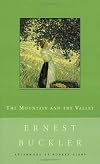
The Annapolis Valley is a beautiful part of Nova Scotia. Set between the Bay of Fundy and a range of forested hills, mountains in the local parlance, it is an amazingly fertile land, dotted with farms generations old. It’s no accident that the protagonist of this novel is named David Canaan.
There are two biblical meanings to the name Canaan. One is that of the land promised to Abraham, the Promised Land of milk and honey. The other is that of Canaan, grandson of Noah, condemned to show more perpetual slavery. David lived both these lives.
The novel’s prologue is in the aftermath of WWII, but the story then quickly shifts to looking back over David’s thirty years. David grew up on a small farm with a twin sister, an older brother, his grandmother, and parents. Each had a defined role in the family, but it became obvious that David was different from the others. An introspective child, “Caution seemed to limit any smile as soon as it began.” He would not be the one to continue this farm cycle. His path would be one of higher education. Nevertheless, pigs still needed to be fed, logs still needed to come down from the mountain, and neighbours still had to be helped. The rhythm of everyday life is beautifully described.
One of the lessons children must learn is that of the permanence of death. Death by misadventure is never far away in rural living. When David was about ten years old, two of the local men were killed in a logging accident. It was his first real experience of the rituals around death. Coming home from the cemetery, he reflected “Swiftly as a breeze, Peter and Spurge had passed from fact to memory”.
Memory, stories, what is told, and what is passed down were of enormous consequence to David, who spent a lot of time contemplating them. There comes a moment in everyone’s development when you pass from child to adult, and David spent a lot of time contemplating this as well. In his case, as with so many, it was the committing of an act he felt he could not disclose to anyone. It was the first time he had felt like this, but he realised, “The secret of childhood is that the past is never thought of as something that might have been different. He was never, even for a moment, all child again.”
Another lesson is that life does not go as planned. David’s took a turn, WWII came along, people left the community. Once they left, they seem to be no longer part of the novel. It was as if they had ceased to exist. However, should they come back, they are incorporated into life once more. This is a novel about David and his world, told by the narrator through David’s eyes and those in his immediate orbit. David is part of his mountain and his valley, and Buckler merges them so well one wonders if any one of them would exist without the other two. show less
There are two biblical meanings to the name Canaan. One is that of the land promised to Abraham, the Promised Land of milk and honey. The other is that of Canaan, grandson of Noah, condemned to show more perpetual slavery. David lived both these lives.
The novel’s prologue is in the aftermath of WWII, but the story then quickly shifts to looking back over David’s thirty years. David grew up on a small farm with a twin sister, an older brother, his grandmother, and parents. Each had a defined role in the family, but it became obvious that David was different from the others. An introspective child, “Caution seemed to limit any smile as soon as it began.” He would not be the one to continue this farm cycle. His path would be one of higher education. Nevertheless, pigs still needed to be fed, logs still needed to come down from the mountain, and neighbours still had to be helped. The rhythm of everyday life is beautifully described.
In the country the day is the determinant. The work, the thoughts, the feelings, to match it, follow.
One of the lessons children must learn is that of the permanence of death. Death by misadventure is never far away in rural living. When David was about ten years old, two of the local men were killed in a logging accident. It was his first real experience of the rituals around death. Coming home from the cemetery, he reflected “Swiftly as a breeze, Peter and Spurge had passed from fact to memory”.
Memory, stories, what is told, and what is passed down were of enormous consequence to David, who spent a lot of time contemplating them. There comes a moment in everyone’s development when you pass from child to adult, and David spent a lot of time contemplating this as well. In his case, as with so many, it was the committing of an act he felt he could not disclose to anyone. It was the first time he had felt like this, but he realised, “The secret of childhood is that the past is never thought of as something that might have been different. He was never, even for a moment, all child again.”
Another lesson is that life does not go as planned. David’s took a turn, WWII came along, people left the community. Once they left, they seem to be no longer part of the novel. It was as if they had ceased to exist. However, should they come back, they are incorporated into life once more. This is a novel about David and his world, told by the narrator through David’s eyes and those in his immediate orbit. David is part of his mountain and his valley, and Buckler merges them so well one wonders if any one of them would exist without the other two. show less

Spoiler alert.
There is a certain unevenness in the story-telling in this book, particularly in the earlier sections, but it does pull together and tell a cohesive and often beautifully written tale. The long poetic descriptive passages, really a sort of meditation on the physical and sensual experience of the people in their setting, can be moving or can interrupt the flow of the narrative a tad too long. Still at their strongest they are some of the best aspects of the book.
I love immersing show more myself in the work and world of this land and time, and there are some compelling insights into humans. Overall it is a dreary tale, though. Just about everybody dies young, the protagonist never comes to grips with his own self-defeating tendencies, and few if any of the inter-personal rifts are resolved before his own untimely death.
It was a bit of work to read in some ways, and I don't regret it, but it isn't one I will go back to. I will cherish some of the images, but as a story, it left me a bit down and unsatisfied. show less
There is a certain unevenness in the story-telling in this book, particularly in the earlier sections, but it does pull together and tell a cohesive and often beautifully written tale. The long poetic descriptive passages, really a sort of meditation on the physical and sensual experience of the people in their setting, can be moving or can interrupt the flow of the narrative a tad too long. Still at their strongest they are some of the best aspects of the book.
I love immersing show more myself in the work and world of this land and time, and there are some compelling insights into humans. Overall it is a dreary tale, though. Just about everybody dies young, the protagonist never comes to grips with his own self-defeating tendencies, and few if any of the inter-personal rifts are resolved before his own untimely death.
It was a bit of work to read in some ways, and I don't regret it, but it isn't one I will go back to. I will cherish some of the images, but as a story, it left me a bit down and unsatisfied. show less
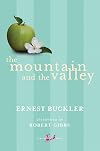
First of all the writing is fantastic, the images the words the author uses really envelopes the reader in the time and place of the novel. The use of simile and metaphor would seem to get tiring after awhile but not in this case. But where the novel falls short is the over all story, it could of been more telling, relevant.
I struggled to get into this book. Its lengthy descriptions of the landscape interrupted the flow of the story making it difficult to stay emotionally engaged with the characters. I may give it another try when I'm in the mood for poetic-style prose but for now, I think I'm going to have to put it aside.
Lists
Awards


You May Also Like


Associated Authors
Statistics
- Works
- 7
- Also by
- 2
- Members
- 255
- Popularity
- #89,876
- Rating
- 3.8
- Reviews
- 8
- ISBNs
- 20