

Jan T. Gross
Author of Neighbors: The Destruction of the Jewish Community in Jedwabne, Poland
About the Author
Jan T. Gross is Professor of Politics and European Studies at New York University
Works by Jan T. Gross
Neighbors: The Destruction of the Jewish Community in Jedwabne, Poland (2000) 693 copies, 18 reviews
Revolution from Abroad: The Soviet Conquest of Poland's Western Ukraine and Western Belorussia (1988) 53 copies
War through children's eyes : the Soviet occupation of Poland and the deportations, 1939-1941 (1981) 8 copies
Und wehe, du hoffst ... : die Sowjetisierung Ostpolens nach dem Hitler-Stalin-Pakt 1939 - 1941 (1988) 1 copy
Upiorna dekada : trzy eseje o stereotypach na temat Żydów, Polaków, Niemców i komunistów 1939-1948 1 copy
War Through Children's Eyes: The Soviet Occupation of Poland and the Deportations, 1939–1941 (Hoover Archival Documentaries) (2019) 1 copy
Szczypta swawoli 1 copy
Vecinos 2001 1 copy
Associated Works
The Establishment Of Communist Regimes In Eastern Europe, 1944-1949 (1997) — Contributor — 13 copies
Tagged
Common Knowledge
- Legal name
- Gross, Jan Tomasz
- Birthdate
- 1947-08-01
- Gender
- male
- Education
- University of Warsaw (physics)
Yale University (Ph.D.) (sociology) (1975) - Occupations
- professor of history
sociologist
Professor of War and Society - Organizations
- Princeton University
Yale University
New York University - Awards and honors
- Order of Merit of the Republic of Poland (1996)
- Relationships
- Deák, István (co-editor)
Judt, Tony (co-editor)
Grudzińska-Gross, Irena (former wife) - Nationality
- Poland
USA - Birthplace
- Warsaw, Poland
- Places of residence
- Warsaw, Poland
USA - Associated Place (for map)
- Warsaw, Poland
Members
Reviews
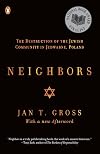
What would it do to your self-image as a country if it wasn't the Nazis who perpetrated the Holocaust, but your neighbors? What if the Nazis stood by and watched while the people that had lived next door to you, in some cases for decades, brutally murdered every Jewish person in your town? Jan T. Gross examines that very question as he examined the slaughter of 1,600 Jews in Jedwabne in the Summer of 1941.
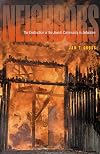
The psychologically disturbing account of how the residents of Jedwabne, a small town in Poland slaughtered their Jewish neighbours on 10 July 1941. After being captured by the Germans on 22 June 1941, the residents asked the Nazis if they could start killing Jews and when given permission, began to do so vigorously under the command of the mayor. The first act was to corral 1600 Jewish men, women, and children into an old barn which was then set afire. Over the ensuing decades, the show more residents of Jedwabne tried to lay the blame on the occupying Germans, but historical documents, and details from residents tell the sordid story. On 10 July 2001, a monument was unveiled in remembrance of the slaughter and the President of the Republic of Poland officially apologized. Is it ever possible for sufficient penance to be paid for such an act? show less
This short book combines excellent documentation with important questions and observations about the meaning and implications of the events described. Despite the storm of controversy surrounding the book’s publication, this is a must-read for anyone wanting to understand what happened in Eastern Europe under Nazi occupation, and the legacy of those times. I’ll call it as I see it: a modern classic.
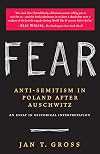
Poland suffered an exceedingly brutal Nazi occupation during the Second World War. Close to five million Polish citizens lost their lives as a result. More than half the casualties were Polish Jews. Thus, the second largest Jewish community in the world–only American Jewry numbered more than the three and a half million Polish Jews at the time–was wiped out. Over 90 percent of its members were killed in the Holocaust. And yet, despite this unprecedented calamity that affected both Jews show more and non-Jews, Jewish Holocaust survivors returning to their hometowns in Poland after the war experienced widespread hostility, including murder, at the hands of their neighbors. The bloodiest peacetime pogrom in twentieth-century Europe took place in the Polish town of Kielce one year after the war ended, on July 4, 1946.
Jan Gross’s Fear attempts to answer a perplexing question: How was anti-Semitism possible in Poland after the war? At the center of his investigation is a detailed reconstruction of the Kielce pogrom and the reactions it evoked in various milieus of Polish society. How did the Polish Catholic Church, Communist party workers, and intellectuals respond to the spectacle of Jews being murdered by their fellow citizens in a country that had just been liberated from a five-year Nazi occupation?
Gross argues that the anti-Semitism displayed in Poland in the war’s aftermath cannot be understood simply as a continuation of prewar attitudes. Rather, it developed in the context of the Holocaust and the Communist takeover: Anti-Semitism eventually became a common currency between the Communist regime and a society in which many had joined in the Nazi campaign of plunder and murder–and for whom the Jewish survivors were a standing reproach.
Jews did not bring communism to Poland as some believe; in fact, they were finally driven out of Poland under the Communist regime as a matter of political expediency. In the words of the Nobel Prize—winning poet Czeslaw Milosz, Poland’s Communist rulers fulfilled the dream of Polish nationalists by bringing into existence an ethnically pure state.
For more than half a century, what happened to the Jewish Holocaust survivors in Poland has been cloaked in guilt and shame. Writing with passion, brilliance, and fierce clarity, Jan T. Gross at last brings the truth to light. show less
Jan Gross’s Fear attempts to answer a perplexing question: How was anti-Semitism possible in Poland after the war? At the center of his investigation is a detailed reconstruction of the Kielce pogrom and the reactions it evoked in various milieus of Polish society. How did the Polish Catholic Church, Communist party workers, and intellectuals respond to the spectacle of Jews being murdered by their fellow citizens in a country that had just been liberated from a five-year Nazi occupation?
Gross argues that the anti-Semitism displayed in Poland in the war’s aftermath cannot be understood simply as a continuation of prewar attitudes. Rather, it developed in the context of the Holocaust and the Communist takeover: Anti-Semitism eventually became a common currency between the Communist regime and a society in which many had joined in the Nazi campaign of plunder and murder–and for whom the Jewish survivors were a standing reproach.
Jews did not bring communism to Poland as some believe; in fact, they were finally driven out of Poland under the Communist regime as a matter of political expediency. In the words of the Nobel Prize—winning poet Czeslaw Milosz, Poland’s Communist rulers fulfilled the dream of Polish nationalists by bringing into existence an ethnically pure state.
For more than half a century, what happened to the Jewish Holocaust survivors in Poland has been cloaked in guilt and shame. Writing with passion, brilliance, and fierce clarity, Jan T. Gross at last brings the truth to light. show less
Lists
Awards


You May Also Like


Associated Authors
Statistics
- Works
- 21
- Also by
- 4
- Members
- 1,073
- Popularity
- #23,963
- Rating
- 3.8
- Reviews
- 21
- ISBNs
- 60
- Languages
- 10
- Favorited
- 1

