
Paul Kengor
Author of God and Ronald Reagan: A Spiritual Life
About the Author
Paul Kengor, PhD, is the New York Times bestselling author of God and Ronald Reagan, 11 Principles of a Reagan Conservative, Dupes, and other books. He serves as professor of political science and executive director of the Center for Vision and Values at Grove City College.
Image credit: Paul Kengor in March 2016, by Hage Skidmore
Works by Paul Kengor
The Devil and Karl Marx: Communism's Long March of Death, Deception, and Infiltration (2020) 155 copies, 2 reviews
A Pope and a President: John Paul II, Ronald Reagan, and the Extraordinary Untold Story of the 20th Century (2017) 131 copies, 1 review
Dupes: How America's Adversaries Have Manipulated Progressives for a Century (2010) 75 copies, 1 review
Takedown: From Communists to Progressives, How the Left Has Sabotaged Family and Marriage (2015) 33 copies
The Divine Plan: John Paul II, Ronald Reagan, and the Dramatic End of the Cold War (2019) 21 copies, 1 review
Associated Works
Immersed in red : my formative years in Marxist household (2016) — Foreword, some editions — 6 copies
Tagged
Common Knowledge
- Other names
- Kengor, Paul G.
- Birthdate
- 1966-12-06
- Gender
- male
- Education
- University of Pittsburgh (PhD|1997)
American University School of International Service (MA)
University of Pittsburgh (BA) - Occupations
- professor of political science
college professor - Organizations
- Grove City College
Hoover Institution
Prager University
Heritage Foundation - Nationality
- USA
- Associated Place (for map)
- USA
Members
Reviews

This book should be read in tandem with Reagan's War by Peter Schweizer - in fact, if they had teamed up to write one book, it would be a stellar, stellar book. Schweizer's book focuses a lot on Reagan's time as SAG President in Hollywood, more so than this one, and Kengor focuses a lot on secret NSDDs and Poland. In fact, Poland is the primary thread that runs through this book, showing up again and again and tying all of Reagan's anti-Communist policies together. The under-the-table aid show more and the above-the-table rhetoric provided by Reagan and his team is the primary reason that the jewel in the Evil Empire's crown fell away, precpitating the downfall of the USSR as a whole. That and SDI. Kengor's book is, like Schweizer's, a corrective to the liberal trope that Gorby surrendered the USSR and Reagan had little, but mostly nothing, to do with the end of the Cold War. "An amiable dunce," as one detractor famously called him. Kengor writes fairly well, though he is a bit long-winded in places and is not averse to beating a dead horse now and again, introducing a subject, telling us about its impact, then giving a detailed history of the subject, with five examples where three would suffice, then reiterating its impact. Thus the text drags a bit in places. Still an excellent book. The debate between Reagan and Robert Kennedy was an eye-opener, I have only seen snippets of it, and I can't recall reading about it. Ted Kennedy's near treason in the early 1980s left me aghast - not a surprise, but shocking nonetheless. Little details here and there crop up to delight the Reaganaut, and make you long for the days when the CIA had a hand in undermining governments and bringing down our enemies (Cuba, Venezuela, Iran - be glad Reagan is gone). show less
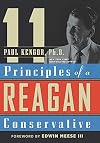
"11 Principles of a Reagan Conservative" by Paul Kengor Ph.D. is a comprehensive and inspiring look at the political philosophy of former US President Ronald Reagan. The author expertly outlines the 11 principles that guided Reagan's leadership and policies, including limited government, free enterprise, strong national defense, and individual freedom. The book is written in a clear and optimistic tone, making it accessible to readers of all political persuasions. Whether you're a fan of show more Reagan or simply interested in understanding his impact on modern conservatism, this book offers a thoughtful and inspiring look at his beliefs and legacy. A must-read for anyone who wants to be uplifted and motivated by the principles that guided one of America's most revered leaders. show less
The Devil and Karl Marx: Communism's Long March of Death, Deception, and Infiltration by Paul Kengor
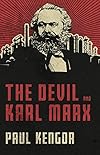
The book touches on quite a bit more than Marx, in fact, the biography of Marx portion is only a fraction of the book. Odd that it doesn't dive much deeper than his parents, because Marx came from a long line of Rabbis that only ended with his father. I would have liked to know more about his lineage, because a lot of the non-mainstream documentaries at the far reaches of the internet mention this in detail, while the book is silent. It's hard to call this omission an oversight, so I'm show more leaning towards this being intentional, possibly a publisher or editor's decision.
The majority of the book's content goes into Marx's philosophy, the type of people who pushed it, and the destruction it caused. Many of these characters readers may be familiar with (Crowley), others not so much.
It's told from a heavily Catholic perspective, with many quotes from Popes, Fr Sheen, and statements made by the Vatican. I didn't find this too off-putting, but an Eastern Orthodox perspective would have also been welcomed, since the Eastern Bloc countries were ultimately the most negatively impacted from this philosophy. Fortunately, the book discusses the tragedies that fell on many Eastern Orthodox believers, namely Priests and members of the clergy in effort for them to renounce their faith, and is perhaps one of the darkest and visceral chapters of any book one will ever read. Absolutely necessary, but be warned.
The best I can say about it is that it covers a lot of ground, and not as dry as it could have been. That said, I'm not certain it warrants being 400+ pages long. It repeats itself quite a bit, and I understand that it's to drive certain points home, but I think that could have done that in 325 pages without sacrificing content. show less
The majority of the book's content goes into Marx's philosophy, the type of people who pushed it, and the destruction it caused. Many of these characters readers may be familiar with (Crowley), others not so much.
It's told from a heavily Catholic perspective, with many quotes from Popes, Fr Sheen, and statements made by the Vatican. I didn't find this too off-putting, but an Eastern Orthodox perspective would have also been welcomed, since the Eastern Bloc countries were ultimately the most negatively impacted from this philosophy. Fortunately, the book discusses the tragedies that fell on many Eastern Orthodox believers, namely Priests and members of the clergy in effort for them to renounce their faith, and is perhaps one of the darkest and visceral chapters of any book one will ever read. Absolutely necessary, but be warned.
The best I can say about it is that it covers a lot of ground, and not as dry as it could have been. That said, I'm not certain it warrants being 400+ pages long. It repeats itself quite a bit, and I understand that it's to drive certain points home, but I think that could have done that in 325 pages without sacrificing content. show less
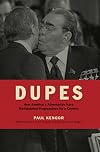
If even a tiny bit of this book is accurate, you should rethink everything you know about all the great Progressives of the past 100 years, from Woodrow Wilson to Ted Kennedy. Drawing on newly-revealed KGB archives that show which American politicians were sympathetic to the cause (and sometimes receiving their donations), I really wonder why this doesn't get a lot more publicity.
Lists
You May Also Like


Associated Authors
Statistics
- Works
- 26
- Also by
- 2
- Members
- 1,354
- Popularity
- #18,990
- Rating
- 4.1
- Reviews
- 22
- ISBNs
- 77
- Languages
- 3
- Favorited
- 1