
Aung San Suu Kyi
Author of Freedom from Fear and Other Writings
About the Author
Suu Kyi's struggle is one of the most extraordinary examples of civil courage in Asia in recent decades." As leader of the prodemocracy movement and cofounder of the National League for Democracy, the nation's opposition party, Aung San Suu Kyi has been under house arrest for what Myanmar's leaders show more call treasonous acts after clashes between demonstrators and armed troops in 1988 and 1989. A scholar and mother, Aung San Suu Kyi had never directly involved herself in politics, yet she was always aware of her identity as the daughter of Aung San, the late Burmese nationalist leader who led the country to independence. During a trip to her homeland, she became aware of deteriorating human rights and the people's cry for democracy. She began her crusade in August 1988 by traveling throughout Burma, calling on the people to help bring democracy to a country governed as a dictatorship since 1962. By introducing the issue of basic human rights, especially the right to choose one's government, Aung San Suu Kyi inspired crowds wherever she went. Aung San Suu Kyi received Nobel Peace Prize in 1991. (Bowker Author Biography) show less
Image credit: Aung San Suu Kyi
Works by Aung San Suu Kyi
Associated Works
Tagged
Common Knowledge
- Birthdate
- 1945-06-19
- Gender
- female
- Education
- Lady Shri Ram College for Women, University of Delhi (1964)
University of Oxford (St. Hugh's College, BA|Philosophy, Politics, and Economics|1969)
University of London (PhD|School of Oriental and African Studies|1985) - Awards and honors
- Nobel Prize (Peace|1991)
Freedom of the City of London (1997revoked|2017)
Freedom of the City of Oxford (1997|revoked|2017)
Freedom of the City of Dublin (1999|revoked|2017)
Presidential Medal of Freedom (2000)
Olof Palme Prize (2005) (show all 9)
Canada (honorary citizenship|2007|revoked|2018)
BBC Reith Lecturer (2011)
Elie Wiesel Award (2012|rescinded|2018) - Relationships
- Aris, Michael (husband)
Aris, Anthony (brother-in-law) - Map Location
- Burma
Members
Reviews

I originally read this in June of 2001, but the recent turmoil in Burma has led me to take it down off the shelf, and page through it again...
A collection of letters from the democratically-elected leader of Burma and winner of the 1991 Nobel Peace Prize, who has been regularly and repeatedly put under house arrest since 1989 by the military junta which rules her country. These brief pieces were written between November 1995 and December 1996, and range in topic from the overtly political show more to the spiritual and personal. Full of Suu Kyi's keen observations and ironic humor - "Life is seldom dull for dissidents in Burma" - they address everything from the importance of tea in the social life of the country to the terrible injustices that SLORC (the State Law and Order Restoration Council) has heaped on pro-democracy activists.
I am a great admirer of Aung San Suu Kyi, and whole-heartedly recommend this collection to all, and most especially to those who would like to know more about this great woman or the history of modern Burma. Although the topics discussed are frequently quite serious, the author's gentle humanity infuses every word, and I came away feeling spiritually cleansed.
Unrelated to any political and/or philosophical issues, one passage in particular has stuck with me since I first read it: "When bathing in the rain was no longer one of great pleasures of my existence, I knew I had left my childhood behind me". This could have been written especially for me!
Black and white line drawings by Heinn Htet. show less
A collection of letters from the democratically-elected leader of Burma and winner of the 1991 Nobel Peace Prize, who has been regularly and repeatedly put under house arrest since 1989 by the military junta which rules her country. These brief pieces were written between November 1995 and December 1996, and range in topic from the overtly political show more to the spiritual and personal. Full of Suu Kyi's keen observations and ironic humor - "Life is seldom dull for dissidents in Burma" - they address everything from the importance of tea in the social life of the country to the terrible injustices that SLORC (the State Law and Order Restoration Council) has heaped on pro-democracy activists.
I am a great admirer of Aung San Suu Kyi, and whole-heartedly recommend this collection to all, and most especially to those who would like to know more about this great woman or the history of modern Burma. Although the topics discussed are frequently quite serious, the author's gentle humanity infuses every word, and I came away feeling spiritually cleansed.
Unrelated to any political and/or philosophical issues, one passage in particular has stuck with me since I first read it: "When bathing in the rain was no longer one of great pleasures of my existence, I knew I had left my childhood behind me". This could have been written especially for me!
Black and white line drawings by Heinn Htet. show less
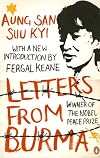
In 1991, Aung San Suu Kyi was awarded the Nobel Peace Prize. She was awarded this for being a steadfast peaceful resistance to the draconian, petty and brutal Myanmar regime. She was under house arrest for 21 years as the leader of the National Defence League. She took all of the threats, disruption and harassment from the and look it back in the face with a wry smile and unlimited courage. She would have her friends and colleagues arrested regularly, her road was frequently blocked, show more especially if she had been planning to hold a meeting or gathering.
All of these overt and covert attacks would have ground most people down, but she bore it with good grace and resilience. She was sustained by her drive to see the country she loves, one day gain a functioning democracy. In these fifty-two letters, she discusses the problems that they have as a country, describes the plight of those that have suffered at the hands of the regime and the repression of the population. It is also full of minutia, she talks about the weather, taking tea and the festivals that were still permitted.
In some ways I liked this, she speaks with a strong voice and brings to life the country that very few have seen from outside. All the way through she has a very clear aim of bringing urgent and necessary change to the country change all the time she was in custody, an aim that the authorities to every opportunity to frustrate. She was released in 2010 and won the election in 2015. She has not been able to hold the presidency because she is the widow and mother of foreigners – provisions from the constitution that seem to have been written specifically to prevent her from being eligible. She was awarded the position of State Counsellor and wields power from there. She has faced criticism in the past couple of years as she has seemingly deliberately ignored the plight of the Rohingya people and the genocide that they are suffering. It tarnishes what is a good book and until that point a life that should have been celebrated. show less
All of these overt and covert attacks would have ground most people down, but she bore it with good grace and resilience. She was sustained by her drive to see the country she loves, one day gain a functioning democracy. In these fifty-two letters, she discusses the problems that they have as a country, describes the plight of those that have suffered at the hands of the regime and the repression of the population. It is also full of minutia, she talks about the weather, taking tea and the festivals that were still permitted.
In some ways I liked this, she speaks with a strong voice and brings to life the country that very few have seen from outside. All the way through she has a very clear aim of bringing urgent and necessary change to the country change all the time she was in custody, an aim that the authorities to every opportunity to frustrate. She was released in 2010 and won the election in 2015. She has not been able to hold the presidency because she is the widow and mother of foreigners – provisions from the constitution that seem to have been written specifically to prevent her from being eligible. She was awarded the position of State Counsellor and wields power from there. She has faced criticism in the past couple of years as she has seemingly deliberately ignored the plight of the Rohingya people and the genocide that they are suffering. It tarnishes what is a good book and until that point a life that should have been celebrated. show less
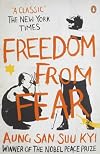
Freedom from Fear by Aung San Suu Kyi Oh, the feels. There's just too much here and during this time. I'm trying to keep this to a review and will post the book inspired rant later. Please bear with me, there will be crossover. This book is amazing and really showcases the struggle and strength of a founder of democracy for her country. This is one of my Reading Nobel Women books. Aung San Suu Kyi was the recipient of the 1991 Nobel Peace Prize.
My feelings about what I was reading show more alternated based on the current US political scene. I was reading it during the last presidential debate and while I was watching the states turn red on election day. I'd rather not get into American politics, but there were some serious concerns on both sides of the aisle and here and some outrage in the aftermath that made reading about student protests in another country and almost 20 years ago that much more relevant.
The book begins with a foreword by Aung San Suu Kyi's husband, Michael Aris. He explains a little of their history together and what had been happening since her struggle for democracy began, it's the personal side that includes that her children had not been able to see her for years on account of it. As someone who works in a "masculine" field and has been married to an at-home dad for six years, I cannot adequately explain how much I adore Aris's support of his wife and the way he never alludes to feelings of emasculation. A woman's struggle and strength does not inherently emasculate her husband. It just doesn't. I love how compiling this work and editing it must have allowed him to feel close to her despite all the things that were keeping them apart at the time of its writing.
He then explains the format for the book. It is broken in three parts. The first are the works about Burma that she wrote before her political involvement. They give the reader a good sense of Burma and how much she loves and appreciates her country. They also get cited quite a bit later, so it helps to have read these works. The next part is her political writings that are mostly by her as well, but some are about her and written by others, such as the acceptance speech given for the Nobel Peace Prize that was given by her son.
It was this part that first made me think about the democracy that we have here and what we want here and what our ideals about democracy really are. It's easy to look at the long history of US democracy and lose the ideas of a founder. This book helped me out with that a little. At worse, it just changed my thoughts about what was going through their minds. There's the bits on the military and how it should (and in the US does) stay out of politics. Aung San Suu Kyi's party was consistently harassed by the military and denied the authorization to assemble but the demonstrations stayed peaceful. It was interesting to see the way she used the presence of the military at her demonstrations as an opportunity to reach out to rather than criticize them.
The last part are the writings in appreciation of Aung San See Kyi's movement and her character. One is written by a personal friend, which was an interesting touch. Another seems a bit more objective but still focuses on the way her involvement changed the movement that had already been there, the way she led them into unity and how she maintained a platform of peaceful protest for democracy over crowds that could have easily gotten violent.
The whole book is a beautiful testament to her strong leadership and character is a proponent of peace and democracy in her country. It recognizes that her position was merely advantageous in the beginning but acknowledges that it was her personal strength and ability that got the country to where it needed to go. It is not a memoir, which was what I had read about previous laureates. I love memoirs, but it was interesting to change it up in that this is part of the body of work that she was given the award for rather than her personal experience through it.
It was also a timely read, as mentioned before. It gives good insight into the mind of a revolutionary striving for democracy in a country that has never had it. The inspirational nature of her writing works to make me want to work on improving upon our own democracy and how it works, to get more involved. show less
My feelings about what I was reading show more alternated based on the current US political scene. I was reading it during the last presidential debate and while I was watching the states turn red on election day. I'd rather not get into American politics, but there were some serious concerns on both sides of the aisle and here and some outrage in the aftermath that made reading about student protests in another country and almost 20 years ago that much more relevant.
The book begins with a foreword by Aung San Suu Kyi's husband, Michael Aris. He explains a little of their history together and what had been happening since her struggle for democracy began, it's the personal side that includes that her children had not been able to see her for years on account of it. As someone who works in a "masculine" field and has been married to an at-home dad for six years, I cannot adequately explain how much I adore Aris's support of his wife and the way he never alludes to feelings of emasculation. A woman's struggle and strength does not inherently emasculate her husband. It just doesn't. I love how compiling this work and editing it must have allowed him to feel close to her despite all the things that were keeping them apart at the time of its writing.
He then explains the format for the book. It is broken in three parts. The first are the works about Burma that she wrote before her political involvement. They give the reader a good sense of Burma and how much she loves and appreciates her country. They also get cited quite a bit later, so it helps to have read these works. The next part is her political writings that are mostly by her as well, but some are about her and written by others, such as the acceptance speech given for the Nobel Peace Prize that was given by her son.
It was this part that first made me think about the democracy that we have here and what we want here and what our ideals about democracy really are. It's easy to look at the long history of US democracy and lose the ideas of a founder. This book helped me out with that a little. At worse, it just changed my thoughts about what was going through their minds. There's the bits on the military and how it should (and in the US does) stay out of politics. Aung San Suu Kyi's party was consistently harassed by the military and denied the authorization to assemble but the demonstrations stayed peaceful. It was interesting to see the way she used the presence of the military at her demonstrations as an opportunity to reach out to rather than criticize them.
The last part are the writings in appreciation of Aung San See Kyi's movement and her character. One is written by a personal friend, which was an interesting touch. Another seems a bit more objective but still focuses on the way her involvement changed the movement that had already been there, the way she led them into unity and how she maintained a platform of peaceful protest for democracy over crowds that could have easily gotten violent.
The whole book is a beautiful testament to her strong leadership and character is a proponent of peace and democracy in her country. It recognizes that her position was merely advantageous in the beginning but acknowledges that it was her personal strength and ability that got the country to where it needed to go. It is not a memoir, which was what I had read about previous laureates. I love memoirs, but it was interesting to change it up in that this is part of the body of work that she was given the award for rather than her personal experience through it.
It was also a timely read, as mentioned before. It gives good insight into the mind of a revolutionary striving for democracy in a country that has never had it. The inspirational nature of her writing works to make me want to work on improving upon our own democracy and how it works, to get more involved. show less
In the wake of Luc Besson's film The Lady and her own delayed Nobel Peace Prize acceptance speech of Aung San Suu Kyi in June 2012 I wanted the listen to more of her voices. This slim collection of 52 columns/letters written in 1995, that is some time after having been awarded the Nobel Prize, for the Japanese newspaper Mainichi Shimbun starts slow with tourist sites, people and food vignettes of Burma. We read about Suu Kyi receiving and paying visits, exchanging gifts and stories. More show more like a mother to her country than the leader of her party and opposition to the government.
Halfway in, the tone of the letters shift and the ugly sides of corruption, economic mismanagement and human right violations in Burma are revealed. While she hat to endure house arrests, it was her associates in prison who had to endure and died from the mistreatment of the ruling junta, aptly named SLORC. Her associates' heroic acceptance of repeated prison terms in atrocious conditions demonstrates a Rocky-like endurance to absorb any punishment the junta metes out. One wonders whether the current reforms will succeed and repay the sacrifices made on its behalf or end in repression. Compared to earlier pictures, Aung San Suu Kyi has visibly aged. Will she have the continued strength to carry the movement forward and accept executive duties? Or will she end Gandhi-like only partially witnessing the change? This collection of letters, while not too political, present her fair approach in the spirit of Lincoln: "With malice toward none, with charity for all, with firmness in the right as God gives us to see the right, let us strive on to finish the work we are in, to bind up the nation's wounds, to care for him who shall have borne the battle and for his widow and his orphan, to do all which may achieve and cherish a just and lasting peace among ourselves and with all nations." show less
Halfway in, the tone of the letters shift and the ugly sides of corruption, economic mismanagement and human right violations in Burma are revealed. While she hat to endure house arrests, it was her associates in prison who had to endure and died from the mistreatment of the ruling junta, aptly named SLORC. Her associates' heroic acceptance of repeated prison terms in atrocious conditions demonstrates a Rocky-like endurance to absorb any punishment the junta metes out. One wonders whether the current reforms will succeed and repay the sacrifices made on its behalf or end in repression. Compared to earlier pictures, Aung San Suu Kyi has visibly aged. Will she have the continued strength to carry the movement forward and accept executive duties? Or will she end Gandhi-like only partially witnessing the change? This collection of letters, while not too political, present her fair approach in the spirit of Lincoln: "With malice toward none, with charity for all, with firmness in the right as God gives us to see the right, let us strive on to finish the work we are in, to bind up the nation's wounds, to care for him who shall have borne the battle and for his widow and his orphan, to do all which may achieve and cherish a just and lasting peace among ourselves and with all nations." show less
You May Also Like


Associated Authors
Statistics
- Works
- 16
- Also by
- 2
- Members
- 764
- Popularity
- #33,304
- Rating
- 3.6
- Reviews
- 17
- ISBNs
- 45
- Languages
- 10
- Favorited
- 2