
Bertil Lintner
Author of Blood Brothers: The Criminal Underworld of Asia
About the Author
Bertil Lintner is a journalist and writer, currently with Asia Times and Asia Pacific Media Services.
Image credit: Courtesy of Allen and Unwin
Works by Bertil Lintner
Great Game East: India, China, and the Struggle for Asia’s Most Volatile Frontier (2012) 35 copies, 1 review
The Kachin: Lords of Burma's Northern Frontier (Beautiful & Educational Books on the Peoples of South China) (1997) 7 copies
World.Wide.Web : Chinese migration in the 21st century - and how it will change the world (2012) 4 copies
Merchants of Madness: The Methamphetamine Explosion in the Golden Triangle (2009) 3 copies, 1 review
Tagged
Common Knowledge
Members
Reviews
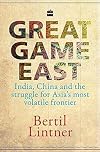
I've read one or two books by Bertil Lintner in the past, so I approached this book with high hopes. I am glad to state that Bertil Lintner lived up to my expectations.
Very few Indians know about the complex history of Northeast India or even try to understand anything about the region. Many people in other parts of India often refer to them by the derogatory term, 'Chinky.'
Bertil Lintner is part of a growing galaxy of writers telling us about this part of India, and even though the book show more is now dated, I recommend it to most people.
One of the book's best parts is the structure, a chapter dedicated to each troubled state – the Nagas, the Mizos, Manipur, and Assam, with chapters focusing on Bangladesh and the Indian Ocean. The excellent introduction creates a solid foundation for the book and establishes Bertil's credentials as a person qualified to write about Northeast India. His daughter was born in Nagaland, and therein lies the tale of an intrepid traveler, researcher, and writer.
I have traveled a bit in the Northeastern parts of India, starting at the height of the insurgency in the 1990s, and I did not understand the reason for the conflict. This book gives me a glimpse into the background of the rebellion against 'the Indian state,' the complicity of state and non-state actors in China, Myanmar, and Bangladesh.
He published the book about a decade back, so the material has become dated. The region has become more tranquil since then, but peace is always one stone's throw away from disintegration. I consider the book essential reading for every Indian citizen and those aspiring to seek a public policy career in the region. One of the book's best aspects is the balanced tone Bertil Lintner adopts: he does not judge or take sides. If you wish to understand Northeast India, this book is a good place to start. show less
Very few Indians know about the complex history of Northeast India or even try to understand anything about the region. Many people in other parts of India often refer to them by the derogatory term, 'Chinky.'
Bertil Lintner is part of a growing galaxy of writers telling us about this part of India, and even though the book show more is now dated, I recommend it to most people.
One of the book's best parts is the structure, a chapter dedicated to each troubled state – the Nagas, the Mizos, Manipur, and Assam, with chapters focusing on Bangladesh and the Indian Ocean. The excellent introduction creates a solid foundation for the book and establishes Bertil's credentials as a person qualified to write about Northeast India. His daughter was born in Nagaland, and therein lies the tale of an intrepid traveler, researcher, and writer.
I have traveled a bit in the Northeastern parts of India, starting at the height of the insurgency in the 1990s, and I did not understand the reason for the conflict. This book gives me a glimpse into the background of the rebellion against 'the Indian state,' the complicity of state and non-state actors in China, Myanmar, and Bangladesh.
He published the book about a decade back, so the material has become dated. The region has become more tranquil since then, but peace is always one stone's throw away from disintegration. I consider the book essential reading for every Indian citizen and those aspiring to seek a public policy career in the region. One of the book's best aspects is the balanced tone Bertil Lintner adopts: he does not judge or take sides. If you wish to understand Northeast India, this book is a good place to start. show less
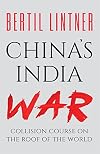
A detailed account of the China-India border conflict. As it generally follows and substantiates the Indian position, it is obviously music to the ears of Indian readers. The book also gives mini-histories of related issues and events in Pakistan, Burma, Nepal, Bhutan, the Sikkim issue, Indian Ocean geopolitics, and so on. The hefty list of references will help the reader follow up on particular aspects. One implication of the India-centric approach is that it does not contribute much to an show more appreciation of the opponent's motivations, and thus ends up with reiterating the stalemate with only a military stand-off to look forward to. show less
Bertil Lintner's book is excellent and is essential reading for anyone who wants to study the events leading up to the 1962 Indo-China war and the subsequent events. Unlike other books which focus only on the war, this one takes you back to the earliest discussions, which are about the MacMahon Line. The book continues on to the developments taking place after the war. He has written a well-balanced and well-researched book.
Buy it. Read i
Buy it. Read i
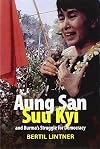
Burma's pro-democracy movement emerged in 1988 when massive demonstrations swept across the country. This book gives an account of the movement, its emergence and growth, and Aung San Suu Kyi's prominent leadership role since its inception. Woven into this history is an outline of how Aung San Suu Kyi herself has become a highly respected pro-democracy icon internationally while being revered nationally as the "female Bodhisattva" who will deliver the Burmese people from the evil of the show more military regime. Lintner considers her strengths as well as her weaknesses, and traces her life not only in Burma, but also in India, the United Kingdom, the United States, Bhutan, and Japan. She was greatly inspired by her father, Aung San, Burma's independence hero who was assassinated when she was an infant, and also by Mahatma Gandhi and Martin Luther King. Lintner analyzes the staying power of Burma's military regime and points out the obstacles to achieving what Aung San Suu Kyi is striving for: a free and democratic Burma show less
You May Also Like


Statistics
- Works
- 29
- Members
- 257
- Popularity
- #89,244
- Rating
- 3.8
- Reviews
- 6
- ISBNs
- 64
- Languages
- 2