

Eoin McNamee
Author of The Navigator
About the Author
Series
Works by Eoin McNamee
Associated Works
Down These Green Streets: Irish Crime Writing in the 21st Century (2011) — Contributor — 25 copies, 1 review
Tagged
Common Knowledge
- Other names
- Creed, John
- Birthdate
- 1961-02-27
- Gender
- male
- Occupations
- writer
- Awards and honors
- Macauley Fellowship for Irish Literature (1990)
- Nationality
- Ireland
- Birthplace
- Kilkeel, County Down, Northern Ireland
- Places of residence
- Kilkeel, County Down, Northern Ireland
County Sligo, Ireland - Associated Place (for map)
- Ireland
Members
Reviews

This is McNamee’s first novel and one can see why it made his name as a writer to watch. The novel is set in Belfast which is described as “cold, functional, ghostly”---an apt description of the tone of the novel itself, but potential readers should not be deterred because the writing is wonderful.
Victor Kelly is a Protestant (though with the possible taint of that Catholic name, Kelly, the most grievous insult anyone could throw in his face) who grows up hard to become head of a show more small gang of killers known as the Resurrection Men who specialize in slitting the throats of Catholics picked up on the streets; not entirely at random as each kidnapping is well planned, but random in that the only real criterion is that the target be Catholic. That, however, is the end of the randomness as the subsequent torture, mutilation, murder and staging of the corpse are meticulously planned for maximum pain and maximum impact. The novel also follows the parallel lives of Ryan, in particular, and Coppinger, two journalists who write about the knife-murders and whose lives cut across those of Kelly and his men.
The novel feels like an abstract painting that is all straight lines, triangles and oblongs of various sizes, colours and shapes that overlap and intersect, a painting of sharp corners and boundaries that everywhere define life and death. Belfast itself is like a character in the novel as we see its economic growth and decline, its increasing despair and dismemberment into sectional retreats. The boundaries of the streets t fix denominational enclaves that determine life and death if, for instance, you were to find yourself accidentally where you should not be. And life lines define one’s existence, in an unbreakable, iron cage: “It was a question of assembling an identity out of names: the name of school attended, the name of the street where you lived, your own name. These were the finally tuned instruments of survival."
The trajectories of the lives of Kelly and his men are straight lines to death or imprisonment with overlapping shapes of allegiances and betrayals. They style themselves as protectors of Protestants against the depredations of Catholics, and for this they are respected, and a little feared, in their community, but without the religious cloak, Kelly and his men would be ordinary thieves, pimps, racketeers, and murderers; these are not innocents led astray. I have to think hard to recall any truly positive human relationships in the novel: Kelly is estranged from his father and even fantasizes slitting his throat when he one day shaves him after his father has had a stroke; Ryan becomes a heavy drinker, is estranged from his father and divorced; Coppinger is a loner who drinks and smokes himself into an early grave; Heather, Victor’s girlfriend is buffeted by forces and events of life from which she cannot break free. And yet there is this fetish of motherhood: one killer has to leave the scene of a murder early because he promised to take his mother to the shops, but none of them has a real, human relationship with his mother. In fact, they are all arrested, infantile development, sociopaths. Only the violence gives them focus and motivation.
Lest all of this sound too depressing to read, let me assure that it is not. The story is bleak, but the telling is clear and the writing is very good. McNamee writes in a very simple, declarative style but his writing is characterized by two powerful currents. One is his insights into what I would call the psychologies of persons, of motivations, of relationships, of social and personal expectations, of roles to be played. This even extends to the psychology of places:
“It was the first time Heather had been inside a courthouse. It was not what she expected. McClure told her that this was part of the mystery of courthouses. They are not what you expect. You look for authority in a courthouse, the exercise of prerogative. This is where the small acts of human deceit and betrayal are given latitude, where they should be played out in terms of motive, consequences. The dark benches, the archaic procedure designed to give you the drama you feel you are owed from your life, the feeling that you are acting on behalf of something great and shadowy. “
The other current is the writing in the use of inventive, insightful and often surprising similes and metaphors.
“Victor would look at him then but he would have put the shout away like it was something he’d sneaked on to the terraces under his coat and was afraid to use again.”
“They would come in and sit on the edge of the sofa. Big Ivan looked miserable and contrite. His eyes kept travelling to his big hands as if they were something uncouth which had followed him in.”
“And it was the women who lay awake at night listening to sand hissing in the caravan chassis and to children making sounds in their sleep to complement that sound, so that they felt a parent’s faint dread at their children’s access to the windlblown and strange.”
“He realized that a name was accomplished and haunting, and that having read them he could not divest himself of them but they would come to him again like an old pain coming intact through the innuendo of years.”
A writer well worth reading. show less
Victor Kelly is a Protestant (though with the possible taint of that Catholic name, Kelly, the most grievous insult anyone could throw in his face) who grows up hard to become head of a show more small gang of killers known as the Resurrection Men who specialize in slitting the throats of Catholics picked up on the streets; not entirely at random as each kidnapping is well planned, but random in that the only real criterion is that the target be Catholic. That, however, is the end of the randomness as the subsequent torture, mutilation, murder and staging of the corpse are meticulously planned for maximum pain and maximum impact. The novel also follows the parallel lives of Ryan, in particular, and Coppinger, two journalists who write about the knife-murders and whose lives cut across those of Kelly and his men.
The novel feels like an abstract painting that is all straight lines, triangles and oblongs of various sizes, colours and shapes that overlap and intersect, a painting of sharp corners and boundaries that everywhere define life and death. Belfast itself is like a character in the novel as we see its economic growth and decline, its increasing despair and dismemberment into sectional retreats. The boundaries of the streets t fix denominational enclaves that determine life and death if, for instance, you were to find yourself accidentally where you should not be. And life lines define one’s existence, in an unbreakable, iron cage: “It was a question of assembling an identity out of names: the name of school attended, the name of the street where you lived, your own name. These were the finally tuned instruments of survival."
The trajectories of the lives of Kelly and his men are straight lines to death or imprisonment with overlapping shapes of allegiances and betrayals. They style themselves as protectors of Protestants against the depredations of Catholics, and for this they are respected, and a little feared, in their community, but without the religious cloak, Kelly and his men would be ordinary thieves, pimps, racketeers, and murderers; these are not innocents led astray. I have to think hard to recall any truly positive human relationships in the novel: Kelly is estranged from his father and even fantasizes slitting his throat when he one day shaves him after his father has had a stroke; Ryan becomes a heavy drinker, is estranged from his father and divorced; Coppinger is a loner who drinks and smokes himself into an early grave; Heather, Victor’s girlfriend is buffeted by forces and events of life from which she cannot break free. And yet there is this fetish of motherhood: one killer has to leave the scene of a murder early because he promised to take his mother to the shops, but none of them has a real, human relationship with his mother. In fact, they are all arrested, infantile development, sociopaths. Only the violence gives them focus and motivation.
Lest all of this sound too depressing to read, let me assure that it is not. The story is bleak, but the telling is clear and the writing is very good. McNamee writes in a very simple, declarative style but his writing is characterized by two powerful currents. One is his insights into what I would call the psychologies of persons, of motivations, of relationships, of social and personal expectations, of roles to be played. This even extends to the psychology of places:
“It was the first time Heather had been inside a courthouse. It was not what she expected. McClure told her that this was part of the mystery of courthouses. They are not what you expect. You look for authority in a courthouse, the exercise of prerogative. This is where the small acts of human deceit and betrayal are given latitude, where they should be played out in terms of motive, consequences. The dark benches, the archaic procedure designed to give you the drama you feel you are owed from your life, the feeling that you are acting on behalf of something great and shadowy. “
The other current is the writing in the use of inventive, insightful and often surprising similes and metaphors.
“Victor would look at him then but he would have put the shout away like it was something he’d sneaked on to the terraces under his coat and was afraid to use again.”
“They would come in and sit on the edge of the sofa. Big Ivan looked miserable and contrite. His eyes kept travelling to his big hands as if they were something uncouth which had followed him in.”
“And it was the women who lay awake at night listening to sand hissing in the caravan chassis and to children making sounds in their sleep to complement that sound, so that they felt a parent’s faint dread at their children’s access to the windlblown and strange.”
“He realized that a name was accomplished and haunting, and that having read them he could not divest himself of them but they would come to him again like an old pain coming intact through the innuendo of years.”
A writer well worth reading. show less
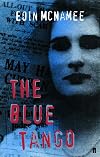
This is the first thing I’ve read by McNamee and it is very good. It is 1952 and nineteen year old Patricia Curran has been brutally murdered (37 stab wounds), her body found, by her brother and father, on the drive up to her house. Patricia comes from a prominent family…her father is a well-known judge and her brother a rising prosecutor who is also a religious nut….but Patricia is a promiscuous young woman involved with both single and married men so her relationships at home are show more strained, to say the least. The novel opens with Patricia’s death but this is not your ordinary murder-mystery. We follow the investigation with the local police, supplemented by a senior London policeman brought in to finish off the case, and we learn more and more about the family and a host of other characters in the small town.
We also learn early in the novel that the wrong man will be convicted for the crime and the guilty party (or parties) from the family will be protected from even the most cursory investigation that would have revealed their guilt….when the local police arrive at the murder scene they are told that the judge does not agree to their searching the house itself and no one questions this. This only gets worse as the proper instincts of the local police detective are suppressed and the investigation, especially with the arrival of the London detectives, becomes a purely political affair marked by complicity, duplicity and incompetence. As one of the characters describes it, “…being swamped with the uneasy sense of corruption and trespass that seemed poised to envelope the whole affair.” McNamee portrays very well the racism, xenophobia, homophobia and sexism of the time, all the more amazing because these were so casual in this time and place; casual in the sense of being unremarked upon, simply being the way that things were.
The murder-mystery and investigation provide structure to the book, but this is really a novel about the complexity and drama of human and social relations. As one character comments, “you did not need to bring mystery with you when even the simplest of human transactions was knee-deep in perplexity.”
McNamee is a fine writer with a keen eye for character and the interplay of interpersonal relations, for the striations of society, for the human strengths and weaknesses and complexities of character and the moral ambiguities and compromises that cut across those striations, for the rationalizations and excuses that people tell themselves in their self-images, for the power of those with place and authority versus those who simply know their place and must submit to survive, for the exercise of power by the powerful to protect one of their own with any sense of justice be damned.
Almost everyone jumps on the bandwagon of badmouthing Patricia and her loose ways, finally depicting her less as a victim than someone bound for trouble and whose life could only be expected to lead to this end. It is ironical that the only person who refuses to engage in this and who will have nothing to do with demeaning her reputation is the loan shark who has been supporting the judge with loans, against his property, to cover gambling losses.
McNamee has a wonderful sense of simile and description, for example:
“It was an era when women in blonde wigs were featured lying naked across the covers of cheap paperbacks. Now they seemed forlorn but at the time they seemed magisterial in their ability to replicate glamour, and he found himself content to accept the leery collaterals of their faked magnificence.”
And this description of the local policeman looking at knives for sale in a department store, “to see if he could find a knife that fitted the pathologist’s description of the blade that killed Patricia. However, the blades he saw seemed to mandate a finesse in the matter of flesh, whereas he was looking for a knife that was short on lustre but possessed perhaps of a crude but reliable killing ability.”
An excellent novel. show less
We also learn early in the novel that the wrong man will be convicted for the crime and the guilty party (or parties) from the family will be protected from even the most cursory investigation that would have revealed their guilt….when the local police arrive at the murder scene they are told that the judge does not agree to their searching the house itself and no one questions this. This only gets worse as the proper instincts of the local police detective are suppressed and the investigation, especially with the arrival of the London detectives, becomes a purely political affair marked by complicity, duplicity and incompetence. As one of the characters describes it, “…being swamped with the uneasy sense of corruption and trespass that seemed poised to envelope the whole affair.” McNamee portrays very well the racism, xenophobia, homophobia and sexism of the time, all the more amazing because these were so casual in this time and place; casual in the sense of being unremarked upon, simply being the way that things were.
The murder-mystery and investigation provide structure to the book, but this is really a novel about the complexity and drama of human and social relations. As one character comments, “you did not need to bring mystery with you when even the simplest of human transactions was knee-deep in perplexity.”
McNamee is a fine writer with a keen eye for character and the interplay of interpersonal relations, for the striations of society, for the human strengths and weaknesses and complexities of character and the moral ambiguities and compromises that cut across those striations, for the rationalizations and excuses that people tell themselves in their self-images, for the power of those with place and authority versus those who simply know their place and must submit to survive, for the exercise of power by the powerful to protect one of their own with any sense of justice be damned.
Almost everyone jumps on the bandwagon of badmouthing Patricia and her loose ways, finally depicting her less as a victim than someone bound for trouble and whose life could only be expected to lead to this end. It is ironical that the only person who refuses to engage in this and who will have nothing to do with demeaning her reputation is the loan shark who has been supporting the judge with loans, against his property, to cover gambling losses.
McNamee has a wonderful sense of simile and description, for example:
“It was an era when women in blonde wigs were featured lying naked across the covers of cheap paperbacks. Now they seemed forlorn but at the time they seemed magisterial in their ability to replicate glamour, and he found himself content to accept the leery collaterals of their faked magnificence.”
And this description of the local policeman looking at knives for sale in a department store, “to see if he could find a knife that fitted the pathologist’s description of the blade that killed Patricia. However, the blades he saw seemed to mandate a finesse in the matter of flesh, whereas he was looking for a knife that was short on lustre but possessed perhaps of a crude but reliable killing ability.”
An excellent novel. show less
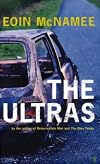
This is an excellent novel by a fine writer. The story is based, loosely, on the life and death of a Special Forces Captain, Robert Nairac, who left a bar in 1977, in the company of three men, and was never seen again, nor was his body ever found. Nairac, at least in the novel, is a larger-than-life, shadowy figure who works hard at perfecting a mysterious persona, a mythic personality. Twenty-five years later, ex-Sergeant Blair Agnew, who knew Nairac, dedicates his wasted life to trying to show more figure out what happened to Nairac; an obsession that is probably the only thing that keeps him going. Agnew himself was a peripheral player in the shadowy world of special forces and competing intelligence agencies, a man with a failed marriage, no career prospects, no core beliefs, a man described by his anorexic daughter as having real expertise only in the “field of weak promises and shallow commitments”.
McNamee conveys very well the indistinct world of the counter intelligence war, a war characterized by many competing agencies and individuals with ill-defined objectives and constantly shifting alliances that can, at times, even cross the lines between friend and foe, a war of clandestine military actions, a world of vaporous lines of communication and responsibility, a world of rituals and talismans and of roles played and imposed but with no moral core, a world of metaphor and enigma and riddles, a world where events and directions seem, in their own mad logic, to have their own life forces, their own ineluctable movements and outcomes beyond the ken and control of the men who think they are masters of the moment. In this, I was struck by parallels to the writing of Dennis Johnson in Tree of Smoke, describing the confusion of purposes and actions of the war in Vietnam.
As one of the protagonists says, “There were complaints from GCHQ that there were too many organizations on the ground and that they were interfering with each other’s work. Knox didn’t agree. He encouraged the entry of other branches into the field. It was important to have inter-agency rivalry, people working in layers, laying false trails for each other. Groups of highly trained men stumbling across each other at night. Knox knew that confusion was important. A sense of unstable government was vital to good intelligence work. You wanted there to be shifting patterns, shadowy alliances, overtones of corruption and sexual scandal.” Or, as Agnew himself realizes at one point, “That was what Robert and the others did. They created secrets and forced everyone to live in them. That was what scared him. The knowledge of clandestine governance, the dark polity.”
This is the third book I’ve read by McNamee (in addition to Resurrection Man and The Blue Tango) and I see repeating characteristics and themes. One is McNamee’s psychological acuity in exploring the weaknesses, guilt, and destinies of individuals and how they interact with others at various levels and in various circumstances. Another is the psychology of confession that does not stop people from doing dark deeds, but drives them towards the absolution, not necessarily of repentance, but of being known, of playing a role consonant with self-images that impose certain requirements. Another is the idea that events have a force and direction and meaning in and of themselves, beyond or apart from the motives of the people that initiate and think they control the interactions.
And then there is the beauty of McNamee’s writing, in particular his use of metaphor in the best manner of unexpected juxtapositions that illuminate. Some examples:
“…he was willing to sit back and watch nurses leaving the hospital, the white of their uniforms stark in the gathering dusk. You had the sensation of signals coming through, systemic in darkness, of semaphore.”
“The bird [a buzzard] moved sideways along the perch and stepped on to his arm with an odd delicacy, something Robert would come to notice in the birds, the way they displayed what seemed like a murderous fastidiousness.”
“The words had a bitter outline, but there was an absence in the way she spoke them that robbed them of malice. She ran her fingers over the seam of the T-shirt and turned it over again as if she could enfold apprehension within it. “
There is more to this book: metaphors of sight and blindness, of the wasting of Agnew’s anorexic daughter. McNamee’s world is stark and there is no redemption, but he does a masterful job of exploring it. Recommended reading. show less
McNamee conveys very well the indistinct world of the counter intelligence war, a war characterized by many competing agencies and individuals with ill-defined objectives and constantly shifting alliances that can, at times, even cross the lines between friend and foe, a war of clandestine military actions, a world of vaporous lines of communication and responsibility, a world of rituals and talismans and of roles played and imposed but with no moral core, a world of metaphor and enigma and riddles, a world where events and directions seem, in their own mad logic, to have their own life forces, their own ineluctable movements and outcomes beyond the ken and control of the men who think they are masters of the moment. In this, I was struck by parallels to the writing of Dennis Johnson in Tree of Smoke, describing the confusion of purposes and actions of the war in Vietnam.
As one of the protagonists says, “There were complaints from GCHQ that there were too many organizations on the ground and that they were interfering with each other’s work. Knox didn’t agree. He encouraged the entry of other branches into the field. It was important to have inter-agency rivalry, people working in layers, laying false trails for each other. Groups of highly trained men stumbling across each other at night. Knox knew that confusion was important. A sense of unstable government was vital to good intelligence work. You wanted there to be shifting patterns, shadowy alliances, overtones of corruption and sexual scandal.” Or, as Agnew himself realizes at one point, “That was what Robert and the others did. They created secrets and forced everyone to live in them. That was what scared him. The knowledge of clandestine governance, the dark polity.”
This is the third book I’ve read by McNamee (in addition to Resurrection Man and The Blue Tango) and I see repeating characteristics and themes. One is McNamee’s psychological acuity in exploring the weaknesses, guilt, and destinies of individuals and how they interact with others at various levels and in various circumstances. Another is the psychology of confession that does not stop people from doing dark deeds, but drives them towards the absolution, not necessarily of repentance, but of being known, of playing a role consonant with self-images that impose certain requirements. Another is the idea that events have a force and direction and meaning in and of themselves, beyond or apart from the motives of the people that initiate and think they control the interactions.
And then there is the beauty of McNamee’s writing, in particular his use of metaphor in the best manner of unexpected juxtapositions that illuminate. Some examples:
“…he was willing to sit back and watch nurses leaving the hospital, the white of their uniforms stark in the gathering dusk. You had the sensation of signals coming through, systemic in darkness, of semaphore.”
“The bird [a buzzard] moved sideways along the perch and stepped on to his arm with an odd delicacy, something Robert would come to notice in the birds, the way they displayed what seemed like a murderous fastidiousness.”
“The words had a bitter outline, but there was an absence in the way she spoke them that robbed them of malice. She ran her fingers over the seam of the T-shirt and turned it over again as if she could enfold apprehension within it. “
There is more to this book: metaphors of sight and blindness, of the wasting of Agnew’s anorexic daughter. McNamee’s world is stark and there is no redemption, but he does a masterful job of exploring it. Recommended reading. show less
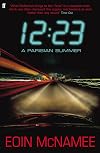
Of all the fin de siecle deaths, none has elicited the hysterical, self-indulgent, almost masturbatory orgasm of primal grief that marked the passing of Diana, Princess of Wales.
On the 10th anniversary of her death, the long-suffering world has once again been subjected to an outpouring of rehashed tributes, tales, theories and photographs of the self-styled ‘Queen of Hearts’.
Eoin McNamee is a renowned writer of fictions based on fact and it is hardly surprising that 2007 saw his take show more on the ‘assassination’ of Lady Di: the difference between McNamee and the al Fayed School of conspiracy theorists is that 12:23 is, unabashedly, a novel.
The book is remarkable not only for its realism and the quality of the research but also for the spare yet lyrical tone of the writing, bringing starkly to life the timeline which concluded in the Alma Tunnel in Paris, when ‘that night’s histories reeled away into myth’.
McNamee scrutinizes the five days before the fatal accident from several points of view: the omniscient reader is privy to all the forces that cause Henri Paul, a man renowned as a skilled driver with excellent responses, to chauffeur the Mercedes into a fatal collision.
We are allowed a glimpse at a complex web: there is the former Special Branch man Harper, recruited by his one-time handler, Bennet. Adjacent to him is Grace, who once held a minor post in British Intelligence, also recruited by Bennet.
Contracted to keep a watching brief on Diana during her brief stay in Paris, the three become aware of other more sinister forces which have also converged on the City of Light in the dog days of the year, including a seedy over-the-hill photographer, who drives a white Fiat Uno…
Sex, stupidity, sleaziness, greed and blackmail are the elements that, to a greater or lesser extent, determine the fate of every one of the characters – from ‘Spencer’ herself and the hapless al Fayed boy to Furst, the mad South African hired killer.
Some have celebrated this anniversary by gleefully plunging venomous knives into Diana’s spectral back, while most have hurtled eagerly down memory lane to enjoy another cathartic fest of weeping and tooth gnashing.
But 12:23 does neither: it is the story of the assassination of the Princess of Wales, it revolves around her, she is the centre of the action – but it is not about her at all, she is just the catalyst.
A sentimental tale about the minor tragedies of unimportant lives, yet the writing is never sentimental and seldom sympathetic: it presents an interesting hypothesis and realistic characters, but avoids positing any ‘answers’ – an excellent read. show less
On the 10th anniversary of her death, the long-suffering world has once again been subjected to an outpouring of rehashed tributes, tales, theories and photographs of the self-styled ‘Queen of Hearts’.
Eoin McNamee is a renowned writer of fictions based on fact and it is hardly surprising that 2007 saw his take show more on the ‘assassination’ of Lady Di: the difference between McNamee and the al Fayed School of conspiracy theorists is that 12:23 is, unabashedly, a novel.
The book is remarkable not only for its realism and the quality of the research but also for the spare yet lyrical tone of the writing, bringing starkly to life the timeline which concluded in the Alma Tunnel in Paris, when ‘that night’s histories reeled away into myth’.
McNamee scrutinizes the five days before the fatal accident from several points of view: the omniscient reader is privy to all the forces that cause Henri Paul, a man renowned as a skilled driver with excellent responses, to chauffeur the Mercedes into a fatal collision.
We are allowed a glimpse at a complex web: there is the former Special Branch man Harper, recruited by his one-time handler, Bennet. Adjacent to him is Grace, who once held a minor post in British Intelligence, also recruited by Bennet.
Contracted to keep a watching brief on Diana during her brief stay in Paris, the three become aware of other more sinister forces which have also converged on the City of Light in the dog days of the year, including a seedy over-the-hill photographer, who drives a white Fiat Uno…
Sex, stupidity, sleaziness, greed and blackmail are the elements that, to a greater or lesser extent, determine the fate of every one of the characters – from ‘Spencer’ herself and the hapless al Fayed boy to Furst, the mad South African hired killer.
Some have celebrated this anniversary by gleefully plunging venomous knives into Diana’s spectral back, while most have hurtled eagerly down memory lane to enjoy another cathartic fest of weeping and tooth gnashing.
But 12:23 does neither: it is the story of the assassination of the Princess of Wales, it revolves around her, she is the centre of the action – but it is not about her at all, she is just the catalyst.
A sentimental tale about the minor tragedies of unimportant lives, yet the writing is never sentimental and seldom sympathetic: it presents an interesting hypothesis and realistic characters, but avoids positing any ‘answers’ – an excellent read. show less
Lists
Awards


You May Also Like


Associated Authors
Statistics
- Works
- 25
- Also by
- 4
- Members
- 1,131
- Popularity
- #22,700
- Rating
- 3.7
- Reviews
- 20
- ISBNs
- 125
- Languages
- 7
- Favorited
- 1