

Dermot Healy (1947–2014)
Author of A Goat's Song
About the Author
Dermot Healy was born in Finea, County Westmeath, Ireland on November 9, 1947. His first volume of short stories, Banished Misfortune, was published in 1982. He wrote several novels including A Goat's Song, Sudden Times, and Long Time, No See. He also wrote volumes of poetry including A Fool's show more Errand and a memoir entitled The Bend for Home. He won several literary prizes including the Hennessy, the Tom Gallon and the Encore. He also wrote and directed plays including The Long Swim and On Broken Wings. He was the ageing Irish emigrant narrator in Nichola Bruce's film, I Could Read the Sky in 1999. He died on June 29, 2014 at the age of 66. (Bowker Author Biography) show less
Image credit: c/o Cavan Library Service
Works by Dermot Healy
Associated Works
Tagged
Common Knowledge
- Canonical name
- Healy, Dermot
- Birthdate
- 1947-11-09
- Date of death
- 2014-06-29
- Gender
- male
- Education
- University College Dublin (dropped out)
- Occupations
- novelist
playwright
poet - Organizations
- Heathrow airport (security guard)
Aosdána
Toscaireacht - Nationality
- Ireland
- Birthplace
- Finnea, Co. Westmeath, Ireland
- Places of residence
- County Cavan, Ireland
London, England
Ballyconnell, County Sligo, Ireland - Associated Place (for map)
- Ireland
Members
Discussions
140. A Goat's Song by Dermot Healy in Backlisted Book Club (March 2022)
Reviews
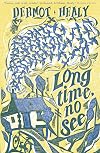
Long Time, No See is the account of a summer of Mister Psyche, a young man in limbo between finishing school and starting the rest of his life, dealing with his past by adopting his granduncle, Joejoe, along with his friend, The Blackbird. Despite the short chapters, it is a novel best savoured in long draughts, sinking into the rhythms of this gradually modernising rural Ireland and dwelling in Psyche's existence as he feels his way through the confusion. I have seen it said that "nothing show more happens" in this novel---only in the same way that "nothing happens" as life dawdles its way along and we try to make sense of it. Give Long Time, No See space to breathe and you might find yourself as mesmerised as I did. show less
 This review was written for LibraryThing Early Reviewers.
I thought I would love this book - from the description it sounded like a combination of Flan O'Brien's Third Policeman, Dan Rhodes' Gold or Paul Murray's books. But I was hugely disappointed. The book consists of a lot of dialogue which normally makes for a quick and easy read, but not in this case. Here it felt like constantly eavesdropping on conversations where I'd arrived half way through and I was never entirely sure who was saying what. If I was to be charitable, I'd say he has a good show more ear for dialogue as I could hear the Irish brogue as I read the conversations. The blurb on the back has Anne Enright proclaiming Healy as a "writer's writer" - that he may be, but ont he basis of this, he certainly isn't a readers writer, which surely is more important? show less
This review was written for LibraryThing Early Reviewers.Have you ever read a book all the way through and felt that you missed something really big? You get that unsettling feeling that perhaps the whole thing is one big allegory that you failed to get. Or maybe you were daydreaming through the crucial paragraph that knits the whole book together.
That’s the feeling I had after reading Long Time, No See. The quality of the writing was excellent throughout, and Dermot Healy spent 11 years writing this book, so I’m sure he had something show more important to say. But I just don’t know what it was. I enjoyed the lively writing, the well-drawn characters, the intriguing situations, but in the end it didn’t seem to lead to anything much. The characters didn’t seem to develop in any meaningful way, and the various mysteries in the plot were either left unresolved or were resolved in a way that felt like an anticlimax. For example the bullet hole in Joejoe’s window was just caused by him firing off his gun. There’s a lot of buildup and suspicion and then it was just an old man firing off his gun by mistake.
Again, maybe I’m missing something, but it felt as if the whole book was like that – plot points were developed just to the point where they had the potential to be interesting, and then were dropped. Mister Psyche grapples with the recent death of his friend in a car crash – or at least you expect him to, but he doesn’t really do much grappling. He’s just sad sometimes, and then he builds a wall. Perhaps the wall is symbolic, or perhaps it isn’t. Mister Psyche has an odd relationship with his girlfriend Anna, with hardly any emotion or affection and not much contact except by mobile phone. Again, we don’t find out why this is, and nothing much changes about it.
Perhaps Healy is trying to say that that’s how life really is, that it’s not that interesting or dramatic, that there is no neat or satisfying resolution, that events don’t have a point in the end. If so, he’s probably right about that, but it doesn’t make for a very engaging read. Or perhaps the characters and plot are developing in interesting ways, but it’s all so understated that I missed it. I don’t generally need, or want, to have everything spelled out for me, and nor do I need a nice neat resolution, but I like to have something happen and for it to a bit plainer than it was here.
My overall feeling about this book was that it was a beautifully written and intriguing (and very long!) setup for a great novel, but the story didn’t develop as I’d hoped it would. show less
That’s the feeling I had after reading Long Time, No See. The quality of the writing was excellent throughout, and Dermot Healy spent 11 years writing this book, so I’m sure he had something show more important to say. But I just don’t know what it was. I enjoyed the lively writing, the well-drawn characters, the intriguing situations, but in the end it didn’t seem to lead to anything much. The characters didn’t seem to develop in any meaningful way, and the various mysteries in the plot were either left unresolved or were resolved in a way that felt like an anticlimax. For example the bullet hole in Joejoe’s window was just caused by him firing off his gun. There’s a lot of buildup and suspicion and then it was just an old man firing off his gun by mistake.
Again, maybe I’m missing something, but it felt as if the whole book was like that – plot points were developed just to the point where they had the potential to be interesting, and then were dropped. Mister Psyche grapples with the recent death of his friend in a car crash – or at least you expect him to, but he doesn’t really do much grappling. He’s just sad sometimes, and then he builds a wall. Perhaps the wall is symbolic, or perhaps it isn’t. Mister Psyche has an odd relationship with his girlfriend Anna, with hardly any emotion or affection and not much contact except by mobile phone. Again, we don’t find out why this is, and nothing much changes about it.
Perhaps Healy is trying to say that that’s how life really is, that it’s not that interesting or dramatic, that there is no neat or satisfying resolution, that events don’t have a point in the end. If so, he’s probably right about that, but it doesn’t make for a very engaging read. Or perhaps the characters and plot are developing in interesting ways, but it’s all so understated that I missed it. I don’t generally need, or want, to have everything spelled out for me, and nor do I need a nice neat resolution, but I like to have something happen and for it to a bit plainer than it was here.
My overall feeling about this book was that it was a beautifully written and intriguing (and very long!) setup for a great novel, but the story didn’t develop as I’d hoped it would. show less
This review was written for LibraryThing Early Reviewers.This is a somewhat puzzling novel. Dermot Healy's writing is quite beautiful, lyrical in a way. The story, however, was disappointing. The author jumps from one occurrence to another and so I found no cohesion in the telling of this tale. Don't get me wrong, the characters are well drawn and the North West Irish dialect becomes very easy to read once you get passed the first quarter of the book. It is this dialect and way of writing which almost made me give up on the novel, but I could not show more write an honest appraisal of the book without reading it in total. Luckily, and quite suddenly, I found myself "in the rhythm" of the story and couldn't put it down.
All the characters are engaging and quite charming. Mister Psyche, our main figure in the novel, has just left school and is extremely close to two elderly male villagers. He has also experienced a recent traumatic event which is not alluded to until well in to the story. Then, when we do discover what happened, it is only referred to in small ways throughout the rest of the book.
I kept waiting for something to happen here, and it never did for me. As a portrait of family life, loss and friendship it hit the mark, but I could have done with more "action" and a deeper understanding of the main characters' lives both past and present. show less
All the characters are engaging and quite charming. Mister Psyche, our main figure in the novel, has just left school and is extremely close to two elderly male villagers. He has also experienced a recent traumatic event which is not alluded to until well in to the story. Then, when we do discover what happened, it is only referred to in small ways throughout the rest of the book.
I kept waiting for something to happen here, and it never did for me. As a portrait of family life, loss and friendship it hit the mark, but I could have done with more "action" and a deeper understanding of the main characters' lives both past and present. show less
This review was written for LibraryThing Early Reviewers.Lists
Awards


You May Also Like


Associated Authors
Statistics
- Works
- 17
- Also by
- 1
- Members
- 716
- Popularity
- #35,435
- Rating
- 3.4
- Reviews
- 21
- ISBNs
- 75
- Languages
- 7
- Favorited
- 1
