
George B. Schaller
Author of The Last Panda
About the Author
Zoologist George B. Schaller was born in 1933. He is the science director of international programs for the New York Zoological Society's Center for Field Biology and Conservation. After studying wildlife in the Serengeti National Park in Tanzania, Schaller wrote The Serengeti Lion: A Study of show more Predator-Prey Relations, which won the 1972 National Book Award. After studying the panda in China, Schaller wrote The Last Panda, a book detailing his discoveries. (Bowker Author Biography) show less
Image credit: Beijing Zoo lecture, Aug. 10, 2005 (photo credit: Smartneddy, Wikipedia user)
Works by George B. Schaller
Mountain Monarchs: Wild Sheep and Goats of the Himalaya (Wildlife Behavior and Ecology series) (1977) 5 copies
Gorillas gads 2 copies
The Snow Leopard 1 copy
Realm of the Snow Antelope 1 copy
LA VIDA DEL GORILA 1 copy
Associated Works
Ants, Indians, and Little Dinosaurs: A Celebration of Man & Nature for the 75th Anniversary of Natural History Magazine (1975) — Contributor — 203 copies, 1 review
Arctic National Wildlife Refuge: Seasons of Life and Land (2003) — Contributor — 70 copies, 1 review
Tagged
Common Knowledge
- Birthdate
- 1933
- Gender
- male
- Education
- University of Alaska
University of Wisconsin–Madison - Occupations
- conservationist
biologist - Awards and honors
- Indianapolis Prize (2008)
National Geographic Lifetime Achievement Award
Tyler Prize for Environmental Achievement - Nationality
- USA
- Associated Place (for map)
- USA
Members
Reviews
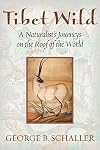
This book was so eye-opening. It really shows you the true life of field work in conservation. And oftentimes, it's not great: the frustrations, the trials and tribulations, the hardships, the monotony, the hard work. But there are positives: the beauty, the sublime, the small triumphs.
"It is the sort of day that makes me question my devotion to this region."
[vs.]
"A wonderful wildlife afternoon; for once reality lives up to anticipation and hope."
I will admit that parts of the book were show more slow, especially the first half. Schaller really gets granular when talking about the specific numbers of species as they travel through various areas, the particulars of travel, things breaking down, people they encounter. But when thinking back on it, I feel this again is perfect to show the monotony and meticulousness required to do this kind of work. Usually when we hear stories about conservation in the news, we hear them at such a high level. We don't see all the blood, sweat, tears, and time that went into gathering all the information and data that led to the final conclusion. This book really shows that.
"Scientific reports present facts neatly arranged and tabulated, marching from concept to conclusion in a wonderfully linear manner. But that is not the reality of fieldwork. In the Chang Tang, for instance, it included endless days of snowstorms, icy winds, bogged down vehicles, impassable terrain, creative disinterest of some coworkers, and vanishing chiru, but on occasion sparkling encounters with wildlife as well. I’ve tried to capture here something of the messy way in which information is actually gathered, erratically and haphazardly, with the solving of everyday logistical problems, and sometimes even with mere survival as the most immediate concern. Patience is perhaps the most valuable commodity. Yet somehow, in the end, one often does gain the kind of information upon which conservation can be based."
But for me, Schaller really shines when he does take that step back and talks about his work in a more abstract and philosophical manner, when he actually examines his own work and his life.
"Lying in the cocoon of my sleeping bag during the long hours of night waiting for dawn, my thoughts distill life past and present. In over half a century of fieldwork I still sleep in cold tents, frost crystals around my face in the morning, just as I did during the 1950s in Alaska, during the 1970s in the Himalaya and Karakoram of Nepal and Pakistan, and from the 1980s onward on the Tibetan Plateau of China and other parts of Central Asia. What am I accomplishing? Why am I doing the same kind of work decade after decade, though in different places? At my age it’s come time for a mental summing up. I strive to do solid science and promote conservation, but, at the same time, I seek a life outdoors, in part a self-indulgent escape from a daily routine. When searching for a personal philosophy, I recall the words of the German poet Johann Friedrich von Schiller: “What the inner voice says will not disappoint the hoping soul.” But that inner voice nags at my being a scientific fossil with a narrow focus, unchanging, while others do “hard” science with acronyms like GIS and DNA. I console myself that natural history remains the cornerstone of conservation, that it must be learned on the ground, asking questions, observing, listening, taking notes, getting the boots muddy. Technology helps to open the world but technology can also close it unless one learns directly from nature."
He talks about having perseverance instead of hope, even though I feel he does think hope is important. I also think he implies that the nagging voice of pessimism is always there in the back of your head:
'After a hiatus of five years since the 2006 workshop, during which progress on the peace park almost ceased, there might now be action on trans-frontier cooperation. I am tempted to write that I hope the peace park will become a reality. However, hope is all too often an indulgence or a prediction of disappointment; it is not a plan of action. With perseverance, we will ultimately succeed. Is it stubbornness or principle on my part after working toward this goal for a quarter century? Actually both. Conservation is my life and I must believe in success or I have nothing."
Something that I think has been more prominent in conservation in the past several years is the importance of the involvement and buy-in of the local community. Schaller has known that for decades:
"It has become axiomatic that conservation can be successful only if local communities are fully involved in planning and implementing management efforts."
Throughout the book, you meet not only the animals Schaller is studying, but the people he interacts with: the scientists and researchers, along with the locals and government officials, and photographers, filmmakers, anyone that is involved. With so many people involved, as in any other field, there will always be differing viewpoints, conflicting goals, varying approaches. Alas, this is the only way, and in this book you see the one step forward, two steps back progress, slow changes, or change not happening quickly enough.
"Too many of my wildlife observations consisted of sad mementos of once-vibrant animals."
I think this is a great book for those interested in conservation, especially to understand the day-to-day field work.
A few more of my favorite quotes:
"I do not mistake numbers and measurements and statistical detail for meaning, but I hoped to collect enough scattered facts to discover from them certain patterns and principles which underlie the Chang Tang ecosystem. But nothing remains static, neither a wildlife population nor a culture, and I knew my efforts would represent just a moment in time, a record of something that no one has seen before and never would again."
"To see all these animals leading their ancient and traditional lives, seemingly unaffected by humankind, is truly a gift to the spirit."
"Being forever itinerant, and burdened with the melancholy of an outsider, I became perhaps an internal exile with a detached and reticent character. Fieldwork demands stoicism, a tolerance for pounding winds and lashing snows as well as balky porters and vehicles, and, most difficult, often renouncing time with those you love. Passions are selfish, and it is Kay who bore the burden of mine. "
"Whatever the explanation, I like to ramble over wild topography or sit quietly to watch an animal in its universe so different from mine. A naturalist basically wanders and observes. "
"It taught me that the forces of pillaging and plunder will always seize any opportunity to destroy, and that never-ending vigilance and commitment are needed to protect a country’s natural treasures and save fragments of wilderness for future generations."
"Science is presumed to be based on facts objectively observed, interpreted, and reported. Each person, though, brings his or her subjective bias to a scientific endeavor. Too often you look only for what’s already in your mind."
"Abdusattor and our two drivers interview households about their life and its relation to wildlife, an essential component of a conservation project. Such facts about local conditions are a starting point, not a conclusion. All too often conservation is approached with enthusiastic ignorance, focused on principles while ignoring the actual aspirations, desires, and needs of the people. Practical conservation usually can survive only by compromise."
"Unfortunately, if perception and reality clash, the former always tends to win. Perhaps Mark Twain said it best: “First get your facts; then you can distort them at your leisure.”"
"Although Buddhism is opposed to intentional killing, such as by hunting, this has never prevented many Tibetans from pursuing animals for subsistence and profit. As with any religion, there is a contradiction between the ideal and actual practice."
Note: I received a review copy of this book from NetGalley. Quotes may have changed in the final version. show less
"It is the sort of day that makes me question my devotion to this region."
[vs.]
"A wonderful wildlife afternoon; for once reality lives up to anticipation and hope."
I will admit that parts of the book were show more slow, especially the first half. Schaller really gets granular when talking about the specific numbers of species as they travel through various areas, the particulars of travel, things breaking down, people they encounter. But when thinking back on it, I feel this again is perfect to show the monotony and meticulousness required to do this kind of work. Usually when we hear stories about conservation in the news, we hear them at such a high level. We don't see all the blood, sweat, tears, and time that went into gathering all the information and data that led to the final conclusion. This book really shows that.
"Scientific reports present facts neatly arranged and tabulated, marching from concept to conclusion in a wonderfully linear manner. But that is not the reality of fieldwork. In the Chang Tang, for instance, it included endless days of snowstorms, icy winds, bogged down vehicles, impassable terrain, creative disinterest of some coworkers, and vanishing chiru, but on occasion sparkling encounters with wildlife as well. I’ve tried to capture here something of the messy way in which information is actually gathered, erratically and haphazardly, with the solving of everyday logistical problems, and sometimes even with mere survival as the most immediate concern. Patience is perhaps the most valuable commodity. Yet somehow, in the end, one often does gain the kind of information upon which conservation can be based."
But for me, Schaller really shines when he does take that step back and talks about his work in a more abstract and philosophical manner, when he actually examines his own work and his life.
"Lying in the cocoon of my sleeping bag during the long hours of night waiting for dawn, my thoughts distill life past and present. In over half a century of fieldwork I still sleep in cold tents, frost crystals around my face in the morning, just as I did during the 1950s in Alaska, during the 1970s in the Himalaya and Karakoram of Nepal and Pakistan, and from the 1980s onward on the Tibetan Plateau of China and other parts of Central Asia. What am I accomplishing? Why am I doing the same kind of work decade after decade, though in different places? At my age it’s come time for a mental summing up. I strive to do solid science and promote conservation, but, at the same time, I seek a life outdoors, in part a self-indulgent escape from a daily routine. When searching for a personal philosophy, I recall the words of the German poet Johann Friedrich von Schiller: “What the inner voice says will not disappoint the hoping soul.” But that inner voice nags at my being a scientific fossil with a narrow focus, unchanging, while others do “hard” science with acronyms like GIS and DNA. I console myself that natural history remains the cornerstone of conservation, that it must be learned on the ground, asking questions, observing, listening, taking notes, getting the boots muddy. Technology helps to open the world but technology can also close it unless one learns directly from nature."
He talks about having perseverance instead of hope, even though I feel he does think hope is important. I also think he implies that the nagging voice of pessimism is always there in the back of your head:
'After a hiatus of five years since the 2006 workshop, during which progress on the peace park almost ceased, there might now be action on trans-frontier cooperation. I am tempted to write that I hope the peace park will become a reality. However, hope is all too often an indulgence or a prediction of disappointment; it is not a plan of action. With perseverance, we will ultimately succeed. Is it stubbornness or principle on my part after working toward this goal for a quarter century? Actually both. Conservation is my life and I must believe in success or I have nothing."
Something that I think has been more prominent in conservation in the past several years is the importance of the involvement and buy-in of the local community. Schaller has known that for decades:
"It has become axiomatic that conservation can be successful only if local communities are fully involved in planning and implementing management efforts."
Throughout the book, you meet not only the animals Schaller is studying, but the people he interacts with: the scientists and researchers, along with the locals and government officials, and photographers, filmmakers, anyone that is involved. With so many people involved, as in any other field, there will always be differing viewpoints, conflicting goals, varying approaches. Alas, this is the only way, and in this book you see the one step forward, two steps back progress, slow changes, or change not happening quickly enough.
"Too many of my wildlife observations consisted of sad mementos of once-vibrant animals."
I think this is a great book for those interested in conservation, especially to understand the day-to-day field work.
A few more of my favorite quotes:
"I do not mistake numbers and measurements and statistical detail for meaning, but I hoped to collect enough scattered facts to discover from them certain patterns and principles which underlie the Chang Tang ecosystem. But nothing remains static, neither a wildlife population nor a culture, and I knew my efforts would represent just a moment in time, a record of something that no one has seen before and never would again."
"To see all these animals leading their ancient and traditional lives, seemingly unaffected by humankind, is truly a gift to the spirit."
"Being forever itinerant, and burdened with the melancholy of an outsider, I became perhaps an internal exile with a detached and reticent character. Fieldwork demands stoicism, a tolerance for pounding winds and lashing snows as well as balky porters and vehicles, and, most difficult, often renouncing time with those you love. Passions are selfish, and it is Kay who bore the burden of mine. "
"Whatever the explanation, I like to ramble over wild topography or sit quietly to watch an animal in its universe so different from mine. A naturalist basically wanders and observes. "
"It taught me that the forces of pillaging and plunder will always seize any opportunity to destroy, and that never-ending vigilance and commitment are needed to protect a country’s natural treasures and save fragments of wilderness for future generations."
"Science is presumed to be based on facts objectively observed, interpreted, and reported. Each person, though, brings his or her subjective bias to a scientific endeavor. Too often you look only for what’s already in your mind."
"Abdusattor and our two drivers interview households about their life and its relation to wildlife, an essential component of a conservation project. Such facts about local conditions are a starting point, not a conclusion. All too often conservation is approached with enthusiastic ignorance, focused on principles while ignoring the actual aspirations, desires, and needs of the people. Practical conservation usually can survive only by compromise."
"Unfortunately, if perception and reality clash, the former always tends to win. Perhaps Mark Twain said it best: “First get your facts; then you can distort them at your leisure.”"
"Although Buddhism is opposed to intentional killing, such as by hunting, this has never prevented many Tibetans from pursuing animals for subsistence and profit. As with any religion, there is a contradiction between the ideal and actual practice."
Note: I received a review copy of this book from NetGalley. Quotes may have changed in the final version. show less

A much better read than The Serengeti Lion, this book details what the field work was like on a personal level. Schaller describes the difficulties he encountered, from getting vehicles stuck in ruts, to loosing track of animals (radio-tracking was in its infancy). One chapter is about how his family handled living in the bush and their various wild pets (at different times, a warthog, mongoose and lion cub). There’s a chapter about dealing with poachers and examining the significance of show more that problem, listing man right up there alongside the prominent predators. I enjoyed greatly the chapters on wild hunting dogs, cheetah and leopards, but of course it is mostly about lion prides. It has all the same information as The Serengeti Lion (some of the sentences repeated word-for-word) but with far fewer statistics and more inclusion of personal descriptions and interesting incidents. Especially Schaller’s own feelings and perceptions about the work, the animals’ individualities, and the landscape around him. It’s very palpable through his words how much the author loved the land and admired the animals he studied. Very interesting is a final chapter where he and a companion roamed the landscape to see how many opportunities they would have of scavenging food or finding weak prey they could easily tackle- once he laid hands on a sick zebra foal, another on a blind giraffe calf- in order to estimate how well primitive hominids could have lived in the area. I don’t know how well his assumptions stand up to
modern anthropology, though... I highly recommend this book over the prior one. It’s just the kind of work a casual reader like myself can appreciate, enjoy and learn from.
more at the Dogear Diary show less
modern anthropology, though... I highly recommend this book over the prior one. It’s just the kind of work a casual reader like myself can appreciate, enjoy and learn from.
more at the Dogear Diary show less

I'd never heard of Schaller before but wanted to read it because it concern the same 1970s trip Peter Matthiessen was on when he wrote The Snow Leopard. Apparently Schaller was at the time considered the world's premier field biologist. On this trip he was scouting for regions in Pakistan, Nepal and Tibet that governments might set aside for parks. He was searching for large mammals and finding most of the Himalayas had been decimated by hunters and farmers. It was mostly empty except for show more local stories of the abundance of what once existed. The writing is evocative but episodic, nothing like the quality of Matthiessen. Schaller writes like a mere mortal, cribbing events from his daily journal giving equal space to everything boring or not. But it is readable and occasionally fascinating. show less

4.25 stars
George Schaller is a biologist and conservationist who has studied various wildlife in their natural settings. In this book, he gives us an account of the time he spent in China in the early 1980s studying the panda.
I really liked this. I didn't know much about the panda and of course, a portion of this book was spent on the pandas he met in the wild while he was there, but a significant amount of the book was also spent detailing the cultural and political hurdles of the project show more coordinated by the World Wildlife Fund, along with the Chinese government and a few other Chinese organizations, none of which seemed to coordinate very well or agree on a whole lot. There were also plenty of frustrations around the people who were sent to work at the research station, many of whom didn't want to be there. So, there was a lot of politics in the book, as well (which kept my interest more than I might have expected). It is nonfiction, which does tend to take a little longer to get through, but if you have an interest in wildlife and/or endangered species, it is well worth the read. show less
George Schaller is a biologist and conservationist who has studied various wildlife in their natural settings. In this book, he gives us an account of the time he spent in China in the early 1980s studying the panda.
I really liked this. I didn't know much about the panda and of course, a portion of this book was spent on the pandas he met in the wild while he was there, but a significant amount of the book was also spent detailing the cultural and political hurdles of the project show more coordinated by the World Wildlife Fund, along with the Chinese government and a few other Chinese organizations, none of which seemed to coordinate very well or agree on a whole lot. There were also plenty of frustrations around the people who were sent to work at the research station, many of whom didn't want to be there. So, there was a lot of politics in the book, as well (which kept my interest more than I might have expected). It is nonfiction, which does tend to take a little longer to get through, but if you have an interest in wildlife and/or endangered species, it is well worth the read. show less
Lists
Awards


You May Also Like


Associated Authors
Statistics
- Works
- 28
- Also by
- 9
- Members
- 726
- Popularity
- #34,982
- Rating
- 4.0
- Reviews
- 9
- ISBNs
- 69
- Languages
- 5
- Favorited
- 1