
Brandon Hobson
Author of The Removed
About the Author
Image credit: Photo by Kaylynn Hobson. Photo Source: https://www.harpercollins.com/blogs/authors/brandon-hobson-202011111441480
Works by Brandon Hobson
Associated Works
Never Whistle at Night: An Indigenous Dark Fiction Anthology (2023) — Contributor — 1,550 copies, 23 reviews
Tagged
Common Knowledge
- Gender
- male
- Short biography
- DR. BRANDON HOBSON IS A 2022 GUGGENHEIM FELLOW. HE RECEIVED HIS PHD FROM OKLAHOMA STATE UNIVERSITY. HIS NOVEL, WHERE THE DEAD SIT TALKING, WAS A FINALIST FOR THE NATIONAL BOOK AWARD, WINNER OF THE READING THE WEST AWARD, AND LONGLISTED FOR THE DUBLIN LITERARY AWARD, AMONG OTHER DISTINCTIONS.
HIS SHORT STORIES HAVE WON A PUSHCART PRIZE AND HAVE APPEARED IN THE BEST AMERICAN SHORT STORIES, MCSWEENEY'S, CONJUNCTIONS, NOON, AND ELSEWHERE. HE TEACHES CREATIVE WRITING AT NEW MEXICO STATE UNIVERSITY AND AT THE INSTITUTE OF AMERICAN INDIAN ARTS. HE IS THE EDITOR IN CHIEF OF PUERTO DEL SOL. HOBSON IS AN ENROLLED CITIZEN OF THE CHEROKEE NATION TRIBE OF OKLAHOMA. - Nationality
- USA
Cherokee Nation - Birthplace
- Oklahoma, USA
- Associated Place (for map)
- Oklahoma, USA
Members
Reviews
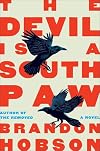
Brandon Hobson is an intriguing Cherokee writer. I loved one of his earlier works, The Removed. In The Devil Is a Southpaw, some of his many layers of meaning went over my head, especially many of the literary, mythological, and historical references. What I did catch was thought-provoking and profound. The first part of the novel, which is a manuscript within the book written by the character Milton, is titled "The Devil is a Southpaw." Milton is a child in the first part and an adult in show more the second part, and his name and qualities seem to allude to the famous Milton. The manuscript is supposedly based on a movie of that name starring John Wayne. Of course, characters played by John Wayne often killed Native Americans and displayed their white dominance. Milton's story takes place at a residential detention center in Oklahoma around 1988. Although not all of the detainees are Native Americans, Matthew Echota, Milton's friend, is certainly one, and he is the object of Milton's admiration, which is more like an unhealthy envy.
We get to know Mathew Echota as a boy who stutters and is the subject of harassment and bullying. Not only is he victimized by his peers, but also by adults. He's different, has a deformed hand, and is super sensitive. He is artistic, misunderstood, and as the Echota name suggests, represents his people, the Cherokee. His family and his captors dismiss his positive attributes and punish him for being himself, talented and observant. The abusive detention home for children, as Milton describes it, forces us to ask questions about the inhumane treatment of some people and the institutional violence characterizing so much American policy and culture. Hobson gave the sergeants and counselors names such as Ambrose, Jackson, Lee, Vlad, and Strangelove. Some of these historic names are references to famous oppressors. Their pretenses of saving people that they are harming, in a religious and cultural sense, are repulsive yet resonate with reality.
The first half of the book is symbolic, mythological, and dark in its portrayal of the treatment of the children at the detention center. The youngsters are continually dehumanized in multiple ways and told to work on redemption and saving themselves. The children's preoccupation is with escaping, not only from the facility, but also from reality by focusing on writing and art to express themselves. Drawings are interspersed throughout the text to illustrate further the emotions and ambiance of the setting and themes. We don't find out the backstories of the children and why they are in detention until the second half of the book. As we read the second half, we are enlightened about the hopelessness of the main characters and the generational cycles of abuse that plague them. It becomes clear that multigenerational violence and dissatisfaction with life and cultural expectations of masculinity and performance adversely affect oppressed people. The book left me with many questions about good and evil, and of course, the devil. The term "southpaw," referring to Matthew's father's baseball status as well as the devil, definitely carries a negative connotation of disadvantage and stigma. The way education is imposed on marginalized people is both pretentious and disturbing.. The people in control of education in this novel are often less educated than their captive audience. In The Devil is a Southpaw, Brandon Hobson has crafted a complex story with powerful and timely themes that will prompt readers to reflect on relationships within families, communities, institutions, and culture. show less
We get to know Mathew Echota as a boy who stutters and is the subject of harassment and bullying. Not only is he victimized by his peers, but also by adults. He's different, has a deformed hand, and is super sensitive. He is artistic, misunderstood, and as the Echota name suggests, represents his people, the Cherokee. His family and his captors dismiss his positive attributes and punish him for being himself, talented and observant. The abusive detention home for children, as Milton describes it, forces us to ask questions about the inhumane treatment of some people and the institutional violence characterizing so much American policy and culture. Hobson gave the sergeants and counselors names such as Ambrose, Jackson, Lee, Vlad, and Strangelove. Some of these historic names are references to famous oppressors. Their pretenses of saving people that they are harming, in a religious and cultural sense, are repulsive yet resonate with reality.
The first half of the book is symbolic, mythological, and dark in its portrayal of the treatment of the children at the detention center. The youngsters are continually dehumanized in multiple ways and told to work on redemption and saving themselves. The children's preoccupation is with escaping, not only from the facility, but also from reality by focusing on writing and art to express themselves. Drawings are interspersed throughout the text to illustrate further the emotions and ambiance of the setting and themes. We don't find out the backstories of the children and why they are in detention until the second half of the book. As we read the second half, we are enlightened about the hopelessness of the main characters and the generational cycles of abuse that plague them. It becomes clear that multigenerational violence and dissatisfaction with life and cultural expectations of masculinity and performance adversely affect oppressed people. The book left me with many questions about good and evil, and of course, the devil. The term "southpaw," referring to Matthew's father's baseball status as well as the devil, definitely carries a negative connotation of disadvantage and stigma. The way education is imposed on marginalized people is both pretentious and disturbing.. The people in control of education in this novel are often less educated than their captive audience. In The Devil is a Southpaw, Brandon Hobson has crafted a complex story with powerful and timely themes that will prompt readers to reflect on relationships within families, communities, institutions, and culture. show less
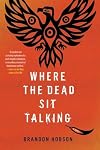
Brandon Hobson has written at least two previous novels and a bunch of short stories, but this is my first book by him. It tells the story of about two years in the life of 14/15 year old Sequoyah, who has been living in foster homes and shelters since his mother was sent to prison for drug- and alcohol-related offenses. Sequoyah loves his mother but he has learned to distance himself from her, for his own sake. His case worker finds him a new foster placement in a rural area a couple of show more hours from where he'd been living in Tulsa, OK. He becomes the third foster kid in the Troutt's house, along with 17YO Rosemary and 13YO George. Sequoyah is Cherokee and Rosemary is Kiowa, and that creates an instant bond between them, but their connection deepens as they spend time together. It's never sexual but it's emotionally very intense. George and Sequoyah share a room and also get to know each other, and mostly they get along, but George is focused and obsessive about his interests (he's writing a novel, among other things) and he has trauma-based fears. So it's not really a friendship, although they grow to care for each other's well being. The Troutts are a bit odd but kind and supportive. The caseworker is also kind and supportive, although necessarily from a distance.
The entire story is told through Sequoyah's POV. We learn about his upbringing and background through his ruminations and flashbacks, including his childhood in Cherokee County, his mother's lapses, and the kitchen accident that left him with obvious facial scarring. Sequoyah wants to connect with people but he doesn't really know how, and he veers from aloof to intensely attached depending on his mood and general state. He's very much a teenage boy, but one who has had a difficult life and is having to make his way without stability or supportive love from any family members. His found family isn't bad, especially given what it could be, and he does the best he can with it. Rosemary becomes the focus of his obsessive interest and attention, which creates problems because she is unstable and unpredictable.
Although a lot of things happen in the course of the novel, they're related at such a controlled, subtle pitch that they don't feel consequential until they sink in. In the hands of another writer the story could have been highly emotional and melodramatic. But that's not how Sequoyah experiences and internalizes it, so we don't either. The way it creeps up on the reader made it far more devastating to read than it would have been if the emotions had been raw on the page.
The writing is phenomenal, and the evocation of both Sequoyah's interiority and the general setting are beautifully, sensitively rendered. It's a strongly controlled, even detached narrative style, which for me made it even more effective (mileage will vary on this one). Every character is carefully brought to life and becomes more than the sum of their obvious characteristics.
I've been puzzling since I started reading the novel about why it hasn't received more attention and garnered more major reviews. Stylistically it's as strong as anything I've read this year. In terms of subject matter, it's thoroughly a novel about important aspects of Native American life today. I wonder if being described as a coming-of-age novel has hurt it as much as helped it, because it is that, but it's so much more than that. It's not YA in the contemporary sense the word is used, rather it's a novel about teenagers that can and should be read by anyone, from teenagers through adults. It captures the intensity and difficulty of being a teenager so well, and it locates that in the tragedy that we as a society have created for children who are thrown into the foster and juvenile care system. No one is villainous here, but the institutions have terrible consequences.
It's also not the kind of Native American story that gets the most attention. It's written by a Native American author who knows the setting intimately, and Sequoyah's and Rosemary's (and Sequoyah's mother's) experiences echo the lives of people in their communities, but it's not Explaining The Native American Experience in big bold letters. Instead, it's telling us the stories we don't know about people who are right in front of us, without overtly pointing us to moral and political lessons. It's devastating, and brilliant, and everyone should read it. show less
The entire story is told through Sequoyah's POV. We learn about his upbringing and background through his ruminations and flashbacks, including his childhood in Cherokee County, his mother's lapses, and the kitchen accident that left him with obvious facial scarring. Sequoyah wants to connect with people but he doesn't really know how, and he veers from aloof to intensely attached depending on his mood and general state. He's very much a teenage boy, but one who has had a difficult life and is having to make his way without stability or supportive love from any family members. His found family isn't bad, especially given what it could be, and he does the best he can with it. Rosemary becomes the focus of his obsessive interest and attention, which creates problems because she is unstable and unpredictable.
Although a lot of things happen in the course of the novel, they're related at such a controlled, subtle pitch that they don't feel consequential until they sink in. In the hands of another writer the story could have been highly emotional and melodramatic. But that's not how Sequoyah experiences and internalizes it, so we don't either. The way it creeps up on the reader made it far more devastating to read than it would have been if the emotions had been raw on the page.
The writing is phenomenal, and the evocation of both Sequoyah's interiority and the general setting are beautifully, sensitively rendered. It's a strongly controlled, even detached narrative style, which for me made it even more effective (mileage will vary on this one). Every character is carefully brought to life and becomes more than the sum of their obvious characteristics.
I've been puzzling since I started reading the novel about why it hasn't received more attention and garnered more major reviews. Stylistically it's as strong as anything I've read this year. In terms of subject matter, it's thoroughly a novel about important aspects of Native American life today. I wonder if being described as a coming-of-age novel has hurt it as much as helped it, because it is that, but it's so much more than that. It's not YA in the contemporary sense the word is used, rather it's a novel about teenagers that can and should be read by anyone, from teenagers through adults. It captures the intensity and difficulty of being a teenager so well, and it locates that in the tragedy that we as a society have created for children who are thrown into the foster and juvenile care system. No one is villainous here, but the institutions have terrible consequences.
It's also not the kind of Native American story that gets the most attention. It's written by a Native American author who knows the setting intimately, and Sequoyah's and Rosemary's (and Sequoyah's mother's) experiences echo the lives of people in their communities, but it's not Explaining The Native American Experience in big bold letters. Instead, it's telling us the stories we don't know about people who are right in front of us, without overtly pointing us to moral and political lessons. It's devastating, and brilliant, and everyone should read it. show less

Set mostly in Oklahoma, this book tells the story of the Echota family and their Cherokee ancestors. Teenage son, Ray-Ray, was killed in a police shooting fifteen years ago. The family recognizes the anniversary of his death, and they are preparing for the annual bonfire. The storyline focuses on Ray-Ray’s mother, Maria, father, Ernest, sister, Sonja, and brother, Edgar. Maria and Sonja experience repercussions from their grief, and their stories take place in the real world. Ernest show more suffers from Alzheimer’s. Edgar is an addict. He takes drugs and finds himself in the Darkening World, a surreal world where he experiences bizarre events. Tsala is the voice of a long-dead ancestor who tells the story of the Trail of Tears.
It is a story of grief – both past and present. It explores the idea that forgiveness is not required in order to achieve healing. The concept of home is prominent. The Darkening World inserts an element of magical realism. It could be drug-induced or perhaps the character is among the dead. I felt the sister’s story was the weakest link – her motivations are unclear, and I am not sure she added much.
The author leaves the ending up to the reader to connect the stories to come up with an explanation. The reader’s reaction will likely depend on how effectively a satisfying conclusion can be conjured. I came up with something that worked for me. show less
It is a story of grief – both past and present. It explores the idea that forgiveness is not required in order to achieve healing. The concept of home is prominent. The Darkening World inserts an element of magical realism. It could be drug-induced or perhaps the character is among the dead. I felt the sister’s story was the weakest link – her motivations are unclear, and I am not sure she added much.
The author leaves the ending up to the reader to connect the stories to come up with an explanation. The reader’s reaction will likely depend on how effectively a satisfying conclusion can be conjured. I came up with something that worked for me. show less
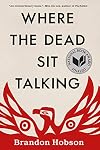
“The everyday cultural world of the Cherokee includes spiritual beings. Even though the beings are different from people and animals, they are not considered ‘supernatural’, but are very much a part of the natural, real world. Most Cherokee at some point in their lives will relate having had an experience with these spiritual beings.”
http://webtest2.cherokee.org/About-The-Nation/Culture/General/The-Traditional-Be...
“A windigo is a supernatural being belonging to the spiritual show more traditions of Algonquian-speaking First Nations in North America. Windigos are described as powerful monsters that have a desire to kill and eat their victims. . . According to most Algonquian oral traditions, a windigo is a cannibalistic monster that preys on the weak and socially disconnected. In most versions of the legend, a human becomes a windigo after his or her spirit is corrupted by greed or weakened by extreme conditions . . . In other legends, humans become windigos when possessed by a prowling spirit during a moment of weakness.”
From The Canadian Encyclopedia
https://www.thecanadianencyclopedia.ca/en/article/windigo
“‘You never listen,’ she said, and these were her final words. In the dimly-lit room I couldn’t tell if she was laughing or sobbing. A surge of anger struck me. It stopped me cold, seeing her standing there. I noticed the gun in her hand. Beyond that, I remember hearing a slight hum that seemed to vibrate from somewhere in the room. The vibration moved across the floor and entered me, my body, my mind. The vibration was its own malicious presence, some isolated entity that existed only in that moment. I knew I was not myself, and it felt stimulating and good. I was someone furious, someone hurt, someone blighted by infectious rage. A split second later I could not contain myself and sprang from the bed and placed my empty hand on her gun-gripping hand, my hand on her hand, and we held on, both confronting ourselves, both relentless.”
From Where the Dead Sit Talking
Sequoyah, a member of Oklahoma’s Cherokee Nation and the unreliable narrator of Where the Dead Sit Talking, looks back to 1989 when he was 15 and witnessed the death of a 17-year-old girl. Hobson’s text can be annoyingly ambiguous at times, but a close, attentive reading suggests that Sequoyah had a role in her demise, which is depicted as a strange one: both a murder and a suicide—of a single person. The narrator provides a slippery account of the events leading up to the young woman’s death.
1989 is the year that Sequoyah is placed in foster care—after his alcoholic mother is imprisoned on drug-related charges. (Prior to this, the two had fled domestic abuse in Cherokee Country for a different type of instability in Tulsa, but the bad spirits followed them. Sequoyah’s addicted mother couldn’t keep a job, and her neglected son wandered the streets in the company of other lost boys and shady characters.) After stints in shelters and juvenile detention centres, the boy ultimately finds himself on the outskirts of Little Crow, near Black River in rural Oklahoma. He lives with Harold and Agnes Troutt and two other eccentric, troubled, and traumatized foster kids: Rosemary Blackwell (there’s a lot of black in this book) and 13-year-old George. Rosemary is a beautiful, artistic, and death-obsessed Kiowa girl, who may have been involved in prostitution and drugs, while George is a boy genius. He’s working on a novel about a society in decline, reads sophisticated religious and philosophical texts, and engages in a variety of charitable works.
Right from the start, Sequoyah is fascinated by the elusive Rosemary. It is not sexual attraction, but a mysterious, even mystical, twin-ship. Sequoyah does not desire Rosemary so much as want to be her. If he dies, he would like her to give her his body. It is not clear if it is this wish, his intense rage at her growing disinterest in him, or some other psychotic delusion that motivates him to place his hand on her gun-gripping one. Hobson seems to intimate that demonic possession could also explain Sequoyah’s disturbed behaviour. Although the Cherokee are not one of the Algonquian-speaking First Nations of North America, Hobson appears to be well acquainted with their spiritual traditions. Rosemary mentions the windigo in connection with Sequoyah’s father, and it seems as right a reading as any that the son has been transformed into one. He is weak—“easily influenced”, isolated, and socially disconnected enough to be vulnerable to this malevolent, mythical supernatural being. As the pages turn, the reader watches Sequoyah’s roommate, George (who is initially eager for friendship with the “feral kid in black jeans”) grow increasingly fearful in this older boy’s presence.
Sequoyah has noticeable facial scars. When asked about them, he says that they are the result of his drunken mother “accidentally” spilling hot grease on him. His insistence on this is enough to raise suspicion about how accidental the incident really was. Uncertain about his gender, Sequoyah regularly uses eyeliner and takes advantage of opportunities to wear Rosemary’s clothes. However, he seems to feel no sexual attraction to anyone, male or female, and he expertly evades the predatory men who accost him. Sequoyah does not lack self-awareness. He is conscious of an emotional flatness, a vacancy, a deadness inside. He says he is “damaged in spirit”. Hobson’s depiction of him put me in mind of psychologist John Bowlby’s classic studies of maladjusted, delinquent, and affectionless children with severe attachment disorders. Sequoyah’s mind frequently streams violent fantasies, and his involvement in Rosemary’s death appears to mark the beginning of his homicidal course. Two other young people in Rosemary’s orbit subsequently suffer violent deaths, and the reader has no reason to doubt that Sequoyah is responsible.
All of Hobson’s characters are disconnected and disturbed. All express a preference for being alone. The young are invariably fixated on death, but even Harold and Agnes, ostensibly loving and tolerant foster parents, have shadow sides. Harold is a bookie, whose father, a booklegger, was murdered. Agnes seethes with mysterious rage at her husband. She may or may not belong to a local religious cult, whose female members wear their hair and clothes in distinctive styles. In the end, though, it’s hard to know for sure just how much of what Sequoyah reports can be relied on. Towards the end of the novel, he says that, like George, he has become a writer of stories, only his are about brainwashed killers and “mysterious deaths in a mythical Oklahoma town.” That’s a pretty good summing up of the novel Sequoyah appears in: Hobson’s.
Where the Dead Sit Talking is unusual, dark, and dream-like. It is light on plot, heavy on atmosphere, and strangely mesmerizing. I think the book is a little too ambiguous to be entirely satisfying or successful. Having said that, I’ve found this to be a book that doesn’t easily let the reader go. I’m still thinking about it weeks after having turned the last page.
Rating: 3.5 show less
http://webtest2.cherokee.org/About-The-Nation/Culture/General/The-Traditional-Be...
“A windigo is a supernatural being belonging to the spiritual show more traditions of Algonquian-speaking First Nations in North America. Windigos are described as powerful monsters that have a desire to kill and eat their victims. . . According to most Algonquian oral traditions, a windigo is a cannibalistic monster that preys on the weak and socially disconnected. In most versions of the legend, a human becomes a windigo after his or her spirit is corrupted by greed or weakened by extreme conditions . . . In other legends, humans become windigos when possessed by a prowling spirit during a moment of weakness.”
From The Canadian Encyclopedia
https://www.thecanadianencyclopedia.ca/en/article/windigo
“‘You never listen,’ she said, and these were her final words. In the dimly-lit room I couldn’t tell if she was laughing or sobbing. A surge of anger struck me. It stopped me cold, seeing her standing there. I noticed the gun in her hand. Beyond that, I remember hearing a slight hum that seemed to vibrate from somewhere in the room. The vibration moved across the floor and entered me, my body, my mind. The vibration was its own malicious presence, some isolated entity that existed only in that moment. I knew I was not myself, and it felt stimulating and good. I was someone furious, someone hurt, someone blighted by infectious rage. A split second later I could not contain myself and sprang from the bed and placed my empty hand on her gun-gripping hand, my hand on her hand, and we held on, both confronting ourselves, both relentless.”
From Where the Dead Sit Talking
Sequoyah, a member of Oklahoma’s Cherokee Nation and the unreliable narrator of Where the Dead Sit Talking, looks back to 1989 when he was 15 and witnessed the death of a 17-year-old girl. Hobson’s text can be annoyingly ambiguous at times, but a close, attentive reading suggests that Sequoyah had a role in her demise, which is depicted as a strange one: both a murder and a suicide—of a single person. The narrator provides a slippery account of the events leading up to the young woman’s death.
1989 is the year that Sequoyah is placed in foster care—after his alcoholic mother is imprisoned on drug-related charges. (Prior to this, the two had fled domestic abuse in Cherokee Country for a different type of instability in Tulsa, but the bad spirits followed them. Sequoyah’s addicted mother couldn’t keep a job, and her neglected son wandered the streets in the company of other lost boys and shady characters.) After stints in shelters and juvenile detention centres, the boy ultimately finds himself on the outskirts of Little Crow, near Black River in rural Oklahoma. He lives with Harold and Agnes Troutt and two other eccentric, troubled, and traumatized foster kids: Rosemary Blackwell (there’s a lot of black in this book) and 13-year-old George. Rosemary is a beautiful, artistic, and death-obsessed Kiowa girl, who may have been involved in prostitution and drugs, while George is a boy genius. He’s working on a novel about a society in decline, reads sophisticated religious and philosophical texts, and engages in a variety of charitable works.
Right from the start, Sequoyah is fascinated by the elusive Rosemary. It is not sexual attraction, but a mysterious, even mystical, twin-ship. Sequoyah does not desire Rosemary so much as want to be her. If he dies, he would like her to give her his body. It is not clear if it is this wish, his intense rage at her growing disinterest in him, or some other psychotic delusion that motivates him to place his hand on her gun-gripping one. Hobson seems to intimate that demonic possession could also explain Sequoyah’s disturbed behaviour. Although the Cherokee are not one of the Algonquian-speaking First Nations of North America, Hobson appears to be well acquainted with their spiritual traditions. Rosemary mentions the windigo in connection with Sequoyah’s father, and it seems as right a reading as any that the son has been transformed into one. He is weak—“easily influenced”, isolated, and socially disconnected enough to be vulnerable to this malevolent, mythical supernatural being. As the pages turn, the reader watches Sequoyah’s roommate, George (who is initially eager for friendship with the “feral kid in black jeans”) grow increasingly fearful in this older boy’s presence.
Sequoyah has noticeable facial scars. When asked about them, he says that they are the result of his drunken mother “accidentally” spilling hot grease on him. His insistence on this is enough to raise suspicion about how accidental the incident really was. Uncertain about his gender, Sequoyah regularly uses eyeliner and takes advantage of opportunities to wear Rosemary’s clothes. However, he seems to feel no sexual attraction to anyone, male or female, and he expertly evades the predatory men who accost him. Sequoyah does not lack self-awareness. He is conscious of an emotional flatness, a vacancy, a deadness inside. He says he is “damaged in spirit”. Hobson’s depiction of him put me in mind of psychologist John Bowlby’s classic studies of maladjusted, delinquent, and affectionless children with severe attachment disorders. Sequoyah’s mind frequently streams violent fantasies, and his involvement in Rosemary’s death appears to mark the beginning of his homicidal course. Two other young people in Rosemary’s orbit subsequently suffer violent deaths, and the reader has no reason to doubt that Sequoyah is responsible.
All of Hobson’s characters are disconnected and disturbed. All express a preference for being alone. The young are invariably fixated on death, but even Harold and Agnes, ostensibly loving and tolerant foster parents, have shadow sides. Harold is a bookie, whose father, a booklegger, was murdered. Agnes seethes with mysterious rage at her husband. She may or may not belong to a local religious cult, whose female members wear their hair and clothes in distinctive styles. In the end, though, it’s hard to know for sure just how much of what Sequoyah reports can be relied on. Towards the end of the novel, he says that, like George, he has become a writer of stories, only his are about brainwashed killers and “mysterious deaths in a mythical Oklahoma town.” That’s a pretty good summing up of the novel Sequoyah appears in: Hobson’s.
Where the Dead Sit Talking is unusual, dark, and dream-like. It is light on plot, heavy on atmosphere, and strangely mesmerizing. I think the book is a little too ambiguous to be entirely satisfying or successful. Having said that, I’ve found this to be a book that doesn’t easily let the reader go. I’m still thinking about it weeks after having turned the last page.
Rating: 3.5 show less
Lists
Youth: DEI (1)
Awards


You May Also Like


Associated Authors
Statistics
- Works
- 8
- Also by
- 4
- Members
- 1,267
- Popularity
- #20,252
- Rating
- 3.7
- Reviews
- 47
- ISBNs
- 33
- Favorited
- 1