
Morgan Talty
Author of Night of the Living Rez: Stories
About the Author
Works by Morgan Talty
Associated Works
Never Whistle at Night: An Indigenous Dark Fiction Anthology (2023) — Contributor — 1,548 copies, 23 reviews
Tagged
Common Knowledge
- Birthdate
- 1991
- Gender
- male
- Organizations
- University of Maine (English in creative writing and Native American and contemporary literature|assistant professor)
University of Southern Maine (Stonecoast MFA in creative writing|faculty member)
Institute of American Indian Arts (faculty member) - Short biography
- (fl. 2022)
- Nationality
- Penobscot
USA - Birthplace
- Bridgeport, Connecticut, USA
- Places of residence
- Levant, Maine, USA
- Map Location
- USA
Members
Reviews
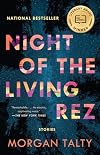
Rating: 5* of five
The Publisher Says: Winner of the PEN/Robert W. Bingham Prize, National Book Critics Circle John Leonard Prize, American Academy of Arts & Letters Sue Kaufman Prize, The New England Book Award, and the National Book Foundation 5 Under 35 Honoree
A Finalist for the Andrew Carnegie Medal for Fiction, the Chautauqua Prize 2023, and Barnes & Noble Discover Book Prize
Named a Best Book of the Year by The New York Times, NPR, Esquire, Oprah Daily, and more
Set in a Native community show more in Maine, Night of the Living Rez is a riveting debut collection about what it means to be Penobscot in the twenty-first century and what it means to live, to survive, and to persevere after tragedy.
In twelve striking, luminescent stories, author Morgan Talty—with searing humor, abiding compassion, and deep insight—breathes life into tales of family and a community as they struggle with a painful past and an uncertain future. A boy unearths a jar that holds an old curse, which sets into motion his family’s unraveling; a man, while trying to swindle some pot from a dealer, discovers a friend passed out in the woods, his hair frozen into the snow; a grandmother suffering from Alzheimer’s projects the past onto her grandson; and two friends, inspired by Antiques Roadshow, attempt to rob the tribal museum for valuable root clubs.
A collection that examines the consequences and merits of inheritance, Night of the Living Rez is an unforgettable portrayal of an Indigenous community and marks the arrival of a standout talent in contemporary fiction.
I RECEIVED A DRC FROM THE PUBLISHER VIA EDELWEISS+. THANK YOU.
My Review: When a new voice speaks in a jaded crowd, it feels like being next to a rocket launch does. The sound is so loud, so intense, its pressure unbalances your legs and knocks you back on your heels.
Morgan Talty, laddies and gentlewomen. From the first story, where we're confronted with cultural touchstones not in upper-class white peoples' frames of reference, we're in assured hands...the limning of the setting, the colors of the relationship dynamics, the milieu, all in three paragraphs...and challenged to accept the entire package as it is.
I shall, comme d'habitude, use the Bryce Method to assess the stories one-by-one.
Burn is the story I quoted above. A short, sharp shock, a shot across the bow of your luxury literary yacht, a foghorn on a sunny cruise. Disorienting by design, this is your chance to return to familiar shores.
I didn't. 5 impressed stars
In a Jar follows David studying his fractured family as it re-forms in unfamiliar ways. His much older sister, first an absence, then a hard sharp corner; his Mumma, inscrutable to kid-eyed David, touchy and strange; Frick, a man new to David and in a place his abandoned father once didn't want.
All the surprise in this concatenated chain of beings comes from knockings in walls, from jars of ill will, from refrigerated poisons ingested through other mouths. 5 more stars
Get Me Some Medicine follows low-life Fellis...the one talking to Dee in the quote all the way above...as he and Dee scrape the bottom of the barrel, drain the butt-end-filled last can of beer, and do themselves no good whatever doing it.
You can't save people. Nor should you, after a while, try. I don't think these boys, these pushing-thirty boys, can be saved. And neither do they. Dee is, at the very least, possessed of glimmers of self-awareness; Fellis, none. 4*
Food for the Common Cold shakes the ugly bits you never tell your partner loose. David, eleven now, can't quite grasp why Frick is so angry; Mumma can't tell him, he's too young; his Dad's far away and shut out like always; so it festers and seethes, finally David lances the boil out of fear for his mother, and out it all oozes for everyone to see, smell, and finally clean up.
Leaving David sick with, what, a cold? A cloggy, soggy cold? Maybe, maybe more. 4.5*
In a Field of Stray Caterpillars gets useless shitty Fellis even deeper into the badness, as he's now got Dee driving him home from his ECT treatments then spending the night there...and Dee's got a white woman on the line, knowing there's never going to be a good ending to that story, still running from what he knows he needs to do by using Fellis.
And this night, the one we're joining the boys to live through, is in the midst of a major mating season overload. The reek of the rotting animals mirrors Fellis and Dee's vacuity by filling the world with a passing stink that won't even result in better-nourished weeds. Fellis is so far gone the nurses are taking about putting a port in him so they don't have to hunt for a vein when they need to fry him with ECT.
How perfect. 5*
The Blessing Tobacco is a family...David's family, now with his much-older sister home...coming to terms with the end of an elder's life, when her body will not die at the same rate as her mind. It's just terrible and painful and all folded in with each others' craziness, fear, and anger.
Outliving your mind is a terrible curse. Outliving your family? Oh. It's scalding water on an icy windshield. 5*
Safe Harbor isn't...when is it ever? How do you ever know when you're going to have that moment of final fear? The one that changes your orientation in the world, the one where you are not the same person between seconds? David becoming Dee doesn't happen in front of us. But happen it does and we don't know him one speck better than before. 5*
Smokes Last brings me face-to-face with one of my most beloathèd addictions: cigarettes. I despise smokers. They reek, they're so unbelievably selfish, taking up all the air in a room and then flinging the leftover chunk of spit-soaked stinking garbage wherever and however it suits them, slowly drowning in the phlegm they hack onto streets and sidewalks for other people to deal with.
And here's fourteen-year-old David shovin' one into his mouth, "just suck a cock! it tastes better and at least somebody's happy!" I want to (maybe did) shout at him. He and his buds out bein' hooligans, beatin' each other up, chuckin' rocks...kids are so much the same everywhere.
Growing up. Not getting any guidance. No wonder what happens happened. 4*
Half-Life is the sharp part of the descent. It's harrowing and appalling and brutally bitterly honest. 4.5*
Earth, Speak is rock bottom. Harrowing. 5*
Night of the Living Rez would've been more palatable if it'd been zombies, or pugwagees; instead it was all over the fucking TV because of course it was and, if it'd been a white woman, it would've been self defense. 5 appalled stars
The Name Means Thunder burns in my head. The sheer horror of what happens when you can't undo a deed. The never-ending awfulness of life's worst moments defining you, charting your course. Too many undone deeds that lead to a done one. The worst of it is: you can't not see it in every moment of every awful undone deed. 5*
Morgan Talty's debut. Can you even imagine having this in you and no way for it to come out that won't change...everything. show less
The Publisher Says: Winner of the PEN/Robert W. Bingham Prize, National Book Critics Circle John Leonard Prize, American Academy of Arts & Letters Sue Kaufman Prize, The New England Book Award, and the National Book Foundation 5 Under 35 Honoree
A Finalist for the Andrew Carnegie Medal for Fiction, the Chautauqua Prize 2023, and Barnes & Noble Discover Book Prize
Named a Best Book of the Year by The New York Times, NPR, Esquire, Oprah Daily, and more
Set in a Native community show more in Maine, Night of the Living Rez is a riveting debut collection about what it means to be Penobscot in the twenty-first century and what it means to live, to survive, and to persevere after tragedy.
In twelve striking, luminescent stories, author Morgan Talty—with searing humor, abiding compassion, and deep insight—breathes life into tales of family and a community as they struggle with a painful past and an uncertain future. A boy unearths a jar that holds an old curse, which sets into motion his family’s unraveling; a man, while trying to swindle some pot from a dealer, discovers a friend passed out in the woods, his hair frozen into the snow; a grandmother suffering from Alzheimer’s projects the past onto her grandson; and two friends, inspired by Antiques Roadshow, attempt to rob the tribal museum for valuable root clubs.
A collection that examines the consequences and merits of inheritance, Night of the Living Rez is an unforgettable portrayal of an Indigenous community and marks the arrival of a standout talent in contemporary fiction.
I RECEIVED A DRC FROM THE PUBLISHER VIA EDELWEISS+. THANK YOU.
My Review: When a new voice speaks in a jaded crowd, it feels like being next to a rocket launch does. The sound is so loud, so intense, its pressure unbalances your legs and knocks you back on your heels.
Morgan Talty, laddies and gentlewomen. From the first story, where we're confronted with cultural touchstones not in upper-class white peoples' frames of reference, we're in assured hands...the limning of the setting, the colors of the relationship dynamics, the milieu, all in three paragraphs...and challenged to accept the entire package as it is.
"Fucking bullshit, fucking goddamn winter, what the fuck."
I laughed.
"It ain't funny, Dee."
"Look," I said. "Do you want me to cut my braid too?"
I shall, comme d'habitude, use the Bryce Method to assess the stories one-by-one.
Burn is the story I quoted above. A short, sharp shock, a shot across the bow of your luxury literary yacht, a foghorn on a sunny cruise. Disorienting by design, this is your chance to return to familiar shores.
I didn't. 5 impressed stars
In a Jar follows David studying his fractured family as it re-forms in unfamiliar ways. His much older sister, first an absence, then a hard sharp corner; his Mumma, inscrutable to kid-eyed David, touchy and strange; Frick, a man new to David and in a place his abandoned father once didn't want.
All the surprise in this concatenated chain of beings comes from knockings in walls, from jars of ill will, from refrigerated poisons ingested through other mouths. 5 more stars
Get Me Some Medicine follows low-life Fellis...the one talking to Dee in the quote all the way above...as he and Dee scrape the bottom of the barrel, drain the butt-end-filled last can of beer, and do themselves no good whatever doing it.
You can't save people. Nor should you, after a while, try. I don't think these boys, these pushing-thirty boys, can be saved. And neither do they. Dee is, at the very least, possessed of glimmers of self-awareness; Fellis, none. 4*
Food for the Common Cold shakes the ugly bits you never tell your partner loose. David, eleven now, can't quite grasp why Frick is so angry; Mumma can't tell him, he's too young; his Dad's far away and shut out like always; so it festers and seethes, finally David lances the boil out of fear for his mother, and out it all oozes for everyone to see, smell, and finally clean up.
Leaving David sick with, what, a cold? A cloggy, soggy cold? Maybe, maybe more. 4.5*
In a Field of Stray Caterpillars gets useless shitty Fellis even deeper into the badness, as he's now got Dee driving him home from his ECT treatments then spending the night there...and Dee's got a white woman on the line, knowing there's never going to be a good ending to that story, still running from what he knows he needs to do by using Fellis.
And this night, the one we're joining the boys to live through, is in the midst of a major mating season overload. The reek of the rotting animals mirrors Fellis and Dee's vacuity by filling the world with a passing stink that won't even result in better-nourished weeds. Fellis is so far gone the nurses are taking about putting a port in him so they don't have to hunt for a vein when they need to fry him with ECT.
How perfect. 5*
The Blessing Tobacco is a family...David's family, now with his much-older sister home...coming to terms with the end of an elder's life, when her body will not die at the same rate as her mind. It's just terrible and painful and all folded in with each others' craziness, fear, and anger.
Outliving your mind is a terrible curse. Outliving your family? Oh. It's scalding water on an icy windshield. 5*
Safe Harbor isn't...when is it ever? How do you ever know when you're going to have that moment of final fear? The one that changes your orientation in the world, the one where you are not the same person between seconds? David becoming Dee doesn't happen in front of us. But happen it does and we don't know him one speck better than before. 5*
Smokes Last brings me face-to-face with one of my most beloathèd addictions: cigarettes. I despise smokers. They reek, they're so unbelievably selfish, taking up all the air in a room and then flinging the leftover chunk of spit-soaked stinking garbage wherever and however it suits them, slowly drowning in the phlegm they hack onto streets and sidewalks for other people to deal with.
And here's fourteen-year-old David shovin' one into his mouth, "just suck a cock! it tastes better and at least somebody's happy!" I want to (maybe did) shout at him. He and his buds out bein' hooligans, beatin' each other up, chuckin' rocks...kids are so much the same everywhere.
Growing up. Not getting any guidance. No wonder what happens happened. 4*
Half-Life is the sharp part of the descent. It's harrowing and appalling and brutally bitterly honest. 4.5*
Earth, Speak is rock bottom. Harrowing. 5*
Night of the Living Rez would've been more palatable if it'd been zombies, or pugwagees; instead it was all over the fucking TV because of course it was and, if it'd been a white woman, it would've been self defense. 5 appalled stars
The Name Means Thunder burns in my head. The sheer horror of what happens when you can't undo a deed. The never-ending awfulness of life's worst moments defining you, charting your course. Too many undone deeds that lead to a done one. The worst of it is: you can't not see it in every moment of every awful undone deed. 5*
Morgan Talty's debut. Can you even imagine having this in you and no way for it to come out that won't change...everything. show less
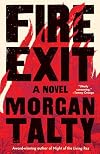
Real Rating: 4.75* of five
The Publisher Says: From the porch of his home, Charles Lamosway has watched the life he might have had unfold across the river on Maine’s Penobscot Reservation. On the far bank, he caught brief moments of his neighbor Elizabeth’s life—from the day she came home from the hospital to her early twenties. But there’s always been something deeper and more dangerous than the river that divides him from her and the rest of the tribal community. It’s the secret show more that Elizabeth is his daughter, a secret Charles is no longer willing to keep.
Now, it’s been weeks since he’s seen Elizabeth, and Charles is worried. As he attempts to hold on to and care for what he can—his home and property; his alcoholic, quick-tempered, and bighearted friend Bobby; and his mother, Louise, who is slipping ever deeper into dementia—he becomes increasingly haunted by his past. Forced to confront a lost childhood on the reservation, a love affair cut short, and the death of his beloved stepfather, Fredrick, in a hunting accident—a death he and Louise are at odds over as to where to lay blame—Charles contends with questions he’s long been afraid to ask. Is his secret about Elizabeth his to share? And would his daughter want to know the truth, even if it could cost her everything she’s ever known?
From the award-winning author of Night of the Living Rez, Morgan Talty’s debut novel, Fire Exit, is a masterful and unforgettable story of family, legacy, bloodlines, culture and inheritance, and what, if anything, we owe one another.
I RECEIVED A DRC FROM THE PUBLISHER VIA NETGALLEY. THANK YOU.
My Review: Twice in the course of this read I stopped to think carefully about the truth, encapsulated in the truism "every tool is a weapon," that the greatest evils come from the least expected places. Honesty, or simple vanity, or (as reality is next to never binary) somewhere on the spectrum defined by those endpoints, in claiming a daughter Charles has always known he fathered though he was never allowed to parent her thanks to the blood quantum laws (weapons of oppression formed into tools of exclusion by the Penobscots themselves) would ruin her life as it is. Does she still have that life? Why hasn't Charles, her immediate neighbor all her life, seen her at all in weeks? Has she moved away, run away or vanished under more sinister circumstances? He has no standing to ask any of these questions, an off-reservation neighbor in the eyes of the law. "To think that the reservation is what makes an Indian an Indian is to massacre all over again the Natives who do not populate it," thinks Charles.
Elizabeth's mother chose to have his child, who was conceived while Charles was able to live on the reservation thanks to his mother's marriage to a Penobscot man, Charles's alcoholic best reservation-dwelling buddy Bobby, by pretending she was his child...a Penobscot father. Charles's acknowledged paternity would have denied Elizabeth a place on reservation, thus her ancestral identity and such benefits as are available to Native Americans who pass the blood quantum tests. Adding injury to this insult, Charles's dearly loved Penobscot stepfather dies...hunting accident? darker tragedy?...so he must leave the reservation for good. A tool, a gift of identity and grudging economic benefit for Elizabeth, becomes a weapon to deprive Charles of a life he wanted. Charles identifies the weaponization of the tool of identity, of belonging: "It was {dead stepfather} Fredrick’s love that made me feel Native. He loved me so much that I was, and still am, convinced that I was from him, part of him, part of what he was part of. That was how I felt about Elizabeth—in truth, she was a descendant only from her mother’s side, and if that were to come out and she were taken off the census, would she feel any less Native? I didn’t think so."
Charles now wants his daughter found, and to tell her at last who her family truly includes. Armistead Maupin, a true treasure of a writer, activist, and thinker, titled his memoir of coming out after coming of age as a true Southern right-wing boy Logical Family. The journey, the destination, the idea of clipping "bio" from "family," all form part of Charles's heterosexual journey. He is more proof that the reality of love forming family not family necessarily forming love, is more than ever a bulwark against increasingly harsh reality. "I wanted to say it all: wanted to give her all the history that is hers. This past. This family. I wanted her to know, wanted her to understand what it meant that she was being stretched beyond the walls of her parents' house," her family of origin was not all there was to her...or his...world. As the story unfolds Charles grapples with claiming the bio- and logical family as his mother descends into dementia thus dying to him before her body finally dies. All of these are issues I've faced; I was totally engrossed, enmeshed in this multipart logical family struggling to be formed.
Charles spends the entire book obsessing over Elizabeth and his denied paternity, over the ethics of telling her this potentially tribal-membership ending reality...and it suddenly hit me almost three-quarters if the way through: Elizabeth is in her middle twenties! I'd simply never done the math. It changed everything to know this.
Telling an adult who can decide for herself what to do with the life-changing factual information is a duty. It's not optional. Her life is built on a lie, and that is unconscionable to continue to hide from a twentysomething. She's got the life experience to decide for herself if she wants to continue to lie to the authorities. How to handle the fallout, if she tells the truth. She's not a kid...and I also realized that Charles'a obsessive worry about why she's vanished is completely misplaced, even a little creepy.
Charles switched from being "poor old Charles" to being "pick your balls up, put 'em back on, and take action for once" Charles. At almost the same narrative moment, a major plot point resolves. I was left wondering what to think about this altered idea of and opinion about the character I'd invested in so deeply.
That is a very, very good reminder to check the facile, shallow interpretations at Author Talty's doorstep...his short fiction should've taught me that! There is no surface without structure around here. I can't quite finish that fifth star because I found some of Charles's passive acceptance and supine acquiescence unpleasant, if relatable throughout, but the awareness misdirection was truly *chef's kiss*
If you haven't read Night of the Living Rez, his story collection, by all means do. Starting here, or starting as I did with the stories, your decision to make Morgan Talty part of your reading universe is one you aren't likely to regret.
(Where the HELL is my 2022 review of the stories?! Panic stations until I find it!) show less
The Publisher Says: From the porch of his home, Charles Lamosway has watched the life he might have had unfold across the river on Maine’s Penobscot Reservation. On the far bank, he caught brief moments of his neighbor Elizabeth’s life—from the day she came home from the hospital to her early twenties. But there’s always been something deeper and more dangerous than the river that divides him from her and the rest of the tribal community. It’s the secret show more that Elizabeth is his daughter, a secret Charles is no longer willing to keep.
Now, it’s been weeks since he’s seen Elizabeth, and Charles is worried. As he attempts to hold on to and care for what he can—his home and property; his alcoholic, quick-tempered, and bighearted friend Bobby; and his mother, Louise, who is slipping ever deeper into dementia—he becomes increasingly haunted by his past. Forced to confront a lost childhood on the reservation, a love affair cut short, and the death of his beloved stepfather, Fredrick, in a hunting accident—a death he and Louise are at odds over as to where to lay blame—Charles contends with questions he’s long been afraid to ask. Is his secret about Elizabeth his to share? And would his daughter want to know the truth, even if it could cost her everything she’s ever known?
From the award-winning author of Night of the Living Rez, Morgan Talty’s debut novel, Fire Exit, is a masterful and unforgettable story of family, legacy, bloodlines, culture and inheritance, and what, if anything, we owe one another.
I RECEIVED A DRC FROM THE PUBLISHER VIA NETGALLEY. THANK YOU.
My Review: Twice in the course of this read I stopped to think carefully about the truth, encapsulated in the truism "every tool is a weapon," that the greatest evils come from the least expected places. Honesty, or simple vanity, or (as reality is next to never binary) somewhere on the spectrum defined by those endpoints, in claiming a daughter Charles has always known he fathered though he was never allowed to parent her thanks to the blood quantum laws (weapons of oppression formed into tools of exclusion by the Penobscots themselves) would ruin her life as it is. Does she still have that life? Why hasn't Charles, her immediate neighbor all her life, seen her at all in weeks? Has she moved away, run away or vanished under more sinister circumstances? He has no standing to ask any of these questions, an off-reservation neighbor in the eyes of the law. "To think that the reservation is what makes an Indian an Indian is to massacre all over again the Natives who do not populate it," thinks Charles.
Elizabeth's mother chose to have his child, who was conceived while Charles was able to live on the reservation thanks to his mother's marriage to a Penobscot man, Charles's alcoholic best reservation-dwelling buddy Bobby, by pretending she was his child...a Penobscot father. Charles's acknowledged paternity would have denied Elizabeth a place on reservation, thus her ancestral identity and such benefits as are available to Native Americans who pass the blood quantum tests. Adding injury to this insult, Charles's dearly loved Penobscot stepfather dies...hunting accident? darker tragedy?...so he must leave the reservation for good. A tool, a gift of identity and grudging economic benefit for Elizabeth, becomes a weapon to deprive Charles of a life he wanted. Charles identifies the weaponization of the tool of identity, of belonging: "It was {dead stepfather} Fredrick’s love that made me feel Native. He loved me so much that I was, and still am, convinced that I was from him, part of him, part of what he was part of. That was how I felt about Elizabeth—in truth, she was a descendant only from her mother’s side, and if that were to come out and she were taken off the census, would she feel any less Native? I didn’t think so."
Charles now wants his daughter found, and to tell her at last who her family truly includes. Armistead Maupin, a true treasure of a writer, activist, and thinker, titled his memoir of coming out after coming of age as a true Southern right-wing boy Logical Family. The journey, the destination, the idea of clipping "bio" from "family," all form part of Charles's heterosexual journey. He is more proof that the reality of love forming family not family necessarily forming love, is more than ever a bulwark against increasingly harsh reality. "I wanted to say it all: wanted to give her all the history that is hers. This past. This family. I wanted her to know, wanted her to understand what it meant that she was being stretched beyond the walls of her parents' house," her family of origin was not all there was to her...or his...world. As the story unfolds Charles grapples with claiming the bio- and logical family as his mother descends into dementia thus dying to him before her body finally dies. All of these are issues I've faced; I was totally engrossed, enmeshed in this multipart logical family struggling to be formed.
Charles spends the entire book obsessing over Elizabeth and his denied paternity, over the ethics of telling her this potentially tribal-membership ending reality...and it suddenly hit me almost three-quarters if the way through: Elizabeth is in her middle twenties! I'd simply never done the math. It changed everything to know this.
Telling an adult who can decide for herself what to do with the life-changing factual information is a duty. It's not optional. Her life is built on a lie, and that is unconscionable to continue to hide from a twentysomething. She's got the life experience to decide for herself if she wants to continue to lie to the authorities. How to handle the fallout, if she tells the truth. She's not a kid...and I also realized that Charles'a obsessive worry about why she's vanished is completely misplaced, even a little creepy.
Charles switched from being "poor old Charles" to being "pick your balls up, put 'em back on, and take action for once" Charles. At almost the same narrative moment, a major plot point resolves. I was left wondering what to think about this altered idea of and opinion about the character I'd invested in so deeply.
That is a very, very good reminder to check the facile, shallow interpretations at Author Talty's doorstep...his short fiction should've taught me that! There is no surface without structure around here. I can't quite finish that fifth star because I found some of Charles's passive acceptance and supine acquiescence unpleasant, if relatable throughout, but the awareness misdirection was truly *chef's kiss*
If you haven't read Night of the Living Rez, his story collection, by all means do. Starting here, or starting as I did with the stories, your decision to make Morgan Talty part of your reading universe is one you aren't likely to regret.
(Where the HELL is my 2022 review of the stories?! Panic stations until I find it!) show less
At first, Night of the Living Rez can feel disorienting. The stories are linked, with recurring characters, but they are not presented in a clear timeline. It takes time to understand who is who, and where each piece fits. That initial friction is real.
However, once the connections begin to emerge, the book deepens significantly.
Each story works on its own, but they become far more powerful when read as part of the whole. The links between them—shared characters, repeated patterns, show more shifting circumstances—add weight and meaning that isn’t immediately obvious. What might seem like a straightforward story early on gains additional resonance once you recognize how it echoes or contrasts with others.
Talty uses this non-linear structure to reflect cycles rather than progression. Characters don’t move neatly from one stage of life to another. Instead, they repeat behaviors, circle back, and exist in overlapping states of struggle, care, and survival. The structure reinforces this idea, making the reading experience feel fragmented at first, but ultimately cohesive in a different, more organic way.
By the end, the book isn’t about assembling a clean timeline. It’s about building a layered understanding of a community and the people within it.
I enjoyed this collection, but it asks the reader to do some work upfront. Once it clicks, though, the individual stories become stronger because of the connections between them—and those connections are what make the book memorable. show less
However, once the connections begin to emerge, the book deepens significantly.
Each story works on its own, but they become far more powerful when read as part of the whole. The links between them—shared characters, repeated patterns, show more shifting circumstances—add weight and meaning that isn’t immediately obvious. What might seem like a straightforward story early on gains additional resonance once you recognize how it echoes or contrasts with others.
Talty uses this non-linear structure to reflect cycles rather than progression. Characters don’t move neatly from one stage of life to another. Instead, they repeat behaviors, circle back, and exist in overlapping states of struggle, care, and survival. The structure reinforces this idea, making the reading experience feel fragmented at first, but ultimately cohesive in a different, more organic way.
By the end, the book isn’t about assembling a clean timeline. It’s about building a layered understanding of a community and the people within it.
I enjoyed this collection, but it asks the reader to do some work upfront. Once it clicks, though, the individual stories become stronger because of the connections between them—and those connections are what make the book memorable. show less
Charles was raised on the Penobscot reservation by his white mother and Indigenous stepfather but was forced to leave at 18 since he is not, by blood, Indigenous. He has moved across the river from where he can see the reservation. Now in his fifties, he is wracked by guilt and a sense of loss, trying to overcome a long estrangement from his mother and forced to keep secrets including of a daughter, whose Indigenous mother chose to leave him so that she could raise her on the reservation, show more and who doesn’t know about him.
Told in two timelines and in the first voice by Charles, Fire Exit by Morgan Talty is a beautifully written, powerful, and poignant novel about a man who is both part of and separated from his community by blood, by secrets, and by the river that flows between them. The characters are fully drawn with backstories and with flaws that make them both relatable and redeemable. The story is often dark and bleak as Charles recounts his sense of loss of his home, his past, his mother who is sinking into dementia but mostly of his daughter but it is also always infused with the love he wants to share with her. This is, in many ways, a very emotional even melancholic tale but never crosses the line into melodrama and ends on a hopeful note. I read an ebook of this novel while listening to the audiobook narrated by Darrell Dennis who does an amazing job of giving Charles a voice.
I received an e-arc of this novel from Netgalley and Penguin Random House Canada and an audiobook from RB Media in exchange for an honest review show less
Told in two timelines and in the first voice by Charles, Fire Exit by Morgan Talty is a beautifully written, powerful, and poignant novel about a man who is both part of and separated from his community by blood, by secrets, and by the river that flows between them. The characters are fully drawn with backstories and with flaws that make them both relatable and redeemable. The story is often dark and bleak as Charles recounts his sense of loss of his home, his past, his mother who is sinking into dementia but mostly of his daughter but it is also always infused with the love he wants to share with her. This is, in many ways, a very emotional even melancholic tale but never crosses the line into melodrama and ends on a hopeful note. I read an ebook of this novel while listening to the audiobook narrated by Darrell Dennis who does an amazing job of giving Charles a voice.
I received an e-arc of this novel from Netgalley and Penguin Random House Canada and an audiobook from RB Media in exchange for an honest review show less
Lists
Awards


You May Also Like


Associated Authors
Statistics
- Works
- 3
- Also by
- 1
- Members
- 1,005
- Popularity
- #25,666
- Rating
- 3.9
- Reviews
- 47
- ISBNs
- 27
- Languages
- 1
- Favorited
- 1