
Arthur Slade
Author of The Hunchback Assignments
About the Author
Image credit: From the jacket flap, reposted from this thread to supercede a phony pic.
Series
Works by Arthur Slade
Monsterology: Fabulous Lives of the Creepy, the Revolting, and the Undead (2005) 42 copies, 1 review
Associated Works
Tagged
Common Knowledge
- Birthdate
- 1967-07-09
- Gender
- male
- Organizations
- SF Canada
- Nationality
- Canada
- Birthplace
- Moose Jaw, Saskatchewan, Canada
- Places of residence
- Saskatoon, Saskatchewan, Canada
- Associated Place (for map)
- Saskatchewan, Canada
Members
Reviews
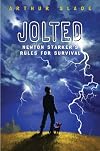
Some people worry about cancer being genetic. The Starkers worry about death by lightening being genetic. Going back generations, every Starker (except for one of Newton’s very far removed grandfather, who died of cholera) has been struck to death by lightening.
Newton Starker and his great grandmother (a grumpy old lady who swears she only survived because of SPITE) are the last two surviving Starkers. And Newton is determined that lightening will not get him. And so, he enrolls at the show more Jerry Potts Academy of Higher Learning and Survival, where the students learn how to survive anything. Newton is convinced that this school will teach him everything he needs in order to learn how to survive the threat of death by lightening.
Arthur Slade is a brilliant author who, from what I’ve seen, can tackle different genres, subject matters, and age groups, and do so successfully. I read Megiddo’s Shadow a few months ago, and one of the first things I said to Rachel when I started reading Jolted was that this had better be pretty bloody good if I were going to enjoy it was much as Megiddo. And I did, oh did I ever. It was so different, but had the same quality of story telling. As much as Megiddo had me in tears, Jolted had me giggling out loud.
The characters, oh the characters! Brilliantly developed. Brilliantly hilarious. The setting – ah! A few mentions of the history of Moose Jaw – the Tunnels of Moose Jaw, the history of the surrounding area, etc. – gave more depth to the area the story was in. And the humour - somewhat snarky and yet I can see how it would appeal to both younger and older readers. Specifically enjoyed the classes that Newton had to take:
Mercantile Fitness and Survival - financial training and outdoor survival.
Biology and Survival of the Fittest - along with typical biology subjects, also covers how to avoid and become predators.
Literature and Communications - an English class that teaches how to make smoke signals?
Culinary Arts and Survival - teaching which plants & animals outdoors are edible.
Ethics of Survival - the “taboos and misconceptions that surround survival.”
Dude, that’s almost as great as the classes they take in Marked and I’d Tell You I Love You But Then I’d Have to Kill You.
Awesome notes of squee:
Newton has a pet pig. Named Josephine. (After Napoleon’s wife, I’m assuming.) She belonged to a man who harvested truffles before Newton acquired her.
Newton is obsessed (that word somehow doesn’t seem strong enough) with truffles. Not the chocolate kind - the fungi kind.
Kilts! They wear kilts at Jerry Potts Academy. And there is a diagram included in the book.
Newton’s favourite recipes are also included in the book. How random and fun is that?
This book takes place at a boarding school that is a castle just outside of Moose Jaw. In Saskatchewan. A gothic castle in Saskatchewan!
Done the squeeage for the time being. So yes, fabulously enjoyable and hilarious book.
Bottom Line: If you haven’t read it yet, go buy this book right now. You will not be disappointed! show less
Newton Starker and his great grandmother (a grumpy old lady who swears she only survived because of SPITE) are the last two surviving Starkers. And Newton is determined that lightening will not get him. And so, he enrolls at the show more Jerry Potts Academy of Higher Learning and Survival, where the students learn how to survive anything. Newton is convinced that this school will teach him everything he needs in order to learn how to survive the threat of death by lightening.
Arthur Slade is a brilliant author who, from what I’ve seen, can tackle different genres, subject matters, and age groups, and do so successfully. I read Megiddo’s Shadow a few months ago, and one of the first things I said to Rachel when I started reading Jolted was that this had better be pretty bloody good if I were going to enjoy it was much as Megiddo. And I did, oh did I ever. It was so different, but had the same quality of story telling. As much as Megiddo had me in tears, Jolted had me giggling out loud.
The characters, oh the characters! Brilliantly developed. Brilliantly hilarious. The setting – ah! A few mentions of the history of Moose Jaw – the Tunnels of Moose Jaw, the history of the surrounding area, etc. – gave more depth to the area the story was in. And the humour - somewhat snarky and yet I can see how it would appeal to both younger and older readers. Specifically enjoyed the classes that Newton had to take:
Mercantile Fitness and Survival - financial training and outdoor survival.
Biology and Survival of the Fittest - along with typical biology subjects, also covers how to avoid and become predators.
Literature and Communications - an English class that teaches how to make smoke signals?
Culinary Arts and Survival - teaching which plants & animals outdoors are edible.
Ethics of Survival - the “taboos and misconceptions that surround survival.”
Dude, that’s almost as great as the classes they take in Marked and I’d Tell You I Love You But Then I’d Have to Kill You.
Awesome notes of squee:
Newton has a pet pig. Named Josephine. (After Napoleon’s wife, I’m assuming.) She belonged to a man who harvested truffles before Newton acquired her.
Newton is obsessed (that word somehow doesn’t seem strong enough) with truffles. Not the chocolate kind - the fungi kind.
Kilts! They wear kilts at Jerry Potts Academy. And there is a diagram included in the book.
Newton’s favourite recipes are also included in the book. How random and fun is that?
This book takes place at a boarding school that is a castle just outside of Moose Jaw. In Saskatchewan. A gothic castle in Saskatchewan!
Done the squeeage for the time being. So yes, fabulously enjoyable and hilarious book.
Bottom Line: If you haven’t read it yet, go buy this book right now. You will not be disappointed! show less
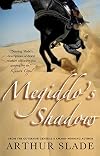
Slade’s young adult World War I novel opens in September 1917 with sixteen-year-old Edward Bathe collecting a letter from his small town’s post office. The regimental leader of the unit in which his older brother, Hector, had been serving for over a year writes that the young man was killed in action in France. (I found this form of family notification jarring; typically, a telegram was sent.) Hector apparently took a bullet to the heart and died instantaneously—or so Sgt. Gledhill show more writes. . . Edward will read quite a different version of the story some months later. Before leaving England and going off to battle himself, he will write to Gledhill asking for further details about his brother’s death. He’ll learn that Hector went on a mission when unwell and was in fact struck down by machine-gun fire. Hit several times in the legs and stomach, he lay out in the open for twenty minutes until his unit could clear the area of gunners. Once his mates got to him, he quickly became delirious with pain, called out for his mother, and died.
Edward’s ailing father, a South African War veteran who suffers episodic depressive illness, has not worked the family farm in Saskatchewan for seven months. Edward has been unable to rouse his dad from bed as his mother could. She died of TB sometime in the recent past and full responsibility for the land and animals has been carried by the sixteen-year-old boy. Now that Hector is dead, Edward decides it is his time to go to the front. He’d always planned to sign up, but now the war has become personal. Since Mr. Bathe refuses to sign the papers which will permit his underaged son to lawfully enlist, Edward determines to lie his way into becoming a member of the “Bull Moose Boys,” a unit out of Moose Jaw, Saskatchewan. His feeling for the family farm pales in comparison to his commitment to the glorious British Empire, which he regards as the keeper of the earth, preserver of order, and tamer of savage lands. “The dirty Huns [are] wrecking it all,” he thinks, they’ve “invaded Belgium and France, raped women, crucified soldiers, and tossed babies onto bayonets.” He naively believes he can play a role in stopping them and become a hero in the process.
It’s a tale that’s been told many times before: an idealistic young man confronts the reality of war and emerges transformed. What’s different about Slade’s novel is that its setting is not France or Belgium but the Middle East during the latter part of the Sinai-Palestine Campaign. The main character is not infantry but yeomanry, and his relationship with his horse figures prominently. It seems to me, too, that Edward is a slower learner than some of the other young soldier protagonists I’ve encountered. He needs to face abundant horrors before he finally gets it. Are youthful idealism and naivety really so firm and deep? Or does Edward stubbornly hold on to dreams of honour and valour because on some level he knows he’s made a serious mistake? In a state of intensely uncomfortable cognitive dissonance, he can’t acknowledge reality until he’s hit over the head time and again with the facts. Whatever the case, the author makes clear that coming of age during war (whether as combatant or collateral damage) is among the harshest experiences a young person can endure.
After crossing the Atlantic and detraining near Camp Witley in Surrey, England, Edward is surprised to meet up with a close military friend of his father’s, the esteemed Colonel Nixon Hilts (“Uncle Nix”) who visited the Bathe farm when Edward and Hector were children. Aware of the teen’s actual age and his skill with horses, the colonel pulls some strings: to spare the boy’s life, he takes the liberty of arranging for Edward to be transferred to the remount department in Lincolnshire to work as a breaker, training the horses that are to be sent to the front. (Those poor, poor creatures—yet another casualty of man’s folly, stupidity, and cruelty.) Edward is not happy about this “reassignment”; he’s in Europe to see some action and itches to hold a Lee Enfield. Still, there is some consolation in Grimsby: he meets and falls for a young nurse, Emily Waters. Slightly older, she’s shrewd, direct, and charmed by his innocence.
In a critical scene on Christmas Day 1917, he helps her and other medical staff unload four ambulances, only to discover that Paul Oster, the Canadian friend who also signed up in Moose Jaw and took the youth under his wing, is among the severely injured. Paul’s face is one massive bruise and his right foot has been blown off. “They lied to us, Edward. We’re all fighting for mud and piss,” Paul tells him. “A man isn’t worth anything there. We’re just meat, ravens picking at our eyes, rats feasting on our flesh.” He advises the boy to break his leg or crush a finger to avoid going to France. Edward rushes outside to vomit, and that night he’s tormented by disturbing battlefield dreams, but his desire to fight persists. He doesn’t return to visit his friend at the aid post as Emily has encouraged him to do.
A short time later while at dinner with Uncle Nix, Edward gains insights into his father and guidance about to what do next. Colonel Hilts, aware that the young man wants to be part of the action, cautions him against transferring back to his own unit—there’s just too much attrition in the infantry, he says. Instead, he recommends that Edward apply to the yeomanry. Yeomen troopers fight both on the ground and on a horse. Within a week, Edward has made a transfer and is thrilled to be paired with “58,” the feisty black gelding that no other breaker could handle. 58 is renamed Bucephalus (after the horse of Alexander the Great)—“Buke” for short. The bond between the two is real and powerful.
Just before Edward finds out that he and his fellow troopers are destined for Palestine, Emily (who also lost a brother in the war and longs to be useful) leaves England to work at the major military hospital in Etaples, France. Both young people will witness significant suffering, and they will cling to and confide in each other in increasingly intimate letters.
Edward had firmly believed he’d be sent to France and had dreams of visiting his girl on leave. However, the current need is in the Middle East. After significant losses to the Ottoman Turks at Gallipoli, the British and their Entente allies have been struggling. Yeomanry units who fought near the Dardanelles are being reorganized and reinforced, and Edward’s unit is among the new blood being infused into the Sinai and Palestine Campaign. But first those troops have to get to the Holy Land. Edward’s ship, a reeking repurposed fruit and fish carrier, is attacked by a German submarine on the way to Alexandria, and there are many casualties, including among the horses below deck.
The physical conditions Edward and his fellows endure once in Palestine are extreme: intense brain-boiling heat (132 degrees Fahrenheit at one point), a lack of water, scorpions, malaria, and eventually influenza. Then there’s the human element: the overfed top-brass windbags, a sociopathic NCO, and a seemingly conscience-free yeoman mate for whom killing Turks is actually pleasurable, a kind of game. Finally, there are the long treks through the desert and the military actions, some of which are described in brutal and bloody detail. This being set in the Holy Land, there are also some biblical references.
Megiddo, for which the novel is named, is an ancient, ruined city on a hill in northern Israel. The Greek name for the place was Armageddon. According to the UK National Army Museum website, the Battle of Megiddo, orchestrated by General Allenby, was the climactic conflict of the campaign in Palestine. The general “skilfully deployed his forces before launching a surprise attack,” seeking “to trap the Ottoman forces, which were encamped and regrouping on the plains of Megiddo, and block off any escape routes.” The aim was a “co-ordinated attack with cavalry, infantry, artillery, armoured vehicles and aircraft to annihilate them in one fell swoop. As the infantry and artillery closed on their positions, the DMC [Desert Mounted Corps] encircled the enemy, preventing escape.” The longest, central part of Slade’s novel concerns Edward’s squadron’s hunting down of Turks all while trying to avoid being ambushed by the wily enemy.
The greatest irony is that when Edward reaches the point that he has lost almost everything he values, including his religion and his ideals, he performs actions that everyone around him agrees merit the Victoria Cross. These acts of ostensible heroism ultimately mean nothing to him. He carries the terrible burden of knowledge, complicity, and guilt—particularly over an encounter with a German boy soldier—and has entered a winter of the soul. When he returns to Saskatchewan and sobs in the arms of the minister and family friend who tried to convince him not to sign up, Reverend Ashford comments: “There’s no shame,Edward. You did everything you could. In the end we are all just men.”
In a concluding note, Slade explains that his novel was inspired by his grandfather’s experience, but it is evident that the author also did a lot of research. It is best that young adult readers approach the book already understanding the causes of the Great War and with some sense of the key players. Furthermore, it’s helpful for them to have a map of Palestine at hand to more easily follow the movements of Edward’s squadron. (The absence of one is an unfortunate oversight.) Having said all this, I think readers of Slade’s novel will gain a good sense of the attitudes and culture (including the jingoism) of the time. Details about prominent military figures, songs and singers of the period, and religion are skillfully woven into the larger story of an underaged soldier’s enlistment, training, time in England, experiences in battle, and his psychological growth and maturation. show less
Edward’s ailing father, a South African War veteran who suffers episodic depressive illness, has not worked the family farm in Saskatchewan for seven months. Edward has been unable to rouse his dad from bed as his mother could. She died of TB sometime in the recent past and full responsibility for the land and animals has been carried by the sixteen-year-old boy. Now that Hector is dead, Edward decides it is his time to go to the front. He’d always planned to sign up, but now the war has become personal. Since Mr. Bathe refuses to sign the papers which will permit his underaged son to lawfully enlist, Edward determines to lie his way into becoming a member of the “Bull Moose Boys,” a unit out of Moose Jaw, Saskatchewan. His feeling for the family farm pales in comparison to his commitment to the glorious British Empire, which he regards as the keeper of the earth, preserver of order, and tamer of savage lands. “The dirty Huns [are] wrecking it all,” he thinks, they’ve “invaded Belgium and France, raped women, crucified soldiers, and tossed babies onto bayonets.” He naively believes he can play a role in stopping them and become a hero in the process.
It’s a tale that’s been told many times before: an idealistic young man confronts the reality of war and emerges transformed. What’s different about Slade’s novel is that its setting is not France or Belgium but the Middle East during the latter part of the Sinai-Palestine Campaign. The main character is not infantry but yeomanry, and his relationship with his horse figures prominently. It seems to me, too, that Edward is a slower learner than some of the other young soldier protagonists I’ve encountered. He needs to face abundant horrors before he finally gets it. Are youthful idealism and naivety really so firm and deep? Or does Edward stubbornly hold on to dreams of honour and valour because on some level he knows he’s made a serious mistake? In a state of intensely uncomfortable cognitive dissonance, he can’t acknowledge reality until he’s hit over the head time and again with the facts. Whatever the case, the author makes clear that coming of age during war (whether as combatant or collateral damage) is among the harshest experiences a young person can endure.
After crossing the Atlantic and detraining near Camp Witley in Surrey, England, Edward is surprised to meet up with a close military friend of his father’s, the esteemed Colonel Nixon Hilts (“Uncle Nix”) who visited the Bathe farm when Edward and Hector were children. Aware of the teen’s actual age and his skill with horses, the colonel pulls some strings: to spare the boy’s life, he takes the liberty of arranging for Edward to be transferred to the remount department in Lincolnshire to work as a breaker, training the horses that are to be sent to the front. (Those poor, poor creatures—yet another casualty of man’s folly, stupidity, and cruelty.) Edward is not happy about this “reassignment”; he’s in Europe to see some action and itches to hold a Lee Enfield. Still, there is some consolation in Grimsby: he meets and falls for a young nurse, Emily Waters. Slightly older, she’s shrewd, direct, and charmed by his innocence.
In a critical scene on Christmas Day 1917, he helps her and other medical staff unload four ambulances, only to discover that Paul Oster, the Canadian friend who also signed up in Moose Jaw and took the youth under his wing, is among the severely injured. Paul’s face is one massive bruise and his right foot has been blown off. “They lied to us, Edward. We’re all fighting for mud and piss,” Paul tells him. “A man isn’t worth anything there. We’re just meat, ravens picking at our eyes, rats feasting on our flesh.” He advises the boy to break his leg or crush a finger to avoid going to France. Edward rushes outside to vomit, and that night he’s tormented by disturbing battlefield dreams, but his desire to fight persists. He doesn’t return to visit his friend at the aid post as Emily has encouraged him to do.
A short time later while at dinner with Uncle Nix, Edward gains insights into his father and guidance about to what do next. Colonel Hilts, aware that the young man wants to be part of the action, cautions him against transferring back to his own unit—there’s just too much attrition in the infantry, he says. Instead, he recommends that Edward apply to the yeomanry. Yeomen troopers fight both on the ground and on a horse. Within a week, Edward has made a transfer and is thrilled to be paired with “58,” the feisty black gelding that no other breaker could handle. 58 is renamed Bucephalus (after the horse of Alexander the Great)—“Buke” for short. The bond between the two is real and powerful.
Just before Edward finds out that he and his fellow troopers are destined for Palestine, Emily (who also lost a brother in the war and longs to be useful) leaves England to work at the major military hospital in Etaples, France. Both young people will witness significant suffering, and they will cling to and confide in each other in increasingly intimate letters.
Edward had firmly believed he’d be sent to France and had dreams of visiting his girl on leave. However, the current need is in the Middle East. After significant losses to the Ottoman Turks at Gallipoli, the British and their Entente allies have been struggling. Yeomanry units who fought near the Dardanelles are being reorganized and reinforced, and Edward’s unit is among the new blood being infused into the Sinai and Palestine Campaign. But first those troops have to get to the Holy Land. Edward’s ship, a reeking repurposed fruit and fish carrier, is attacked by a German submarine on the way to Alexandria, and there are many casualties, including among the horses below deck.
The physical conditions Edward and his fellows endure once in Palestine are extreme: intense brain-boiling heat (132 degrees Fahrenheit at one point), a lack of water, scorpions, malaria, and eventually influenza. Then there’s the human element: the overfed top-brass windbags, a sociopathic NCO, and a seemingly conscience-free yeoman mate for whom killing Turks is actually pleasurable, a kind of game. Finally, there are the long treks through the desert and the military actions, some of which are described in brutal and bloody detail. This being set in the Holy Land, there are also some biblical references.
Megiddo, for which the novel is named, is an ancient, ruined city on a hill in northern Israel. The Greek name for the place was Armageddon. According to the UK National Army Museum website, the Battle of Megiddo, orchestrated by General Allenby, was the climactic conflict of the campaign in Palestine. The general “skilfully deployed his forces before launching a surprise attack,” seeking “to trap the Ottoman forces, which were encamped and regrouping on the plains of Megiddo, and block off any escape routes.” The aim was a “co-ordinated attack with cavalry, infantry, artillery, armoured vehicles and aircraft to annihilate them in one fell swoop. As the infantry and artillery closed on their positions, the DMC [Desert Mounted Corps] encircled the enemy, preventing escape.” The longest, central part of Slade’s novel concerns Edward’s squadron’s hunting down of Turks all while trying to avoid being ambushed by the wily enemy.
The greatest irony is that when Edward reaches the point that he has lost almost everything he values, including his religion and his ideals, he performs actions that everyone around him agrees merit the Victoria Cross. These acts of ostensible heroism ultimately mean nothing to him. He carries the terrible burden of knowledge, complicity, and guilt—particularly over an encounter with a German boy soldier—and has entered a winter of the soul. When he returns to Saskatchewan and sobs in the arms of the minister and family friend who tried to convince him not to sign up, Reverend Ashford comments: “There’s no shame,Edward. You did everything you could. In the end we are all just men.”
In a concluding note, Slade explains that his novel was inspired by his grandfather’s experience, but it is evident that the author also did a lot of research. It is best that young adult readers approach the book already understanding the causes of the Great War and with some sense of the key players. Furthermore, it’s helpful for them to have a map of Palestine at hand to more easily follow the movements of Edward’s squadron. (The absence of one is an unfortunate oversight.) Having said all this, I think readers of Slade’s novel will gain a good sense of the attitudes and culture (including the jingoism) of the time. Details about prominent military figures, songs and singers of the period, and religion are skillfully woven into the larger story of an underaged soldier’s enlistment, training, time in England, experiences in battle, and his psychological growth and maturation. show less

I received this book through Library Thing's Early Reviewers, and I was thrilled because I had read the first Amber Fang book and loved it, and I couldn't wait to dive in and read more about Amber's adventures. This was a very fast read. So much happens in this book compared to the first, and there are so many twists and turns and unexpected elements that turn up! The story just flies along. I feel like we got to know Amber much more in this book. As she searches for her mother, and the show more truth of her own origins and background, we start to see that there is a huge world that Amber is a vital part of that she knew nothing about. We learn more about The League and their purpose, as well as the mysterious ZARC organization. We learn more about the sensitive and vulnerable side of Amber, but her sassy spirit still rings through, along with her determination and strength of will. She's smart, she loves books, she loves research and knowledge, and she has a kickass sense of humour. I thought I had grown tired of reading about vampires, but Amber takes an overdone theme and gives us something fresh and fun. I can't wait to see what Amber is going to do next! show less
 This review was written for LibraryThing Early Reviewers.
This was ... yikes. The protagonist had such a strange mix of slang and her characterization seemed oddly inconsistent. It was like the author was trying to force her to seem cool and aloof and Strong Female Protagonist, but it just didn't work for me. Hello, fellow kids.
Also, the racism. We Canadians sure do like to deny that we have a racism problem, but this book contained some fine examples:
"The flight to Canada took us to Winnipeg, and then we got on another plane that spat us out in a show more city with the mysterious name of Saskatoon, Saskatchewan. Where the Canadians come up with these names was anyone's guess. Maybe all their naming decisions happened after a hockey concussion."
Canadian place names that seem strange, like US place names, come from Indigenous languages. This is really gross, and illustrates just how badly racist Canadians are towards our Indigenous hosts. But wait, there's more, in the very next paragraph:
"We loaded into a six-seater twin-prop plane and began o our way to a northern hunting lodge. By *we* I mean there were four of us. Dermot was there, of course, and he moved slowly because he'd stashed his exoskeleton in a large suitcase. He did look a bit better though. He had to use a cane, and I found myself taking his arm several times. My remaining two companions were both Chinese people, one male, one female. They had appeared on the tarmac of the Saskatoon John G. Diefenbaker International Airport. As far as I could tell, they were mute. At least, they only nodded when we were introduced.
[...]
"So where did you find our two friends?"
"Ask them," Dermot said. "They speak English."
"Oh," I said. Ugh, I really should have been more careful. "So what part of China are you from?"
"I'm from Philly," the woman said gruffly.
"And I'm from Paris," said the man. "Paris, Texas, of course."
I nearly slapped myself in the head. Why would I made such an idiotic assumption? I was a librarian. I'd lived in North America all y life and knew firsthand about the variety of ethnic backgrounds. On top of that, I'd consumed people of all shapes and sizes and ethnicity. I should have known better!
"Um, what are your names?" I asked, realizing Dermot hadn't told me their names when we first met.
"I'm Derek," the man said.
"I'm Steph," the woman said.
And that was the end of the conversation. I totally got why they wouldn't want to talk to me any longer."
Nothing says "I'm not racist!" like putting in an explicitly racist statement and then pointing out how racist it is and gosh, people should know better. Heavy-handed and very poorly done. I hated it and will not be picking up the sequel, or the first book in the series, or any other books by this author. I don't care if he's won a Governor General's Award; those are racist, too. show less
Also, the racism. We Canadians sure do like to deny that we have a racism problem, but this book contained some fine examples:
"The flight to Canada took us to Winnipeg, and then we got on another plane that spat us out in a show more city with the mysterious name of Saskatoon, Saskatchewan. Where the Canadians come up with these names was anyone's guess. Maybe all their naming decisions happened after a hockey concussion."
Canadian place names that seem strange, like US place names, come from Indigenous languages. This is really gross, and illustrates just how badly racist Canadians are towards our Indigenous hosts. But wait, there's more, in the very next paragraph:
"We loaded into a six-seater twin-prop plane and began o our way to a northern hunting lodge. By *we* I mean there were four of us. Dermot was there, of course, and he moved slowly because he'd stashed his exoskeleton in a large suitcase. He did look a bit better though. He had to use a cane, and I found myself taking his arm several times. My remaining two companions were both Chinese people, one male, one female. They had appeared on the tarmac of the Saskatoon John G. Diefenbaker International Airport. As far as I could tell, they were mute. At least, they only nodded when we were introduced.
[...]
"So where did you find our two friends?"
"Ask them," Dermot said. "They speak English."
"Oh," I said. Ugh, I really should have been more careful. "So what part of China are you from?"
"I'm from Philly," the woman said gruffly.
"And I'm from Paris," said the man. "Paris, Texas, of course."
I nearly slapped myself in the head. Why would I made such an idiotic assumption? I was a librarian. I'd lived in North America all y life and knew firsthand about the variety of ethnic backgrounds. On top of that, I'd consumed people of all shapes and sizes and ethnicity. I should have known better!
"Um, what are your names?" I asked, realizing Dermot hadn't told me their names when we first met.
"I'm Derek," the man said.
"I'm Steph," the woman said.
And that was the end of the conversation. I totally got why they wouldn't want to talk to me any longer."
Nothing says "I'm not racist!" like putting in an explicitly racist statement and then pointing out how racist it is and gosh, people should know better. Heavy-handed and very poorly done. I hated it and will not be picking up the sequel, or the first book in the series, or any other books by this author. I don't care if he's won a Governor General's Award; those are racist, too. show less
This review was written for LibraryThing Early Reviewers.Lists
Awards


You May Also Like


Associated Authors
Statistics
- Works
- 49
- Also by
- 3
- Members
- 2,196
- Popularity
- #11,682
- Rating
- 3.7
- Reviews
- 129
- ISBNs
- 180
- Languages
- 3
- Favorited
- 2

