
Aatish Taseer
Author of Stranger to History: A Son's Journey through Islamic Lands
About the Author
Aatish Taseer is the author of two novels, The Temple-goers and Noon, and a translation. He has worked as a reporter for Time magazine, and has written for the Sunday Times, the Financial Times, and Esquire. His work has been translated into over ten languages, and he lives between London and Delhi.
Works by Aatish Taseer
Associated Works
Tagged
Common Knowledge
- Birthdate
- 1980
- Gender
- male
- Education
- Amherst College (French and Political Science)
- Occupations
- journalist
- Relationships
- Taseer, Salmaan (father)
Singh, Tavleen (mother) - Nationality
- UK (birth)
India
Pakistan - Places of residence
- New Delhi, India
London, England, UK
Members
Reviews
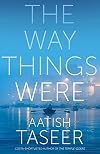
'The Way Things Were' is an ode to Sanskrit and a reminder of what it actually means to be a rational Indian... This book tells a beautiful bittersweet story of a family against the backdrop of changing phases of Indian politics...
Aatish Taseer places history in the center and explores the different approaches towards the recorded past and how these approaches affect psyches of people and thus the future of a nation... And in all this how we lose the very essence of history which is to learn show more from our mistakes in the past... Instead we lose our future by using history to recreate those mistakes in the name of securing our religions.
'The Way Things Were' has a lot of important things to say... A Must Read... show less
Aatish Taseer places history in the center and explores the different approaches towards the recorded past and how these approaches affect psyches of people and thus the future of a nation... And in all this how we lose the very essence of history which is to learn show more from our mistakes in the past... Instead we lose our future by using history to recreate those mistakes in the name of securing our religions.
'The Way Things Were' has a lot of important things to say... A Must Read... show less
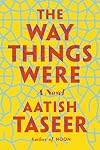
Tour de force. The story of Toby and Uma, and the large cast of characters their lives touch and are touched by, manages to be brilliantly about language and how it shapes and is shaped by life, about what it means to be an outsider - both of a place and not of a place, about how individuals find themselves in others and in spite of others. The history of India in the late 20th Century, just for good measure.

The author straddles many fracture lines: Hindu-Muslim, India-Pakistan in the subcontinent, western education and Indian cultural roots, and so on. He makes an honest attempt to come to India, to access the Hindu-Indian-traditional part of his civilizational heritage, and that too to the centre of traditional Hindu, Sanskrit learning, the Brahmins of Banaras in the Ganges valley. Here he meets up with both men on the street (Brahmins of the present age), as well as tradition-bound scholars, show more some of them schooled strictly in the traditional ways, and some who know also the world of modern linguistic and philosophical scholarship. But he is defeated, ultimately, by the lack of self-awareness, the mistaken conviction that the scriptures contain all knowledge, the absence of a critical understanding of what the British (and for that matter the Muslim) interludes and interactions have meant, and the lack of any future prospects for the purely backward-looking world view of his contacts. He decides he is better off in the west, where there is an element of rationality and more productive civilizational values of the Enlightenment and the respect for the individual. In this, he confirms the reaction that most modern English-schooled Indians have to the uglier manifestations of the current Hindutva movement in India. show less
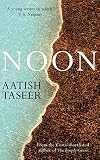
This book is more a collection of short stories than a novel, showing as it does distinct episodes in the life of Rehan Tabassum set several years apart. Written sometimes in the first-person and sometimes in the third, we see Rehan first as a young man on his way to meet his father who abandoned his mother when Rehan was too young to remember him. The following four chapters focus on incidents in Rehan’s life from when he was a child until the present when he is a young man.
Rehan’s show more life, as a young man with an Indian mother, an absent father in Pakistan and a western education, seems to mirror the author’s own life and the book comes over as autobiographical in style. The various stories provide glimpses into the divisions in society in both India and Pakistan, the contrasts between the wealth and power of the new industrialists and the simultaneous fading of the old privileged classes, the casual corruption and cruelty that seem to be part of everyday life and the rise of the more militant form of Islamism. Without in any way dwelling on terrorism, the author makes reference to it and highlights the growing hatred of western values and the colonial legacy, embodied often by the use of the English language amongst the elite.
The tone of the book was quite pessimistic about the societies of both India and Pakistan. The role of women came across as very minor and subordinate – both of Rehan’s father figures had left wives for younger women and after Rehan’s childhood years the women were barely mentioned. The scenes of mild torture casually employed by the police, the continuing class and caste divides, the contrasts of extreme poverty and extreme wealth, the street riots – I was left wanting to see some of the positives that surely must exist to counterbalance these negative images.
Overall, however, I found the author to be a very effective and compelling storyteller. While I didn’t feel the book held quite together as a novel, I found each chapter to be a fully formed story in its own right. There were many cultural and religious references in the book that I didn’t get and the author didn’t explain (why should he?) but I didn’t find this marred my understanding or enjoyment of the book. I will certainly look out for more from this author in the future.
I got the opportunity to read and review this book through the Amazon Vine programme. show less
Rehan’s show more life, as a young man with an Indian mother, an absent father in Pakistan and a western education, seems to mirror the author’s own life and the book comes over as autobiographical in style. The various stories provide glimpses into the divisions in society in both India and Pakistan, the contrasts between the wealth and power of the new industrialists and the simultaneous fading of the old privileged classes, the casual corruption and cruelty that seem to be part of everyday life and the rise of the more militant form of Islamism. Without in any way dwelling on terrorism, the author makes reference to it and highlights the growing hatred of western values and the colonial legacy, embodied often by the use of the English language amongst the elite.
The tone of the book was quite pessimistic about the societies of both India and Pakistan. The role of women came across as very minor and subordinate – both of Rehan’s father figures had left wives for younger women and after Rehan’s childhood years the women were barely mentioned. The scenes of mild torture casually employed by the police, the continuing class and caste divides, the contrasts of extreme poverty and extreme wealth, the street riots – I was left wanting to see some of the positives that surely must exist to counterbalance these negative images.
Overall, however, I found the author to be a very effective and compelling storyteller. While I didn’t feel the book held quite together as a novel, I found each chapter to be a fully formed story in its own right. There were many cultural and religious references in the book that I didn’t get and the author didn’t explain (why should he?) but I didn’t find this marred my understanding or enjoyment of the book. I will certainly look out for more from this author in the future.
I got the opportunity to read and review this book through the Amazon Vine programme. show less
Lists
Awards


You May Also Like


Associated Authors
Statistics
- Works
- 8
- Also by
- 3
- Members
- 399
- Popularity
- #60,804
- Rating
- 3.8
- Reviews
- 8
- ISBNs
- 49
- Languages
- 6