
Alice Albinia
Author of Empires of the Indus: The Story of a River
About the Author
Alice Albinia's honors include a Somerset Maugham Award, the Royal Society of Literature/Jerwood Prize, and the Dolman Travel Prize 2009. Her writing has appeared in The Guardian, the Financial Times, and elsewhere. She lives in England.
Works by Alice Albinia
Tagged
Common Knowledge
- Birthdate
- 1976
- Gender
- female
- Education
- University of Cambridge
University of London (School of Oriental and African Studies) - Occupations
- journalist
- Agent
- Rebecca Carter
- Nationality
- UK
- Birthplace
- London, England, UK
- Associated Place (for map)
- England, UK
Members
Reviews
Cwen: A mysterious death, a band of women and a remote island where anything is possible. 'Magical, rich and magnificent' MAXINE PEAKE by Alice Albinia
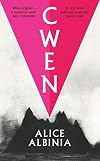
[b:Cwen|56756754|Cwen|Alice Albinia|https://i.gr-assets.com/images/S/compressed.photo.goodreads.com/books/1615384584l/56756754._SY75_.jpg|88704167] was not the novel I expected it to be and all the better for it. For some reason I thought it would be sci-fi – presumably because I discovered it via a list of sci-fi and fantasy in the Guardian? In any case, it is a rare example of a contemporary utopian novel, with a minor mythological element. The structure of the narrative is a public show more enquiry into the work of a woman named Eva, who slowly and carefully introduced feminist influence into the public life of a Scottish island. The reader’s perspective is largely that of the woman leading the public enquiry. Gradually a picture of who Eva was and what she did is built up via the voices of her friends, relatives, colleagues, and detractors. This is a fascinating and unusual way to approach a character, which Albinia executes really well. I was immediately drawn in and found the polyphonic nature of the narrative deeply compelling. It's striking both to see Eva through the eyes of the community and explore the community itself. The wide cast of characters and their interactions are evoked beautifully.
The writing style is cool, composed, psychologically insightful, and elegantly paced. The mystical interludes from the perspective of Cwen herself make an effective contrast to the public enquiry’s investigations, as well as helping to build a strong sense of place. I've rarely come across novels that ask how local communities can meaningfully move towards equality, justice, solidarity, and environmental conservation within existing systems. [b:Cwen|56756754|Cwen|Alice Albinia|https://i.gr-assets.com/images/S/compressed.photo.goodreads.com/books/1615384584l/56756754._SY75_.jpg|88704167] does this brilliantly. It gradually explains how Eva used her wealth and privilege to catalyse and fund change, which is inspiring and thought-provoking to discover via those speaking at the inquiry. In parallel, Albinia gives a voice to the spirit of Cwen, a small uninhabited island. These stark interludes link the transformation of the nearby community with the forgotten and suppressed women's history in the islands. It's hard to articulate how rich and original the whole novel is. After finishing it, I immediately wanted to reread and absorb more of its subtleties. I really appreciated [b:Cwen|56756754|Cwen|Alice Albinia|https://i.gr-assets.com/images/S/compressed.photo.goodreads.com/books/1615384584l/56756754._SY75_.jpg|88704167] and would have more to say about it had the heatwave not deprived me of sleep. show less
The writing style is cool, composed, psychologically insightful, and elegantly paced. The mystical interludes from the perspective of Cwen herself make an effective contrast to the public enquiry’s investigations, as well as helping to build a strong sense of place. I've rarely come across novels that ask how local communities can meaningfully move towards equality, justice, solidarity, and environmental conservation within existing systems. [b:Cwen|56756754|Cwen|Alice Albinia|https://i.gr-assets.com/images/S/compressed.photo.goodreads.com/books/1615384584l/56756754._SY75_.jpg|88704167] does this brilliantly. It gradually explains how Eva used her wealth and privilege to catalyse and fund change, which is inspiring and thought-provoking to discover via those speaking at the inquiry. In parallel, Albinia gives a voice to the spirit of Cwen, a small uninhabited island. These stark interludes link the transformation of the nearby community with the forgotten and suppressed women's history in the islands. It's hard to articulate how rich and original the whole novel is. After finishing it, I immediately wanted to reread and absorb more of its subtleties. I really appreciated [b:Cwen|56756754|Cwen|Alice Albinia|https://i.gr-assets.com/images/S/compressed.photo.goodreads.com/books/1615384584l/56756754._SY75_.jpg|88704167] and would have more to say about it had the heatwave not deprived me of sleep. show less
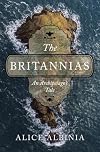
As a writer who enjoys telling stories rooted in myth and tradition, and who favors strong female protagonists, I thought 'The Britannias' to be a revealing depiction of Britain through its islands.
Alice Albinia expertly mixes together history, folklore, and travelogue to provide readers with a new perspective on the rich tapestry of this "island nation." 'The Britannias' takes viewers on a mesmerizing trip around Britain's island geography, from Neolithic wonders to modern charms, show more demonstrating how these islands have influenced the mainland's history, culture, and technology. Alice Albinia travels across Britain and beyond, exploring beaches, meeting autonomous islanders, and discovering a subversive mythology of female authority. Albinia uncovers the lasting legacy of female independence woven into British identity.
This is a colorful and observant inquiry that questions long-held beliefs about Britain. With its incisive text and stunning pictures, this book is a must-read for anybody interested in learning more about Britain's island origins. show less
Alice Albinia expertly mixes together history, folklore, and travelogue to provide readers with a new perspective on the rich tapestry of this "island nation." 'The Britannias' takes viewers on a mesmerizing trip around Britain's island geography, from Neolithic wonders to modern charms, show more demonstrating how these islands have influenced the mainland's history, culture, and technology. Alice Albinia travels across Britain and beyond, exploring beaches, meeting autonomous islanders, and discovering a subversive mythology of female authority. Albinia uncovers the lasting legacy of female independence woven into British identity.
This is a colorful and observant inquiry that questions long-held beliefs about Britain. With its incisive text and stunning pictures, this book is a must-read for anybody interested in learning more about Britain's island origins. show less
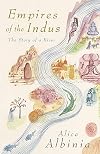
This is a remarkable book in so many ways. The first thing that I loved was the structure; as Albinia moves geographically up the Indus valley, she goes back in history. Hence the first chapter describes Karachi and deals with Partition in 1947, and the last chapter is set in Tibet at the source of the Indus and explores the prehistory of the region five million years ago.
The other aspect of this book that cannot fail to impress is Albinia's own part in the book. From her sheer guts (e.g. show more travelling to areas of Pakistan and Afghanistan where I would not dream of going even as a Pakistani woman), to the painstaking depth of her research, to her ability to expose the failings of the authorities while maintaining an impartial respect and fondness for the people on both sides of the Indus, this is an impressive book. But what makes it truly outstanding is the emotional connection she feels to the history and culture of this region and the indignation that she feels regarding their erosion:
"The Atharva Veda calls the Indu 'saraansh': flowing for ever. One day, when there is nothing but dry riverbeds and dust, when this ancient name has been rendered obsolete, then the songs humans sing will be dirges of bitterness and regret. They will tell of how the Indus -- which once 'encircled Paradise', bringing forth civilizations and species, languages and religions -- was, through mankind's folly, entirely spent."
If only we South Asians cared so much ourselves. show less
The other aspect of this book that cannot fail to impress is Albinia's own part in the book. From her sheer guts (e.g. show more travelling to areas of Pakistan and Afghanistan where I would not dream of going even as a Pakistani woman), to the painstaking depth of her research, to her ability to expose the failings of the authorities while maintaining an impartial respect and fondness for the people on both sides of the Indus, this is an impressive book. But what makes it truly outstanding is the emotional connection she feels to the history and culture of this region and the indignation that she feels regarding their erosion:
"The Atharva Veda calls the Indu 'saraansh': flowing for ever. One day, when there is nothing but dry riverbeds and dust, when this ancient name has been rendered obsolete, then the songs humans sing will be dirges of bitterness and regret. They will tell of how the Indus -- which once 'encircled Paradise', bringing forth civilizations and species, languages and religions -- was, through mankind's folly, entirely spent."
If only we South Asians cared so much ourselves. show less
Alice Albinia’s book is one of the best book in the travel literature genre that I’ve read in recent times.
Wanderlust, astonishing sense of adventure, and a never-ending hunger to gather little known facts and the history of every place she visits is what makes her such a brilliant travel writer. A lot of research has gone into the making of the book, and it is evident from the numerous journals, books and ancient scripts she quotes to emphasize her findings. It’s the best kind of show more book with such a delightful mixture of travel, descriptions of the people, the culture, the history, the flaws, the merits, the geography, the architecture, the political scenario, quaint facts and trivia about every place she sets foot on while tracing the course of the Indus river.
She traces the Indus from it’s delta in Sindh, Pakistan and reaches up to it’s source in the mountains of Tibet, travelling through Afghanistan, India and China. I won’t mention the details of the exhaustive list of facts she unearths during her travels, but here is a glimpse of few intriguing facts that the book describes.
1. Pakistan’s current socio-political and cultural scenarios,an in-depth view of the delta region to swat valley,the various tribes...Sheedis in particular, who claim to be descendants of Bilal, an Ethiopian who was Prophet Mohammed’s follower.
2. She traces and co-relates the origin, rise or fall of various religions on the banks of the Indus. Hinduism, Islam, Buddhism, Sikhism, and Christianity, all evolved through centuries and highly influenced by invasions and pilgrimages on the Indus valley. Hinduism proliferated during the early eleventh and tenth century A.D. and has persisted through the centuries despite invasion by Muslim rulers in the Indus Valley. She describes the Sadhubela temple in Pakistan, the Hindus worshipping Uderolal or Jhule Lal, the river God of Indus who travels on four palla fish. And then there was the spread of Buddhism mainly by King Asoka as far as the borders of Afghanistan. The Buddhist stupas, the Bamiyan Buddha, the Buddhist people of Ladakh and Tibet, Chinese pilgrims tracing the routes of spread of Buddhism centuries ago…everything comes alive in Albinia’s descriptions. Then Islam came with Sultan Mahmud of Ghazni, whose plundering of the famed Indian treasures is a historical legend. Mughals followed but with varying tolerance for other religions, from Emperor Akbar’s exemplary tolerance to Aurangazeb’s zilch religious tolerance.
Then Sikhism started out in 15th century, with Guru Nanak’s birth on the Indus valley, and the spread of Sikhism throughout the centuries by the rest of the ten Gurus, Maharaja Ranjit Singh’s rule, and the holy place Nankana Sahib still in Pakistan. She also visits the Golden Temple in Amritsar, on the banks of the tributaries of the Indus. Christianity came late with the British invasion of India, and it’s spread by Christian missionaries. The influence of British on the people and the customs of this region, the tactics followed by the British to spread their empire are wonderfully detailed too. Right up to the Independence of India.
3. She deals with the Partition of India, the after-effects, the large-scale migration, and the horrible massacres in the name of religion and the geographical boundaries which were peacefully cohabited by the same people for ages. The “divide and rule” policy of British culminating in the Partition of India, the thoughts and arguments of the Indian and Pakistani politicians who witnessed, welcomed or argued this change…a valuable insight is provided by the book.
4. She also describes the people and their varying customs in every place with perfect detailing; the Pashtuns, the Sheedis, the Ladakhis, the Dards, the Kalash being the most interesting. The Kalash have their own religion, resides in mountainous Northern Pakistan, a community whose customs have remained unvaried through thousands of years, believed to be the original Aryans, has the custom of burying people in open coffins, and the women enjoys the kind of freedom which is rare in the country. She also writes about the polyandrous communities of Ladakh and Tibet, where women have dominated men throughout the centuries. The polyandry is more out of necessity than personal choice, the limited resources makes traditional marriages a no-no because inheritance problems will arise in the little provisions the families have.
5. Architecture and heritage sites are a prominent feature in this book. The Harrapan and Mohenjo-Daro civilizations, the Buddhist statues and stupas, the numerous caves and stone circles populating the Indus banks, the temples and mosques dating back thousands of years, and stone carvings some dating back to 80,000 years, she encounters them all. But is dismayed by the indifference these architectural jewels are treated by people and little has been done for their preservation by the archaeological societies.
6. Albinia writes beautifully about her final and highly adventurous journey to the source of Indus in Tibet. But she’s in for a terrible shock when she realizes that the Chinese had dammed the Indus a few months ago and she had actually been following the tributaries of Indus all along. The construction of dams altering the course of a river, that originated far earlier than humans arrived on this Earth and had flowed without anyone disturbing it’s course, for purposes like generating electricity and irrigation has altered the entire geography and as a result the lives of the people inhabiting that region. Poorly planned and injudicious construction of dams by all the countries through which the Indus flows is highly condemned in the book. BY construction of the dams in India and Pakistan, Punjab has the best irrigated fields but the people of the delta have to drink diluted sewage water or the highly saline water. Agriculture is impossible and only fishing in the ocean remains the only source of livelihood there. The aquatic animals have suffered too, by dams blocking their routes of migration.
7. She describes the Indian and Pakistani border military camps, the Kargil war, the sentiments of the people involved, Kargil now, and the issue of Kashmir, the object of dispute since Partition.
I’ve left out a million details, but I highly recommend this book to everyone if history and travel even remotely intrigues you. show less
Wanderlust, astonishing sense of adventure, and a never-ending hunger to gather little known facts and the history of every place she visits is what makes her such a brilliant travel writer. A lot of research has gone into the making of the book, and it is evident from the numerous journals, books and ancient scripts she quotes to emphasize her findings. It’s the best kind of show more book with such a delightful mixture of travel, descriptions of the people, the culture, the history, the flaws, the merits, the geography, the architecture, the political scenario, quaint facts and trivia about every place she sets foot on while tracing the course of the Indus river.
She traces the Indus from it’s delta in Sindh, Pakistan and reaches up to it’s source in the mountains of Tibet, travelling through Afghanistan, India and China. I won’t mention the details of the exhaustive list of facts she unearths during her travels, but here is a glimpse of few intriguing facts that the book describes.
1. Pakistan’s current socio-political and cultural scenarios,an in-depth view of the delta region to swat valley,the various tribes...Sheedis in particular, who claim to be descendants of Bilal, an Ethiopian who was Prophet Mohammed’s follower.
2. She traces and co-relates the origin, rise or fall of various religions on the banks of the Indus. Hinduism, Islam, Buddhism, Sikhism, and Christianity, all evolved through centuries and highly influenced by invasions and pilgrimages on the Indus valley. Hinduism proliferated during the early eleventh and tenth century A.D. and has persisted through the centuries despite invasion by Muslim rulers in the Indus Valley. She describes the Sadhubela temple in Pakistan, the Hindus worshipping Uderolal or Jhule Lal, the river God of Indus who travels on four palla fish. And then there was the spread of Buddhism mainly by King Asoka as far as the borders of Afghanistan. The Buddhist stupas, the Bamiyan Buddha, the Buddhist people of Ladakh and Tibet, Chinese pilgrims tracing the routes of spread of Buddhism centuries ago…everything comes alive in Albinia’s descriptions. Then Islam came with Sultan Mahmud of Ghazni, whose plundering of the famed Indian treasures is a historical legend. Mughals followed but with varying tolerance for other religions, from Emperor Akbar’s exemplary tolerance to Aurangazeb’s zilch religious tolerance.
Then Sikhism started out in 15th century, with Guru Nanak’s birth on the Indus valley, and the spread of Sikhism throughout the centuries by the rest of the ten Gurus, Maharaja Ranjit Singh’s rule, and the holy place Nankana Sahib still in Pakistan. She also visits the Golden Temple in Amritsar, on the banks of the tributaries of the Indus. Christianity came late with the British invasion of India, and it’s spread by Christian missionaries. The influence of British on the people and the customs of this region, the tactics followed by the British to spread their empire are wonderfully detailed too. Right up to the Independence of India.
3. She deals with the Partition of India, the after-effects, the large-scale migration, and the horrible massacres in the name of religion and the geographical boundaries which were peacefully cohabited by the same people for ages. The “divide and rule” policy of British culminating in the Partition of India, the thoughts and arguments of the Indian and Pakistani politicians who witnessed, welcomed or argued this change…a valuable insight is provided by the book.
4. She also describes the people and their varying customs in every place with perfect detailing; the Pashtuns, the Sheedis, the Ladakhis, the Dards, the Kalash being the most interesting. The Kalash have their own religion, resides in mountainous Northern Pakistan, a community whose customs have remained unvaried through thousands of years, believed to be the original Aryans, has the custom of burying people in open coffins, and the women enjoys the kind of freedom which is rare in the country. She also writes about the polyandrous communities of Ladakh and Tibet, where women have dominated men throughout the centuries. The polyandry is more out of necessity than personal choice, the limited resources makes traditional marriages a no-no because inheritance problems will arise in the little provisions the families have.
5. Architecture and heritage sites are a prominent feature in this book. The Harrapan and Mohenjo-Daro civilizations, the Buddhist statues and stupas, the numerous caves and stone circles populating the Indus banks, the temples and mosques dating back thousands of years, and stone carvings some dating back to 80,000 years, she encounters them all. But is dismayed by the indifference these architectural jewels are treated by people and little has been done for their preservation by the archaeological societies.
6. Albinia writes beautifully about her final and highly adventurous journey to the source of Indus in Tibet. But she’s in for a terrible shock when she realizes that the Chinese had dammed the Indus a few months ago and she had actually been following the tributaries of Indus all along. The construction of dams altering the course of a river, that originated far earlier than humans arrived on this Earth and had flowed without anyone disturbing it’s course, for purposes like generating electricity and irrigation has altered the entire geography and as a result the lives of the people inhabiting that region. Poorly planned and injudicious construction of dams by all the countries through which the Indus flows is highly condemned in the book. BY construction of the dams in India and Pakistan, Punjab has the best irrigated fields but the people of the delta have to drink diluted sewage water or the highly saline water. Agriculture is impossible and only fishing in the ocean remains the only source of livelihood there. The aquatic animals have suffered too, by dams blocking their routes of migration.
7. She describes the Indian and Pakistani border military camps, the Kargil war, the sentiments of the people involved, Kargil now, and the issue of Kashmir, the object of dispute since Partition.
I’ve left out a million details, but I highly recommend this book to everyone if history and travel even remotely intrigues you. show less
Lists
Awards


You May Also Like


Associated Authors
Statistics
- Works
- 5
- Members
- 501
- Popularity
- #49,398
- Rating
- 3.9
- Reviews
- 18
- ISBNs
- 36
- Languages
- 5