
Peter FitzSimons
Author of Nancy Wake: A Biography of Our Greatest War Heroine
About the Author
Peter John FitzSimons is an Australian journalist and writer, born on June 29, 1961 in Wahroonga, New South Wales. He studied government and political science at the University of Sydney and earned a degree in arts. In the 1980s to 2010 he played rugby. For two years (2006-2008) he was a radio show more co-host with Mike Carlton of the Breakfast with Mike and Fitz show. He is journalist with the Sydney Morning Herald and Sun-Herald. His twenty-seven books include Tobruk, Kokoda, Charles Kingsford Smith and Those Magnificent Men, A Simpler Time, Mawson, Batavia, Eureka: The Unfinished Revolution, Ned Kelly, Gallipoli, Fromelles and Pozieres: In the Trenches of Hell, and has written seven biographies. Victory at Villers-Bretonneux was published in November 2016. The Great Aussie Bloke Slim-Down is his most recent bestseller. (Bowker Author Biography) show less
Works by Peter FitzSimons
Mawson: And the Ice Men of the Heroic Age: Scott, Shackleton and Amundsen. (2011) 144 copies, 2 reviews
Mutiny on the Bounty: A saga of sex, sedition, mayhem and mutiny, and survival against extraordinary odds (2018) 121 copies
The Catalpa Rescue: The Gripping Story of the Most Dramatic and Successful Prison Break in Australian History (2019) 59 copies
Fair Go, Sport: Inspiring and Uplifting Tales of the Good Folks, Great Sportsmanship and Fair Play (2018) 19 copies
How Hemlines Predict the Economy: Explanations, Rationalizations, and Theories on Everything (2009) 11 copies
A Simpler Life 1 copy
Associated Works
Tagged
Common Knowledge
- Canonical name
- FitzSimons, Peter
- Legal name
- FitzSimons, Peter John
- Birthdate
- 1961-06-29
- Gender
- male
- Education
- Knox Grammar School
University of Sydney
Peats Ridge Primary School - Occupations
- rugby player (Wallabies)
journalist
broadcaster
biographer - Awards and honors
- Order of Australia (Member, 2011)
- Relationships
- Wilkinson, Lisa (wife)
- Short biography
- Peter John FitzSimons AM (born 29 June 1961, Wahroonga, New South Wales) is an Australian journalist and author, based in Sydney. He is a former radio presenter and national representative rugby union player.
- Nationality
- Australia (birth)
- Birthplace
- Wahroonga, New South Wales, Australia
- Places of residence
- Peats Ridge, New South Wales, Australia
Sydney, New South Wales, Australia - Associated Place (for map)
- New South Wales, Australia
Members
Reviews
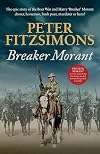
I'll begin this by saying I'm a fan of Peter FitzSimon's work. I've enjoyed many of his other titles.
But not this one. In fact, I stopped reading it about 2/3 the way through. That's rare for me. I usually push-on regardless.
The main subject of the book - Breaker Morant - is part of Australian folklore. A movie of the same name typifies Australian sentiment against the British 'mother country', and harks to our feelings of being used and thrown to the dogs by Britain in both world wars.
But show more this Breaker Morant - the one the author paints - is not what I expected. He's a theiving, selfish, self-centered, narcissistic, woman-ising, drunken, con-artist. And that's just his good points. It got to a point in the book where I just so disliked him I didn't care whether he was executed, or even whether that was 'just'. I got the impression the author grew to dislike him, too, and I think this came out in his writing.
Large swathes of the book are about the setting - the Boer war between Britain and South African republics in what is now South Africa over a century ago. My god, if ever there was history made to 'end all wars' (at that time, anyway) it would be this waste of time, money and many, many lives. Both sides were disgusting. The lowest of human base behaviour on display. And while the author paints the heroics of the Australian soldiers involved, he also details their atrocities. Truly shameful.
FitzSimon employs a unique style which combines story-telling, fiction, non-fiction, auto-biography, commentary, and narration. He would drive any traditional editor to madness I'd reckon. It's an odd mix, but I'm used to it from his other books. In this book, though, the prose became awkward and stilted in parts, and sometimes plain infuriating. Who's talking? What's happening here? The reader should not be spending time working that out. And in some chapters I was reading unnecessary detail that just didn't seem to matter. So what if the researchers found it ... why do I need to read it?
Definitely not my favourite FitzSimon's title. And I suspect it's not his, either. show less
But not this one. In fact, I stopped reading it about 2/3 the way through. That's rare for me. I usually push-on regardless.
The main subject of the book - Breaker Morant - is part of Australian folklore. A movie of the same name typifies Australian sentiment against the British 'mother country', and harks to our feelings of being used and thrown to the dogs by Britain in both world wars.
But show more this Breaker Morant - the one the author paints - is not what I expected. He's a theiving, selfish, self-centered, narcissistic, woman-ising, drunken, con-artist. And that's just his good points. It got to a point in the book where I just so disliked him I didn't care whether he was executed, or even whether that was 'just'. I got the impression the author grew to dislike him, too, and I think this came out in his writing.
Large swathes of the book are about the setting - the Boer war between Britain and South African republics in what is now South Africa over a century ago. My god, if ever there was history made to 'end all wars' (at that time, anyway) it would be this waste of time, money and many, many lives. Both sides were disgusting. The lowest of human base behaviour on display. And while the author paints the heroics of the Australian soldiers involved, he also details their atrocities. Truly shameful.
FitzSimon employs a unique style which combines story-telling, fiction, non-fiction, auto-biography, commentary, and narration. He would drive any traditional editor to madness I'd reckon. It's an odd mix, but I'm used to it from his other books. In this book, though, the prose became awkward and stilted in parts, and sometimes plain infuriating. Who's talking? What's happening here? The reader should not be spending time working that out. And in some chapters I was reading unnecessary detail that just didn't seem to matter. So what if the researchers found it ... why do I need to read it?
Definitely not my favourite FitzSimon's title. And I suspect it's not his, either. show less

Slow down. Take a deep breath.
That's what I constantly felt like telling PeterFitzSimons as I went through this book. It all feels so rushed.
Of course, Les Darcy was rushed himself. A child of a large Catholic family in Australia, he started boxing serious at age fifteen, was probably the best in Australia within five years, by 1916 was looking for a way to get to America to fight even though World War I was raging, managed to get there by sneaking out of Australia on a freight-carrier, show more couldn't manage to arrange a fight in America, and died of disease in Memphis in May 1917.
Before he died, his patriotism was questioned, because he didn't volunteer for the Australian army -- but after his death, he became an Australian hero. There were several books, and at least a couple of songs, including one that made it pretty firmly into Australian tradition ("In Maitland cemet'ry Lies poor Les Darcy"). It was the song that got me interested -- I assure you I am not interested in boxing!
Darcy's early death raised two questions: What did he die of (he was only about 22, after all!), and just how good was he? The Darcy song claims the Americans poisoned him because he was too good and would beat anyone he faced. In fact, he seems to have died of pneumonia and sepsis, which came about because of an injury he took in a bout before he flew to Australia. And we really don't know how good he was, because he had few opportunities to fight the world's best boxers -- but the fact that he occasionally had trouble with lesser mortals makes it unlikely that he was in fact the world's best.
This book doesn't go to the extremes of the folk songs (e.g. it accepts the American death certificate), but it's always pumping up Les, the friendly, guileless kid who just wanted to beat the stuffing out of people. (And marry his girlfriend Winnie O'Sullivan, even though they were both very young.) The picture it paints is, frankly, of a rather foolish young man with fast fists. Is that right? Once again, I don't know, because it's all so breathless.
I don't know if a true biography of Darcy can be written at this date. Everyone who knew him is dead, and most of those who wrote things about him were Darcy fans; it's hard to find balance. This seems like a panegyric. (At least it's a readable one.) But it also left me constantly wanting to shake sense into Darcy. A very peculiar mix -- but at least better than the folk songs. show less
That's what I constantly felt like telling PeterFitzSimons as I went through this book. It all feels so rushed.
Of course, Les Darcy was rushed himself. A child of a large Catholic family in Australia, he started boxing serious at age fifteen, was probably the best in Australia within five years, by 1916 was looking for a way to get to America to fight even though World War I was raging, managed to get there by sneaking out of Australia on a freight-carrier, show more couldn't manage to arrange a fight in America, and died of disease in Memphis in May 1917.
Before he died, his patriotism was questioned, because he didn't volunteer for the Australian army -- but after his death, he became an Australian hero. There were several books, and at least a couple of songs, including one that made it pretty firmly into Australian tradition ("In Maitland cemet'ry Lies poor Les Darcy"). It was the song that got me interested -- I assure you I am not interested in boxing!
Darcy's early death raised two questions: What did he die of (he was only about 22, after all!), and just how good was he? The Darcy song claims the Americans poisoned him because he was too good and would beat anyone he faced. In fact, he seems to have died of pneumonia and sepsis, which came about because of an injury he took in a bout before he flew to Australia. And we really don't know how good he was, because he had few opportunities to fight the world's best boxers -- but the fact that he occasionally had trouble with lesser mortals makes it unlikely that he was in fact the world's best.
This book doesn't go to the extremes of the folk songs (e.g. it accepts the American death certificate), but it's always pumping up Les, the friendly, guileless kid who just wanted to beat the stuffing out of people. (And marry his girlfriend Winnie O'Sullivan, even though they were both very young.) The picture it paints is, frankly, of a rather foolish young man with fast fists. Is that right? Once again, I don't know, because it's all so breathless.
I don't know if a true biography of Darcy can be written at this date. Everyone who knew him is dead, and most of those who wrote things about him were Darcy fans; it's hard to find balance. This seems like a panegyric. (At least it's a readable one.) But it also left me constantly wanting to shake sense into Darcy. A very peculiar mix -- but at least better than the folk songs. show less
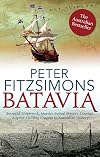
Where do I begin? I have given this 5 stars not for the craft of writing the book (which is great) but for the actual tale itself. It is an epic, unbelievable story that is true, and the truth is what makes it all the more incredible. I have always wanted to write this tale myself but I honestly don't think that I could have done it any better than Fitzsimmon's stark journalistic style. "This happened , then this happened..." gives the story a weight of honesty. There is very little in the show more way of descriptive, emotive text and "fill in the gaps" writing, and what little there is does not in any way detract from the telling.
For those who don't know, this is the tale of three men : Pelsart the commander of the Batavia who is bound in his actions by duty, honor and restraint, Jeronimus Cornelisz,the apothecary who is driven by greed, lust, and the need for control and power, and Webbie Hayes, an ordinary soldier with pragmatism, natural leadership skills and an extraordinary ability to plan for any eventuality and unite others without resorting to fear and intimidation. The Batavia is a flagship of the VOC (Dutch East India Company) that controls the spice trade and she sets out in the 1620s from the Netherlands bound for Jakarta (then know also as Batavia). She is carrying chests of coins, valuables for trading and 310 + people as she leads 6 other ships in convoy around the horn of Africa and across the Indian Ocean to present-day Indonesia.
Although commanded by Pelsart - he spends most of his time ill in his cabin with malaria, it is the evil Jeronimous and the skipper Jacobez who plot to steal the ship and its valuables (including the lovely Lucretia - a high class wife travelling to meet her husband) and become pirates/outlaws. To this end, Jacobez steers the Batavia away from the rest of the fleet deliberately and is about to take over when the vessel runs aground on the shallow Abrolhos Island shoals (about 80 kms off the coast of WA).
What happens next is extraordinary and beggars belief but it is all true; documented in great detail in the trial notes that followed, in Pelsart's own journal and in a letter by the Chaplain on board to his relatives soon after.
So in brief: (PLOT SPOILERS IN ABUNDANCE!!)
1. 180 people are ferried to nearby islands
2. 70 are left on board including Jeronimous.
3. There are 2 boats attached to the Batavia that are used to transport people and food from the boat.
4. Pelsart goes looking for water and food with a small amount of crew including the traitor skipper Jacobez. They encounter aboriginal peoples on the coast of WA and after various sailing mishaps that push them further north, soon realise their only option is to leave behind the survivors and try to reach Batavia. They leave without being able to go back to tell the survivors what is happening.
5. Jeronimous Cornelisz is washed ashore when the Batavia finally sinks and as 3rd in charge takes control. He splits all the Survivors into groups on various islands according to his master plan of eliminating any resistance to his power. For instance, after confiscating everyone's weapons , he moves the soldiers under Webbie Hayes to one island where he tells them to find water but expects them to all die of thirst and starvation.
6. Using trusted henchmen, he systematically kills anyone who poses a threat to him under cover of darkness. Also murdering people who may eat their dwindling food stocks or who don't contribute anything to the struggling community ( the old, the ill, the unskilled - i.e he keeps all the carpenters alive to make new boats). Murder is also used to keep others in line - the preacher's family are all slaughtered to make sure that the preacher and his daughter comply with his rule.
7. He kidnaps all the women who are "comely" (ugly ones are killed) and forces them to be communal sex slaves for his followers with the exception of Lucretia (who he keeps for himself) and the preacher's daughter (who he gives to his right hand man)
8. Meanwhile, Webbie Hayes (though not the most senior soldier) organises everyone on his island, he rations water until they find some, builds forts and kills kangaroos for food and soon realises with horror what Jeronimous is up to when some survivors swim to his island and tell him what is going on. He decides to use stones and slings to defend the island, believing that Pelsart or the VOC will send a rescue ship as their cargo is so valuable.
9.Pelsart manages to reach Batavia where Jacobez is arrested for his part in an indecent assault on Lucretia before the shipwreck. It takes 2 weeks to ready a rescue ship and then weeks and weeks of systematically searching the WA coast without running aground for the Batavia, as Jacobez has written the coordinates wrong.
10. Jeronimous realizes that Webbie's island will be closer to the rescue ship when it comes so he decides to launch all out attacks which Hayes repels. Hayes even captures Jeronimous so his deputy is forced to launch a full scale attack on Webbie's men.
11. On the very day that this happens, Pelsart's rescue ship comes into view so Webbie launches a small boat they have built on the island to try and reach it before the attackers do to tell Pelsart what has happened. He succeeds.
12. A long trial ensues as Pelsart recovers all the lost valuables from the wreck bar one chest. Jeronimous and his followers are tortured, have their hands cut off and hung bar 2 who are marooned in the coast of WA. (Aboriginals in that area have dutch words, blue eyes and white skin and extra toes as a legacy from this ancestry)
13. Others are taken back to Batavia where they are tortured and executed.
There is a fascinating little side note to the story regarding the whereabouts of the Batavia wreck and the discovery of skeletons and artifacts in the islands at the end of the story. Fitzsimmons also tries to give some insight to what happened to the survivors after they were rescued.
I loved this story so much, I wanted to read it all again when I finished! I would recommend it for those who love historical tales that are backed up by hard facts and those interested in Australian history. It is also an amazing story of courage and resilience - what the few women who survived endured - how Webbie Hayes' ingenuity and leadership prevailed - and how one evil person can corrupt so many given the circumstances. HIGHLY RECOMMENDED for Mature readers (there is rape, torture, dismemberment, etc.) show less
For those who don't know, this is the tale of three men : Pelsart the commander of the Batavia who is bound in his actions by duty, honor and restraint, Jeronimus Cornelisz,the apothecary who is driven by greed, lust, and the need for control and power, and Webbie Hayes, an ordinary soldier with pragmatism, natural leadership skills and an extraordinary ability to plan for any eventuality and unite others without resorting to fear and intimidation. The Batavia is a flagship of the VOC (Dutch East India Company) that controls the spice trade and she sets out in the 1620s from the Netherlands bound for Jakarta (then know also as Batavia). She is carrying chests of coins, valuables for trading and 310 + people as she leads 6 other ships in convoy around the horn of Africa and across the Indian Ocean to present-day Indonesia.
Although commanded by Pelsart - he spends most of his time ill in his cabin with malaria, it is the evil Jeronimous and the skipper Jacobez who plot to steal the ship and its valuables (including the lovely Lucretia - a high class wife travelling to meet her husband) and become pirates/outlaws. To this end, Jacobez steers the Batavia away from the rest of the fleet deliberately and is about to take over when the vessel runs aground on the shallow Abrolhos Island shoals (about 80 kms off the coast of WA).
What happens next is extraordinary and beggars belief but it is all true; documented in great detail in the trial notes that followed, in Pelsart's own journal and in a letter by the Chaplain on board to his relatives soon after.
So in brief: (PLOT SPOILERS IN ABUNDANCE!!)
1. 180 people are ferried to nearby islands
2. 70 are left on board including Jeronimous.
3. There are 2 boats attached to the Batavia that are used to transport people and food from the boat.
4. Pelsart goes looking for water and food with a small amount of crew including the traitor skipper Jacobez. They encounter aboriginal peoples on the coast of WA and after various sailing mishaps that push them further north, soon realise their only option is to leave behind the survivors and try to reach Batavia. They leave without being able to go back to tell the survivors what is happening.
5. Jeronimous Cornelisz is washed ashore when the Batavia finally sinks and as 3rd in charge takes control. He splits all the Survivors into groups on various islands according to his master plan of eliminating any resistance to his power. For instance, after confiscating everyone's weapons , he moves the soldiers under Webbie Hayes to one island where he tells them to find water but expects them to all die of thirst and starvation.
6. Using trusted henchmen, he systematically kills anyone who poses a threat to him under cover of darkness. Also murdering people who may eat their dwindling food stocks or who don't contribute anything to the struggling community ( the old, the ill, the unskilled - i.e he keeps all the carpenters alive to make new boats). Murder is also used to keep others in line - the preacher's family are all slaughtered to make sure that the preacher and his daughter comply with his rule.
7. He kidnaps all the women who are "comely" (ugly ones are killed) and forces them to be communal sex slaves for his followers with the exception of Lucretia (who he keeps for himself) and the preacher's daughter (who he gives to his right hand man)
8. Meanwhile, Webbie Hayes (though not the most senior soldier) organises everyone on his island, he rations water until they find some, builds forts and kills kangaroos for food and soon realises with horror what Jeronimous is up to when some survivors swim to his island and tell him what is going on. He decides to use stones and slings to defend the island, believing that Pelsart or the VOC will send a rescue ship as their cargo is so valuable.
9.Pelsart manages to reach Batavia where Jacobez is arrested for his part in an indecent assault on Lucretia before the shipwreck. It takes 2 weeks to ready a rescue ship and then weeks and weeks of systematically searching the WA coast without running aground for the Batavia, as Jacobez has written the coordinates wrong.
10. Jeronimous realizes that Webbie's island will be closer to the rescue ship when it comes so he decides to launch all out attacks which Hayes repels. Hayes even captures Jeronimous so his deputy is forced to launch a full scale attack on Webbie's men.
11. On the very day that this happens, Pelsart's rescue ship comes into view so Webbie launches a small boat they have built on the island to try and reach it before the attackers do to tell Pelsart what has happened. He succeeds.
12. A long trial ensues as Pelsart recovers all the lost valuables from the wreck bar one chest. Jeronimous and his followers are tortured, have their hands cut off and hung bar 2 who are marooned in the coast of WA. (Aboriginals in that area have dutch words, blue eyes and white skin and extra toes as a legacy from this ancestry)
13. Others are taken back to Batavia where they are tortured and executed.
There is a fascinating little side note to the story regarding the whereabouts of the Batavia wreck and the discovery of skeletons and artifacts in the islands at the end of the story. Fitzsimmons also tries to give some insight to what happened to the survivors after they were rescued.
I loved this story so much, I wanted to read it all again when I finished! I would recommend it for those who love historical tales that are backed up by hard facts and those interested in Australian history. It is also an amazing story of courage and resilience - what the few women who survived endured - how Webbie Hayes' ingenuity and leadership prevailed - and how one evil person can corrupt so many given the circumstances. HIGHLY RECOMMENDED for Mature readers (there is rape, torture, dismemberment, etc.) show less
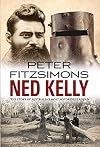
Another fantastic biography from Peter FitzSimons, and it has changed my opinion of him somewhat. While I think he ended up as a murderer, and an attempted mass-murderer at that with the intent to derail a train at Glenrowan, he was I will concede to a certain extent pushed into it by the actions of the police (and Victorian society) in his youth.
The telling point is the anecdote related late in the book that in Victoria every man is presumed innocent until proven Irish. That such a joke show more existed at the time is an indication to me of the position of the Irish, or at least poor Irish, in Victorian society at the time. This joke is enough to make me think that coming from the poor underclass Ned and his ilk may have been provoked by his, his family's, and his countrymen's treatment by Victorian society in general, to fight back, and as it says in Proverbs 14:12 "There is a way that seems right to a man, but its end is the way to death."
He was a brave man, and a leader. Peter FitzSimons points out that in different circumstances and given half a chance he probably would have made a great general in the army for instance. In this I agree. show less
The telling point is the anecdote related late in the book that in Victoria every man is presumed innocent until proven Irish. That such a joke show more existed at the time is an indication to me of the position of the Irish, or at least poor Irish, in Victorian society at the time. This joke is enough to make me think that coming from the poor underclass Ned and his ilk may have been provoked by his, his family's, and his countrymen's treatment by Victorian society in general, to fight back, and as it says in Proverbs 14:12 "There is a way that seems right to a man, but its end is the way to death."
He was a brave man, and a leader. Peter FitzSimons points out that in different circumstances and given half a chance he probably would have made a great general in the army for instance. In this I agree. show less
Lists
Awards


You May Also Like


Associated Authors
Statistics
- Works
- 48
- Also by
- 3
- Members
- 3,351
- Popularity
- #7,619
- Rating
- 4.0
- Reviews
- 37
- ISBNs
- 347
- Languages
- 4
- Favorited
- 3