
Giles MacDonogh
Author of After the Reich: The Brutal History of the Allied Occupation
About the Author
Giles MacDonogh is a historian and journalist. He contributes regularly to the Financial Times, The Times, The Guardian, and Evening Standard. He lives in London
Works by Giles MacDonogh
Classic Malts of Scotland 1 copy
Associated Works
The Hitler Book: The Secret Dossier Prepared for Stalin from the Interrogations of Otto Guensche and Heinze Linge, Hitler's Closest Personal Aides (2005) — Translator, some editions — 445 copies, 4 reviews
Tagged
Common Knowledge
- Birthdate
- 1955-04-06
- Gender
- male
- Education
- University of Oxford (Balliol College)
City of London School - Occupations
- journalist
translator
historian - Relationships
- Brazil, Candida (wife)
- Short biography
- Fluent in French and German
- Nationality
- England
UK - Birthplace
- London, England, UK
- Places of residence
- Cambridge, Cambridgeshire, England, UK
Paris, France - Associated Place (for map)
- England, UK
Members
Reviews
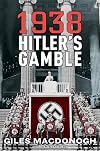
Fascinating book detailing the critical year of 1938, when Hitler enacted his plans to annex Austria and dismember Czechoslovakia to advance his Greater Germany project . The author illustrates the failure of the Western powers England and France to confront Hitler before he got stronger. 1938 was also the year in which the evil of the Nazi regime was finally revealed in the horror of Kristallnacht , when Hitler and his cronies turned on their Jewish victims and moulded the German people to show more their will. Very good book with revealing postscript by the author. show less
After the Reich: The Brutal History of the Allied Occupation by Giles MacDonogh tells a story many people probably don't want to hear. We like to keep our heroes heroic. We like to see World War II as "the good war, " the soldiers who fought it as "the greatest generation." When we talk about Germany after the war, we brag about how generous the Marshall plan was. But what happened in Germany immediately after the war was not so great. The fact that what so many Germans did before the end show more was far worse doesn't change that. Human suffering is human suffering.
Giles MacDonogh, to his credit, deals with this question in his book's preface.
This book is about the experience of the Germans in defeat. It is about the occupation imposed on them following the criminal campaigns of Adolf Hitler. To some extent it is a study in resignation, their acceptance of any form of indignity in the knowledge of the great wrongs perpetrated by the National Socialist state. Not all of these Germans were involved in these crimes, by any means, but with few exceptions they recognized that their suffering was an inevitable result of them. I make no excuses for the crimes the Nazis committed, nor do I doubt for one moment the terrible desire for revenge that they aroused.
After the Reich begins where most war stories end. What happens to the civilian population of a defeated nation? What happens to the soldiers in the defeated army? Who is to be held responsible for the war? What price shall they pay?
Some histories aim for understanding by focusing on a narrow range of topics, while others try to cover the entire breadth of an event or period. After the Reich is of the latter type. Mr. MacDonogh divides After the Reich into four sections. The first section, Chaos, deals with life during and immediately after the closing days of the war in Europe. What happened is best characterized by rape and ethnic cleansing. If you were a woman, and the Russian army found you in territory once occupied by the German army, you would almost certainly be raped. You were much safer if the Americans or the British found you, but you were not completely safe. After the fall of Nazi Germany millions of ethnic Germans were forced to leave their homes in Poland, Czechoslovakia, Hungary, Yugoslavia and what was once Prussia. It did not matter if you were a former Nazi, a child, a former inmate of a concentration camp or Jewish. The lines on the map had been redrawn; all Germans had to go. Many did not survive.
The second section, Allied Zones, is a detailed description of daily life in each of the Zones of occupied Germany. What was once the most feared nation on earth, was divided into Russian, American, British, French Zones, each controlled by a different set of rules and laws. While the quality of life differed from zone to zone, certain characteristics were common in all four. Food was remarkably scare as one would expect. What little shelter had survived intact was soon taken over by the occupying forces. To survive, large numbers of German women turned to prostitution or took lovers. The adult population of each zone was largely female. While money existed, almost all real business used cigarettes as currency. Orphaned children could be found hiding in piles of rubble, living like wild animals. Many did not survive the first winter after the war.
Crime and Punishment, section three of After the Reich, will be familiar territory to fans of The Third Man. Carol Ballard's film, based on a novella by Graham Greane, is mentioned by Mr. MacDonogh as a very accurate representation of life in occupied Vienna. Everyone sought what they needed to survive on the black market. Theft was everywhere. The way the allies divided authority over Germany and Austria kept everything in a state of confusion. While he trials of former Nazi officials are not the main concern of After the Reigh, Mr. MacDonogh shines a critical light on them. Although some of the surviving high ranking Nazis did face trial and eventual execution, the trials then moved on to relatively small fish. Most of those guilty of criminal acts were never tried. Section four, The Road to Freedom, deals briefly with the beginning of the cold war and the realization that both sides needed Germany as an ally to keep the other side in check. This turns out to be the main motivation for the eventual reconstruction of Germany. It's interesting to discover that early on Stalin offered to give East Germany it's freedom if all sides agreed to make united Germany a neutral state. His offer was refused.
After the Reich is not easy reading. While not intended as an academic book, it's not aimed at a wide general audience. But if we believe the maxim that those who forget the past are condemned to repeat it, then don't we have to make an effort to remember it? The U.S. is currently occupying two countries we conquered in battle. While the situation is not as extreme by any measure, history holds valuable lessons that could prove useful for understanding Iraq and Afghanistan. Over 60 years since the end of World War II or over 6,000 miles between New York and Iraq, seen from a great distance of either time or space it easy to overlook how terrible the experience of occupation can be and to overlook that the price paid is paid by both the guilty and the innocent alike. show less
Giles MacDonogh, to his credit, deals with this question in his book's preface.
This book is about the experience of the Germans in defeat. It is about the occupation imposed on them following the criminal campaigns of Adolf Hitler. To some extent it is a study in resignation, their acceptance of any form of indignity in the knowledge of the great wrongs perpetrated by the National Socialist state. Not all of these Germans were involved in these crimes, by any means, but with few exceptions they recognized that their suffering was an inevitable result of them. I make no excuses for the crimes the Nazis committed, nor do I doubt for one moment the terrible desire for revenge that they aroused.
After the Reich begins where most war stories end. What happens to the civilian population of a defeated nation? What happens to the soldiers in the defeated army? Who is to be held responsible for the war? What price shall they pay?
Some histories aim for understanding by focusing on a narrow range of topics, while others try to cover the entire breadth of an event or period. After the Reich is of the latter type. Mr. MacDonogh divides After the Reich into four sections. The first section, Chaos, deals with life during and immediately after the closing days of the war in Europe. What happened is best characterized by rape and ethnic cleansing. If you were a woman, and the Russian army found you in territory once occupied by the German army, you would almost certainly be raped. You were much safer if the Americans or the British found you, but you were not completely safe. After the fall of Nazi Germany millions of ethnic Germans were forced to leave their homes in Poland, Czechoslovakia, Hungary, Yugoslavia and what was once Prussia. It did not matter if you were a former Nazi, a child, a former inmate of a concentration camp or Jewish. The lines on the map had been redrawn; all Germans had to go. Many did not survive.
The second section, Allied Zones, is a detailed description of daily life in each of the Zones of occupied Germany. What was once the most feared nation on earth, was divided into Russian, American, British, French Zones, each controlled by a different set of rules and laws. While the quality of life differed from zone to zone, certain characteristics were common in all four. Food was remarkably scare as one would expect. What little shelter had survived intact was soon taken over by the occupying forces. To survive, large numbers of German women turned to prostitution or took lovers. The adult population of each zone was largely female. While money existed, almost all real business used cigarettes as currency. Orphaned children could be found hiding in piles of rubble, living like wild animals. Many did not survive the first winter after the war.
Crime and Punishment, section three of After the Reich, will be familiar territory to fans of The Third Man. Carol Ballard's film, based on a novella by Graham Greane, is mentioned by Mr. MacDonogh as a very accurate representation of life in occupied Vienna. Everyone sought what they needed to survive on the black market. Theft was everywhere. The way the allies divided authority over Germany and Austria kept everything in a state of confusion. While he trials of former Nazi officials are not the main concern of After the Reigh, Mr. MacDonogh shines a critical light on them. Although some of the surviving high ranking Nazis did face trial and eventual execution, the trials then moved on to relatively small fish. Most of those guilty of criminal acts were never tried. Section four, The Road to Freedom, deals briefly with the beginning of the cold war and the realization that both sides needed Germany as an ally to keep the other side in check. This turns out to be the main motivation for the eventual reconstruction of Germany. It's interesting to discover that early on Stalin offered to give East Germany it's freedom if all sides agreed to make united Germany a neutral state. His offer was refused.
After the Reich is not easy reading. While not intended as an academic book, it's not aimed at a wide general audience. But if we believe the maxim that those who forget the past are condemned to repeat it, then don't we have to make an effort to remember it? The U.S. is currently occupying two countries we conquered in battle. While the situation is not as extreme by any measure, history holds valuable lessons that could prove useful for understanding Iraq and Afghanistan. Over 60 years since the end of World War II or over 6,000 miles between New York and Iraq, seen from a great distance of either time or space it easy to overlook how terrible the experience of occupation can be and to overlook that the price paid is paid by both the guilty and the innocent alike. show less
After the Reich, The Brutal History of the Allied Occupation was written by Giles MacDonogh and published in 2007. The version I reviewed was published by Basic Books of New York in 2007 and is 618 pages. The ISBN of this particular book is 978-0-465-00337-2.
This book covers the activities by the Western Allies and Soviet Union within the occupied areas of Germany and Austria, from the final days of the war until Mid-1949 when the Cold War was getting underway. The description of the author show more in the preface states the following:
“...I have divided the book into four parts: the first looks at the chaos that followed the end of the war within the lands that were then Germany, and the punitive stance of the Allies; the second looks at the day-to-day existence of the Germans and Austrians; the third examines crime and punishment; and the fourth introduces the chronology and records the major political developments from Potsdam to the foundation of the two German republics.”
In his description of the layout of the book, MacDonogh has succeeded in giving the reader details of the events in the final days of World War II through to the Cold War. The book is filled with personal accounts from those who experienced the events in the time and place of late and post-war Germany. Some of these descriptions are personal and of a graphic nature. This is especially true in the beginning parts of the book, as the fall of Germany was close at hand, or after capitulation. His work brings to light events that have been either forgotten by western history, or simply glossed over.
I finished the book realizing there were aspects of World War II I was not aware of. I think that MacDonogh did a service to the history community by writing this book and telling the story of those vanquished by the war. He presents to us stories of Germans, who were not Nazis, but by being in the wrong time and place, suffered the retribution brought on to that regime by the Allies at the end of a costly war.
In the post-war “day-to-day existence” part of the book, there was a lot of focus on the theater and arts of the German people, as in bringing their lives back to some sense of post-war normalcy. I was somewhat skeptical of this emphasis, and wrote it off to being where the major body of sources for information where. In my opinion, it seems fresh water, food, warmth and safety were the top priorities of your average German citizen at this time. It just did not seem to fit as a high priority, and received too much emphasis. I would have liked to have seen some maps to accompany some parts of the book. One such example would be the relocation of Germany’s eastern borders. Having to stop where you are reading to get a ‘lay of the land’ by consulting a map from an atlas, the internet or another book can be cumbersome.
The book contains twenty-seven photographs of the period at the center of the book and no maps, as previously mentioned. The book does contain many notes and sources listed from page 547 to 584, and an index.
My final verdict is that the book is a recommended read for those seeking the story of the ‘last days of the Reich’ and the chaotic aftermath thereafter from the perspective of the German citizen. The reader will also become acquainted with the history of this period and some of the major individuals who participated in the rebuilding of Germany and Austria. show less
This book covers the activities by the Western Allies and Soviet Union within the occupied areas of Germany and Austria, from the final days of the war until Mid-1949 when the Cold War was getting underway. The description of the author show more in the preface states the following:
“...I have divided the book into four parts: the first looks at the chaos that followed the end of the war within the lands that were then Germany, and the punitive stance of the Allies; the second looks at the day-to-day existence of the Germans and Austrians; the third examines crime and punishment; and the fourth introduces the chronology and records the major political developments from Potsdam to the foundation of the two German republics.”
In his description of the layout of the book, MacDonogh has succeeded in giving the reader details of the events in the final days of World War II through to the Cold War. The book is filled with personal accounts from those who experienced the events in the time and place of late and post-war Germany. Some of these descriptions are personal and of a graphic nature. This is especially true in the beginning parts of the book, as the fall of Germany was close at hand, or after capitulation. His work brings to light events that have been either forgotten by western history, or simply glossed over.
I finished the book realizing there were aspects of World War II I was not aware of. I think that MacDonogh did a service to the history community by writing this book and telling the story of those vanquished by the war. He presents to us stories of Germans, who were not Nazis, but by being in the wrong time and place, suffered the retribution brought on to that regime by the Allies at the end of a costly war.
In the post-war “day-to-day existence” part of the book, there was a lot of focus on the theater and arts of the German people, as in bringing their lives back to some sense of post-war normalcy. I was somewhat skeptical of this emphasis, and wrote it off to being where the major body of sources for information where. In my opinion, it seems fresh water, food, warmth and safety were the top priorities of your average German citizen at this time. It just did not seem to fit as a high priority, and received too much emphasis. I would have liked to have seen some maps to accompany some parts of the book. One such example would be the relocation of Germany’s eastern borders. Having to stop where you are reading to get a ‘lay of the land’ by consulting a map from an atlas, the internet or another book can be cumbersome.
The book contains twenty-seven photographs of the period at the center of the book and no maps, as previously mentioned. The book does contain many notes and sources listed from page 547 to 584, and an index.
My final verdict is that the book is a recommended read for those seeking the story of the ‘last days of the Reich’ and the chaotic aftermath thereafter from the perspective of the German citizen. The reader will also become acquainted with the history of this period and some of the major individuals who participated in the rebuilding of Germany and Austria. show less
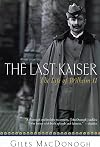
3713. The Last Kaiser: The Life of Wilhelm II, by Giles MacDonogh (read 11 Mar 2003) Since I have read, on Oct 14, 1989, The Kaiser and His Times, by Michael Balfour, and, on 2 Sept 2000, Kaiser Wilhelm II: Germany's Last Emperor, by John Van der Kiste, it was hard for me to see why I should read this new biography of him. But I succumbed, and did. The prose in this book is unclear at times--"his" might refer to not the last mentioned man but the one mentioned before that! There is no show more bibliography, and the hordes of footnotes tell little and do not indicate extensive study, though many are to German books. Nevertheless I enjoyed the book muchly, especially the account of the years 1912 to 1918--momentous years indeed. Wilhelm (as he is called in the title, though in the book he is always called William!) was a flawed man, very German even though his mother was Queen Victoria's eldest daughter. The book is probably more kind to Wilhelm than English authors usually are, but it tells plenty about his oddities and mistakes. The account of his tree chopping down in his retirement seems incredible, though we are not told what equipment he used. This was a most interesting book re most interesting events, even though it had flaws. show less
Lists
You May Also Like


Associated Authors
Statistics
- Works
- 15
- Also by
- 2
- Members
- 1,203
- Popularity
- #21,349
- Rating
- 3.7
- Reviews
- 17
- ISBNs
- 54
- Languages
- 5
