
Pascal Mercier (1944–2023)
Author of Night Train to Lisbon
About the Author
Disambiguation Notice:
(dut) Pascal Mercier is het pseudoniem van de Zwitserse filosoof Peter Bieri (1944-) waaronder hij romans schrijft. Niet te verwarren met de Zwitserse politicus Peter Bieri (1952-).
Pascal Mercier is the pen-name used by the Swiss philosopher Peter Bieri (b. 1944) as a novelist. He has also published philosophical books using his real name. He is not the same as the Swiss politician Peter Bieri (b. 1952).
Image credit: www.literarischeaarau.ch
Works by Pascal Mercier
Mercier 1 copy
Noc_ni vlak za Lisabon 1 copy
Sözlerin Agirligi 1 copy
Der Fluss der Zeit 1 copy
Noční vlad do Lisabonu 1 copy
2006 1 copy
Last Train to Lisbon 1 copy
Associated Works
Tagged
Common Knowledge
- Legal name
- Bieri, Peter
- Other names
- Mercier, Pascal
- Birthdate
- 1944-06-23
- Date of death
- 2023-06-27
- Gender
- male
- Education
- University of London
University of Heidelberg - Occupations
- philosopher
writer - Organizations
- Freie Universität, Berlin
- Awards and honors
- Lichtenberg-Medaille (2006)
Marie Luise Kaschnitz Prize (2006) - Nationality
- Switzerland
- Birthplace
- Bern, Bern, Switzerland
- Places of residence
- Bern, Switzerland
London, England, UK
Heidelberg, Germany
Berkeley, California, USA
Berlin, Germany - Place of death
- Berlijn, Duitsland
- Map Location
- Switzerland
- Disambiguation notice
- Pascal Mercier is the pen-name used by the Swiss philosopher Peter Bieri (b. 1944) as a novelist. He has also published philosophical books using his real name. He is not the same as the Swiss politician Peter Bieri (b. 1952).
Members
Reviews
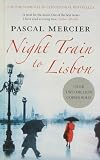
I absolutely loved this book. If you read all the reviews here, you will find they are almost bi-polar, or in the words of a beer ad slogn, "those who like it, like it a lot." If you don't love it, chances are you will hate it.
Raimundo Gregorius has a chance encounter with a Potuguese woman, then finds a book written by a Portuguese author (Prado) with a title that grabs him. On the spot, he leaves his long-held teaching position and travels to Portugal to learn more about the author. Once show more there, he meets people who knew the now-deceased author and finds out about the Portuguese resistance movement.
Prado's writings are deeply introspective and philosophical. I think readers who like a fast-moving plot may find them distracting. But I also think they mirror Gregorius's own search...his attempt to find something beyond his routine life in Switzerland.
There really are two stories here: Gregorious's obsession with Prado, and Prado's obsession with the workings of the mind; and the Portuguese resistance movement.
Now, the rest is hard to say without spoilers, so this may be a bit cryptic. Gregorius's decision to shut down his Switzerland life may be more than a mid-life crisis. And this may be the saddest book I've ever read...or not...depending on what happens immediately after the ending. And I loved the way it ended...the uncertainty that I was faced with is exactly what Gregorius, who I've come to know and feel close to, is facing. I'm there with him, and he is a character that will stay with me. show less
Raimundo Gregorius has a chance encounter with a Potuguese woman, then finds a book written by a Portuguese author (Prado) with a title that grabs him. On the spot, he leaves his long-held teaching position and travels to Portugal to learn more about the author. Once show more there, he meets people who knew the now-deceased author and finds out about the Portuguese resistance movement.
Prado's writings are deeply introspective and philosophical. I think readers who like a fast-moving plot may find them distracting. But I also think they mirror Gregorius's own search...his attempt to find something beyond his routine life in Switzerland.
There really are two stories here: Gregorious's obsession with Prado, and Prado's obsession with the workings of the mind; and the Portuguese resistance movement.
Now, the rest is hard to say without spoilers, so this may be a bit cryptic. Gregorius's decision to shut down his Switzerland life may be more than a mid-life crisis. And this may be the saddest book I've ever read...or not...depending on what happens immediately after the ending. And I loved the way it ended...the uncertainty that I was faced with is exactly what Gregorius, who I've come to know and feel close to, is facing. I'm there with him, and he is a character that will stay with me. show less

"Our life, those are fleeting formations of quicksand formed by one gust of wind, destroyed by the next. Images of futility that blow away even before they have properly formed”.
I cracked open Pascal Mercier’s book with some trepidation, not really in the mood to read yet another novel written by a philosophy lecturer that specialised in wise words on the meaning or otherwise of our existence. This one has our hero picking up a book in a foreign bookstore and setting out on a hunt to show more meet the author; the purveyor of wisdom. There have been a number of these literary detection novels where a little known writer is tracked down by afictionado’s in search of literary fame. Possession by A S Byatt springs to mind. I feared that Night Train to Lisbon would be an uneasy amalgamation of one of these with some philosophical thoughts as evinced in my recently read of The Elegance of a Hedgehog by Muriel Barbery. The snippets from critical reviews on the inside cover claiming the book would be a life changing experience written by a visionary author, also did not bode well.
Imagine my surprise when I found myself completely caught up in this novel’s milieu from the moment that Raimund Gregorius stepped into a Spanish book shop in his home town of Bern Switzerland with his head ringing with the sound of the Portuguese language. The bookshop “smelt wonderfully of old leather and dust” as Gregorius picks from a shelf; UM OURIVES DAS PALAVARAS by AMADEU INACIO DE ALMEIDA PRADO, LISBOA 1975. He does not read Portuguese but the book seller reads out loud for him the title and a short introduction. Gregorius is captivated by the sound of the language and when the book seller translates a passage including the sentence “Given that we can live only a small part of what there is in us” he realises he must have this book. He rushes home armed with a Portuguese dictionary so that he can make his own translations.
As lovers of books and bookshops, that we all are, who has not had that moment of discovery similar to Gregorius’s; Mercier’s sympathetically well drawn leading character, who has spent his life as a student and then a teacher of classical languages. Gregorius’s careful translations reveals an exotic world of modern thought and investigations into language and the use of words. He wants to know more, he wants to meet the author, he wants to be in Portugal and so he walks away from his job and his life in Bern and boards a train to Lisbon. I have done something similar in my life a couple of times and so I was travelling hopefully with Gregorius. I was still concerned however that Mercier’s book might either sink under a weight of cod philosophy or that Gregorius the 57 year old scholar would prove to be so capable and resourceful that he would become totally unbelievable. I needn’t have worried I was in safe hands.
A chance meeting on the Lisbon train with a business man gives Gregorius some contacts and a foothold in the city, Gregorius says:
“There were those people who read and there were others, whether you were a reader or a non-reader, it was soon apparent. There was no greater distinction between people. People were amazed when he asserted this and many shook their heads at such crankiness, but that’s how it was and Gregorius knew it. He knew it.”
The city of Lisbon is explored not by its tourist sights, but by its bookshops. Gregorius soon learns that Amandeu had died in 1973, but his publisher puts him in contact with members of his family. He continues to translate chapters from the book as he tracks down two sisters. The elder sister Adriana is still under the power of her brother. The house where she assisted his work as a doctor remains untouched since the day of his death. It is a shrine. In contrast Melodie still living in the family house is a girl “who didn’t seem to touch the ground”. Friends and lovers are contacted and it soon becomes apparent that Amandeu was involved in the resistance movement against the Portuguese dictator Salazar. Amandeu was a charismatic man who touched the lives of almost everybody he met. Gregorius finds his old school; the Liceu, where some of the teachers were priests in the old Jesuit tradition. He translates his speech that was made to the school on Diploma day, which Amadeu had entitled “Reverence and Loathing for the word of God. At 17 years old Amandeu was already a powerful thinker who was not afraid to speak his mind. His tour de force of a speech touches on issues that were to occupy his thoughts for the rest of his life: the inside and outside of people and how we appear to others and how we appear to ourselves, the use of words, the need for secrets, secrets even from an omnipresent God, he rails against the human condition and the existential nature of his thoughts are already evident.
Pascal Mercier skillfully weaves Gregorius’s translations into the narrative of his search and so we witness the effect of the events discovered about Amandeu's life on his thoughts and actions through his writings. We are already aware that the star pupil at school is a troubled man; pressure from his family pushes him into a medical career, he is uneasy about his relationship with his doting sister, he joins the resistance movement where friendships are stretched to breaking point and betrayals are common place. Imprisonment and torture are just a step away and his writings reflect the damage to his health and his character. The titles of the essays will give a flavour of his state of mind: “The Shadow of the Soul, Treacherous Words, The Disconcerting shadow of Death and finally Furious Loneliness”.
Gregorius is deeply affected by the careful translation he is making and when he digs further and finds unsent letters and memos in locked drawers, that reveal more of Amandeu’s personal anguish, then it causes Gregorius to think about his own life. Grgorius becomes ill with a condition that is similar to one that Amandeu suffered as Amandeu seems to reach out to him beyond the grave. Mercier’s thought provoking book has many layers and calls for careful reading.
Mercier has used italics to highlight the sections that are the translations made by Gregorius of Amandeu’s writings. As soon as I had finished the novel, I went back through to read these passages in isolation and found new depths in the writing. Many of these short essays can stand alone and the quality of thought in them is at times outstanding. The extended metaphor of “I Live in Myself as a Moving Train” is writing at its best.
For a book that has language and the use of words as a key theme it is interesting to think about the fact that Gregorius is making translations from the Portuguese with the aid of dictionaries and occasionally native speakers. In addition Mercier’s book was originally written in German and I was reading an English translation by Barbara Harshav; treacherous words indeed perhaps or as Amandeu says “In the changing light of the words the same things can look different”
This is an excellent novel and one that I will keep to read again. Some beautiful and intelligent writing, with its layers of meaning makes this a book for grown-up people.
Not a life changing experience but still a 4.5 star read. show less
I cracked open Pascal Mercier’s book with some trepidation, not really in the mood to read yet another novel written by a philosophy lecturer that specialised in wise words on the meaning or otherwise of our existence. This one has our hero picking up a book in a foreign bookstore and setting out on a hunt to show more meet the author; the purveyor of wisdom. There have been a number of these literary detection novels where a little known writer is tracked down by afictionado’s in search of literary fame. Possession by A S Byatt springs to mind. I feared that Night Train to Lisbon would be an uneasy amalgamation of one of these with some philosophical thoughts as evinced in my recently read of The Elegance of a Hedgehog by Muriel Barbery. The snippets from critical reviews on the inside cover claiming the book would be a life changing experience written by a visionary author, also did not bode well.
Imagine my surprise when I found myself completely caught up in this novel’s milieu from the moment that Raimund Gregorius stepped into a Spanish book shop in his home town of Bern Switzerland with his head ringing with the sound of the Portuguese language. The bookshop “smelt wonderfully of old leather and dust” as Gregorius picks from a shelf; UM OURIVES DAS PALAVARAS by AMADEU INACIO DE ALMEIDA PRADO, LISBOA 1975. He does not read Portuguese but the book seller reads out loud for him the title and a short introduction. Gregorius is captivated by the sound of the language and when the book seller translates a passage including the sentence “Given that we can live only a small part of what there is in us” he realises he must have this book. He rushes home armed with a Portuguese dictionary so that he can make his own translations.
As lovers of books and bookshops, that we all are, who has not had that moment of discovery similar to Gregorius’s; Mercier’s sympathetically well drawn leading character, who has spent his life as a student and then a teacher of classical languages. Gregorius’s careful translations reveals an exotic world of modern thought and investigations into language and the use of words. He wants to know more, he wants to meet the author, he wants to be in Portugal and so he walks away from his job and his life in Bern and boards a train to Lisbon. I have done something similar in my life a couple of times and so I was travelling hopefully with Gregorius. I was still concerned however that Mercier’s book might either sink under a weight of cod philosophy or that Gregorius the 57 year old scholar would prove to be so capable and resourceful that he would become totally unbelievable. I needn’t have worried I was in safe hands.
A chance meeting on the Lisbon train with a business man gives Gregorius some contacts and a foothold in the city, Gregorius says:
“There were those people who read and there were others, whether you were a reader or a non-reader, it was soon apparent. There was no greater distinction between people. People were amazed when he asserted this and many shook their heads at such crankiness, but that’s how it was and Gregorius knew it. He knew it.”
The city of Lisbon is explored not by its tourist sights, but by its bookshops. Gregorius soon learns that Amandeu had died in 1973, but his publisher puts him in contact with members of his family. He continues to translate chapters from the book as he tracks down two sisters. The elder sister Adriana is still under the power of her brother. The house where she assisted his work as a doctor remains untouched since the day of his death. It is a shrine. In contrast Melodie still living in the family house is a girl “who didn’t seem to touch the ground”. Friends and lovers are contacted and it soon becomes apparent that Amandeu was involved in the resistance movement against the Portuguese dictator Salazar. Amandeu was a charismatic man who touched the lives of almost everybody he met. Gregorius finds his old school; the Liceu, where some of the teachers were priests in the old Jesuit tradition. He translates his speech that was made to the school on Diploma day, which Amadeu had entitled “Reverence and Loathing for the word of God. At 17 years old Amandeu was already a powerful thinker who was not afraid to speak his mind. His tour de force of a speech touches on issues that were to occupy his thoughts for the rest of his life: the inside and outside of people and how we appear to others and how we appear to ourselves, the use of words, the need for secrets, secrets even from an omnipresent God, he rails against the human condition and the existential nature of his thoughts are already evident.
Pascal Mercier skillfully weaves Gregorius’s translations into the narrative of his search and so we witness the effect of the events discovered about Amandeu's life on his thoughts and actions through his writings. We are already aware that the star pupil at school is a troubled man; pressure from his family pushes him into a medical career, he is uneasy about his relationship with his doting sister, he joins the resistance movement where friendships are stretched to breaking point and betrayals are common place. Imprisonment and torture are just a step away and his writings reflect the damage to his health and his character. The titles of the essays will give a flavour of his state of mind: “The Shadow of the Soul, Treacherous Words, The Disconcerting shadow of Death and finally Furious Loneliness”.
Gregorius is deeply affected by the careful translation he is making and when he digs further and finds unsent letters and memos in locked drawers, that reveal more of Amandeu’s personal anguish, then it causes Gregorius to think about his own life. Grgorius becomes ill with a condition that is similar to one that Amandeu suffered as Amandeu seems to reach out to him beyond the grave. Mercier’s thought provoking book has many layers and calls for careful reading.
Mercier has used italics to highlight the sections that are the translations made by Gregorius of Amandeu’s writings. As soon as I had finished the novel, I went back through to read these passages in isolation and found new depths in the writing. Many of these short essays can stand alone and the quality of thought in them is at times outstanding. The extended metaphor of “I Live in Myself as a Moving Train” is writing at its best.
For a book that has language and the use of words as a key theme it is interesting to think about the fact that Gregorius is making translations from the Portuguese with the aid of dictionaries and occasionally native speakers. In addition Mercier’s book was originally written in German and I was reading an English translation by Barbara Harshav; treacherous words indeed perhaps or as Amandeu says “In the changing light of the words the same things can look different”
This is an excellent novel and one that I will keep to read again. Some beautiful and intelligent writing, with its layers of meaning makes this a book for grown-up people.
Not a life changing experience but still a 4.5 star read. show less
“Life is not what we live, it is what we imagine we are living.” “It takes divine courage & divine strength to live with oneself in perfect truth.” “Imagination is our last sanctuary.” These are a few quotes from the fictional author, A. Prado, in Night Train to Lisbon. He is referred to as, “the goldsmith of words”, by those who have known him. In truth, it is Pascal Mercier who forms these philosophically insightful words and shares them with us through Raimund Gregorius, a show more professor, who breaks from his routine life when introduced to a book of Prado’s writings. Gregorius takes a train to Lisbon to begin his journey. Ultimately, it is to learn about the life of Prado. Yet, in doing so, learns about himself, too. There are many spokes that radiate from this central theme. They take us through the map of the theoretical mind to look at and reconsider our inner (the soul) and outer (who we are perceived to be) lives. Mercier carries us through a passage of space and time we will reflect on for the remainder of our lives. This is not a kitsch novel (a little dry humor for those familiar with this book) with an excess of overbearing platitudes. It is a deeply experienced odyssey of the mind and soul. show less
Pascal Mercier is the pseudonym of Peter Beri, a Swiss writer and philosopher, whose research focuses on philosophy of mind , epistemology and ethics, all of which figure prominently in this book. I hesitate to say novel, although there is a narrative arc, interesting characters, historical contexts (much focused on resistance to the Salazar tyranny in Portugal, 1932-1968, the personal effects of which is a theme that connects a number of key characters in the book).
At times, the book reads show more more like Philosophical Meditations on Life, around which the author has constructed a story to give a framework to the meditations presented as the writings of Amadeu de Prado, a supremely brilliant child, adolescent, adult, doctor who became active in the resistance to the Salazar regime and died relatively young of an aneurism that he knew was a ticking bomb in his brain. The advantage of the framework is that it lets the author expand beyond the ruminations of one individual, trenchant and interesting as they are, so that we see him in relationships with his mother and father, sisters, lovers, friends, all of whom have different views and connections and who relate to him, and love or hate or fear him, as a person, all the while recognizing the brilliance of his introspection and his mind.
Raimund Gregorius teaches classical languages in a school in Bern; his life is routine and defined by his remarkable erudition but he is so boring that his nickname is Papyrus. Then, one day on the way to school, a chance encounter with a distraught Portuguese woman plus his discovery of a remarkable book (Amadeu’s writings) inspire him to abandon his post, leave Bern without a word, and catch the trains across Europe to Lisbon to search out friends and relatives of Amadeu, to get to know him through others in addition to through his writings that resonate so strongly for Gregorius. Gregorius meets Amadeu’s two sisters who have completely different personalities, through letters he is given plus Amadue’s own writing, he comes to know Amadeu’s father and mother and their relationship with their brilliant, frightening child, he befriends men who worked in the Resistance with Amadeu, meets old teachers, and an old love, and others. Through it all, Gregorius builds a multifaceted image of Amadeu that no one other person can have because they don’t have the information but more importantly because they have their own prisms and prejudices and preconceptions for knowing and understanding Amadeu. As we all do with all people.
It is difficult to summarize everything in this book. Mercier deals with concepts of the accidental paths of life and what if another had been, or is, chosen; friendship; disappointment; the wholeness of life and fear of death; mortality; changes in people; the flow of time and the relationship of time past, present and future; loneliness; dignity; anger; intimacy; parenting. But if I could identify three overarching themes or points, it would be these:
First is the power of words. Words define concepts and thoughts. Words describe thoughts and things and events. We communicate through words with friends and strangers and family and lovers and those we hate. Words can soothe and wound. Words that are not said may be even more important than those that are. Words take on a power and an existence of their own. Without words we are mute and unable to structure, to communicate, to live our lives. So words matter; meanings matter; how words are used or abused matters. Words are sacred and essential to what it is to be human.
Second is the tension, the dynamic, the conflict of the inner and outer person, all of which play in each individual and in relations with every other person encountered , developing a matrix of overlapping impressions and beliefs that guide feelings and actions, but that are so complex, so ephemeral, that even the most sophisticated computer could never plot, much less track, even less predict, them. As Amadeu says: “But when we set out to understand somebody’s inside? Is that a trip that ever ends? Is the soul a place of ‘facts’? Or are the alleged facts only the deceptive shadows of our stories?”
The third, in a sense, combines the first two. Gregorius is given letters that Amadeu had written, separately, to hi s mother and father, but never delivered, and a letter from his father that was never given. They ache love and angst and misunderstanding and things never said, that could not be said, or for which people did not have the strength or courage to say. The missed communications and misunderstood feelings of the closest relationships; the words not said; the things that could not be put into words.
This is not a book to be read quickly, but it is a book that rewards attention and patience, even when it slows in places; a book to be savoured and argued with and thought about; a book to be re-read. show less
At times, the book reads show more more like Philosophical Meditations on Life, around which the author has constructed a story to give a framework to the meditations presented as the writings of Amadeu de Prado, a supremely brilliant child, adolescent, adult, doctor who became active in the resistance to the Salazar regime and died relatively young of an aneurism that he knew was a ticking bomb in his brain. The advantage of the framework is that it lets the author expand beyond the ruminations of one individual, trenchant and interesting as they are, so that we see him in relationships with his mother and father, sisters, lovers, friends, all of whom have different views and connections and who relate to him, and love or hate or fear him, as a person, all the while recognizing the brilliance of his introspection and his mind.
Raimund Gregorius teaches classical languages in a school in Bern; his life is routine and defined by his remarkable erudition but he is so boring that his nickname is Papyrus. Then, one day on the way to school, a chance encounter with a distraught Portuguese woman plus his discovery of a remarkable book (Amadeu’s writings) inspire him to abandon his post, leave Bern without a word, and catch the trains across Europe to Lisbon to search out friends and relatives of Amadeu, to get to know him through others in addition to through his writings that resonate so strongly for Gregorius. Gregorius meets Amadeu’s two sisters who have completely different personalities, through letters he is given plus Amadue’s own writing, he comes to know Amadeu’s father and mother and their relationship with their brilliant, frightening child, he befriends men who worked in the Resistance with Amadeu, meets old teachers, and an old love, and others. Through it all, Gregorius builds a multifaceted image of Amadeu that no one other person can have because they don’t have the information but more importantly because they have their own prisms and prejudices and preconceptions for knowing and understanding Amadeu. As we all do with all people.
It is difficult to summarize everything in this book. Mercier deals with concepts of the accidental paths of life and what if another had been, or is, chosen; friendship; disappointment; the wholeness of life and fear of death; mortality; changes in people; the flow of time and the relationship of time past, present and future; loneliness; dignity; anger; intimacy; parenting. But if I could identify three overarching themes or points, it would be these:
First is the power of words. Words define concepts and thoughts. Words describe thoughts and things and events. We communicate through words with friends and strangers and family and lovers and those we hate. Words can soothe and wound. Words that are not said may be even more important than those that are. Words take on a power and an existence of their own. Without words we are mute and unable to structure, to communicate, to live our lives. So words matter; meanings matter; how words are used or abused matters. Words are sacred and essential to what it is to be human.
Second is the tension, the dynamic, the conflict of the inner and outer person, all of which play in each individual and in relations with every other person encountered , developing a matrix of overlapping impressions and beliefs that guide feelings and actions, but that are so complex, so ephemeral, that even the most sophisticated computer could never plot, much less track, even less predict, them. As Amadeu says: “But when we set out to understand somebody’s inside? Is that a trip that ever ends? Is the soul a place of ‘facts’? Or are the alleged facts only the deceptive shadows of our stories?”
The third, in a sense, combines the first two. Gregorius is given letters that Amadeu had written, separately, to hi s mother and father, but never delivered, and a letter from his father that was never given. They ache love and angst and misunderstanding and things never said, that could not be said, or for which people did not have the strength or courage to say. The missed communications and misunderstood feelings of the closest relationships; the words not said; the things that could not be put into words.
This is not a book to be read quickly, but it is a book that rewards attention and patience, even when it slows in places; a book to be savoured and argued with and thought about; a book to be re-read. show less
Lists
music to my eyes (1)
Mooie titels (1)
Awards


You May Also Like


Associated Authors
Statistics
- Works
- 25
- Also by
- 2
- Members
- 4,747
- Popularity
- #5,292
- Rating
- 3.7
- Reviews
- 150
- ISBNs
- 212
- Languages
- 22
- Favorited
- 10