
Jenn Ashworth
Author of A Kind of Intimacy
About the Author
Image credit: © 2013 Emma Farrer
Works by Jenn Ashworth
Congregation of Innocents 1 copy
The Longest Night 1 copy
Associated Works
The Dead of Summer: Strange Tales of May Eve and Midsummer: 19 (British Library Gilded Nightmares) (2025) — Contributor — 19 copies, 1 review
Dialogue: A Journal of Mormon Thought - Volume 47, Number 2 (Summer 2014) (2014) — Contributor — 1 copy
Tagged
Common Knowledge
- Birthdate
- 1982
- Gender
- female
- Education
- University of Cambridge
University of Manchester - Occupations
- librarian (prison)
- Nationality
- England
UK
Members
Reviews

There is a grubby, desperate, joyless feel to “Cold Light” that caused me to put it aside a few times. While it is well written, with authentic feeling characters…as a group I don’t think one of them experiences true happiness even once during the entire novel.
“Cold Light” is about dark things. Death, despair, cruelty, mean spiritedness and desperation fill even the smallest cracks of these characters lives. And I was never really sure why. Though none of them have dream lives, show more few of them are living nightmare lives.
Laura, or Lola, is the main character…and through her eyes we view this tangled group of unhappy and unfulfilled people. Though nothing other worldly happens…there is a feel of unreality throughout. Perhaps that emanates from the perspective of a very troubled teenage girl.
“Tonight I remember the things that happened during that winter and it is like watching myself in a reconstruction. Some girl who isn’t quite real enough to be me stumbles through the corridors in a school that cannot have been so large and sits near a pair of girls that would never have been allowed to be so cruel.”
Laura and her friend Chloe, and Chloe’s newest friend Emma, are jaded and cynical, despite their young age. Their lives are about smoking, drinking, ignoring their parents whenever possible, and only tangentially about school. Their voices come across like those of much older women who have lived hard lives. This winter of their lives is filled with rumor, a forbidden boyfriend and a growing cloud of suspicion and danger.
“I knew already that it wouldn’t matter. That this was the start of a time when things like shoes would stop mattering altogether. That the idea they had ever mattered was going to become funny.”
This time would change them all. Furtive secrets, actions that could never be taken back…would lead to the destruction of the lives they know. Destruction that would echo into the future.
“I look at her, think about how she lives – alone, touching no one but her dogs – and get a glimpse of something massive and black, something I can’t catch hold of.”
“It is cold, where Emma is. I realize I do not understand it.”
These characters are unable to understand themselves, let alone others around them. This book is glittering ice – slippery sharp with no warmth or soft spots. “Cold”, yes. “Light”, no. show less
“Cold Light” is about dark things. Death, despair, cruelty, mean spiritedness and desperation fill even the smallest cracks of these characters lives. And I was never really sure why. Though none of them have dream lives, show more few of them are living nightmare lives.
Laura, or Lola, is the main character…and through her eyes we view this tangled group of unhappy and unfulfilled people. Though nothing other worldly happens…there is a feel of unreality throughout. Perhaps that emanates from the perspective of a very troubled teenage girl.
“Tonight I remember the things that happened during that winter and it is like watching myself in a reconstruction. Some girl who isn’t quite real enough to be me stumbles through the corridors in a school that cannot have been so large and sits near a pair of girls that would never have been allowed to be so cruel.”
Laura and her friend Chloe, and Chloe’s newest friend Emma, are jaded and cynical, despite their young age. Their lives are about smoking, drinking, ignoring their parents whenever possible, and only tangentially about school. Their voices come across like those of much older women who have lived hard lives. This winter of their lives is filled with rumor, a forbidden boyfriend and a growing cloud of suspicion and danger.
“I knew already that it wouldn’t matter. That this was the start of a time when things like shoes would stop mattering altogether. That the idea they had ever mattered was going to become funny.”
This time would change them all. Furtive secrets, actions that could never be taken back…would lead to the destruction of the lives they know. Destruction that would echo into the future.
“I look at her, think about how she lives – alone, touching no one but her dogs – and get a glimpse of something massive and black, something I can’t catch hold of.”
“It is cold, where Emma is. I realize I do not understand it.”
These characters are unable to understand themselves, let alone others around them. This book is glittering ice – slippery sharp with no warmth or soft spots. “Cold”, yes. “Light”, no. show less
 This review was written for LibraryThing Early Reviewers.
A while ago I got a quarter of the way through this and stopped. This time I got to chapter 11 and skimmed the rest. Laurie's husband Mark goes missing and she doesn't tell any one for six weeks. At first I thought this was going to be an unreliable narrator story, but in fact it is more of a withholding, unlikeable, self-sabotaging, self-involved narrator story.
The writing was good, especially the sections with Olena and Laurie's dad, but I found the story very unpleasant. The traumatic show more event Laurie is withholding from the reader, which goes some way to excusing her actions, was signed very clearly from early on and the whole thing was just very sad. show less
The writing was good, especially the sections with Olena and Laurie's dad, but I found the story very unpleasant. The traumatic show more event Laurie is withholding from the reader, which goes some way to excusing her actions, was signed very clearly from early on and the whole thing was just very sad. show less
This is why I love book groups: they draw your attention to books you might otherwise never have discovered.
What's it about?
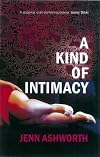
Jenn Ashworth's debut novel, 'A kind of Intimacy', stars Annie, a lonely, obese woman who narrates her increasingly awkward attempts to build a new life and get to know her new neighbours - without revealing too much about her past.
I found the blurb intriguing and the opening lines drew me in:
"After the van had been loaded and sent on its way I took off all my clothes show more and kicked the sofa I was about to abandon. Not just a little kick either. I really belted it."
Annie isn't just abandoning a sofa. Gradually, through her recollection of the past and her inadvertent admissions to her neighbours, she reveals a darkly disturbing history and, more frighteningly, a deeply deluded sense of her self and her interactions with the world. From her early attempts to seduce the milkman to her unjustifiable conviction that next-door neighbour Neil is preparing to leave his sexy young girlfriend, Lucy, for her, Annie reads the world around her as she wishes it was, twisting evidence in ways that are occasionally astonishing. (Noisy sex next door? It must be Neil's way of letting Lucy down gently.)
What's it like?
The gaps between Annie's narrative and the reality the reader can perceive initially create sympathy, especially as the other characters can be distinctly unsympathetic - Lucy is cruel about Annie's weight, neighbourhood watch member Sangita is a gossip - but as time draws on, Annie's misinterpretation takes a darker turn and her deliberate obtuseness becomes horrifying.
It might sound odd to say that I enjoyed this, and perhaps I mostly mean that I enjoy thinking over the whole conceit in retrospect. While reading, I wondered how far Annie really was self-aware and conscious of the narrative she was spinning; by the end of the novel it seemed unbelievable that she could really believe what she was saying. That isn't to say that I thought the book was flawed. Actually, the ending is so effective because all the preceding events help the reader to understand that Annie's insistent lack of awareness is not pathetic or sad but dangerous.
Unusually, I felt the praise on the back cover was entirely justified. Alison Flood from The Guardian notes that 'A kind of intimacy' has been compared to 'Notes on a Scandal' by Zoë Heller, which is entirely appropriate (and another book I absolutely loved). The blurb suggests that Annie has "too much in common with the rest of us to be written off as a monster" and I suspect this is what makes both books so powerful. It is easy to build small interactions into intensely significant ones if you are feeling particularly vulnerable for whatever reason. It is more difficult to be bothered to eat well if you're persistently cooking - or, eventually, microwaving - for one. These small truths make us feel that we can understand some of Annie's world, that she is not an Evil Monster, but an ordinary person gone badly awry.
Annie's narrative voice is very engaging and easy to read; despite being chronically short of time I finished the book within a few days because it was so easy to pick up and slip back into her world. The ending is dramatic, perhaps overly so for some readers, but I felt that it worked well with the preceding material and I liked that there was a definite closure to the novel.
Final thoughts
I really enjoyed Ashworth's debut novel and will be keeping an eye out for 'A Cold Light', her second novel, which has an almost equally intriguing premise. Reading this has also made me want to re-read 'Notes on a Scandal', though this will have to wait until I have made a respectable indentation in the 'borrowed' section of my TBR pile.
Some readers have complained that Annie's malaise is too obvious, seen too quickly, and removes doubt from the reader's mind. I disagree that it should be hidden; by introducing Annie's deluded perspective early on the reader isn't wondering whether or not she can be trusted, instead they are wondering with increasing urgency what she has done (does she have a daughter? If so, where is she?) and what she might do yet. This creates a great deal more tension than simply wondering whether or not Annie can be trusted.
Ashworth has been commended for her comic gifts and there is dark humour here, but it's more shake-your-head-in-mildly-amused-disbelief than ooh-that's-funny-but-a-bit-naughty-so-I-shouldn't-laugh-at-it-really. Amusing, but not laugh-out-loud funny. This isn't intended as a criticism, simply an observation that I would market his book based on its narrative strength and dark tone rather than its comic aspect. (Besides which, I always find this kind of "comedy" deeply uncomfortable as you are being encouraged to laugh at someone who is clearly Not Quite Right.)
In short, I highly recommended 'A kind of Intimacy' if you enjoy reading unreliable narrators, novels which focus on personal relationships and / or darkly comic stories. show less
What's it about?
Jenn Ashworth's debut novel, 'A kind of Intimacy', stars Annie, a lonely, obese woman who narrates her increasingly awkward attempts to build a new life and get to know her new neighbours - without revealing too much about her past.
I found the blurb intriguing and the opening lines drew me in:
"After the van had been loaded and sent on its way I took off all my clothes show more and kicked the sofa I was about to abandon. Not just a little kick either. I really belted it."
Annie isn't just abandoning a sofa. Gradually, through her recollection of the past and her inadvertent admissions to her neighbours, she reveals a darkly disturbing history and, more frighteningly, a deeply deluded sense of her self and her interactions with the world. From her early attempts to seduce the milkman to her unjustifiable conviction that next-door neighbour Neil is preparing to leave his sexy young girlfriend, Lucy, for her, Annie reads the world around her as she wishes it was, twisting evidence in ways that are occasionally astonishing. (Noisy sex next door? It must be Neil's way of letting Lucy down gently.)
What's it like?
The gaps between Annie's narrative and the reality the reader can perceive initially create sympathy, especially as the other characters can be distinctly unsympathetic - Lucy is cruel about Annie's weight, neighbourhood watch member Sangita is a gossip - but as time draws on, Annie's misinterpretation takes a darker turn and her deliberate obtuseness becomes horrifying.
It might sound odd to say that I enjoyed this, and perhaps I mostly mean that I enjoy thinking over the whole conceit in retrospect. While reading, I wondered how far Annie really was self-aware and conscious of the narrative she was spinning; by the end of the novel it seemed unbelievable that she could really believe what she was saying. That isn't to say that I thought the book was flawed. Actually, the ending is so effective because all the preceding events help the reader to understand that Annie's insistent lack of awareness is not pathetic or sad but dangerous.
Unusually, I felt the praise on the back cover was entirely justified. Alison Flood from The Guardian notes that 'A kind of intimacy' has been compared to 'Notes on a Scandal' by Zoë Heller, which is entirely appropriate (and another book I absolutely loved). The blurb suggests that Annie has "too much in common with the rest of us to be written off as a monster" and I suspect this is what makes both books so powerful. It is easy to build small interactions into intensely significant ones if you are feeling particularly vulnerable for whatever reason. It is more difficult to be bothered to eat well if you're persistently cooking - or, eventually, microwaving - for one. These small truths make us feel that we can understand some of Annie's world, that she is not an Evil Monster, but an ordinary person gone badly awry.
Annie's narrative voice is very engaging and easy to read; despite being chronically short of time I finished the book within a few days because it was so easy to pick up and slip back into her world. The ending is dramatic, perhaps overly so for some readers, but I felt that it worked well with the preceding material and I liked that there was a definite closure to the novel.
Final thoughts
I really enjoyed Ashworth's debut novel and will be keeping an eye out for 'A Cold Light', her second novel, which has an almost equally intriguing premise. Reading this has also made me want to re-read 'Notes on a Scandal', though this will have to wait until I have made a respectable indentation in the 'borrowed' section of my TBR pile.
Some readers have complained that Annie's malaise is too obvious, seen too quickly, and removes doubt from the reader's mind. I disagree that it should be hidden; by introducing Annie's deluded perspective early on the reader isn't wondering whether or not she can be trusted, instead they are wondering with increasing urgency what she has done (does she have a daughter? If so, where is she?) and what she might do yet. This creates a great deal more tension than simply wondering whether or not Annie can be trusted.
Ashworth has been commended for her comic gifts and there is dark humour here, but it's more shake-your-head-in-mildly-amused-disbelief than ooh-that's-funny-but-a-bit-naughty-so-I-shouldn't-laugh-at-it-really. Amusing, but not laugh-out-loud funny. This isn't intended as a criticism, simply an observation that I would market his book based on its narrative strength and dark tone rather than its comic aspect. (Besides which, I always find this kind of "comedy" deeply uncomfortable as you are being encouraged to laugh at someone who is clearly Not Quite Right.)
In short, I highly recommended 'A kind of Intimacy' if you enjoy reading unreliable narrators, novels which focus on personal relationships and / or darkly comic stories. show less

I had high hopes for this anthology based on the first three excellent stories but it rather drifts down hill after that. The premise is a good one - that folk horror has looked at the working class as the 'other', often in negative terms, and that a correction is worth making.
The introduction is a solid and thoughtful explanation of where the book is coming although it presages the book by declining into a bit of a rant towards the end. Is this a book about the working class or about the show more frustrated outrage of would-be escapees from that class with literary aspirations?
Over half the authors are women which should be a fair and good thing but some of them have confused feminist politics with working class politics. The portrayal of men in these pieces is certainly not providing much in the way of solidarity.
The Editor, Hollie Starling, provides a well written story but it is of this type. Its link to folk horror is tenuous to say the least. It is an aggressive and murderous piece of science fiction horror masquerading as folk in which ball-cutting revenge by a sex bot is riddled with hatred.
Most of the stories are fine if not inspiring, although the last two are literary to the point of self-indulgence (witchery in Hastings) or obscurity. This last - 'It Fair Give Me The Spikes' by Tom Benn - is a linguistically accomplished ghost story marred by its sustained incomprehensibility.
Earlier than this, there is a weird fantasy response to 'The Wicker Man' from a quasi-class angle (Cornish fisher folk in this case) that actually ends up with something that might be classed as a 'happy ending'. Happy endings are not part of the genre description.
So, let us praise the first three stories as well above the average, worth considering for future anthologies. In these stories, the authors maintain both the horror and the ordinariness of existence and some decent relation to the genre they are supposed to be emulating.
The first is the best - 'The Ossuary' by A. K Blakemore - which is rather subversive of the Editor's avowed intent. The publisher might have hoped (from the blurb) that we would despise the aged prejudiced guardian of bones but Blakemore presents her with real sympathy.
It is a subtle story in which the pricks are the liberal leftie children who are pompous and callous while two urban Asians behave unpleasantly amongst her bones. She is a cultural dinosaur doomed to extinction but she is also a person. Blakemore treats her as such.
Daniel Draper's 'Perpetual Stew' could so easily have gone wrong with its outrageous premise of a mining village held together by grand guignol petty cannibalism but he pulls it off because of his close observation of working class life and his allegiance to the tropes of folk horror.
Finally, Emma Glass' fantasy of grief over the death of a child that leads to the willing immersion of a mother in the ancient earth works because the fantasy is embedded in absolute fidelity to the powerful emotions involved. It is quietly devastating as it turns from realism into folk tale.
These three stories make an otherwise very uneven collection well worth owning. It is certainly not that there is anything truly bad in it (though one or two come close) but that the 'working class' writers were perhaps not pushed hard enough to meet the brief by the editorial team.
As to its working class authenticity, I find it hard to judge - the idea of the working class has transformed from the idea of a class defined by its relationship to the means of production to something more amorphous as those left behind by neo-liberal economics.
The purpose of the book (a worthy one) was ostensibly to reverse the patronising assumptions of 'The Wicker Man' and of urban horror writers who positioned rural and other working class communities as containing some threat to 'nice' educated middle class people. Grammar school patrony!
The much-appreciated Nigel Kneale was always a bourgeois at heart who feared the mob whether urban or rural as becomes clear from any sensible reading of 'Quatermass and the Pit' and 'Quatermass IV' (both the epitome of intelligent science fiction-based folk horror).
Similarly most of the neo-pagans who swear by 'The Wicker Man' seem deliberately forgetful that the film was an attack on irrationality, paganism and the suggestibility and weakness of ordinary folk. A literary challenge to all this was long overdue.
Unfortunately, the challenge is not coming from 'authentic' communities but from individuals who are part of or aspirant to becoming part of a particular and increasingly proletarianised artistic and creative community that is threatened with extinction in economically troubled times.
The working class communities here are largely being 'imagined' in no less a manner than they were 'imagined' negatively by their 'bourgeois' predecessors. Nothing wrong with that - Irvine Welsh 'imagines' his amoral thugs in much the same way and creates great literature.
However, the atomisation and fragmentation of the working class and the replacement of positive 'socialist' or 'labour' politics with the politics of identity and 'ressentiment' creates something that is more petit-bourgeois than proletarian.
This creates uneasiness as to authentic appropriation of working class tropes precisely because the appropriation is for a politics as unrecognisable to most traditional working people as would be the top-down social democratic and patronising politics of past denizens of Hampstead.
Still, I wish all the authors well. Most of them have huge potential to refine their art. It is good that the anthology was attempted. If only the rather vicious man-hating (which is anti-working class) aspects could be removed and the final step taken from the identity politics of the liberal Left! show less
The introduction is a solid and thoughtful explanation of where the book is coming although it presages the book by declining into a bit of a rant towards the end. Is this a book about the working class or about the show more frustrated outrage of would-be escapees from that class with literary aspirations?
Over half the authors are women which should be a fair and good thing but some of them have confused feminist politics with working class politics. The portrayal of men in these pieces is certainly not providing much in the way of solidarity.
The Editor, Hollie Starling, provides a well written story but it is of this type. Its link to folk horror is tenuous to say the least. It is an aggressive and murderous piece of science fiction horror masquerading as folk in which ball-cutting revenge by a sex bot is riddled with hatred.
Most of the stories are fine if not inspiring, although the last two are literary to the point of self-indulgence (witchery in Hastings) or obscurity. This last - 'It Fair Give Me The Spikes' by Tom Benn - is a linguistically accomplished ghost story marred by its sustained incomprehensibility.
Earlier than this, there is a weird fantasy response to 'The Wicker Man' from a quasi-class angle (Cornish fisher folk in this case) that actually ends up with something that might be classed as a 'happy ending'. Happy endings are not part of the genre description.
So, let us praise the first three stories as well above the average, worth considering for future anthologies. In these stories, the authors maintain both the horror and the ordinariness of existence and some decent relation to the genre they are supposed to be emulating.
The first is the best - 'The Ossuary' by A. K Blakemore - which is rather subversive of the Editor's avowed intent. The publisher might have hoped (from the blurb) that we would despise the aged prejudiced guardian of bones but Blakemore presents her with real sympathy.
It is a subtle story in which the pricks are the liberal leftie children who are pompous and callous while two urban Asians behave unpleasantly amongst her bones. She is a cultural dinosaur doomed to extinction but she is also a person. Blakemore treats her as such.
Daniel Draper's 'Perpetual Stew' could so easily have gone wrong with its outrageous premise of a mining village held together by grand guignol petty cannibalism but he pulls it off because of his close observation of working class life and his allegiance to the tropes of folk horror.
Finally, Emma Glass' fantasy of grief over the death of a child that leads to the willing immersion of a mother in the ancient earth works because the fantasy is embedded in absolute fidelity to the powerful emotions involved. It is quietly devastating as it turns from realism into folk tale.
These three stories make an otherwise very uneven collection well worth owning. It is certainly not that there is anything truly bad in it (though one or two come close) but that the 'working class' writers were perhaps not pushed hard enough to meet the brief by the editorial team.
As to its working class authenticity, I find it hard to judge - the idea of the working class has transformed from the idea of a class defined by its relationship to the means of production to something more amorphous as those left behind by neo-liberal economics.
The purpose of the book (a worthy one) was ostensibly to reverse the patronising assumptions of 'The Wicker Man' and of urban horror writers who positioned rural and other working class communities as containing some threat to 'nice' educated middle class people. Grammar school patrony!
The much-appreciated Nigel Kneale was always a bourgeois at heart who feared the mob whether urban or rural as becomes clear from any sensible reading of 'Quatermass and the Pit' and 'Quatermass IV' (both the epitome of intelligent science fiction-based folk horror).
Similarly most of the neo-pagans who swear by 'The Wicker Man' seem deliberately forgetful that the film was an attack on irrationality, paganism and the suggestibility and weakness of ordinary folk. A literary challenge to all this was long overdue.
Unfortunately, the challenge is not coming from 'authentic' communities but from individuals who are part of or aspirant to becoming part of a particular and increasingly proletarianised artistic and creative community that is threatened with extinction in economically troubled times.
The working class communities here are largely being 'imagined' in no less a manner than they were 'imagined' negatively by their 'bourgeois' predecessors. Nothing wrong with that - Irvine Welsh 'imagines' his amoral thugs in much the same way and creates great literature.
However, the atomisation and fragmentation of the working class and the replacement of positive 'socialist' or 'labour' politics with the politics of identity and 'ressentiment' creates something that is more petit-bourgeois than proletarian.
This creates uneasiness as to authentic appropriation of working class tropes precisely because the appropriation is for a politics as unrecognisable to most traditional working people as would be the top-down social democratic and patronising politics of past denizens of Hampstead.
Still, I wish all the authors well. Most of them have huge potential to refine their art. It is good that the anthology was attempted. If only the rather vicious man-hating (which is anti-working class) aspects could be removed and the final step taken from the identity politics of the liberal Left! show less
Lists
Awards


You May Also Like


Associated Authors
Statistics
- Works
- 17
- Also by
- 8
- Members
- 672
- Popularity
- #37,564
- Rating
- 3.4
- Reviews
- 47
- ISBNs
- 46
- Languages
- 3
