
Chloe Hooper
Author of A Child's Book of True Crime
About the Author
Image credit: Wikipedia user Ottre
Works by Chloe Hooper
Associated Works
Tagged
Common Knowledge
- Canonical name
- Hooper, Chloe
- Birthdate
- 1973
- Gender
- female
- Education
- University of Melbourne
Columbia University - Agent
- The Wylie Agency
- Nationality
- Australia
- Places of residence
- Melbourne, Victoria, Australia
- Associated Place (for map)
- Victoria, Australia
Members
Reviews

Powerful, insightful, disturbing, depressing and just plain hopeless. What have we done to the true Australians? Chloe Hooper's account of Palm Island and the death-in-custody of Cameron Doomadgee reveals the dystopian mess of race relations in Australia. But within, there is flickering hope. A few individuals who are beaten down, but keep getting up again. Women mostly.
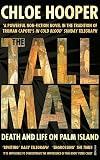
Palm Island, November 2004. A 36 year old Aboriginal man, Cameron Doomadgee, is arrested for swearing at a police officer. He is drunk, and as they arrive at the station he strikes Senior Sergeant Christopher Hurley in the face.
45 minutes later Cameron Doomadgee is dead, his liver cleaved in two as you might see after a fatal car crash. The police say he fell on a step but others disagree. A week later there is a riot during which the police station is burnt to the ground and Hurley’s show more residence with it. A relief team is sent in and Hurley goes into hiding. But the case doesn’t go away. An inquest is launched, then a criminal trial. It’s the first time in Australian history that a police officer has been brought before the law to answer for the death of an Aboriginal prisoner in their care. In the process the trial comes to embody all of the hurt and guilt and prejudice that underline relations between native and white Australia. show less
45 minutes later Cameron Doomadgee is dead, his liver cleaved in two as you might see after a fatal car crash. The police say he fell on a step but others disagree. A week later there is a riot during which the police station is burnt to the ground and Hurley’s show more residence with it. A relief team is sent in and Hurley goes into hiding. But the case doesn’t go away. An inquest is launched, then a criminal trial. It’s the first time in Australian history that a police officer has been brought before the law to answer for the death of an Aboriginal prisoner in their care. In the process the trial comes to embody all of the hurt and guilt and prejudice that underline relations between native and white Australia. show less

I understand that many readers are disappointed by this book because it does not meet the usual true crime criteria and they expected something different. For me, however, who is not a true crime buff, it was a very good book.
The three Australian woman writers accompanied the trial of Erin Patterson, who invited four of her relatives to lunch and poisoned them by hiding mushrooms in a Beef Wellington, killing three of them. The authors taped their conversations about the trial and thought show more about turning those tapes into a podcast, but then published them as a book. This audiobook was than narrated from that book, so it's not comprised of the original tapes. It is obvious that the text was edited, but it still felt quite natural to me.
I have been kind of morbidly fascinated by this case since I first read about it, and one thing I liked about the book is that the authors try to explain where that fascination comes from - the archetype of the female poisoner, the reversal of women's traditional role of feeding and nurturing, the marriage drama, the Midsomer Murders-like storyline. The conversation flows freely and touches upon many topics. It traces the progress of the trial, but also includes the personal thoughts of the authors, their observations and how they respond to what they see. They also analyze what the story might signify in the wider context of society and why many people, especially women, are so interested in true crime.
While not all the contents were equally intriguing, I really liked listening to the thoughts of these three women. I learned a lot about the actual case, but the discussions of the sociology of it all were even more compelling. show less
The three Australian woman writers accompanied the trial of Erin Patterson, who invited four of her relatives to lunch and poisoned them by hiding mushrooms in a Beef Wellington, killing three of them. The authors taped their conversations about the trial and thought show more about turning those tapes into a podcast, but then published them as a book. This audiobook was than narrated from that book, so it's not comprised of the original tapes. It is obvious that the text was edited, but it still felt quite natural to me.
I have been kind of morbidly fascinated by this case since I first read about it, and one thing I liked about the book is that the authors try to explain where that fascination comes from - the archetype of the female poisoner, the reversal of women's traditional role of feeding and nurturing, the marriage drama, the Midsomer Murders-like storyline. The conversation flows freely and touches upon many topics. It traces the progress of the trial, but also includes the personal thoughts of the authors, their observations and how they respond to what they see. They also analyze what the story might signify in the wider context of society and why many people, especially women, are so interested in true crime.
While not all the contents were equally intriguing, I really liked listening to the thoughts of these three women. I learned a lot about the actual case, but the discussions of the sociology of it all were even more compelling. show less
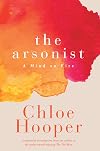
Bushfires are practically synonymous with Summer in Australia, and there have been several severe and deadly conflagrations since its settlement including the recent large scale fire of 2019/2020. Of these blazes however, Black Saturday has the dubious distinction of claiming the most lives in recorded history.
On Saturday 7th February 2009, as temperatures soared to the mid 40’s, there were as many as four hundred separate fires burning in Victoria. By the time they were extinguished show more 450,000 ha (1,100,000 acres) of land had been razed, over 3500 structures (including homes, commercial premises, and agricultural buildings) were destroyed, stock and crops were lost, and 173 people lost their lives while hundreds more were injured.
One of the blazes, known as The Churchill Complex fire, started in the early afternoon on 7 February 2009 in the Latrobe Valley. The fire travelled rapidly, impacting on several towns in south east Victoria. Eleven people died as a result of the fire, 145 houses were destroyed, and more than 25,861 hectares were burnt. Less than a week after the fire began, investigators were able to determine that it was caused by arson.
In The Arsonist: Mind on Fire, Chloe Hooper tells the story of this disastrous event, and its devastating impact on its victims. She then details the investigation that identified Brendan Sokaluk, a Churchill local, as responsible, and his subsequent trial and conviction.
The statements from those that lost loved one’s, and property, are heartbreaking to read. Survivors, including the rural firefighters who fought the blaze, were forever changed by their confrontation with the fire, and the event continued to take a toll long after the fire was extinguished.
In Australia, Hooper reports, around 13% of vegetation fires are maliciously lit and it’s estimated that only one per cent of bushfire arsonists are ever caught. This is often because the fires are started in unpopulated areas, and the subsequent blaze conveniently destroys any evidence that may have remained. In the case of the Churchill Complex fire, investigators quickly suspected arson was at play and their attention was drawn to the suspicious behaviour of a man identified as Brendan Sokaluk.
Hooper takes us through the investigation, drawing on a number of perspectives to show how the police reached their conclusions about the cause of the fire, and who was to blame. Brendan Sokaluk, a 39 year old local resident, was seen in the area of ignition, by multiple witnesses, and met the general profile of an arsonist - he was from a disadvantaged background, unemployed, and anti social. During his initial interview, Sokaluk confessed to setting the fire ‘accidentally’, and then retracted his admission, but while it became clear to officers that Brendan had some level of cognitive deficiency, several suspected he was exaggerating his inability to comprehend the investigating detectives questions. Nevertheless the police felt they had enough information to charge Sokaluk with ten counts of arson causing death, and 181 other charges, the majority relating to criminal damage (plus a charge of possession for child pornography found on his computer that was later dropped).
While a psychiatric assessment declared Sokaluk fit to stand trial, his lawyers were never confident that he understood the gravity of the charges against him, nor the mechanics of the legal proceedings. Brendan never took the stand, and no true motive for starting the fire was ever established. The trial began in 2011, nearly three years after Sokaluk’s arrest, and Hooper leads the reader through the process that eventually saw him convicted and sentenced to 17 years plus time served (3 years). With his fourteen year minimum, Sokaluk will be eligible for parole in 2023.
I found The Arsonist to be a well-written and balanced account of Black Saturday, though I was expecting Hooper would a provide a little more detail and context to the disaster itself. I do think her reportage on the investigation was concise, and of the trial, nuanced. She is respectful of those who were most affected by the blaze, but not without empathy for Brendan Sokaluk and his family.
Fire is a merciless beast, one the Australian landscape is particularly susceptible to, especially as we head towards even more extreme temperatures in a changing climate. Having ignored much of the Aboriginal wisdom in managing the land with fire, there is ample fuel for people to ignite for any one of the complicated reasons arsonists do so, and Hooper suggests we ignore the risks at our peril. show less
On Saturday 7th February 2009, as temperatures soared to the mid 40’s, there were as many as four hundred separate fires burning in Victoria. By the time they were extinguished show more 450,000 ha (1,100,000 acres) of land had been razed, over 3500 structures (including homes, commercial premises, and agricultural buildings) were destroyed, stock and crops were lost, and 173 people lost their lives while hundreds more were injured.
One of the blazes, known as The Churchill Complex fire, started in the early afternoon on 7 February 2009 in the Latrobe Valley. The fire travelled rapidly, impacting on several towns in south east Victoria. Eleven people died as a result of the fire, 145 houses were destroyed, and more than 25,861 hectares were burnt. Less than a week after the fire began, investigators were able to determine that it was caused by arson.
In The Arsonist: Mind on Fire, Chloe Hooper tells the story of this disastrous event, and its devastating impact on its victims. She then details the investigation that identified Brendan Sokaluk, a Churchill local, as responsible, and his subsequent trial and conviction.
The statements from those that lost loved one’s, and property, are heartbreaking to read. Survivors, including the rural firefighters who fought the blaze, were forever changed by their confrontation with the fire, and the event continued to take a toll long after the fire was extinguished.
In Australia, Hooper reports, around 13% of vegetation fires are maliciously lit and it’s estimated that only one per cent of bushfire arsonists are ever caught. This is often because the fires are started in unpopulated areas, and the subsequent blaze conveniently destroys any evidence that may have remained. In the case of the Churchill Complex fire, investigators quickly suspected arson was at play and their attention was drawn to the suspicious behaviour of a man identified as Brendan Sokaluk.
Hooper takes us through the investigation, drawing on a number of perspectives to show how the police reached their conclusions about the cause of the fire, and who was to blame. Brendan Sokaluk, a 39 year old local resident, was seen in the area of ignition, by multiple witnesses, and met the general profile of an arsonist - he was from a disadvantaged background, unemployed, and anti social. During his initial interview, Sokaluk confessed to setting the fire ‘accidentally’, and then retracted his admission, but while it became clear to officers that Brendan had some level of cognitive deficiency, several suspected he was exaggerating his inability to comprehend the investigating detectives questions. Nevertheless the police felt they had enough information to charge Sokaluk with ten counts of arson causing death, and 181 other charges, the majority relating to criminal damage (plus a charge of possession for child pornography found on his computer that was later dropped).
While a psychiatric assessment declared Sokaluk fit to stand trial, his lawyers were never confident that he understood the gravity of the charges against him, nor the mechanics of the legal proceedings. Brendan never took the stand, and no true motive for starting the fire was ever established. The trial began in 2011, nearly three years after Sokaluk’s arrest, and Hooper leads the reader through the process that eventually saw him convicted and sentenced to 17 years plus time served (3 years). With his fourteen year minimum, Sokaluk will be eligible for parole in 2023.
I found The Arsonist to be a well-written and balanced account of Black Saturday, though I was expecting Hooper would a provide a little more detail and context to the disaster itself. I do think her reportage on the investigation was concise, and of the trial, nuanced. She is respectful of those who were most affected by the blaze, but not without empathy for Brendan Sokaluk and his family.
Fire is a merciless beast, one the Australian landscape is particularly susceptible to, especially as we head towards even more extreme temperatures in a changing climate. Having ignored much of the Aboriginal wisdom in managing the land with fire, there is ample fuel for people to ignite for any one of the complicated reasons arsonists do so, and Hooper suggests we ignore the risks at our peril. show less
Lists
Awards


You May Also Like


Associated Authors
Statistics
- Works
- 9
- Also by
- 9
- Members
- 1,166
- Popularity
- #22,047
- Rating
- 3.7
- Reviews
- 45
- ISBNs
- 93
- Languages
- 7
- Favorited
- 1