
Bill Gaston
Author of Sointula
Works by Bill Gaston
Spying on America 1 copy
Associated Works
Tagged
Common Knowledge
- Birthdate
- 1953
- Gender
- male
- Education
- University of British Columbia
- Occupations
- logger
salmon fishing guide - Awards and honors
- Timothy Findley Award (2002)
- Nationality
- Canada
- Places of residence
- Winnipeg, Manitoba, Canada
North Vancouver, British Columbia, Canada
Victoria, British Columbia, Canada - Map Location
- Canada
Members
Reviews
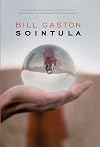
The real Sointula is a failed Utopian community off the coast of northern Vancouver Island. It was founded in the early 20th century by a group of Finnish settlers, and its name means “harmony.” The Sointula of the novel, I suppose, has more of a symbolic meaning that anything else. In some ways, it is about a search for harmony, or inner peace. Or maybe not. Either way, not much of the book is actually set there, and it certainly isn’t a piece of historical fiction retelling the show more village’s story.
Instead it is the story of Tom Poole, a 26 year old with a dodgy past,who lives on a beach near Sointula working as a whale researcher. He may or may not be a sociopath, autistic, or a drug dealer. And it’s the story of Evelyn, his mother, who abandons her comfortable life in Ontario to be at the deathbed of Tom’s father, Claude. Her story begins 460 km south, at the other end of Vancouver Island, where she suddenly decides to drop her depression medication, live like a homeless person, and steal a kayak. And finally, it’s the story of British-American ex-high school biology teacher Peter, who wants to travel the Island and write a book about the experience (despite his frequent gall bladder attacks). He soon meets up with Evelyn and they decide to kayak to Sointula to find Tom, a journey for which they are in no way prepared.
What I didn’t like: None of the characters are particularly likeable, although they are sympathetic. Just when I was warming to one of them, they’d do something dumb, or selfish, or morally questionable. They were all a bit too quick to act like hobos. I found the frequent discussion of their dirty, smelly, starving bodies a bit tiresome---after all, like George Orwell in Down and Out in Paris and London, they could make it all go away in a phone call. I often felt trapped in the kayak , tent, or isolated beach right along with them, but then I think this feeling of being trapped is one of the author’s points. However, at times I found it made me feel a bit too claustrophobic.
What I liked: A lot. The writing is excellent and the book is well structured. The characters and situations were different, and right to the end there was nothing predictable or too coincidental. I appreciate that there is a map, even though I know the Island quite well and would have had a good idea where they were without it, I found myself flipping to it frequently. Gaston is one of those writers who weaves in bits of history, biology, and geography, and I love to learn while I read. But my favourite thing about the book is the author’s excellent sense of place—I personally love Vancouver Island and the Gulf Islands, and I can tell he does too.
Recommended for: Readers who like unusual literary fiction, anyone who is interested in Vancouver Island or the great outdoors of the Pacific Northwest. Not recommended for people who are uncomfortable when reading about bodily functions. show less
Instead it is the story of Tom Poole, a 26 year old with a dodgy past,who lives on a beach near Sointula working as a whale researcher. He may or may not be a sociopath, autistic, or a drug dealer. And it’s the story of Evelyn, his mother, who abandons her comfortable life in Ontario to be at the deathbed of Tom’s father, Claude. Her story begins 460 km south, at the other end of Vancouver Island, where she suddenly decides to drop her depression medication, live like a homeless person, and steal a kayak. And finally, it’s the story of British-American ex-high school biology teacher Peter, who wants to travel the Island and write a book about the experience (despite his frequent gall bladder attacks). He soon meets up with Evelyn and they decide to kayak to Sointula to find Tom, a journey for which they are in no way prepared.
What I didn’t like: None of the characters are particularly likeable, although they are sympathetic. Just when I was warming to one of them, they’d do something dumb, or selfish, or morally questionable. They were all a bit too quick to act like hobos. I found the frequent discussion of their dirty, smelly, starving bodies a bit tiresome---after all, like George Orwell in Down and Out in Paris and London, they could make it all go away in a phone call. I often felt trapped in the kayak , tent, or isolated beach right along with them, but then I think this feeling of being trapped is one of the author’s points. However, at times I found it made me feel a bit too claustrophobic.
What I liked: A lot. The writing is excellent and the book is well structured. The characters and situations were different, and right to the end there was nothing predictable or too coincidental. I appreciate that there is a map, even though I know the Island quite well and would have had a good idea where they were without it, I found myself flipping to it frequently. Gaston is one of those writers who weaves in bits of history, biology, and geography, and I love to learn while I read. But my favourite thing about the book is the author’s excellent sense of place—I personally love Vancouver Island and the Gulf Islands, and I can tell he does too.
Recommended for: Readers who like unusual literary fiction, anyone who is interested in Vancouver Island or the great outdoors of the Pacific Northwest. Not recommended for people who are uncomfortable when reading about bodily functions. show less
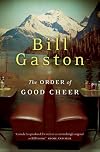
It's like watching an afternoon rain in the mountains through a big picture window. A beautiful view grows gray, then frighteningly dark, but as the rain clears the air and allows rays of sunshine through the shrinking clouds, the view becomes luminous, vivid, sharply defined. An occasional droplet captures and lenses the whole world in a tiny space for a moment, then slips away. Afterward, the world appears renewed.
The book is fantastically good. The interweaving of the historical and show more contemporary settings, the poignant but not pointed-at contrasts and similarities providing a richness for the careful reader, even as the adventures and the personal hopes of all the characters keep the pace engaging. There are sentences worth reading aloud for poetic quality, characterizations as real as life, and whimsies woven tightly with despairs. Above all, the narratives capture something lacking in so much fiction: the understanding that joy and pain are inextricable.Conscience and volition are here too, rising now in one character and falling in another, points between which to navigate like Scylla and Charybdis, so lifelike. And this author doesn't settle for the popular endings of the day (cliffhanger, everybody changes and goes away, guy/girl gets guy/girl, saccharine moral) - he convincingly portrays people at the brink of decision, stronger than they were, ready to live. It's so good to read a book that ends on a note of genuine hope. show less
The book is fantastically good. The interweaving of the historical and show more contemporary settings, the poignant but not pointed-at contrasts and similarities providing a richness for the careful reader, even as the adventures and the personal hopes of all the characters keep the pace engaging. There are sentences worth reading aloud for poetic quality, characterizations as real as life, and whimsies woven tightly with despairs. Above all, the narratives capture something lacking in so much fiction: the understanding that joy and pain are inextricable.Conscience and volition are here too, rising now in one character and falling in another, points between which to navigate like Scylla and Charybdis, so lifelike. And this author doesn't settle for the popular endings of the day (cliffhanger, everybody changes and goes away, guy/girl gets guy/girl, saccharine moral) - he convincingly portrays people at the brink of decision, stronger than they were, ready to live. It's so good to read a book that ends on a note of genuine hope. show less
"She can quiet a man like this. He wants only entertainment. He lacks eyes to see what's in the fire: faces hideous or godlike or mirroring any possible mood. He can't hear the tiny marimba of pebbles in waves, or the silence that is their aching measure. Can't parse the accents of smoke, or smell the beach as a charnel ground of clams, the non-stop enormity of this." p31
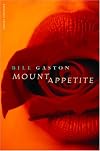
"Mount Appetite" by Bill Gaston is a collection of stories, tied together by the protagonists' search for something unseen show more or unknowable. Readers will meet a faith healer who lives in a trailer with a donation box outside; a professional taste-tester who's dying and can't stand his neighbours carrots; a graduate who researches fish, stays with her unfertilized charges while suspecting her husband of infidelity; a brother encounters tragedy on a baseball field.
Gaston's style has a natural, organic flow. This easily lends itself to the description of the landscape, an important aspect of his stories. The stories are diverse, the voices varied, giving the book a freshness that short story collections often lack. He pulls the reader in, almost drowns them in waves of original diction, never letting go until the last page. Each story is a universe, cupped in the hand.
There are so many great lines within this collection "her mouth shaped like a complaint", "fingers tooling in flesh and oil", "The dutiful tides of Indian Arm, the rich, fish-rank croaks of gulls and herons, the smell of shattered cedar, the sacred light in a dewdrop reflecting the sun, the mysterious light in a dewdrop reflecting the moon."
The only frustrating aspect of Gaston's writing is what feels like a lack of resolution. "The Angel's Share" involves Evelyn, a young woman running from the death of her father. While the story has an otherworldly west coast feel to it, the ending feels incomplete. We only dip into the relationship between Evelyn and her father whereas a full swig would have been more helpful in understanding her character. This truncation, this lack of closure occurs in several other stories and is frustrating as the rest of Gaston's works are entirely satisfying. show less
"Mount Appetite" by Bill Gaston is a collection of stories, tied together by the protagonists' search for something unseen show more or unknowable. Readers will meet a faith healer who lives in a trailer with a donation box outside; a professional taste-tester who's dying and can't stand his neighbours carrots; a graduate who researches fish, stays with her unfertilized charges while suspecting her husband of infidelity; a brother encounters tragedy on a baseball field.
Gaston's style has a natural, organic flow. This easily lends itself to the description of the landscape, an important aspect of his stories. The stories are diverse, the voices varied, giving the book a freshness that short story collections often lack. He pulls the reader in, almost drowns them in waves of original diction, never letting go until the last page. Each story is a universe, cupped in the hand.
There are so many great lines within this collection "her mouth shaped like a complaint", "fingers tooling in flesh and oil", "The dutiful tides of Indian Arm, the rich, fish-rank croaks of gulls and herons, the smell of shattered cedar, the sacred light in a dewdrop reflecting the sun, the mysterious light in a dewdrop reflecting the moon."
The only frustrating aspect of Gaston's writing is what feels like a lack of resolution. "The Angel's Share" involves Evelyn, a young woman running from the death of her father. While the story has an otherworldly west coast feel to it, the ending feels incomplete. We only dip into the relationship between Evelyn and her father whereas a full swig would have been more helpful in understanding her character. This truncation, this lack of closure occurs in several other stories and is frustrating as the rest of Gaston's works are entirely satisfying. show less
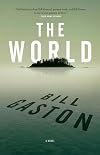
Though it took me a long time to read this, that's not to say this was a horrible book. Actually, it's quite a good one, if a touch overlong. There's four stories intertwined here, between Stuart, who burned down his own house the day he paid it off, Mel who's dying of cancer, her father Hal, who suffers from Alzheimer's, and finally the book within the book, The World, written by Hal years earlier.
The characters, though well-drawn, still somehow feel a bit superficial. And the various show more stories do seem a touch drawn out. Though I liked the book and loved the twist at the end, I felt I would have enjoyed it much more if it had been a solid 100 pages shorter.
Still worth the read, though. show less
The characters, though well-drawn, still somehow feel a bit superficial. And the various show more stories do seem a touch drawn out. Though I liked the book and loved the twist at the end, I felt I would have enjoyed it much more if it had been a solid 100 pages shorter.
Still worth the read, though. show less
Lists
Awards


You May Also Like


Associated Authors
Statistics
- Works
- 21
- Also by
- 2
- Members
- 353
- Popularity
- #67,813
- Rating
- 3.6
- Reviews
- 17
- ISBNs
- 50
- Languages
- 1
- Favorited
- 2