
Daphne Gottlieb
Author of Final Girl
About the Author
Daphne Gottlieb is a fixture in the San Francisco slam poetry scene and has also toured nationally. She writes for Metroleum, a popular webzine, and is also the author of Pelt, a collection of poetry
Works by Daphne Gottlieb
Fucking Daphne: Mostly True Stories and Fictions (2008) — Editor; Introduction — 25 copies, 2 reviews
Bess 2 copies
Associated Works
The Year's Best Fantasy and Horror: Seventeenth Annual Collection (2004) — Contributor — 241 copies, 9 reviews
Tagged
Common Knowledge
Members
Reviews
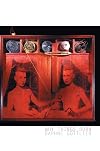
A re-read prompted by my traipse through my poetry shelf to catalog for goodreads. An acquisition from the period when I was obsessed with Soft Skull Books. One of the few books I lent to Jessa that I demanded back before she moved to Germany.
This is a book for young feminists -- deeply entrenched in the war of the sexes. Raw from the evils of misogyny in the world -- street harassment, abuse, domestic violence, rape... and the way women fold themselves up to live within the narrow confines show more that will will them approval, or at least safety. Poetry for fans of Michelle Tea, of Cunt, of the fierce feminist warriors of spoken word...
Reading this again so many years later brought up a bewildering mess of emotions from when I , too, was raw from constantly being grated against the Global Accords on the Fair Use of the Sex Class. The shock of strange men showing me their dicks as they passed me on the interstate. Being overwhelmed by righteous grief each time I listened to Ani DiFranco's "Hide and Seek"... The rage of hearing stories like the disappearing women of Juarez. The ache of watching yet another friend redefine their entire life around an unexpected pregnancy that was never more than an inconvenience or a punchline to the man "responsible."
All of this shit is still in the world. I'm both grateful and horrified by the distance my current reality lets me put between my daily life and these horrors. Reading this poetry is like licking the wound and finding it still new, electric. show less
This is a book for young feminists -- deeply entrenched in the war of the sexes. Raw from the evils of misogyny in the world -- street harassment, abuse, domestic violence, rape... and the way women fold themselves up to live within the narrow confines show more that will will them approval, or at least safety. Poetry for fans of Michelle Tea, of Cunt, of the fierce feminist warriors of spoken word...
Reading this again so many years later brought up a bewildering mess of emotions from when I , too, was raw from constantly being grated against the Global Accords on the Fair Use of the Sex Class. The shock of strange men showing me their dicks as they passed me on the interstate. Being overwhelmed by righteous grief each time I listened to Ani DiFranco's "Hide and Seek"... The rage of hearing stories like the disappearing women of Juarez. The ache of watching yet another friend redefine their entire life around an unexpected pregnancy that was never more than an inconvenience or a punchline to the man "responsible."
All of this shit is still in the world. I'm both grateful and horrified by the distance my current reality lets me put between my daily life and these horrors. Reading this poetry is like licking the wound and finding it still new, electric. show less
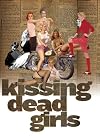
San Francisco-based performance poet Daphne Gottlieb is one of the most innovative voices in American poetry today, having carved out a space for herself out on the distant intersection of avant-garde verse, feminist theory, and popular culture. Her latest volume, Kissing Dead Girls, is another gleeful, high-speed smear of mordant humor, historical mash-up, and feral exploration of bodies, hearts, fluids, emotions, and scars. If in total the book is less startling and focused than Final show more Girl, her award-winning 2003 collection, it is because here Gottlieb is expanding her themes and experimenting with a broader set of poetic forms.
The poems in Kissing Dead Girls can be divided into two basic categories, the first being blunt chunks of prose poetry that often hang on a surrealist turn—a woman who thinks her clothes have memories (“carry-on”), a woman who, bored, replaces the moon in the night sky with her heart (“waxing”). These poems achieve varying levels of emotional impact; the intellectual reversal sometimes feels gimmicky rather than radically epiphanic, and one can’t help but feel that they benefit from Gottlieb’s renowned performance delivery, having at times the curiously lifeless rhythm that slam poetry can effect on the page.
The true brilliance of Kissing Dead Girls, and the source of its power, lies in the second category of poems, where Gottlieb’s penchant for engineering shocking juxtapositions comes into its own. With these poems she advances structures that are often either conflationary (alternating found voices, as in the scathing abortion poem “roe parasites”) or syncretic (combining two or more found narratives side-by-side, as in “our lady of the other,” which balances text from Julie Kristeva and Harriet Beecher Stowe). The effect is brilliant, troubling, and often funny: in forcing drastically different narratives together, Gottlieb has created a genre-bending synthesis all her own. Her sources—the appropriated voices and re-contextualized quotations—are the engine of the poetry, because she takes from a grab bag of cultural detritus high (Whitman, Stein, Orwell, Shaw) and low (pornography, tabloid headlines, The Exorcist, Marilyn Monroe, JonBenet Ramsay, crime shows) and swirls them around in a raucous vortex.
No one does this kind of verbal collage as inventively as Gottlieb. In fact, with the possible exception of Olena Kalytiak Davis, another poet of violent conjunction, no one I can think of does it at all, which marks Gottlieb’s achievement as a unique advancement. As recently as 2003 the critic Elisabeth A. Frost, in her book The Feminist Avant-Garde in American Poetry, could decry “the predominant models of identity politics on one hand and ‘feminine writing’ on the other—the two theoretical models that have dominated discussions of feminist poetics in the United States,” noting that the crippling “emphasis on personal voice—and the relatively transparent language that often accompanies it—supports an unspoken assumption that linguistic experimentation has little relevance to feminist writing.” Daphne Gottlieb’s revenants, “freshly dead and ready for love,” may have highly personal voices, but their language is hardly transparent, and all the more jolting and urgent for it. Gottlieb wills herself to be the lover of all these dead women, famous and obscure, and the force of her desire is both unnerving and invigorating. -- Zoland Poetry Review website, Winter 2008. show less
The poems in Kissing Dead Girls can be divided into two basic categories, the first being blunt chunks of prose poetry that often hang on a surrealist turn—a woman who thinks her clothes have memories (“carry-on”), a woman who, bored, replaces the moon in the night sky with her heart (“waxing”). These poems achieve varying levels of emotional impact; the intellectual reversal sometimes feels gimmicky rather than radically epiphanic, and one can’t help but feel that they benefit from Gottlieb’s renowned performance delivery, having at times the curiously lifeless rhythm that slam poetry can effect on the page.
The true brilliance of Kissing Dead Girls, and the source of its power, lies in the second category of poems, where Gottlieb’s penchant for engineering shocking juxtapositions comes into its own. With these poems she advances structures that are often either conflationary (alternating found voices, as in the scathing abortion poem “roe parasites”) or syncretic (combining two or more found narratives side-by-side, as in “our lady of the other,” which balances text from Julie Kristeva and Harriet Beecher Stowe). The effect is brilliant, troubling, and often funny: in forcing drastically different narratives together, Gottlieb has created a genre-bending synthesis all her own. Her sources—the appropriated voices and re-contextualized quotations—are the engine of the poetry, because she takes from a grab bag of cultural detritus high (Whitman, Stein, Orwell, Shaw) and low (pornography, tabloid headlines, The Exorcist, Marilyn Monroe, JonBenet Ramsay, crime shows) and swirls them around in a raucous vortex.
No one does this kind of verbal collage as inventively as Gottlieb. In fact, with the possible exception of Olena Kalytiak Davis, another poet of violent conjunction, no one I can think of does it at all, which marks Gottlieb’s achievement as a unique advancement. As recently as 2003 the critic Elisabeth A. Frost, in her book The Feminist Avant-Garde in American Poetry, could decry “the predominant models of identity politics on one hand and ‘feminine writing’ on the other—the two theoretical models that have dominated discussions of feminist poetics in the United States,” noting that the crippling “emphasis on personal voice—and the relatively transparent language that often accompanies it—supports an unspoken assumption that linguistic experimentation has little relevance to feminist writing.” Daphne Gottlieb’s revenants, “freshly dead and ready for love,” may have highly personal voices, but their language is hardly transparent, and all the more jolting and urgent for it. Gottlieb wills herself to be the lover of all these dead women, famous and obscure, and the force of her desire is both unnerving and invigorating. -- Zoland Poetry Review website, Winter 2008. show less
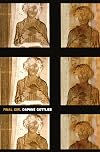
Sexy and smart assed, at times both dizzying and disturbing, humorous and harrowing, San Francisco-based performance poet Daphne Gottleib is all the proof one needs that ‘page’ and ‘stage’ in poetry can thrive together and enrich each other. This is daring, heady and energetic stuff, perfect for Halloween – or Women’s History Month.
The final girl is the last man standing in a slasher flick: “Even during that final struggle she is now weak and now strong, now flees the killer and now charges him, now stabs and is stabbed, now cries out in fear and now shouts in anger,” according to Carol J. Clover in her essay “Her Body, Himself: Gender in the Slasher Film.”* Inspired by this paradoxical character, Daphne Gottlieb uses the final girl to inform her poetry in this sharp, witty and moving collection. In these show more poems, Gottlieb challenges sexism, hate crimes and gender bias. She defies social mores that define masculinity and femininity. And, most startling of all, she conveys the fear haunts the reality of someone who lives and acts outside the realm of gender normalcy.
Also a performance poet and, recently, graphic novelist, Gottlieb writes verse that both screams and whispers, shatters clichés with sizzling wordplay, and grounds her theories with solid, vivid details. She employs experimental techniques that emphasize both the immediacy and wide range of gender bias by rearranging phrases from everyday and historical sources, sampling Sojourner Truth’s speeches, the captivity narrative of Mary Rowlandson, a newspaper article about a hate crime. Plenty more material draws from the language and imagery of horror films, including the “Final Girl” cycle, a sequence of ten poems that form the thematic core, where she even reminds us of our implicit participation: “We control the horizontal. / We control the vertical. / We control the abduction.”
Gottlieb gives voice to the characters whose side we don’t hear: transvestite, victim’s mother, exile. In “The Other Woman,” she states her case with staggering emotional force in punched-out lines: “Have you ever seen flood damage? / Your husband came over / and burst over in my lap … There is nothing / going on. I took nothing / you wanted. You can’t / have it back.”
* Also available from the library in the collection The dread of difference : gender and the horror film / edited by Barry Keith Grant) show less
Also a performance poet and, recently, graphic novelist, Gottlieb writes verse that both screams and whispers, shatters clichés with sizzling wordplay, and grounds her theories with solid, vivid details. She employs experimental techniques that emphasize both the immediacy and wide range of gender bias by rearranging phrases from everyday and historical sources, sampling Sojourner Truth’s speeches, the captivity narrative of Mary Rowlandson, a newspaper article about a hate crime. Plenty more material draws from the language and imagery of horror films, including the “Final Girl” cycle, a sequence of ten poems that form the thematic core, where she even reminds us of our implicit participation: “We control the horizontal. / We control the vertical. / We control the abduction.”
Gottlieb gives voice to the characters whose side we don’t hear: transvestite, victim’s mother, exile. In “The Other Woman,” she states her case with staggering emotional force in punched-out lines: “Have you ever seen flood damage? / Your husband came over / and burst over in my lap … There is nothing / going on. I took nothing / you wanted. You can’t / have it back.”
* Also available from the library in the collection The dread of difference : gender and the horror film / edited by Barry Keith Grant) show less
Awards


You May Also Like


Associated Authors
Statistics
- Works
- 11
- Also by
- 9
- Members
- 333
- Popularity
- #71,380
- Rating
- 4.0
- Reviews
- 16
- ISBNs
- 16
- Favorited
- 2