
Luther Standing Bear (1868–1939)
Author of My People, the Sioux
About the Author
Image credit: Credit: Photo by Fowler, Chicago, July 21, 1891
(LoC Prints and Photographs Division,
LC-USZ62-56421)
(LoC Prints and Photographs Division,
LC-USZ62-56421)
Works by Luther Standing Bear
The Tragedy of the Sioux 2 copies
My People the Sioux 1 copy
Associated Works
Black Elk Speaks: Being the Life Story of a Holy Man of the Oglala Sioux (1932) — Illustrator — 4,281 copies, 56 reviews
Voice of the Turtle: American Indian Literature, 1900-1970 (1994) — Contributor — 139 copies, 1 review
The Heath Anthology of American Literature, Concise Edition (2003) — Contributor — 73 copies, 1 review
Native Heritage: Personal Accounts by American Indians, 1790 to the Present (1995) — Contributor — 66 copies
Tagged
Common Knowledge
- Canonical name
- Standing Bear, Luther
- Other names
- Ota Kte
- Birthdate
- 1868
- Date of death
- 1939-02-20
- Gender
- male
- Education
- Carlisle Indian Industrial School
- Occupations
- teacher
actor - Organizations
- National League for Justice to the American Indian
Oglala Council
Actors' Guild of Hollywood
Indian Actors' Association
Buffalo Bill's Wild West Show
Oglala Lakota People - Nationality
- Lakota
USA - Birthplace
- Rosebud Reservation, South Dakota, USA
Spotted Tail Agency, Rosebud, Dakota Territory, South Dakota, USA - Places of residence
- South Dakota, USA
California, USA
Pennsylvania, USA - Place of death
- Huntington, California, USA
- Burial location
- Hollywood Forever Cemetery, Los Angeles, California, USA
- Map Location
- USA
Members
Reviews
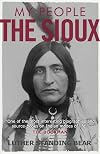
"I want you to remember that all the celebrated Indians who have big names in the white man’s histories and stories were not the ones we considered important men. Their prominence was due either to getting into the show business, or to selling things that did not belong to them personally, or trading it to the white people for little money."
This is an eye-opening look into the history of the Sioux people during the time when their world was changing from the traditional to the colonized. show more While Luther Standing Bear speaks in favor of assimilation (to an extent) into the white man's world, near the end of this book you can also see his plea start to take shape—he spells it out at the very end, but the gist of it is that he wants his people and the white people to both work for a good and just outcome (which sadly has yet to properly arrive, a century later). I found the early portion of the book easier to read, because it was more story-like about his boyhood on the prairie, while the second half starts to signal the message. And yet, the second half of the book is at least as important as the first half, and reminds us that while we may feel like we've taken big steps forward, there is still a long way to go. show less
This is an eye-opening look into the history of the Sioux people during the time when their world was changing from the traditional to the colonized. show more While Luther Standing Bear speaks in favor of assimilation (to an extent) into the white man's world, near the end of this book you can also see his plea start to take shape—he spells it out at the very end, but the gist of it is that he wants his people and the white people to both work for a good and just outcome (which sadly has yet to properly arrive, a century later). I found the early portion of the book easier to read, because it was more story-like about his boyhood on the prairie, while the second half starts to signal the message. And yet, the second half of the book is at least as important as the first half, and reminds us that while we may feel like we've taken big steps forward, there is still a long way to go. show less
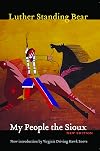
“It is just a message to the White race… No one is able to understand the Indian race like an Indian.” (preface)
Luther Standing Bear autobiography of his life, his story growing up, living traditional Native American lifestyle. Then, with warrior mentality instilled by his father, conforming to new ways of white people by attending Carlise boarding school, learning English language, involvement with Native American relations with government. Humorous stories of observing, then acting show more as the whites did, with an inside look at how whites disregarded harmony with nature; provided a sense that no matter what happens in life, it will all be ok. Powerful story containing inside look at Sun Dance, Ghost Dance, Wounded Knee, warrior mentality, boarding school children dying, Chief Spotted Tail and Crow Dog.
“I was thinking of my father, and how he had many times said to me, “Son, be brave! Die on the battle-field if necessary away from home. It is better to die young than to get old and sick and then die.” (page 124)
“The next day he complained that he felt sick, and he was again allowed to remain away from school. The following day he died.” (page 159) show less
Luther Standing Bear autobiography of his life, his story growing up, living traditional Native American lifestyle. Then, with warrior mentality instilled by his father, conforming to new ways of white people by attending Carlise boarding school, learning English language, involvement with Native American relations with government. Humorous stories of observing, then acting show more as the whites did, with an inside look at how whites disregarded harmony with nature; provided a sense that no matter what happens in life, it will all be ok. Powerful story containing inside look at Sun Dance, Ghost Dance, Wounded Knee, warrior mentality, boarding school children dying, Chief Spotted Tail and Crow Dog.
“I was thinking of my father, and how he had many times said to me, “Son, be brave! Die on the battle-field if necessary away from home. It is better to die young than to get old and sick and then die.” (page 124)
“The next day he complained that he felt sick, and he was again allowed to remain away from school. The following day he died.” (page 159) show less
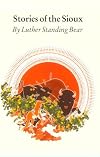
I enjoyed reading this collection of short stories from the Sioux Nation. These were recorded here by Luther Standing Bear and had previously been passed on through oral tradition. I was concerned in the first half of this book because most of these stories were about the adventures of men. Even "The Snow Woman" was about a man who goes wandering in the snow and meets a woman who has run away from her village to avoid an arranged marriage. He ends up marrying the woman instead. Fortunately, show more as the book went on, there were a couple more stories about women, such as "The Woman who Killed the Owl", and "Grandmother and the Bear". These stories are often about animals and their relationship to Native people.
This would be an excellent text to use when teaching about the history of Native people in this country or as a support tool for teaching about oral tradition. show less
This would be an excellent text to use when teaching about the history of Native people in this country or as a support tool for teaching about oral tradition. show less
Lists
You May Also Like


Associated Authors
Statistics
- Works
- 7
- Also by
- 5
- Members
- 500
- Popularity
- #49,492
- Rating
- 4.0
- Reviews
- 3
- ISBNs
- 35
- Languages
- 3
- Favorited
- 1