
Christopher Pike
Author of Human Urges, Fatal Consequences
About the Author
Christopher Pike is the pseudonym of Kevin Christopher McFadden, one of America's most popular young adult fiction writers. He was born in Brooklyn, New York, on November 12, 1954, but grew up in Los Angeles, California. He took on various jobs before writing Slumber Party, Weekend, and Chain show more Letter, all of which became bestsellers. His other works include The Last Vampire series; the Final Friends trilogy; The Lost Mind; Witch; Whisper of Death; Alosha; The Yanti; Bury Me Deep; and Fall into Darkness. He also writes the children's series Spooksville and adult novels including Sati; The Season of Passage; The Listeners; The Cold One; The Blind Mirror and Falling. (Bowker Author Biography) show less
Series
Works by Christopher Pike
The Little People: Spooksville #8 (Pike, Christopher. Spooksville, No. 8.) (1996) 49 copies, 1 review
The Last Vampire Series, 6 Volumes (The Last Vampire, Black Blood, Red Dice, Phantom, Evil Thirst, and Creatures of Forever) (2009) 19 copies, 1 review
Thrills, Chills, and Nightmares/Twisted/Weekend/the Lifeguard/Slumber Party/Boxed Set (1987) 5 copies
Until the End The Party; The Dance; The Graduation by Pike, Christopher [Simon Pulse,2011] (Paperback) (2011) 2 copies
Spook city 1 copy
Cheerleaders Set (Trying Out | Getting Even | Rumors | Feuding | All the Way | Splitting) (2000) 1 copy
Christopher Pike Gift Set - 3 Volume Box Set - ('Gimme A Kiss', 'Last Act', & 'Remember Me') (1988) 1 copy
The last Vampire3 1 copy
Gänsehaut um Mitternacht. Todesmelodie; Der schwarze Dom; Legende der Angst. Drei unheimliche Romane in einem Band. (1998) 1 copy
Associated Works
Tagged
Common Knowledge
- Legal name
- McFadden, Kevin Christopher
- Birthdate
- 1954-11-12
- Gender
- male
- Occupations
- factory worker
house painter
computer programmer
writer - Nationality
- USA
- Birthplace
- New York, New York, USA
- Places of residence
- Brooklyn, New York, New York, USA
Los Angeles, California, USA
Santa Barbara, California, USA - Associated Place (for map)
- USA
Members
Discussions
Sci Fi with "crystal" in the title in Name that Book (May 2016)
Reviews
TRIGGER WARNINGS: Racism, child molestation, misogyny
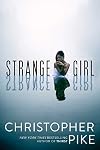
The cover was beautiful. I didn't bother reading the blurb before checking out the book. When I got home, I read the blurb on the dust jacket three times to try and figure out what the plot was. The blurb claims it's three genres in one: love story, mystery, and there's a mystical girl in the novel. A love story and a mystery put together is called a romantic suspense novel. The fact that the blurb didn't refer to it as such annoyed me show more greatly. This is none of those things, anyway. "Strange Girl" is the wish fulfillment fantasy of a teenage boy: overnight massive musical success, hot girlfriend, girls agonizing over him, lives in a small town but has money enough for tons of instruments and cables for them. The author of this novel is actually in his mid-sixties. He wrote some great horror novels in the 90s and is obviously trying to branch out here. It doesn't work.
The book has entire chapters stuffed full of info-dumps and backstory and UGHHH THE DAMN SONG LYRICS. SHUT UP, LITTLE BOY, I DO NOT CARE ABOUT YOUR SONGS. He would not shut up. Like, every. Every italicized, center-formatted word was on each page when the teen felt like singing and I haaaated it. Song lyrics, especially entire transcribed songs, in books -do not work for me-. Guaranteed way for me to skip those pages and be cranky at the author. The only place it really worked was "The Hunger Games" book series, and it was not only characterization, it was -foreshadowing.- Even then, I remember thinking the movie would help me appreciate it more. The song turned out to be amaaazing and the whole scene was breathtaking and deserved tons of awards. Back to this book review. The writing in general was super padded. Kids wouldn't take so many words to say such simple things. Adults might if they were at the end of their patience and enunciating each word slowly and clearly to a child.
The novel has tons of racist microaggressions and racist portrayals. Mike, a fellow band member, is Latinx, a stoner, and violent. Does Pike think pot is meth? Mike the Racial Stereotype is unreliable, doesn't care about much, and is seriously injured during a drug bust. The closeted gay band member has a huge crush on Mike, and--I'm not sure if it was supposed to portray Mike as--I'm not sure. Anyway, Pike tries to score I'm So With the Times points by having the two date and/or hook up near the end of the novel, only to retcon it hardcore in the epilogue. The principal is part of the KKK, but secretly had a child by a Black woman, announces it and cries and hugs the woman at a school assembly.
Aja herself is a walking, talking Magical Negro Trope. She literally appears out of nowhere. White people are obsessed with her. Nearly every person of color in this book is connected to her in some way. Her name gets an in-dialogue, in-conversation pronunciation and spelling guide between the main character and his platonic gal pal. I just briefly looked up the name to fact-check and got four different definitions and origins for the name. I am so annoyed. Pike claims his character Aja is from Brazil. I don't know enough about the name to comment, but I knew how to spell and pronounce it before this book. My problem is, the way Pike wrote this book, might make people think Aja is a mystical fantasy name. It is not: Aja Raiden wrote a wonderful book about jewelry titled "Stoned." I went on a tirade for a bit but am refocusing briefly. Anyway, this book's character Aja being a personified Magical Negro Trope -is- the whole plot. She has no likes or dislikes, parrots others constantly, and whips back and forth between So Wise and Super Naive with breaking speed. Her speech often consists of cryptic, mystical statements when she's not trying to figure out English idioms. Despite the story repeatedly stating she shouldn't know English, she not only knows it but has a photographic memory of it. Her supernatural beauty is mentioned every five seconds. It's written in such a way that...it could easily be a teenage boy -or- Pike himself describing her. She's a person, not a platter of meat.
She heals people unnaturally quickly and successfully, hence the book's plot. Her only flaw is that healing can exhaust or injure her. The book outright states this. Fine. But readers are quickly clobbered over the head with CAN YOU GUESS WHAT HAPPENS OH WOW SOMETHING MIGHT HAPPEN OOH in regards to this. (sigh) Aja brings the protagonist overnight and unrealistic songwriter success because he fucks her. And he's seriously self-congratulatory over it. Sure, he tries to be all sensitive and caring, but his undisguised salivation and previous jealousy have such attempts fall flat. He's mean about girls in general and ruthlessly categorizes them: Nicole's the evil ex who uuused to be pretty, but is now tooootally a slattern who's juuuust too used to getting her way. He...says the same thing about Aja later on in the book, but she's not demonized for it. Quite the contrary. Janet is the platonic gal pal and at some point, it was hinted that she wasn't heterosexual. I see that a lot in books and media. It's old, annoying, and useless. Shelly is so hurt and heartbroken about the teen protagonist not dating her that she constantly hides. I fully admit: I was that kid. I didn't break the behavior until I was in my early twenties, and it took a -lot- of trying.
I am giving all these characters far richer description and backstories than Pike actually gave them. Each was hardly developed. Aja is one of those "so beautiful that she's not used to hearing no" girls. They actually exist. I know three of them. But they are real people, with actual depth and experiences of rejection and sadness and heartbreak. It is extremely difficult to write them convincingly in books and other media. Pike tried. Aja just got creepier and creepier as the book continued. I fully expected her to murder someone and laugh, and -then- develop character. The book got super preachy about spirituality and tried to talk about different religions, for a good chunk of the book. I was -furious-. I actually wondered if my arteries would be damaged due to my fury, at the end of the book. Aja The Hot Exotic Healing Girl dies so a child molester can live, and his victim sobs and screams and blames herself. CHRISTOPHER PIKE, YOU AWFUL PERSON.. show less
The cover was beautiful. I didn't bother reading the blurb before checking out the book. When I got home, I read the blurb on the dust jacket three times to try and figure out what the plot was. The blurb claims it's three genres in one: love story, mystery, and there's a mystical girl in the novel. A love story and a mystery put together is called a romantic suspense novel. The fact that the blurb didn't refer to it as such annoyed me show more greatly. This is none of those things, anyway. "Strange Girl" is the wish fulfillment fantasy of a teenage boy: overnight massive musical success, hot girlfriend, girls agonizing over him, lives in a small town but has money enough for tons of instruments and cables for them. The author of this novel is actually in his mid-sixties. He wrote some great horror novels in the 90s and is obviously trying to branch out here. It doesn't work.
The book has entire chapters stuffed full of info-dumps and backstory and UGHHH THE DAMN SONG LYRICS. SHUT UP, LITTLE BOY, I DO NOT CARE ABOUT YOUR SONGS. He would not shut up. Like, every. Every italicized, center-formatted word was on each page when the teen felt like singing and I haaaated it. Song lyrics, especially entire transcribed songs, in books -do not work for me-. Guaranteed way for me to skip those pages and be cranky at the author. The only place it really worked was "The Hunger Games" book series, and it was not only characterization, it was -foreshadowing.- Even then, I remember thinking the movie would help me appreciate it more. The song turned out to be amaaazing and the whole scene was breathtaking and deserved tons of awards. Back to this book review. The writing in general was super padded. Kids wouldn't take so many words to say such simple things. Adults might if they were at the end of their patience and enunciating each word slowly and clearly to a child.
The novel has tons of racist microaggressions and racist portrayals. Mike, a fellow band member, is Latinx, a stoner, and violent. Does Pike think pot is meth? Mike the Racial Stereotype is unreliable, doesn't care about much, and is seriously injured during a drug bust. The closeted gay band member has a huge crush on Mike, and--I'm not sure if it was supposed to portray Mike as--I'm not sure. Anyway, Pike tries to score I'm So With the Times points by having the two date and/or hook up near the end of the novel, only to retcon it hardcore in the epilogue. The principal is part of the KKK, but secretly had a child by a Black woman, announces it and cries and hugs the woman at a school assembly.
Aja herself is a walking, talking Magical Negro Trope. She literally appears out of nowhere. White people are obsessed with her. Nearly every person of color in this book is connected to her in some way. Her name gets an in-dialogue, in-conversation pronunciation and spelling guide between the main character and his platonic gal pal. I just briefly looked up the name to fact-check and got four different definitions and origins for the name. I am so annoyed. Pike claims his character Aja is from Brazil. I don't know enough about the name to comment, but I knew how to spell and pronounce it before this book. My problem is, the way Pike wrote this book, might make people think Aja is a mystical fantasy name. It is not: Aja Raiden wrote a wonderful book about jewelry titled "Stoned." I went on a tirade for a bit but am refocusing briefly. Anyway, this book's character Aja being a personified Magical Negro Trope -is- the whole plot. She has no likes or dislikes, parrots others constantly, and whips back and forth between So Wise and Super Naive with breaking speed. Her speech often consists of cryptic, mystical statements when she's not trying to figure out English idioms. Despite the story repeatedly stating she shouldn't know English, she not only knows it but has a photographic memory of it. Her supernatural beauty is mentioned every five seconds. It's written in such a way that...it could easily be a teenage boy -or- Pike himself describing her. She's a person, not a platter of meat.
She heals people unnaturally quickly and successfully, hence the book's plot. Her only flaw is that healing can exhaust or injure her. The book outright states this. Fine. But readers are quickly clobbered over the head with CAN YOU GUESS WHAT HAPPENS OH WOW SOMETHING MIGHT HAPPEN OOH in regards to this. (sigh) Aja brings the protagonist overnight and unrealistic songwriter success because he fucks her. And he's seriously self-congratulatory over it. Sure, he tries to be all sensitive and caring, but his undisguised salivation and previous jealousy have such attempts fall flat. He's mean about girls in general and ruthlessly categorizes them: Nicole's the evil ex who uuused to be pretty, but is now tooootally a slattern who's juuuust too used to getting her way. He...says the same thing about Aja later on in the book, but she's not demonized for it. Quite the contrary. Janet is the platonic gal pal and at some point, it was hinted that she wasn't heterosexual. I see that a lot in books and media. It's old, annoying, and useless. Shelly is so hurt and heartbroken about the teen protagonist not dating her that she constantly hides. I fully admit: I was that kid. I didn't break the behavior until I was in my early twenties, and it took a -lot- of trying.
I am giving all these characters far richer description and backstories than Pike actually gave them. Each was hardly developed. Aja is one of those "so beautiful that she's not used to hearing no" girls. They actually exist. I know three of them. But they are real people, with actual depth and experiences of rejection and sadness and heartbreak. It is extremely difficult to write them convincingly in books and other media. Pike tried. Aja just got creepier and creepier as the book continued. I fully expected her to murder someone and laugh, and -then- develop character. The book got super preachy about spirituality and tried to talk about different religions, for a good chunk of the book. I was -furious-. I actually wondered if my arteries would be damaged due to my fury, at the end of the book. Aja The Hot Exotic Healing Girl dies so a child molester can live, and his victim sobs and screams and blames herself. CHRISTOPHER PIKE, YOU AWFUL PERSON.. show less
“They don’t write about ghosts in the paper. Not even The Daily Disaster.” — Sally
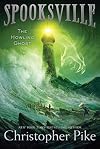
Yes, the official name of Springville/Spooksville’s newspaper is The Daily Disaster! This is a fun series for the younger kids from the pen of Christopher Pike. The Howling Ghost is the second in the series, picking up on the heels of the charming inaugural entry, The Secret Path. Adam had just moved to Springville in the first book, where he met Sally and Watch. They quickly became his friends. show more Twelve-year-old Adam wasn’t certain initially what to make of all those wild stories about the town. Springville has been nicknamed Spooksville by the children because of all the weird occurrences, and the way kids just seem to vanish. By the end of his first big adventure, Adam knows he’s not living in a normal place. That tone carries forward into the second entry:
“Adam was amazed at how large the obituary section was for such a small town. In each issue it took up half the paper. Sally was right about one thing: not everyone stayed for long in Spooksville. The cause of death was often listed as simply disappeared.”
Just as in the first book, Pike injects enough humor and charm into The Howling Ghost to offset any real scares. Though there is a ghost and some danger, it really never gets too dark for the 8-12 year old age group at which it’s aimed. In fact, this series from the 1990s may seem innocent after Harry Potter, and may appeal more to the 8-10 age range rather than 8-12 that’s suggested.
Cindy Makey loses her younger brother Neil to a howling ghost at Spooksville’s lighthouse. He is never found, so presumed to be just another kid who disappeared. Sally gets the ball rolling for the trio of friends to investigate, so that Neil doesn’t become just another statistic. This proves problematic, however, as Cindy MaKay is very sweet, and takes a shine to Adam — which might be returned. The only caveat to this story is in fact, that dynamic, with the very jealous Sally coming off petulant and snarky, even uncaring once she realizes the possibility of Adam liking Cindy. She was precocious and likable in the first book, but in this one the reader gets irritated with her.
Things take a serious turn when after hooking up with Cindy, who is ecstatic that someone believes her story about a ghost snatching her brother, a visit is made to the deserted lighthouse. Cindy almost falls to her death, but Adam saves her. Scramming out of there when they hear the howling ghost, the kids decide to do some research. This leads to some fun stuff involving the Spooksville librarian, Mr. Spiney. His obsession with kids building strong bones knows no bounds!
What the kids discover at the library about a wrecked ship and a lighthouse keeper and her young son, will become important when they return to the lighthouse, but in what way I can’t reveal. There is some action and some derring-do by all involved. Adam even gets his first kiss — albeit on the cheek, which leaves Sally steaming. Before that happens, there is some underwater danger, and some more spookiness at the lighthouse. Will Cindy become a bigger part of the series, sticking around to eat donuts with the trio in the next book, The Haunted Cave? I’ll have to see. Finding out should be fun in this terrific series for younger kids. show less
Yes, the official name of Springville/Spooksville’s newspaper is The Daily Disaster! This is a fun series for the younger kids from the pen of Christopher Pike. The Howling Ghost is the second in the series, picking up on the heels of the charming inaugural entry, The Secret Path. Adam had just moved to Springville in the first book, where he met Sally and Watch. They quickly became his friends. show more Twelve-year-old Adam wasn’t certain initially what to make of all those wild stories about the town. Springville has been nicknamed Spooksville by the children because of all the weird occurrences, and the way kids just seem to vanish. By the end of his first big adventure, Adam knows he’s not living in a normal place. That tone carries forward into the second entry:
“Adam was amazed at how large the obituary section was for such a small town. In each issue it took up half the paper. Sally was right about one thing: not everyone stayed for long in Spooksville. The cause of death was often listed as simply disappeared.”
Just as in the first book, Pike injects enough humor and charm into The Howling Ghost to offset any real scares. Though there is a ghost and some danger, it really never gets too dark for the 8-12 year old age group at which it’s aimed. In fact, this series from the 1990s may seem innocent after Harry Potter, and may appeal more to the 8-10 age range rather than 8-12 that’s suggested.
Cindy Makey loses her younger brother Neil to a howling ghost at Spooksville’s lighthouse. He is never found, so presumed to be just another kid who disappeared. Sally gets the ball rolling for the trio of friends to investigate, so that Neil doesn’t become just another statistic. This proves problematic, however, as Cindy MaKay is very sweet, and takes a shine to Adam — which might be returned. The only caveat to this story is in fact, that dynamic, with the very jealous Sally coming off petulant and snarky, even uncaring once she realizes the possibility of Adam liking Cindy. She was precocious and likable in the first book, but in this one the reader gets irritated with her.
Things take a serious turn when after hooking up with Cindy, who is ecstatic that someone believes her story about a ghost snatching her brother, a visit is made to the deserted lighthouse. Cindy almost falls to her death, but Adam saves her. Scramming out of there when they hear the howling ghost, the kids decide to do some research. This leads to some fun stuff involving the Spooksville librarian, Mr. Spiney. His obsession with kids building strong bones knows no bounds!
What the kids discover at the library about a wrecked ship and a lighthouse keeper and her young son, will become important when they return to the lighthouse, but in what way I can’t reveal. There is some action and some derring-do by all involved. Adam even gets his first kiss — albeit on the cheek, which leaves Sally steaming. Before that happens, there is some underwater danger, and some more spookiness at the lighthouse. Will Cindy become a bigger part of the series, sticking around to eat donuts with the trio in the next book, The Haunted Cave? I’ll have to see. Finding out should be fun in this terrific series for younger kids. show less
Christopher Pike generally creates plots that are different enough to enthrall, with his other real strength lying in creating compassionate, genuine characters. In this case we have stumbling, bumbling Herb, being the typical teenage boy in that he's 'horny', yet being unique because of actual tenderness.
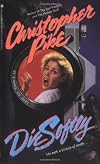
Die Softly is one of Pike's darker stories, ending with a twisted finale that leaves one depressed and stunned. There are so many curves in this road it should be blockaded. It never stays show more stagnant, popping up continuously with new nail-chomping situations. Was the girl he's been in love with for years involved more than she says? Is she being framed by his best friend, jealous of his relationship with her? Did the best friend do it? Is it because of his love's demented, drug addicted friends? Did one of them turn on each other? And what is the deal with his other best friend's brother's car accident a year earlier? You get the picture.
It's one of those novels that starts at the end, with Herb telling it how everything went to hell to a surprisingly amicable detective. From there out it's a mystery where you get a good idea, but just aren't sure. There is an inkling of blood, but suspense isn't focused on. My attention was grabbed and I hated putting it down. The powerful ending wrapped it up perfectly. Bad points? Well, the middle did lag a bit, even if things were happening. Herb was a 'great guy' but the circular actions grew slightly - and I said slightly - tiresome. The beginning could have been sped up also. The dream sequence was useful and did interest, but it went on too long and became stale. My mind drifted a few times, but thankfully in the end Pike's words brought me back home.
Like most of Pike's books, while labeled as young adult, the very grown-up themes shine through. I was left thinking about how far some people go for people they care about, even when they know better. It's not the general story of the protagonist trying to figure out whodunnit before it's too late, but a different animal altogether. A book that leaves me thinking, even if it's depressing, can never be a bad thing. show less
Die Softly is one of Pike's darker stories, ending with a twisted finale that leaves one depressed and stunned. There are so many curves in this road it should be blockaded. It never stays show more stagnant, popping up continuously with new nail-chomping situations. Was the girl he's been in love with for years involved more than she says? Is she being framed by his best friend, jealous of his relationship with her? Did the best friend do it? Is it because of his love's demented, drug addicted friends? Did one of them turn on each other? And what is the deal with his other best friend's brother's car accident a year earlier? You get the picture.
It's one of those novels that starts at the end, with Herb telling it how everything went to hell to a surprisingly amicable detective. From there out it's a mystery where you get a good idea, but just aren't sure. There is an inkling of blood, but suspense isn't focused on. My attention was grabbed and I hated putting it down. The powerful ending wrapped it up perfectly. Bad points? Well, the middle did lag a bit, even if things were happening. Herb was a 'great guy' but the circular actions grew slightly - and I said slightly - tiresome. The beginning could have been sped up also. The dream sequence was useful and did interest, but it went on too long and became stale. My mind drifted a few times, but thankfully in the end Pike's words brought me back home.
Like most of Pike's books, while labeled as young adult, the very grown-up themes shine through. I was left thinking about how far some people go for people they care about, even when they know better. It's not the general story of the protagonist trying to figure out whodunnit before it's too late, but a different animal altogether. A book that leaves me thinking, even if it's depressing, can never be a bad thing. show less
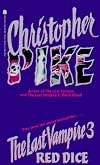
3.5 stars. Sita is back, with the newly-created vampire Joel, the FBI agent who was hunting down the serial killer in the previous book. This one opens immediately at the end of the last one, with Sita and Joel needing to escape a very tightly wound dragnet that has closed around them. Joel tries to speak to his colleagues, but he is immediately taken into custody, and Sita has to escape on her own. The first chapter is forty pages long and extremely action packed, so be prepared!
Joel is show more taken to an underground bunker to be studied, and Sita is trying to figure out how to rescue him. Once she gets in, she realizes that she has been betrayed by a person from her past, and it becomes a struggle of wills as to who will escape - and survive.
I enjoyed this a lot more than book #2, perhaps because it adds to the mythos surrounding Sita and her five thousand year life. Here, Sita recalls a time in medieval Italy when she met a young priest aspiring to recreate the blood of Jesus via alchemy. She fell in love with him (Arturo) and allowed him to experiment with her blood, until things went pear-shaped. She thought she'd disposed of Arturo via the Inquisition, but unfortunately she didn't. I liked the addition of the Catholic mythology to the Hindu-inspired spirituality of Sita, and the alchemy twist was pretty ingenious. It didn't hold up quite as well in present day, but it was an interesting path nonetheless. There is a deux es machina ending to allow Sita to escape, which is also more WTF than sensible, but hey! At least the explanation is somewhat plausible: it seems that final infusion of Yaksha's blood from the last book has given Sita a lot of new powers.
Arturo knows one of Sita's weak points: the loss of her child. In exchange for her blood, he offers her the chance to become a mother again, which is something she finds very tempting. At the end of this book, she tries again to transform herself into a mortal being. Was she successful? We'll find out in Book #4!
One final note: time is flying by at warp speed; apparently only two months have elapsed since the start of Book #1. Maybe it seems longer to me because we're reading only one book a year? IDK; I find as I get older, I've lost all sense of time passing. show less
Joel is show more taken to an underground bunker to be studied, and Sita is trying to figure out how to rescue him. Once she gets in, she realizes that she has been betrayed by a person from her past, and it becomes a struggle of wills as to who will escape - and survive.
I enjoyed this a lot more than book #2, perhaps because it adds to the mythos surrounding Sita and her five thousand year life. Here, Sita recalls a time in medieval Italy when she met a young priest aspiring to recreate the blood of Jesus via alchemy. She fell in love with him (Arturo) and allowed him to experiment with her blood, until things went pear-shaped. She thought she'd disposed of Arturo via the Inquisition, but unfortunately she didn't. I liked the addition of the Catholic mythology to the Hindu-inspired spirituality of Sita, and the alchemy twist was pretty ingenious. It didn't hold up quite as well in present day, but it was an interesting path nonetheless. There is a deux es machina ending to allow Sita to escape, which is also more WTF than sensible, but hey! At least the explanation is somewhat plausible: it seems that final infusion of Yaksha's blood from the last book has given Sita a lot of new powers.
Arturo knows one of Sita's weak points: the loss of her child. In exchange for her blood, he offers her the chance to become a mother again, which is something she finds very tempting. At the end of this book, she tries again to transform herself into a mortal being. Was she successful? We'll find out in Book #4!
One final note: time is flying by at warp speed; apparently only two months have elapsed since the start of Book #1. Maybe it seems longer to me because we're reading only one book a year? IDK; I find as I get older, I've lost all sense of time passing. show less
Lists
Gateway Horror (25)
Ghosts (1)
September TBR (1)
horror (1)
1980s (1)
Overdue Podcast (1)
Favourite Books (2)
1990s (2)
Awards


You May Also Like


Associated Authors
Statistics
- Works
- 130
- Also by
- 2
- Members
- 30,215
- Popularity
- #663
- Rating
- 3.6
- Reviews
- 513
- ISBNs
- 918
- Languages
- 9
- Favorited
- 68