
Leni Riefenstahl (1902–2003)
Author of Leni Riefenstahl: A Memoir
About the Author
Image credit: Image © ÖNB/Wien
Works by Leni Riefenstahl
Triumph of the Will (Special Edition) — Director — 6 copies
Hinter den Kulissen des Reichsparteitag-Films Der Film "Triumph des Willens" wurde im Auftrag des Führers geschaffen (1935) 2 copies
Day of Freedom / Victory of Faith (Double Feature Video) — Director — 1 copy
Associated Works
White Ecstasy [1931 film] 1 copy
S.O.S. Iceberg [1933 film] — Actor — 1 copy
Tagged
Common Knowledge
- Canonical name
- Riefenstahl, Leni
- Legal name
- Riefenstahl, Helene Bertha Amalia
- Birthdate
- 1902-08-22
- Date of death
- 2003-09-08
- Gender
- female
- Education
- Grimm-Reiter Dance School, Berlin
- Occupations
- actor
photographer
film director
dancer
screenwriter - Relationships
- Kettner, Horst (husband)
- Nationality
- Germany (birth)
- Birthplace
- Berlin, Germany
- Places of residence
- Berlin, Germany
- Place of death
- Pöcking, Germany
- Burial location
- Pöcking on Lake Starnberg
- Associated Place (for map)
- Berlin, Germany
Members
Reviews

I had high hopes that Riefenstahl's Memoirs would offer an inside look at life in Hitler's most-intimate circle, but alas, that was not to be. To begin with, besides her work on her 1936 film, Triumph of the Will, which documents Hitler's Nazi party rally in Nuremberg that year, she did little film work at all during World War II. Yes, she spoke with Hitler on several occasions, often at events to honor German artists such as herself, but she was no Nazi insider.
Her memoirs are interesting, show more but sad, and Riefenstahl, who insists she wrote them herself, without the help of a ghost writer, is not a gifted writer. Yes, she initially believed Hitler would be good for Germany, despite his racist views, which she says she believed he expressed only to win popular political support. Yes, he turned out to be terrible for Germany. No, she knew nothing of the Holocaust. Yes, she was slandered as a "Nazi slut" for the rest of her long life, but Riefenstahl never squarely addresses the main criticism of her, that she promoted a man and an ideology that destroyed Germany and much of the rest of the world and included the murder of many millions of Jews, Poles, homosexuals, Communists, German liberals and Gypsies. Was she blinded by opportunity? By Hitler's personal magnetism (she certainly believes Hitler would have made her his mistress had she ben interested). True, her contribution to the Nazi ascent has been greatly exagerated, but what should have been a suitable punishment for a talented artist who sold her soul?
Riefenstahl did suffer, however, which her memoirs make clear. After the war, she was imprisoned for months, and then, time and again when she seemed to have lined up support to make another film, someone always objects to her because of her link to Hitler and the project is cancelled. Despite the deserved acclaim for her film about the 1936 Olympics, she barely had enough money to pay her debts and afford a small home near Munich.
While there are few insights into the Nazi hierarchy, Riefenstahl's account of her early years as a movie star, primarily of films shot in the Alps or in Greenland, are fascinating. Working at a time when stunt men (or women) were rare, she learned to ski and mountain climb for roles that tested her physical and mental strength. She survives several serious falls, anxiously walks on a ladder across a deep crevasse, and is nearly buried in a landslide (captured on film). In a harrowing sequence in which she was supposed to crash a biplane into an ice floe, the German WWI flying ace Ernst Udet secretly piloted the plane from the back seat, crashing it into the ice where it starts to burn as he and Riefenstahl leap from the wreckage.
Riefenstahl claims the director Josef von Sternberg tried to seduce her but nevertheless she insisted he screen test an unknown Marlene Dietrich (who lived on her block) for what turned out to be her star-making role in his movie The Blue Angel. And besides her refusal to work for him, she says Nazi propaganda chief Goebbels hated her also because she refused to become his mistress.
Riefenstahl did manage to win accolades for her later photographic work, much of it focusing on the primitive Nuba people in northern Sudan or in underwater images. She seems admirable for her sheer stubbornness to continue trying to work as a visual artist despite decades of rejection.
But she also seems temperamental, judgmental and impulsive, and it is often difficult to decide how much to believe details of her memoirs.
The biggest omission from them, however, is that Riefenstahl never mentions any particular challenges she faced as a woman. She is on any short list of the most influential female directors or photographers of all time, yet the issue never comes up, whether she is dealing with demanding movie producers, testosterone-fueled Nazis, or Sudanese officialdom.
In the end, to me, that is what is most impressive about Riefenstahl, that despite setbacks and wrong turns that would have convinced most of us to take a job teaching film at a junior college, Riefenstahl instead is headed for a barren track in Africa or a remote undersea location, even into her 70s and 80s. It is ironic that the title of the film which ended up ruining her career, Triumph of the Will, ends up as the perfect title for her memoirs. show less
Her memoirs are interesting, show more but sad, and Riefenstahl, who insists she wrote them herself, without the help of a ghost writer, is not a gifted writer. Yes, she initially believed Hitler would be good for Germany, despite his racist views, which she says she believed he expressed only to win popular political support. Yes, he turned out to be terrible for Germany. No, she knew nothing of the Holocaust. Yes, she was slandered as a "Nazi slut" for the rest of her long life, but Riefenstahl never squarely addresses the main criticism of her, that she promoted a man and an ideology that destroyed Germany and much of the rest of the world and included the murder of many millions of Jews, Poles, homosexuals, Communists, German liberals and Gypsies. Was she blinded by opportunity? By Hitler's personal magnetism (she certainly believes Hitler would have made her his mistress had she ben interested). True, her contribution to the Nazi ascent has been greatly exagerated, but what should have been a suitable punishment for a talented artist who sold her soul?
Riefenstahl did suffer, however, which her memoirs make clear. After the war, she was imprisoned for months, and then, time and again when she seemed to have lined up support to make another film, someone always objects to her because of her link to Hitler and the project is cancelled. Despite the deserved acclaim for her film about the 1936 Olympics, she barely had enough money to pay her debts and afford a small home near Munich.
While there are few insights into the Nazi hierarchy, Riefenstahl's account of her early years as a movie star, primarily of films shot in the Alps or in Greenland, are fascinating. Working at a time when stunt men (or women) were rare, she learned to ski and mountain climb for roles that tested her physical and mental strength. She survives several serious falls, anxiously walks on a ladder across a deep crevasse, and is nearly buried in a landslide (captured on film). In a harrowing sequence in which she was supposed to crash a biplane into an ice floe, the German WWI flying ace Ernst Udet secretly piloted the plane from the back seat, crashing it into the ice where it starts to burn as he and Riefenstahl leap from the wreckage.
Riefenstahl claims the director Josef von Sternberg tried to seduce her but nevertheless she insisted he screen test an unknown Marlene Dietrich (who lived on her block) for what turned out to be her star-making role in his movie The Blue Angel. And besides her refusal to work for him, she says Nazi propaganda chief Goebbels hated her also because she refused to become his mistress.
Riefenstahl did manage to win accolades for her later photographic work, much of it focusing on the primitive Nuba people in northern Sudan or in underwater images. She seems admirable for her sheer stubbornness to continue trying to work as a visual artist despite decades of rejection.
But she also seems temperamental, judgmental and impulsive, and it is often difficult to decide how much to believe details of her memoirs.
The biggest omission from them, however, is that Riefenstahl never mentions any particular challenges she faced as a woman. She is on any short list of the most influential female directors or photographers of all time, yet the issue never comes up, whether she is dealing with demanding movie producers, testosterone-fueled Nazis, or Sudanese officialdom.
In the end, to me, that is what is most impressive about Riefenstahl, that despite setbacks and wrong turns that would have convinced most of us to take a job teaching film at a junior college, Riefenstahl instead is headed for a barren track in Africa or a remote undersea location, even into her 70s and 80s. It is ironic that the title of the film which ended up ruining her career, Triumph of the Will, ends up as the perfect title for her memoirs. show less
Leni Riefenstahl died in 2003, when she was 101 years old, the last surviving member of Hitler's inner circle. How much of her life after 1945 was an attempt to cover up and mislead history is not clarified by this memoir. But what is there is a stunning record of how Riefenstahl came of age and entered the German film industry when it was at its height, making Mountain Films and developing a production technique that would come to full fruition in her documentaries, Triumph of the Will and show more Olympia. Her filmic transitioning remains an art form in and of itself; her work flows, moves, and isolates its subjects against natural and epic backgrounds. Individuals become expressions of natural will and order. So, in many ways, she does reflect the ideology of the political movement that made her rise possible in the first place.
The details of Riefenstahl's life mesmerize the reader. And it also demonstrates one of the quirks of National Socialist Germany. That is, not only the survival but the flourishing of certain types of women in Hitler's Third Reich. Riefenstahl, like the aviatrix Hanna Reitsch, was something of a bohemian working outside the traditional social roles assigned to women. She became a force, a power to be reckoned with in Germany during a time when sexism operated as a secondary sort of racism. Clearly, this was not the ideological goal of Nazism but it was an aspect of the Nazi elites that that they saw something of themselves, outsiders, perhaps, in figures like Riefenstahl, Reitsch, and Hitler's personal secretaries.
Riefenstahl's death and her memoirs effectively closed the book on the passing of a certain era in history. Hitler and his regime now belong to a past whose living memory no longer exists. You can still find some hints of it in Riefenstahl's writings, but you will need to read between the lines to determine the ultimate truth. show less
The details of Riefenstahl's life mesmerize the reader. And it also demonstrates one of the quirks of National Socialist Germany. That is, not only the survival but the flourishing of certain types of women in Hitler's Third Reich. Riefenstahl, like the aviatrix Hanna Reitsch, was something of a bohemian working outside the traditional social roles assigned to women. She became a force, a power to be reckoned with in Germany during a time when sexism operated as a secondary sort of racism. Clearly, this was not the ideological goal of Nazism but it was an aspect of the Nazi elites that that they saw something of themselves, outsiders, perhaps, in figures like Riefenstahl, Reitsch, and Hitler's personal secretaries.
Riefenstahl's death and her memoirs effectively closed the book on the passing of a certain era in history. Hitler and his regime now belong to a past whose living memory no longer exists. You can still find some hints of it in Riefenstahl's writings, but you will need to read between the lines to determine the ultimate truth. show less
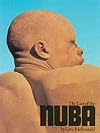
As a friend of Hitler, Riefenstahl was controversial in herself. But her characterisation of the Nuba as unspoilt noble savages was also deeply controversial. But for my money this book gets 4 stars just for the beautiful photos, if nothing else.

Among the most powerful propaganda of all time, terrifying in its intensity.
You May Also Like


Associated Authors
Statistics
- Works
- 36
- Also by
- 7
- Members
- 949
- Popularity
- #27,106
- Rating
- 4.1
- Reviews
- 22
- ISBNs
- 74
- Languages
- 7
- Favorited
- 2