
Giorgos Seferis (1900–1971)
Author of George Seferis: Collected Poems
About the Author
Seferis, who was Greece's ambassador to London in 1961, has done much to integrate the unique Greek heritage with avant-garde European poetry. He is regarded as one of the greatest poets of his time. Born in Smyrna, he moved to Athens at age 14. He studied in Paris at the end of World War I and show more afterward joined the Greek diplomatic service. "Eminent as he is as a European poet," wrote Rex Warner, "Seferis is preeminently a Greek poet, conscious of the Greek tradition which shaped, and indeed created the tradition of Europe. Throughout the poetry of Seferis one will notice his profound consciousness of the presence of the past and its weight." His themes show a constant awareness of both the dignity and the inevitable sorrow of humanity. His images---the voyage, the search, and the ruins that become alive and yet suggest death---are universal, his treatment of them contemporary. His language has a disciplined power and simplicity. In addition to the Poems, selections from his poetry appear in Edmund Keeley and Philip Sherrard's Six Poets of Modern Greece. The Royal Swedish Literary Academy awarded Seferis the Nobel Prize "for his eminent lyrical writing, inspired by a deep feeling for the Hellenic world of culture." (Bowker Author Biography) show less
Image credit: Photo by user Klearchoskapoutsis / Greek Wikipedia.
Works by Giorgos Seferis
Μέρες Β΄ 5 copies
Poesie 4 copies
Le parole e i marmi 4 copies
Μεταγραφές 3 copies
Los Premios Nobel de literatura : Derek Walcott : Yorgos Seferis : Kenzaburo Oé (1997) — Author — 3 copies
Πολιτικό ημερολόγιο Α' 1935-1944 2 copies
Πολιτικό ημερολόγιο 2 copies
ΣΗΜΕΙΩΣΕΙΣ ΓΙΑ ΜΙΑ "ΕΒΔΟΜΑΔΑ" 2 copies
The king of Asine, and other poems 2 copies
Poemas 2 copies
This Dialectic of Blood and Light: George Seferis - Philip Sherrard: An Exchange 1947 - 1971 (Romiosyni Series) (2015) 2 copies
Seferis, stenarnas diktare 2 copies
Zestien Haiku 2 copies
Discours de Stockholm 1 copy
Ἡ Στέρνα 1 copy
Poezi 1 copy
THE CHARIOTEER 1 copy
Μέρες Η 1 copy
Poesie di Giogio Seferis 1 copy
Mithistòrima 1 copy
Ποιήματα 1 copy
Seçme Şiirler 1 copy
Στροφή 1 copy
Δοκιμές (1936-1947) 1 copy
Two Letters From Greece 1 copy
Dodici poesie 1 copy
Piimata [Poems] 1 copy
Mythistorema 1 copy
"Κυπριακές" επιστολές του Σεφέρη (1954-1962). Από την αλληλογραφία του με τον Γ.Π. Σαββίδη (1991) 1 copy
El zorzal y otros poemas 1 copy
Calligram : a poem 1 copy
between the symplegades 1 copy
Seferis : Choix De Poemes 1 copy
El Zorzal y otros poemas 1 copy
Εκλογή από τις δοκιμές 1 copy
Έξι νύχτες στην Ακρόπολη 1 copy
Κρυφά ποιήματα 1 copy
Άσμα ασμάτων 1 copy
Χειρόγραφο Σεπτ. '41 1 copy
Μέρες του 1945-1951 1 copy
Opere 1 copy
Ποιήματα 1 copy
Associated Works
World Poetry: An Anthology of Verse from Antiquity to Our Time (1998) — Contributor — 499 copies, 2 reviews
Against Forgetting: Twentieth-Century Poetry of Witness (1993) — Contributor — 377 copies, 2 reviews
The Sophisticated Cat: A Gathering of Stories, Poems, and Miscellaneous Writings About Cats (1992) — Contributor — 112 copies, 1 review
The Poet's Work: 29 Poets on the Origins and Practice of Their Art (1979) — Contributor — 95 copies, 1 review
Tagged
Common Knowledge
- Canonical name
- Seferis, Giorgos
- Legal name
- Seferiades, Giorgios Stylianou
Sepheriades, Yeoryios Stilianou - Birthdate
- 1900-03-13
- Date of death
- 1971-09-20
- Gender
- male
- Education
- Sorbonne (Law)
- Occupations
- diplomat
ambassador
poet
essayist - Organizations
- Royal Greek Ministry of Foreign Affairs
- Awards and honors
- Nobel Prize (Literature, 1963)
American Academy of Arts and Letters (Foreign Honorary, Literature, 1971) - Relationships
- Tsatsos, Jeanne (sister)
- Cause of death
- pneumonia
- Nationality
- Greece
- Birthplace
- Urla, Aidin Vilayet, Ottoman Empire
- Places of residence
- Urla, Aidin Vilayet, Ottoman Empire
Athens, Greece
Paris, France
London, England, UK - Place of death
- Athens, Greece
- Burial location
- First Cemetery in Athens, Greece
- Associated Place (for map)
- Greece
Members
Reviews

I am of the opinion that if authors did not want to publish certain pieces of writing during their lifetimes, we should not ignore their choice on the matter when they can no longer stop us from doing so. It's not a faultless rule, there are surely exceptions. Yet, in this case, George Seferis would likely regret to be associated with Six Nights on the Acropolis if he could.
A reader, such as this one, could find here quite a few interesting ideas and the ways they present themselves, a few show more glimpses of the author behind Stratis, a feeling of a culture at the crossroads between a tragedy of the recent past, the glory of the old days, and more tragedies to come. But most of what this reader found in the book was not worth looking for. And so the reader has to go back to George Seferis he knows and loves, even if he knows him barely and loves him only through a distorted mirror of translation. He, this reader, instead of rambling on, gives you, without the permission of the dead editor, or the dead author, or the dead translator, this
INTERVAL OF JOY
We were happy all that morning
O God how happy.
First the stones the leaves and the flowers shone
and then the sun
a huge sun all thorns but so very high in the heavens.
A nymph was gathering our cares and hanging them on the
trees
a forest of Judas trees.
Cupids and satyrs were singing and playing
and rosy limbs could be glimpsed amid black laurel
the flesh of young children.
We were happy all that morning;
the abyss was a closed well
on which the tender foot of a young faun stamped
do you remember its laughter: how happy we were!
And then clouds rain and the damp earth;
you stopped laughing when you reclined in the hut,
and opened your large eyes and gazed
on the archangel wielding a fiery sword
"I cannot explain it," you said, "I cannot explain it,"
I find people impossible to understand
however much they may play with colors
they are all black.
George Seferis, tr. by Kimon Friar, 'Modern European Poetry' ed. by Willis Barnstone 1966 show less
A reader, such as this one, could find here quite a few interesting ideas and the ways they present themselves, a few show more glimpses of the author behind Stratis, a feeling of a culture at the crossroads between a tragedy of the recent past, the glory of the old days, and more tragedies to come. But most of what this reader found in the book was not worth looking for. And so the reader has to go back to George Seferis he knows and loves, even if he knows him barely and loves him only through a distorted mirror of translation. He, this reader, instead of rambling on, gives you, without the permission of the dead editor, or the dead author, or the dead translator, this
INTERVAL OF JOY
We were happy all that morning
O God how happy.
First the stones the leaves and the flowers shone
and then the sun
a huge sun all thorns but so very high in the heavens.
A nymph was gathering our cares and hanging them on the
trees
a forest of Judas trees.
Cupids and satyrs were singing and playing
and rosy limbs could be glimpsed amid black laurel
the flesh of young children.
We were happy all that morning;
the abyss was a closed well
on which the tender foot of a young faun stamped
do you remember its laughter: how happy we were!
And then clouds rain and the damp earth;
you stopped laughing when you reclined in the hut,
and opened your large eyes and gazed
on the archangel wielding a fiery sword
"I cannot explain it," you said, "I cannot explain it,"
I find people impossible to understand
however much they may play with colors
they are all black.
George Seferis, tr. by Kimon Friar, 'Modern European Poetry' ed. by Willis Barnstone 1966 show less
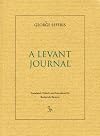
A slight volume really, but it works best when able to set the poetry into the context provided by Seferis' journal entries. The travels in Cyprus before Engomi: Scents of lentiskbegan to stir upon old hillsides of memorybosoms among foliage, moistened lips;and everything became dry at once in the flatness of the plainin the stone's despair the eroded powerin the empty land of sparse weed and thornswhere carefree on its way a snake glides byand where much time is taken up with dying

Jorgos Seferis vjen me një tjetër përmasë; atë të estetit. Janë 17 esetë në këtë përmbledhje: "Hyrje në poezinë e T.S. Eliot-it", "Mbi një fragment nga Pirandello", "Dialog mbi poezinë", "Monolog mbi poezinë", "Arti dhe epoka", "Fjalim në Stokholm", "Dy fjalë për traditën e re greke", "Në 700-vjetorin e Dantes", të sjella në shqip nga Romeo Çollaku

I don't know if it was the translation or the poems themselves but these appealed more to my intellect than my emotions. However, I liked them enough that I will try to read more by Seferis
Lists
Awards


You May Also Like


Associated Authors
Statistics
- Works
- 142
- Also by
- 10
- Members
- 937
- Popularity
- #27,411
- Rating
- 4.0
- Reviews
- 17
- ISBNs
- 142
- Languages
- 13
- Favorited
- 9