
François Rabelais (–1553)
Author of Gargantua and Pantagruel
About the Author
One of the leading humanist writers of the French Renaissance, Rabelais was at first a Franciscan and then a Benedictine monk, a celebrated physician and professor of anatomy, and later cure of Meudon. The works of Rabelais are filled with life to the overflowing, hence the term "Rabelaisian." His show more principal protagonists, Gargantua and his son, Pantagruel, are appropriately giants, not only in size, but also in spirit and action. The five books of their adventures are separate works, containing, in different measure, adventures, discussions, farcical scenes, jokes, games, satires, philosophical commentaries, and anything else that a worldly, learned man of genius such as Rabelais could pour into his work. His style is innovative and idiosyncratic, marked by humorous neologisms made up from the learned languages, Greek and Latin, side by side with the most earthy, humble, and rough words of the street and barnyard. His Gargantua, published in 1534, satirizes the traditional education of Parisian theologians and, in the Abbe de Theleme episode, recommends a free, hedonistic society of handsome young men and women in contrast to the restrictive life of monasticism. The gigantic scope of Rabelais's work also reflects the Renaissance thirst for encyclopedic knowledge. (Bowker Author Biography) show less
Disambiguation Notice:
Alcofribas Nasier is a pseudonym for Rabelais
(fre) Alcofribas Nasier is a pseudonym and anagram for François Rabelais
Image credit: From Album littéraire de la France
Series
Works by François Rabelais
ŒUVRES de RABELAIS Tome II Illustration de Gustave Doré LIVRE DEUXIÈME PANTAGRUEL ROY DES DIPSODES SES FAICTS ET PROUESSES ESPOVENTABLES (1971) 7 copies
Gargantua (Bac 2023, 1re générale & 1re techno): suivi des parcours « Rire et savoir » et « La bonne éducation » (2021) 7 copies
Lire et s'entraîner : Francois Rabelais : Gargantua et Pantagruel [book + sound recording] (2011) — Writer — 7 copies
Gargantua und Pantagruel I-III 5 copies
Gargantua und Pantagruel IV-V 4 copies
Gargantua: Pantagruel: extraits 4 copies
Oeuvres de Rabelais, augmentées de plusieurs fragments et de deux chapitres du Ve livre restitués d'après un manuscrit de la Bibliothèque… (1856) 3 copies
Gargântua & Pantagruel (Volume I) — Author — 3 copies
The Works of Rabelais (Volume 2) 3 copies
Three good giants: whose famous deeds are recorded in the ancient chronicles of Franco̦is Rabelais 3 copies
Gargantua, extraits. Avec une notice biographique... des notes... par Jean-Christian Dumont,... (1972) 3 copies
Rabelais 3 copies
O Terceiro Livro dos Fatos e Ditos Heroicos do Bom Pantagruel (Em Portuguese do Brasil) (2006) 3 copies
Ὁ Γαργαντούας 2 copies
Œuvres de Rabelais: Tome deuxième 2 copies
BiblioLycée - Gargantua, François Rabelais - BAC 2023: Parcours : Rire et savoir ; La bonne éducation (2021) 2 copies
BiblioLycée Gargantua (Rabelais) - BAC 2024: Parcours : Rire et savoir ; La bonne éducation (2022) 2 copies
Gargantua and Patagruel 2 copies
Pantagruel : Roy des dipsodes, restitue a son naturel avec des faictz et prouesse espoventables (1969) 2 copies
Œuvres complètes, tome I 2 copies
Œuvres complètes, tome II 2 copies
Œuvres de Rabelais 2 copies
Rabelais. Le Cinquième livre : Suivi des Oeuvres diverses. Texte établi et annoté par Pierre Michel. Préface de Michel Butor (1969) 2 copies
Suure Gargantua - Pantagrueli isa ülikohutav elulugu, mis on ... magister Alcofribasi poolt kirja pandud raamat täis pantagruelisme : [romaan] (1996) 2 copies
Oeuvres complètes Tome I 2 copies
Gargantua i Pantagruel. T. 1-2 2 copies
Pages choisies 1 1 copy
Oeuvres de Rabelais 1 copy
Pages choisies 2 1 copy
Pages choisies, tome I 1 copy
Pages choisies, tome II 1 copy
Works 1 copy
Rabelais, Works 1 copy
The Works of Rabelais 1 copy
Gargăngchuya 1 copy
Păngtagruyen 1 copy
O gigante Gargantua 1 copy
Garguantua 1 copy
Gargantua and Pantagruel 1 copy
Pages choisies 1 copy
Pages choisies 1 1 copy
Pages choisies 2 1 copy
Rabelais - Pages Pedagogiques - Les Classiques Pour Tous # 316 - Notice Et Notes Par Perier 1 copy, 1 review
Oeuvres Rabelais 1 copy
Pantagruel I-II 1 copy
Gargantua, chapitres XI-XXIV – Bac de français 2025 – Parcours : rire et savoir, la bonne éducation (2021) 1 copy
Pages choisies 1 copy
Gargantua İle Pantagruel 1 copy
Gargantua i Pantagruel. T. 2 1 copy
The Works of Rabelias 1 copy
Le quart livre 1 copy
Gargantua : mighty monster 1 copy
Le cinquième livre 1 copy
Le tiers livre 1 copy
Oeuvres completes 2 1 copy
Oeuvres completes 1 1 copy
Oeuvres completes 1 copy
Oeuvres Completes Tome I 1 copy
Æuvres. Bind 1-2 1 copy
Gargantua and Patagruel 1 copy
Oeuvres de François Rabelais 1 copy
Забавные сны Пантагрюэля 1 copy
Rabelais - Book III 1 copy
O Segundo Livro - Pantagruel, Rei Dos Dipsodos, Restituido A Seu Natural, Com Os Feitos (2022) 1 copy
RABELAIS OEUVRES COMPLETES 1 copy
Pages Choisies [2 Vols.] 1 copy
Rabelais: i urval 1 copy
Œuvres de Maître François Rabelais (Édition collationnée sur les textes originaux, Tome Troisième) 1 copy
Gargantua i Pantagruel T.1-2 1 copy
Les Songes Drolatiques De Pantagruel Ou Sont Contenues Cent Vingt Figures... (French Edition) (2018) 1 copy
ŒUVRES de RABELAIS TOME IV Illustration de Gustave Doré LE QUART LIVRE DES FAICTS ET DICTS HÉROÏQUES DU NOBLE PANTAGRUEL (1971) 1 copy
The Works Of Rabelais 1 copy
Master Francis Rabelais - five Books of the Lives, Heroic Deeds and Sayings of Gargantua and his son Pantagruel - volume II (1904) 1 copy
Gargantua e Pantagruele, 1 1 copy
The complete works of Doctor François Rabelais, abstractor of the quintessence : being an account 1 copy
Pages pédagogiques 1 copy
Pantagruel Publié sur le texte définitif établi et annoté par Pierre Michel. Préface de Jacques Perret (1964) 1 copy
Gargantua 1 copy
ANTISECHE UNIVERSELLE -L' 1 copy
Die Träume des Pantagruel 1 copy
Oevres de F. Rabelais 1 copy
Pariser Geschichten 1 copy
Pantagruel II (Tiers Livre, Quart Livre, Livre Cinquieme: extraits) (Classiques Larousse) (1937) 1 copy
Pantagruel Attends the Trial of Bridlegoose Who Decided Cases by the Fall of Dice (in Law in Action) 1 copy
Gargantua and Paragruel 1 copy
Les Ouevres 1 copy
Gargantua and Pantragruel 1 copy
Gargántula y Pantagruel 1 copy
L'Abbaye de Theleme 1 copy
The Works of Mr. Francis Rabelais ... Containing Five Books of the Lives, H eroic Deeds and Sayings of Gargantua ... (1954) 1 copy
Great Droll Stories. 1 copy
Rabelais l’intégrale : Œuvres complètes [Nouv. éd. revue et mise à jour] (French Edition) (2019) 1 copy
Gargantua 1 copy
Les cinq livres I 1 copy
Les cinq livres II 1 copy
Pages Choisies I 1 copy
Oeuvres - Vol. 1-2 1 copy
Rabelais Rousers 1 copy
Les Aventures de François Rabelais 2: Pantagruel, Panurge et L'Oracle de la Dive Bouteille (2014) 1 copy
Gargantua Pantagruel I 1 copy
Pantagrueline Prognostication pour l'An 1533: Avec Les Almanachs pour les ans 1533, 1535 et 1541 1 copy
Les Cinq Livres de F. Rabelais, Vol. 3 of 5: Pantagruel (Classic Reprint) (French Edition) (2017) 1 copy
Pantagruel-2 1 copy
Gargantua/Pantagruel-1 1 copy
Œuvres de Rabelais 1 copy
Rabelais: Pages choisies II 1 copy
Gargantua and Pantagruel I 1 copy
Livre I - Gargantua – suivi d'annexes: Nouvelle édition 2019 (French Edition) (2019) 1 copy, 1 review
Oeuvres 1 copy
Associated Works
Choice Cuts: A Savory Selection of Food Writing from Around the World and Throughout History (2002) — Contributor — 369 copies, 2 reviews
The World of Law, Volumes I-II: The Law in Literature, The Law as Literature (1960) — Contributor — 54 copies
Lapham's Quarterly - Lines of Work: Volume IV, Number 2, Spring 2011 (2011) — Contributor — 32 copies, 2 reviews
The Ribald Reader: 2000 Years of Lusty Love and Laughter (1906) — Contributor — 19 copies, 2 reviews
Oogst Der Tijden. keur uit de werken van schrijvers en dichters aller volken en eeuwen (1940) — Contributor — 12 copies
Affentheuerlich Naupengeheurliche Geschichtsklitterung. Die Andere Bibliothek (1997) — Autor, some editions — 11 copies
Piirakkasota; valikoima huumoria — Contributor — 3 copies
Literaire rechtspraak — Contributor, some editions — 1 copy
Tagged
Common Knowledge
- Canonical name
- Rabelais, François
- Other names
- Nasier, Alcofribas
- Birthdate
- 1483/94
- Date of death
- 1553-04-09
- Gender
- male
- Education
- University of Montpellier (Doctor of Medicine|1537)
University of Poitiers (law) - Occupations
- monk
doctor
physician
novelist
writer - Organizations
- Franciscan Order
Benedictine Order
Hôtel-Dieu - Short biography
- French Renaissance writer, doctor and humanist. François Rabelais studied law and joined the Franciscan order of monks. He then studied medicine and became a practicing physician, but his true genius was as a storyteller. He's considered an eminent, avant-garde author of fantasy and satire, with his comic masterpiece Gargantua and Pantagruel being published in several volumes between 1532 and 1564. Since his day, "Rabelaisian" has entered the English vocabulary as a byword for works marked by bawdy or outrageous humor, caricatures, and bold truthfulness.
- Nationality
- France
- Birthplace
- La Devinière, Indre-et-Loire, France
- Places of residence
- Chinon, Anjou, France
Montpellier, Hérault, France
Metz, Moselle, France
Poitiers, Vienne, France
Angers, Maine-et-Loire, France
Fontenay-le-Comte, Vendée, France (show all 12)
Maillezais, Vendée, France
Paris, Île-de-France, France
Lyon, Rhône, Auvergne-Rhône-Alpes, France
Rome, Italy
Saint-Maur-des-Fossés, Val de Marne, France
Meudon, Hauts-de-Seine, France - Place of death
- Paris, Île-de-France, France
- Burial location
- Cimetière de l'église Saint-Paul, Paris
- Map Location
- France
- Disambiguation notice
- Alcofribas Nasier is a pseudonym for Rabelais
- Associated Place (for map)
- France
Members
Reviews

The story of the giant Pantagruel is presented as the sequel to a popular chapbook of the time, the Grandes et inestimables Chronicques de l'énorme géant Gargantua (although Rabelais later went back and wrote his own prequel about Panatagruel's father, Gargantua) and ties in to a long popular tradition of giant stories. If Rabelais is to be believed (and he insists that everything he tells us is true, so obviously he should be), Gargantua and Pantagruel have a heritage that goes right back show more to the Book of Genesis, set out in one of the opening chapters in a three-page list of "and he begat ...".
But what's new in Rabelais is that he serves up the grotesque and fantastic elements of the giant story in an incongruous context of humanist renaissance scholarship. Pantagruel is not just any giant, he's a man of the moment, a graduate of the Sorbonne who can debate with visiting scholars, settle law cases, advise on medical matters, and much else, usually taking the opportunity to make scholastics, alchemists, indulgence-sellers and other enemies of humanism look silly in the process. I found it very interesting to discover how often Rabelais reminds us that we are living in a Renaissance surrounded by new, exciting ideas and need to get rid of the clutter of medieval thought. I hadn't expected to find this so explicitly set out! And of course it was this aspect of the books that repeatedly got Rabelais into trouble with the Church and the authorities at the Sorbonne.
However, we all know what "Rabelaisian" means: transgressive humour in glorious excess. And we get a lot of that: double-entendres, hundreds of codpiece and fart jokes, mammoth drinking sessions resulting in oceans of piss, baby giants eating live bears, a whole army sheltering under Pantagruel's tongue, and all the rest of it. I was amused to see how often the editor of the 1964 edition I was using felt he had to resort to blanks and circumlocutions in the Notes for things that were unmistakably explicit in the original text. As if his delicate young readers could be protected from unpleasant words by 16th century spelling conventions alone...
Is it still funny for modern readers? Well, yes, but not always. Some scenes still work brilliantly - I loved the philosophical debate conducted entirely in (meaningless) signs and gestures, for instance, which would have been equally effective as a Monty Python sketch. Perfect timing and a narrator who just about manages to maintain the pretence that he is taking it all seriously keep us on the edge of doubting that there might be some meaning in it all after all. The multilingual discussion when Pantagruel first meets Panurge is another triumph. And on the smaller scale, Rabelais is good at setting us up for the terrible puns he's about to sneak in. But in other places it can feel a bit formulaic - a fart or a reference to codpieces is just thrown in gratuitously when Rabelais wants to change the pace. The list jokes also seem to go on for about three times as long as they need to, and some one-liners are ruined when Rabelais draws them out too long (e.g. the notion that the walls of Paris should be rebuilt using female genitals because they can be had for much less money than building-stone at the moment - a joke that becomes decidedly unpleasant as soon as you start to think about it).
I was expecting to have trouble with the 16th-century French, but actually it's not all that difficult: the main hurdle to get over for a reader is the different spelling convention, and once you've got that sorted out, there turn out to be rather few words that aren't current any more, and most of those are either picked up by the Notes or obvious from the context. show less
But what's new in Rabelais is that he serves up the grotesque and fantastic elements of the giant story in an incongruous context of humanist renaissance scholarship. Pantagruel is not just any giant, he's a man of the moment, a graduate of the Sorbonne who can debate with visiting scholars, settle law cases, advise on medical matters, and much else, usually taking the opportunity to make scholastics, alchemists, indulgence-sellers and other enemies of humanism look silly in the process. I found it very interesting to discover how often Rabelais reminds us that we are living in a Renaissance surrounded by new, exciting ideas and need to get rid of the clutter of medieval thought. I hadn't expected to find this so explicitly set out! And of course it was this aspect of the books that repeatedly got Rabelais into trouble with the Church and the authorities at the Sorbonne.
However, we all know what "Rabelaisian" means: transgressive humour in glorious excess. And we get a lot of that: double-entendres, hundreds of codpiece and fart jokes, mammoth drinking sessions resulting in oceans of piss, baby giants eating live bears, a whole army sheltering under Pantagruel's tongue, and all the rest of it. I was amused to see how often the editor of the 1964 edition I was using felt he had to resort to blanks and circumlocutions in the Notes for things that were unmistakably explicit in the original text. As if his delicate young readers could be protected from unpleasant words by 16th century spelling conventions alone...
Is it still funny for modern readers? Well, yes, but not always. Some scenes still work brilliantly - I loved the philosophical debate conducted entirely in (meaningless) signs and gestures, for instance, which would have been equally effective as a Monty Python sketch. Perfect timing and a narrator who just about manages to maintain the pretence that he is taking it all seriously keep us on the edge of doubting that there might be some meaning in it all after all. The multilingual discussion when Pantagruel first meets Panurge is another triumph. And on the smaller scale, Rabelais is good at setting us up for the terrible puns he's about to sneak in. But in other places it can feel a bit formulaic - a fart or a reference to codpieces is just thrown in gratuitously when Rabelais wants to change the pace. The list jokes also seem to go on for about three times as long as they need to, and some one-liners are ruined when Rabelais draws them out too long (e.g. the notion that the walls of Paris should be rebuilt using female genitals because they can be had for much less money than building-stone at the moment - a joke that becomes decidedly unpleasant as soon as you start to think about it).
I was expecting to have trouble with the 16th-century French, but actually it's not all that difficult: the main hurdle to get over for a reader is the different spelling convention, and once you've got that sorted out, there turn out to be rather few words that aren't current any more, and most of those are either picked up by the Notes or obvious from the context. show less

A derék Pantagruel hősi cselekedeteinek és mondásainak
HARMADKÖNYVE
(móriczos változat)
PANURGOSZ: Urambátyám, én mögházasodnék.
PANTAGRUEL: Ne tegye kend, mer mögcsalja az asszon.
PANURGOSZ: De pedig!
PANTAGRUEL: Akkó szakadjék mög kend.
(Valahogy így. Csak sokkal több szóban. Rabelais első két könyvének hősei most visszatérnek, hogy egy alacsonyabb költségvetésű történetben szórakoztassák a nagyérdeműt. Ezúttal jóval kevesebb a pajzán kaland és a világot show more átszelő utazás – jobbára csak a mélyen férficentrikus filozofikus eszmecsere marad. Az igazi főszereplő ezúttal Panurgosz, aki elhatározza, hogy nőt veszen magához, de előtte kikéri nagybecsű patrónusa, Pantagruel véleményét, aki ebben a könyvben nem testi erejét, sokkal inkább bölcsességét villogtatja. Pantagruel nem támogatja az ötletet, megjósolván, hogy a hölgyemény szarvakkal ajándékozza majd meg Panurgoszt, ráadásul alighanem el is agyabugyálja – de az érintett sutba vágja a jó tanácsot, és továbbra is ragaszkodik elképzeléséhez. Innentől kezdve újra és újra azt látjuk, hogy Panurgosz a legkülönbözőbb orákulumokhoz fordul útbaigazításért, bölcshöz és bolondhoz, orvoshoz és filozófushoz, tudáshoz és varázslathoz, vagy egyszerűen csak a hatoldalú kockához, akik mind csalfa asszonyt ígérnek neki – de hősünknek egyre vadabb kacskaringókkal mindig sikerül úgy magyarázni az eredményt, hogy az az ő előfeltételezéseit támassza alá. Hogy aztán az egész retorikai salto mortale meglepetésszerű hajóútba – és bosszantó függővégbe* – torkolljon a végén. Tanmese ez az ostobáról, aki nem képes döntéseiért vállalni a felelősséget, ezért tanácsot kér – de ha nem szája íze szerint való a tanács, akkor vissza az egész. Ráadásul mindez olyan hajmeresztő okoskodásokkal teletűzdelt tündéri szófosással előadva, hogy attól az ember legszívesebben a falnak menne – ez a stíl gúnyos koppintás a korabeli Sorbonne szőrözőinek és zabhegyezőinek az orrára, akik felsőbb parancsra még a feketéről is bebizonyítanák, hogy fehér, de legalábbis törtszürke. Persze e szatirikus koppintástól a párizsi egyetemet még nem szippantotta be akkoriban az önnön oktondisága által képzett fekete lyuk, de annyi azért elmondható, hogy amíg Rabelais neve azóta is közszájon forog, a Sorbonne teológusainak névsorát 1543-ból alighanem csak pár szent őrült tudná akár csak részben is felsorolni. És ez is valami – az irodalom kis diadala az emberi butaság felett.)
* Apropos függővég. Remélem, Csordás Gábor már elkezdte fordítani a negyedkönyvet, mert különben! show less
HARMADKÖNYVE
(móriczos változat)
PANURGOSZ: Urambátyám, én mögházasodnék.
PANTAGRUEL: Ne tegye kend, mer mögcsalja az asszon.
PANURGOSZ: De pedig!
PANTAGRUEL: Akkó szakadjék mög kend.
(Valahogy így. Csak sokkal több szóban. Rabelais első két könyvének hősei most visszatérnek, hogy egy alacsonyabb költségvetésű történetben szórakoztassák a nagyérdeműt. Ezúttal jóval kevesebb a pajzán kaland és a világot show more átszelő utazás – jobbára csak a mélyen férficentrikus filozofikus eszmecsere marad. Az igazi főszereplő ezúttal Panurgosz, aki elhatározza, hogy nőt veszen magához, de előtte kikéri nagybecsű patrónusa, Pantagruel véleményét, aki ebben a könyvben nem testi erejét, sokkal inkább bölcsességét villogtatja. Pantagruel nem támogatja az ötletet, megjósolván, hogy a hölgyemény szarvakkal ajándékozza majd meg Panurgoszt, ráadásul alighanem el is agyabugyálja – de az érintett sutba vágja a jó tanácsot, és továbbra is ragaszkodik elképzeléséhez. Innentől kezdve újra és újra azt látjuk, hogy Panurgosz a legkülönbözőbb orákulumokhoz fordul útbaigazításért, bölcshöz és bolondhoz, orvoshoz és filozófushoz, tudáshoz és varázslathoz, vagy egyszerűen csak a hatoldalú kockához, akik mind csalfa asszonyt ígérnek neki – de hősünknek egyre vadabb kacskaringókkal mindig sikerül úgy magyarázni az eredményt, hogy az az ő előfeltételezéseit támassza alá. Hogy aztán az egész retorikai salto mortale meglepetésszerű hajóútba – és bosszantó függővégbe* – torkolljon a végén. Tanmese ez az ostobáról, aki nem képes döntéseiért vállalni a felelősséget, ezért tanácsot kér – de ha nem szája íze szerint való a tanács, akkor vissza az egész. Ráadásul mindez olyan hajmeresztő okoskodásokkal teletűzdelt tündéri szófosással előadva, hogy attól az ember legszívesebben a falnak menne – ez a stíl gúnyos koppintás a korabeli Sorbonne szőrözőinek és zabhegyezőinek az orrára, akik felsőbb parancsra még a feketéről is bebizonyítanák, hogy fehér, de legalábbis törtszürke. Persze e szatirikus koppintástól a párizsi egyetemet még nem szippantotta be akkoriban az önnön oktondisága által képzett fekete lyuk, de annyi azért elmondható, hogy amíg Rabelais neve azóta is közszájon forog, a Sorbonne teológusainak névsorát 1543-ból alighanem csak pár szent őrült tudná akár csak részben is felsorolni. És ez is valami – az irodalom kis diadala az emberi butaság felett.)
* Apropos függővég. Remélem, Csordás Gábor már elkezdte fordítani a negyedkönyvet, mert különben! show less
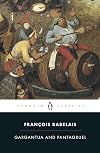
This collection of books began with the highest of the high, then proceeded immediately to tank miserably until it reached the lowest of the low. I read the version translated by Samuel Putnam, and in his hands, the word "lively" in the title was very well suited. The first book of Gargantua was a revelation, rich with linguistic acrobatics, profound in silliness, and filled to hilarity with hyperbole. I enjoyed every moment.
Then Pantagruel was born, and I wished he never was. I prefer the show more father, and the apple fell far from the tree. The first book on his life contained nothing I can remember. The second book contained hundreds of pages of a meandering conversation about whether or not his friend should marry. The third book had 20 or so pages on a missing hatchet? What a waste of my time. show less
Then Pantagruel was born, and I wished he never was. I prefer the show more father, and the apple fell far from the tree. The first book on his life contained nothing I can remember. The second book contained hundreds of pages of a meandering conversation about whether or not his friend should marry. The third book had 20 or so pages on a missing hatchet? What a waste of my time. show less
This whole series is stuffed with references to ancient greece, ancient rome, references to the bible, medieval history and philosophy, and i mean caked with so many classical references while being so verbosely fancy and grotesque at the same time, that if you'd get rid of them you could probably read these five books all in one sitting. Critics love to take a dump on Ready Player One for namedropping 80s and 90s pop culture brands and references, but still consider Pantagruel a literary show more masterpiece because it was written by a white man some five centuries ago, whatever floats their boat, but I'll never get their point.
And yes, I am well-versed in classical culture and history, but still found Pantagruel an insufferably tedious read. My favorite scenes and the only ones that I deem as worth remembering were Panurge's sign debate and some passages in Gargantua, but that's all there's to it, these works are extremely outdated and unsuitable for a modern audience, also the repetitive poop and pee and ass jokes weren't funny, at all. show less
And yes, I am well-versed in classical culture and history, but still found Pantagruel an insufferably tedious read. My favorite scenes and the only ones that I deem as worth remembering were Panurge's sign debate and some passages in Gargantua, but that's all there's to it, these works are extremely outdated and unsuitable for a modern audience, also the repetitive poop and pee and ass jokes weren't funny, at all. show less
Lists
Awards


You May Also Like


Associated Authors
Statistics
- Works
- 404
- Also by
- 20
- Members
- 8,702
- Popularity
- #2,754
- Rating
- 3.8
- Reviews
- 95
- ISBNs
- 466
- Languages
- 29
- Favorited
- 39


