
Sam Epstein (1909–2000)
Author of The Great Houdini
About the Author
Disambiguation Notice:
Sam Epstein and Beryl Williams Epstein are a husband-and-wife team who jointly wrote over 120 books. Although Sam is often individually credited for some of the books, Beryl played a major role in their creation. They also used the pseudonym Bruce Campbell for the "Ken Holt" series of books.
Image credit: Sam and Beryl Epstein
Works by Sam Epstein
Good Clean Food: Shopping Smart to Avoid GMOs, rBGH, and Products That May Cause Cancer and Other Diseases (2013) 6 copies
The First Book of Teaching Machines 4 copies
Dynamo Farm: A 4-H Story 1 copy
FIRST BOOK of MEXICO By SAN and BERYL EPSTEIN Watts HC 1955 6th [Hardcover] Sam & Beryl Epstein 1 copy
Jackknife for a penny, 1 copy
Associated Works
The Secret of Skeleton Island (1949) — Author, some editions; Author, some editions — 79 copies, 2 reviews
Tagged
Common Knowledge
- Other names
- Campbell, Bruce
- Birthdate
- 1909
- Date of death
- 2000-01-21
- Gender
- male
- Relationships
- Epstein, Beryl Williams (wife)
- Birthplace
- Boston, Massachusetts, USA
- Places of residence
- New York, New York, USA
Mattituck, New York, USA - Place of death
- Southold, New York, USA
- Disambiguation notice
- Sam Epstein and Beryl Williams Epstein are a husband-and-wife team who jointly wrote over 120 books. Although Sam is often individually credited for some of the books, Beryl played a major role in their creation. They also used the pseudonym Bruce Campbell for the "Ken Holt" series of books.
- Associated Place (for map)
- New York, USA
Members
Reviews

This is one of those books I read as a kid and have since thought about on and off for more than fifty years. Today I am wondering which school library carried it and of the unknown librarian who selected it for the shelves of the elementary school I attended.
I'm in ever-growing awe of librarians who seem to know what the minds of children crave long before anyone else. This book's original title, the one I read, was George Washington Carver: Negro Scientist.
Carver was born enslaved, just show more before slavery was abolished. As a baby, his family was kidnapped from their white slave owner, Moses Carver, in Missouri and the family was sold in Kentucky. He alone was found and was returned to Carver. After slavery was abolished, Carver and his wife raised George as one of their own children and encouraged his intellectual pursuits. One can't help but wonder what America would be like today had there been tens of thousands of stories like that, of whites who embraced the 13th Amendment, instead of resenting it and passing down cruelty and resentment for generations.
This autobiography for children was published before the Civil Rights Act of 1964. Very likely school segregation was still going on where I lived at the time. If not by law, then by de facto segregation when whites and people of color lived in distinct areas of town and thus attended different schools. As a child I was aware of it--where did I live at the time I read this book? New Mexico? Oklahoma? I can't quite recall nor do I recall questioning exactly why that was; why there were few to no non-whites in the schools I attended. Had I asked, I wonder what answer I would have gotten. Certainly the appropriate, educating word "systemic" would not have been used.
However, even at just 8 or 9 years old, we were taught about the shameful history of slavery in the United States. That was before these current inane laws prohibiting the factual teaching of it were enacted, lest someone white feels "bad."
(I'm confused. Who are the "snowflakes" again?)
We should all feel bad about it, about that time in our country's history. Sickened, heart-broken, ashamed, and outraged, too. Those are healthy responses. It's called empathy and you should be glad if your child feels it. It's a painful capacity that distinguishes good people from cruel or psychopathic ones.
Oh, but seeing this cover uplifts me. It brings me back to the early fuzzy questions of my younger self. This book is an early testament to a host of adults--artists, writers, agents, publishers, librarians--who answered questions of children like myself. They were part of the hard work of "making a more perfect union." show less
I'm in ever-growing awe of librarians who seem to know what the minds of children crave long before anyone else. This book's original title, the one I read, was George Washington Carver: Negro Scientist.
Carver was born enslaved, just show more before slavery was abolished. As a baby, his family was kidnapped from their white slave owner, Moses Carver, in Missouri and the family was sold in Kentucky. He alone was found and was returned to Carver. After slavery was abolished, Carver and his wife raised George as one of their own children and encouraged his intellectual pursuits. One can't help but wonder what America would be like today had there been tens of thousands of stories like that, of whites who embraced the 13th Amendment, instead of resenting it and passing down cruelty and resentment for generations.
This autobiography for children was published before the Civil Rights Act of 1964. Very likely school segregation was still going on where I lived at the time. If not by law, then by de facto segregation when whites and people of color lived in distinct areas of town and thus attended different schools. As a child I was aware of it--where did I live at the time I read this book? New Mexico? Oklahoma? I can't quite recall nor do I recall questioning exactly why that was; why there were few to no non-whites in the schools I attended. Had I asked, I wonder what answer I would have gotten. Certainly the appropriate, educating word "systemic" would not have been used.
However, even at just 8 or 9 years old, we were taught about the shameful history of slavery in the United States. That was before these current inane laws prohibiting the factual teaching of it were enacted, lest someone white feels "bad."
(I'm confused. Who are the "snowflakes" again?)
We should all feel bad about it, about that time in our country's history. Sickened, heart-broken, ashamed, and outraged, too. Those are healthy responses. It's called empathy and you should be glad if your child feels it. It's a painful capacity that distinguishes good people from cruel or psychopathic ones.
Oh, but seeing this cover uplifts me. It brings me back to the early fuzzy questions of my younger self. This book is an early testament to a host of adults--artists, writers, agents, publishers, librarians--who answered questions of children like myself. They were part of the hard work of "making a more perfect union." show less
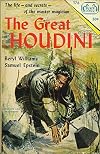
Recounting the life and achievements of Harry Houdini is a daunting task, given his involvement in so many ventures during his remarkable career including circus performer, illusionist, spiritual "medium" (when in dire straits financially), escape artist, historian of magic, published author, show manager, filmmaker, and debunker of fake spiritual mediums later in life during his tumultous friendship with Sir Arthur Conan Doyle.
Through tireless effort that would have broken most men half his show more age—and frequently exhausted his devoted wife Bessie—Houdini had become a renown showman, philanthropist, and lecturer in demand throughout Europe and the United States right up until just days before his death on 31 October 1926.
In The Great Houdini, the husband and wife team of Beryl Williams and Samuel Epstein deftly capture all of that and more in a 268-page biography that includes a foreword by Houdini friend and student, William B. Gibson (who also created the famous pulp fiction character, The Shadow).
Make no mistake, this is not a romanticized chronicling that elevates Houdini to unblemished sainthood. Williams and Epstein offer honest accounts of the performer's bravado, arrogance, ill-temper, and occasional failures (as a show manager and film star) as much as his brilliance and industriousness in crafting each stage performance and besting every handcuff and escape challenge from law enforcement and container manufacturers alike. Nothing could keep Houdini restrained—physically or mentally—and nothing could hold him captive.
It was, in fact, Houdini who captivated the world. show less
Through tireless effort that would have broken most men half his show more age—and frequently exhausted his devoted wife Bessie—Houdini had become a renown showman, philanthropist, and lecturer in demand throughout Europe and the United States right up until just days before his death on 31 October 1926.
In The Great Houdini, the husband and wife team of Beryl Williams and Samuel Epstein deftly capture all of that and more in a 268-page biography that includes a foreword by Houdini friend and student, William B. Gibson (who also created the famous pulp fiction character, The Shadow).
Make no mistake, this is not a romanticized chronicling that elevates Houdini to unblemished sainthood. Williams and Epstein offer honest accounts of the performer's bravado, arrogance, ill-temper, and occasional failures (as a show manager and film star) as much as his brilliance and industriousness in crafting each stage performance and besting every handcuff and escape challenge from law enforcement and container manufacturers alike. Nothing could keep Houdini restrained—physically or mentally—and nothing could hold him captive.
It was, in fact, Houdini who captivated the world. show less

A remarkable story, well-told and illustrated. The back and front cover are well matched, on the back page a voyageur is partying with a bottle of booze, but on the front cover Dr. Beaumont is attending to the injured Alexis. Wild parties frequently result in injuries, but few so useful to science.
The illustrations are black and white drawings. They seem accurate, and the beaver and raccoon near the endpapers are quite charming.
The illustrations are black and white drawings. They seem accurate, and the beaver and raccoon near the endpapers are quite charming.

Good book for children with the framing narrative of an electricity blackout used to discuss energy consumption, production, and distribution. The somewhat goofy line drawings are not very informative but they make the children's 70's outfits less jarring.
Lists
Awards


You May Also Like


Associated Authors
Statistics
- Works
- 89
- Also by
- 2
- Members
- 2,148
- Popularity
- #11,970
- Rating
- 3.8
- Reviews
- 21
- ISBNs
- 83
