
Ida Fink (1921–2011)
Author of A Scrap of Time and Other Stories
About the Author
Ida Fink was born January 11, 1921, in Zbaraz, Poland, now part of Ukraine. She attended the High School of Music in Lwow, Poland, from 1938-41 but was forced to live in hiding through much of World War II. She emmigrated to Israel in 1957 and began her work at Yad Vashem, the Holocaust memorial show more and museum, recording the memories and experiences of other Jewish survivors. Fink worked as a librarian from 1972-82. Fink delayed her writing for more than 10 years after the Holocaust in order to achieve the emotional distance that would allow her to write in the proper voice. She recounts the genocide of her people in A Scrap of Time and Other Stories (1987), a semiautobiographical collection consisting of 22 stories and a short play first published in Hebrew translation as Pisat zman, Massada (1975). Other titles include Stot, a one-act play that was produced for Israeli radio in 1970 and German television in Germany in 1981; Slady, a radio play, in 1986; and Podroz, a novel, in 1990. She received the Anne Frank Prize for Literature in 1985, and Prix Litteraire Wizo, 1990, both for A Scrap of Time. (Bowker Author Biography) show less
Works by Ida Fink
Associated Works
Tagged
Common Knowledge
- Canonical name
- Fink, Ida
- Legal name
- Landau, Ida
- Other names
- Fink, Ida
- Birthdate
- 1921-11-21
- Date of death
- 2011-09-27
- Gender
- female
- Education
- Lviv Conservatory
- Occupations
- music librarian
short story writer
novelist
memoirist
Holocaust survivor - Awards and honors
- Israel Prize (Literature, 2008)
- Short biography
- Ida Fink. née Landau, was born to a Jewish family in Zbaraż, Poland (present-day Zbarazh, Ukraine). Her father Ludwig Landau was a physician and her mother Fannie Stein was a teacher. The family was cultured and spoke both Polish and German at home. Ida studied music at the Lwów (Lviv) Conservatory before the Nazi Occupation of her homeland in World War II. She spent 1941-1942 confined in the Zbaraż ghetto, before escaping with her younger sister Elsa with the help of false identification papers. In 1948, she married Bruno (Bronek) Fink, a survivor of four concentration camps, with whom she had a daughter. For a number of years, they lived in Poland, but moved to Israel in 1957. Ida worked as a music librarian and began writing stories about her experiences. Her first collection, A Scrap of Time and Other Stories, was published in Polish in 1983, followed in 1989 by the English translation. Her novel The Journey (1990) appeared in English translation in 1992, and a film adaptation was produced for German television in 2002. Her book Traces, containing stories and short plays, was published in 1997. Her writing has garnered many international awards.
A 2007 documentary about her life, entitled The Garden that Floated Away after one of her stories, was produced by Israeli filmmaker Ruth Walk. - Nationality
- Poland
Israel - Birthplace
- Zbaraz, Poland (now Zbarazh Ukraine)
- Places of residence
- Zbaraz, Poland (birth)
Holon, Israël - Associated Place (for map)
- Zbaraz, Poland
Members
Reviews
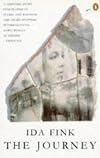
With this deeply moving, masterfully controlled novel, Fink, a Jewish writer who was born in Poland in 1921, continues her exploration of survival during the Holocaust (begun in the story collection A Scrap of Time ). Two Jewish sisters armed only with poorly forged papers escape a Polish ghetto; their real names are never given, and the narrator, the older sister, instead uses the various aliases they assume. Posing as Christians, they report to a transit camp to be sent to work in Germany. show more Danger is never far from them, however, and they are forced into a series of escapes and changes of identity. Fink excels at locating the tiny details that carry fatal consequences: Polish factory workers, suspecting the sisters, challenge them to sing Christmas carols; a farmhand doesn't contradict the narrator's claim to be an experienced milkmaid even when he sees the raw blisters on her hands; the narrator, still posing as a peasant, must concoct a cover story after she impulsively plays Chopin's "Polonaise" on the piano. The author's restrained, unsurprised tones suggest how routine, how everyday the brutalities of the Nazi regime must have seemed, even to its victims. Deceptively fluid, Fink's novel is utterly chilling.
As in her collection A Scrap of Time ( LJ 8/87), winner of the first Anne Frank Prize for Literature, Fink tells the story of Holocaust survivors, portraying the lives of ordinary people as they are forced to confront the unimaginable. show less
As in her collection A Scrap of Time ( LJ 8/87), winner of the first Anne Frank Prize for Literature, Fink tells the story of Holocaust survivors, portraying the lives of ordinary people as they are forced to confront the unimaginable. show less

This book features a series of short memories of the days when the Nazis were decimating Polish people. Some of the stories were autobiographical, some were from other people. They featured scenes of horror when the Nazis called people out of the houses and divided them into useful or not useful professions. The people deemed not useful were either slaughtered immediately in the town square or loaded in trucks to the cemetery, made to dig a mass grave, and slaughtered there. Some people show more managed to hide by staying motionless for months in spaces under cow barns or in pit sties. The last part of the book was a script were witnesses to the slaughter were grilled for precise memories.
This book is different from others about the Holocaust because we don't leave the town, people were not always noble, and we are never taken to the work camps. The scenes of people returning to the town were quite poignant. show less
This book is different from others about the Holocaust because we don't leave the town, people were not always noble, and we are never taken to the work camps. The scenes of people returning to the town were quite poignant. show less
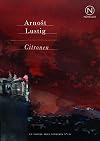
This is the third of the quartet of short stories on the holocaust recently published in Swedish. It relates an episode in the tragedy of a family in the Jewish ghetto in Łódź. The author, Arnošt Lustig, grew up in Prague, in what is now the Czech Republic, and survived imprisonment in no fewer than three concentration camps: Theresienstadt, Auschwitz and Buchenwald. He managed to escape from the train that was taking him to Dachau near the end of war.

Lists
Awards


You May Also Like


Associated Authors
Statistics
- Works
- 13
- Also by
- 3
- Members
- 398
- Popularity
- #60,945
- Rating
- 4.1
- Reviews
- 7
- ISBNs
- 46
- Languages
- 7
- Favorited
- 3