
Olaf Stapledon (1886–1950)
Author of Star Maker
About the Author
Image credit: Courtesy of the NYPL Digital Gallery (image use requires permission from the New York Public Library)
Series
Works by Olaf Stapledon
Talking Across the World: The Love Letters of Olaf Stapledon and Agnes Miller, 1913-1919 (1987) 13 copies
Collected Stories 4 copies
A World Of Sound 3 copies
Arms Out Of Hand 3 copies
A Modern Magician 3 copies
East Is West 3 copies
Saints and revolutionaries 2 copies
Interplanetary Man 2 copies
The Man Who Became A tree 2 copies
Criador de Estrelas 1 copy
Últimos e Primeiros Homens 1 copy
STA Juan Raro 1 copy
Alevler 1 copy
Beyond the "isms" 1 copy
The Collected Works of Olaf Stapledon: Science Fiction Novels, Fantasy Short Stories and Philosophical Works (2021) 1 copy
Critaturas de fuego 1 copy
X Rare stories 1 copy
X Biography 1 copy
THE ROAD TO THE AIDE POST 1 copy
William Olaf Stapledon 1 copy
Associated Works
This Way to the End Times: Classic Tales of the Apocalypse (2016) — Contributor — 52 copies, 2 reviews
Titan, Teil 21: Klassische Science Fiction- Erzählungen (1976) — Contributor, some editions — 10 copies
Tagged
Common Knowledge
- Legal name
- Stapledon, William Olaf
- Birthdate
- 1886-05-10
- Date of death
- 1950-09-06
- Gender
- male
- Education
- University of Oxford (Balliol College)
University of Liverpool (Phd)
Abbotsholme School (Rocester, Staffordshire, England, UK) - Occupations
- novelist
teacher
lecturer
ethicist
philosopher
ambulance driver (WWI) (show all 7)
peace activist - Organizations
- University of Liverpool
- Awards and honors
- Cordwainer Smith Rediscovery Award (2001)
Croix de Guerre (WWI)
Science Fiction and Fantasy Hall of Fame (2014) - Relationships
- Stapledon, Sir Reginald George (uncle)
- Short biography
- Olaf Stapledon, englischer Philosoph und Schriftsteller, wuchs in Ägypten auf und studierte in Oxford. Neben seiner Tätigkeit in einer Reederei hielt er an der Universität Liverpool Gastvorlesungen über englische Literatur und über Geschichte der Industrialisierung. Nach seiner Promotion zum Doktor der Philosophie wandte er sich der Erforschung der philosophischen Richtungen im 20. Jahrhundert zu. Von 1930 an schrieb er Science Fiction. In der Tradition von H. G. Wells stehend, schuf er mit seinen Romanen gigantische Extrapolationen der menschlichen Entwicklung und der Entfaltung des Lebens im Kosmos. (Rückentext »Der Sternenschöpfer«)
- Cause of death
- heart attack
- Nationality
- UK
- Birthplace
- Seacombe, Wallasey, Cheshire, England, UK
- Places of residence
- Seacombe, Merseyside, England, UK
Caldy, Wirral, Merseyside, England, UK
Port Said, Egypt
Rocester, Staffordshire, England, UK
Manchester, England, UK
West Kirby, Merseyside, England, UK - Place of death
- Caldy, Wirral, Merseyside, England, UK
- Burial location
- Dee Estuary, Wirral, Merseyside, England, UK (ashes scattered)
- Map Location
- England, UK
Members
Discussions
Olaf Stapledon Question in Science Fiction Fans (February 2014)
"Last and First Men" Group Discussion in Group Reads - Sci-Fi (August 2013)
Reviews
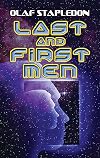
It's certainly impressive - both in concept and in execution. I can't really say I've read anything like it; I'm reminded of Asimov's Foundation "trilogy", only with a scope much grander, or of... some book I read back in my SF days... something by Aldiss, perhaps? Something about mankind millions of years into the future, living in space stations underground... it's fuzzy. Also of Swedish sf/non-fiction astronomy writer Peter Nilson, whom I absolutely adore, but who is mostly untranslated show more AFAIK.
Anyway. This might be the first novel I've ever read where the foreword urged me to skip the first few chapters - and it's easy to see why, even if I wouldn't recommend it. Because even if he gets some guesses about the 20th-21st centuries VERY wrong (and bases them almost entirely on national stereotyping which I hope is supposed to be satirical) he actually gets a few things right - if not in detail. The dominance of an increasingly nationalistic and religious America, for instance, or the rise of a China which adopts capitalism but not democracy...
But it's after all that that things get really interesting. One thing that strikes me is how far we've come since 1930; Stapledon is a pessimist when it comes to humanity's (or if that should be humanities') ability to live in peace with each other or others, but when it comes to technology he's already been overrun - his mankinds need millions of years to develop things such as space flight, nuclear power or genetics, but Stapledon's own contemporaries needed less than 20 years. If I had any main problem with the story, it's exactly this; things take TOO long, as if he needed to find some way to stretch it to 2,000 million years - and so we have species-wide civilizations lasting millions of years with no great changes, we have evolution simply "taking a break" from time to time, etc.
But the main story here, of course, is the development of Man. Or Men. And even if I think it suffers from hardly having any characters whatsoever - it does get a bit same-same-but-different after a while when all numbers are counted in millions - and even if Stapledon goes on to apply the same national stereotyping he uses on The First Men to...um... species-related stereotyping later on, it's a fascinating, if rarely thrilling, read. The sheer imagination it takes to pull something like this off; the plausibility he, despite some romantic naivite both when it comes to society and biology, manages to add to his broad strokes of the brush... Plus, he's occasionally VERY funny. I'm not sure if some bits are intended as satire on the First Men or if he's writing it all as straight-faced as he can, but since they are all to some extent human - and we are all too human - it certainly works as such from time to time.
As someone who always prefers character to plot, I was surprised at how much I liked this. It has its faults, and it rarely kept me turning pages breathlessly, but... I've never read anything with the same approach, and I find myself wishing there were more books like it. show less
Anyway. This might be the first novel I've ever read where the foreword urged me to skip the first few chapters - and it's easy to see why, even if I wouldn't recommend it. Because even if he gets some guesses about the 20th-21st centuries VERY wrong (and bases them almost entirely on national stereotyping which I hope is supposed to be satirical) he actually gets a few things right - if not in detail. The dominance of an increasingly nationalistic and religious America, for instance, or the rise of a China which adopts capitalism but not democracy...
But it's after all that that things get really interesting. One thing that strikes me is how far we've come since 1930; Stapledon is a pessimist when it comes to humanity's (or if that should be humanities') ability to live in peace with each other or others, but when it comes to technology he's already been overrun - his mankinds need millions of years to develop things such as space flight, nuclear power or genetics, but Stapledon's own contemporaries needed less than 20 years. If I had any main problem with the story, it's exactly this; things take TOO long, as if he needed to find some way to stretch it to 2,000 million years - and so we have species-wide civilizations lasting millions of years with no great changes, we have evolution simply "taking a break" from time to time, etc.
But the main story here, of course, is the development of Man. Or Men. And even if I think it suffers from hardly having any characters whatsoever - it does get a bit same-same-but-different after a while when all numbers are counted in millions - and even if Stapledon goes on to apply the same national stereotyping he uses on The First Men to...um... species-related stereotyping later on, it's a fascinating, if rarely thrilling, read. The sheer imagination it takes to pull something like this off; the plausibility he, despite some romantic naivite both when it comes to society and biology, manages to add to his broad strokes of the brush... Plus, he's occasionally VERY funny. I'm not sure if some bits are intended as satire on the First Men or if he's writing it all as straight-faced as he can, but since they are all to some extent human - and we are all too human - it certainly works as such from time to time.
As someone who always prefers character to plot, I was surprised at how much I liked this. It has its faults, and it rarely kept me turning pages breathlessly, but... I've never read anything with the same approach, and I find myself wishing there were more books like it. show less
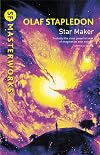
This is some quality proto-dreampunk right here. The whole thing is an out-of-body experience with some of the most important plot points coming from literal dreams. It's such an immense story packed into a short book that sometimes it feels more like notes for a long series like Asimov's Foundation.
If you're up for a highly abstract story that's not so much about individual characters as it is about life, the universe, and everything, then this is quite a read.
If you're up for a highly abstract story that's not so much about individual characters as it is about life, the universe, and everything, then this is quite a read.
RE: LAST AND FIRST MEN:
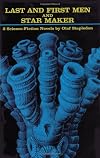
First published in 1930, LAST AND FIRST MEN is remarkably insightful and still contemporarily relevant in its philosophical understanding of human nature, failures, and aspirations. It is a work of unprecedented scale in the SF genre, describing the history of humanity from 1930 onwards across two billion years and eighteen distinct human species—both those naturally evolved and those human-designed, of which our own is but the first and, spiritually, the most show more primitive.
Stapledon’s conception of history is based on the Hegelian Dialectic: a cyclical pattern in which many civilizations repeatedly rise to greatness and descend into savagery over millions of years, and yet it is also one of incremental progress as later civilizations meet each successive threat to human survival through adaptation and the achievement of threat-specific physical, intellectual, communal, spiritual, and philosophical challenge until the noble, but inevitably, Last human civilization. But even then, in humility, there remains hope.
LAST AND FIRST MEN, in its presentation, is a "recounting" of the entirety of human history relayed to the author, of the First Men (like we, the readers), by the time-traversing telepathy of one of the very Last Men.
The story's protagonist is Humanity, and the plot is what befalls us as a species.
This narrative style may be off-putting to those accustomed to the usual fare of a modern novel's dialogue among relatable characters facing personal challenges, but for the reader with the ability to conceive of character and conflict and settings on the "macrocosmic" rather than the comparatively microcosmic scale -- and who possesses a philosophical interest in Man and matching curiosity regarding Life and our place and purpose within it will be amply rewarded.
Once I acclimated to the narrative format, I found LAST AND FIRST MEN increasingly engaging. I admittedly struggled with the Last Man's self-acknowledged dispassionate recount of his events that were both tragic and sometimes amoral to borderline immoral (such as episodes of eugenics, uncompassionate transhumanism, regrettable genocide, and unregretted euthanasia, as well as species-determined socially acceptable suicide). I was somewhat surprised by the equally matter-of-fact description of changing sexual mores, all plausible given the unique circumstances of the eighteen human species described.
The grand scale of humanity's story over millions of years, facing environmental, human (political, ideological, philosophical, religious), alien (Martian and Venusian), and cosmic challenges, evoked my awe.
LAST AND FIRST MEN has been highly acclaimed by figures as diverse as Jorge Luis Borges, J. B. Priestley, Bertrand Russell, Algernon Blackwood, Hugh Walpole, Arnold Bennett, Virginia Woolf, and Winston Churchill. show less
First published in 1930, LAST AND FIRST MEN is remarkably insightful and still contemporarily relevant in its philosophical understanding of human nature, failures, and aspirations. It is a work of unprecedented scale in the SF genre, describing the history of humanity from 1930 onwards across two billion years and eighteen distinct human species—both those naturally evolved and those human-designed, of which our own is but the first and, spiritually, the most show more primitive.
Stapledon’s conception of history is based on the Hegelian Dialectic: a cyclical pattern in which many civilizations repeatedly rise to greatness and descend into savagery over millions of years, and yet it is also one of incremental progress as later civilizations meet each successive threat to human survival through adaptation and the achievement of threat-specific physical, intellectual, communal, spiritual, and philosophical challenge until the noble, but inevitably, Last human civilization. But even then, in humility, there remains hope.
LAST AND FIRST MEN, in its presentation, is a "recounting" of the entirety of human history relayed to the author, of the First Men (like we, the readers), by the time-traversing telepathy of one of the very Last Men.
The story's protagonist is Humanity, and the plot is what befalls us as a species.
This narrative style may be off-putting to those accustomed to the usual fare of a modern novel's dialogue among relatable characters facing personal challenges, but for the reader with the ability to conceive of character and conflict and settings on the "macrocosmic" rather than the comparatively microcosmic scale -- and who possesses a philosophical interest in Man and matching curiosity regarding Life and our place and purpose within it will be amply rewarded.
Once I acclimated to the narrative format, I found LAST AND FIRST MEN increasingly engaging. I admittedly struggled with the Last Man's self-acknowledged dispassionate recount of his events that were both tragic and sometimes amoral to borderline immoral (such as episodes of eugenics, uncompassionate transhumanism, regrettable genocide, and unregretted euthanasia, as well as species-determined socially acceptable suicide). I was somewhat surprised by the equally matter-of-fact description of changing sexual mores, all plausible given the unique circumstances of the eighteen human species described.
The grand scale of humanity's story over millions of years, facing environmental, human (political, ideological, philosophical, religious), alien (Martian and Venusian), and cosmic challenges, evoked my awe.
LAST AND FIRST MEN has been highly acclaimed by figures as diverse as Jorge Luis Borges, J. B. Priestley, Bertrand Russell, Algernon Blackwood, Hugh Walpole, Arnold Bennett, Virginia Woolf, and Winston Churchill. show less
I have conflicting feelings about this book: I could just as well give it 1 star or 5 stars. The British science fiction author Olaf Stapledon (1886-1950) certainly had an unbridled imagination. This was already evident in his phenomenal Last and the First Men (1930), a reconstruction of more than 2 billion years of human history (you read that right: 2 billion years). In this book, Star Maker (1937), he even goes a step further: he lets a British man look back on a cosmic journey of years show more along solar systems with inhabited planets, entire galaxies and ultimately the Creator/Star Maker himself. Once again, the strangest creatures, civilizations and cosmic empires pass by, in an increasingly intense succession and interconnection. Again I was impressed by Stapledon’s knowledge and use of the astronomical science of the time, I just think of his description of multiverses. Most notable is his emphasis on cosmic interconnectedness: starting with the methods of ‘psychical attraction’ and ‘disembodied flight’ that he uses to transport his narrator through space (and time) faster than the speed of light, along with an ever-increasing number of mentally interconnected entities, and culminating in a collective mind that encompasses the entire cosmos, a truly impressive image: “Each world, peopled with its unique, multitudinous race of sensitive individual intelligences united in true community, was itself a living thing, possessed of a common spirit. And each system of many populous orbits was itself a communal being. And the whole galaxy, knit in a single telepathic mesh, was a single intelligent and ardent being, the common spirit, the ‘I’, of all its countless, diverse, and ephemeral individuals.”
But Stapledon was also a child of his time (the interbellum), and that is shown, for example, in his long digression on racial differences, in the many references to fascism and capitalism, and in his very cyclical view of the development of civilizations. It is this constant rise and fall of civilizations, and especially the sometimes arbitrary destruction and annihilation of entire worlds, galaxies and even universes that raises fundamental, existential questions in the narrator: “As we searched up and down time and space, discovering more and more of the rare grains called planets, as we watched race after race struggle to a certain degree of lucid consciousness, only to succumb to some external accident or, more often, to some flaw in its own nature, we were increasingly oppressed by a sense of the futility, the planlessness of the cosmos.”
And so our narrator in his quest ultimately ends up with the Star Maker, the creator of everything. And – as might be expected – this ‘encounter’ is expressed in true Dantesque terms: “I saw, though nowhere in cosmical space, the blazing source of the hypercosmical light, as though it were an overwhelmingly brilliant point, a star, a sun more powerful than all suns together. It seemed to me that this effulgent star was the centre of a four-dimensional sphere whose curved surface was the three-dimensional cosmos. The star of stars, this star that was indeed the Star Maker, was perceived by me, its cosmical creature, for one moment before its splendour seared my vision.”
But the big question is of course how this Supreme Being could remain so indifferent to all these destroyed beings and worlds. In an attempt to explain this, Stapledon presents us with the image of a kind of Ultimate Laboratory Technician in a permanent creative mood, experimenting both within and outside of time (clearly Stapledon has read Augustine), with ever-reconfigured universes, a formidable, endlessly learning entity. This may seem an attractive intellectual image (which, by the way, comes close to the image of God in process theology), but from a human-existential point of view it seems to me an emotional sign of weakness.
The scope and depth of what Stapledon touches upon in this novel may safely be called phenomenal. But in all honesty I must say that the accumulation of descriptions and experiences is so overwhelming and sometimes so very detailed that it eventually becomes very difficult to follow, and – as far as I am concerned – also a bit long-winded. Hence my allusion to the choice between 1 or 5 stars. So I will cowardly refrain from giving a rating, but this is without a doubt one of the most remarkable writings of the first half of the 20th century show less
But Stapledon was also a child of his time (the interbellum), and that is shown, for example, in his long digression on racial differences, in the many references to fascism and capitalism, and in his very cyclical view of the development of civilizations. It is this constant rise and fall of civilizations, and especially the sometimes arbitrary destruction and annihilation of entire worlds, galaxies and even universes that raises fundamental, existential questions in the narrator: “As we searched up and down time and space, discovering more and more of the rare grains called planets, as we watched race after race struggle to a certain degree of lucid consciousness, only to succumb to some external accident or, more often, to some flaw in its own nature, we were increasingly oppressed by a sense of the futility, the planlessness of the cosmos.”
And so our narrator in his quest ultimately ends up with the Star Maker, the creator of everything. And – as might be expected – this ‘encounter’ is expressed in true Dantesque terms: “I saw, though nowhere in cosmical space, the blazing source of the hypercosmical light, as though it were an overwhelmingly brilliant point, a star, a sun more powerful than all suns together. It seemed to me that this effulgent star was the centre of a four-dimensional sphere whose curved surface was the three-dimensional cosmos. The star of stars, this star that was indeed the Star Maker, was perceived by me, its cosmical creature, for one moment before its splendour seared my vision.”
But the big question is of course how this Supreme Being could remain so indifferent to all these destroyed beings and worlds. In an attempt to explain this, Stapledon presents us with the image of a kind of Ultimate Laboratory Technician in a permanent creative mood, experimenting both within and outside of time (clearly Stapledon has read Augustine), with ever-reconfigured universes, a formidable, endlessly learning entity. This may seem an attractive intellectual image (which, by the way, comes close to the image of God in process theology), but from a human-existential point of view it seems to me an emotional sign of weakness.
The scope and depth of what Stapledon touches upon in this novel may safely be called phenomenal. But in all honesty I must say that the accumulation of descriptions and experiences is so overwhelming and sometimes so very detailed that it eventually becomes very difficult to follow, and – as far as I am concerned – also a bit long-winded. Hence my allusion to the choice between 1 or 5 stars. So I will cowardly refrain from giving a rating, but this is without a doubt one of the most remarkable writings of the first half of the 20th century show less
Lists
Page Turners (1)
SF Masterworks (4)
Awards


You May Also Like


Associated Authors
Statistics
- Works
- 70
- Also by
- 13
- Members
- 6,358
- Popularity
- #3,869
- Rating
- 3.8
- Reviews
- 138
- ISBNs
- 263
- Languages
- 14
- Favorited
- 18