
John W. S. Bradshaw
Author of Cat Sense: How the New Feline Science Can Make You a Better Friend to Your Pet
About the Author
Works by John W. S. Bradshaw
Cat Sense: How the New Feline Science Can Make You a Better Friend to Your Pet (2013) 687 copies, 29 reviews
Dog Sense: How the New Science of Dog Behavior Can Make You A Better Friend to Your Pet (2011) 490 copies, 14 reviews
The Trainable Cat: A Practical Guide to Making Life Happier for You and Your Cat (2016) 191 copies, 3 reviews
Tagged
Common Knowledge
- Birthdate
- 1950-04-20
- Gender
- male
- Education
- University of Oxford (B.A.)
University of Southampton (Ph.D.) - Occupations
- anthrozoologist
Reader in Companion Animal Behaviour - Organizations
- University of Bristol
University of Southampton - Nationality
- UK
- Places of residence
- Southampton, England, UK
- Associated Place (for map)
- England, UK
Members
Reviews

This fascinating book explores the domain of the world's most popular pet, the domestic cat. Surprisingly, very little scientific research has been done on the cat, but Bradshaw compiles the outcomes of recent research in this book. The book begins with a natural history of cats and how they developed a relationship with humans.
The famous independence of cats comes from how they first were first domesticated. Cats were "hired" to be mousers, a job that they did on their own as opposed to the show more more social aspects of the dog's work of herding, hunting, and guarding. Despite their independence, the affection of cats is real. In addition to touch and grooming, a raised tail is a signal of friendliness. While cats meow often with humans, it's rarely used among wild and feral cats. While cats can bond with humans (especially if they're socialized before they reach 8 weeks) they are less likely to want to spend time with other cats due to their territorial nature. Getting a second cat to keep your original cat company rarely works. In fact, a cat coming to a new home may find that they yard of their humans' property is already marked by a neighboring cat, leading to stress and standoffs.
The issue of allowing pet cats outdoors on their own is a contentious one. Bradshaw argues that the evidence that cats decimate local wildlife are built on faulty data (although cats can be bad for certain environments, such as islands, and feral cat communities anywhere). In some cases, cats may be beneficial to bird populations since they hunt other predators such as rats. Nevertheless, Bradshaw offers a lot of tips on how best to allow cats outdoors should you choose to do so as well as enrichment to help keep indoor cats happy. Bradshaw believes that when cats leave a dead animal as a "treat" for their humans that they simply remembered once they got home that there was much tastier store-bought food and lost interest in the animal they caught.
The last chapter is a little strange in how Bradshaw considers how to select traits in domestic cats in order to breed them to be better companions to humans and to living indoors. He does make a good point that the growing practice of neutering pet cats means that future kittens are more likely to come from feral cats who have traits opposite of what we desire in cats. Overall it's an interesting book that's taught me some new things about my favorite pet.
Favorite Passages:
The famous independence of cats comes from how they first were first domesticated. Cats were "hired" to be mousers, a job that they did on their own as opposed to the show more more social aspects of the dog's work of herding, hunting, and guarding. Despite their independence, the affection of cats is real. In addition to touch and grooming, a raised tail is a signal of friendliness. While cats meow often with humans, it's rarely used among wild and feral cats. While cats can bond with humans (especially if they're socialized before they reach 8 weeks) they are less likely to want to spend time with other cats due to their territorial nature. Getting a second cat to keep your original cat company rarely works. In fact, a cat coming to a new home may find that they yard of their humans' property is already marked by a neighboring cat, leading to stress and standoffs.
The issue of allowing pet cats outdoors on their own is a contentious one. Bradshaw argues that the evidence that cats decimate local wildlife are built on faulty data (although cats can be bad for certain environments, such as islands, and feral cat communities anywhere). In some cases, cats may be beneficial to bird populations since they hunt other predators such as rats. Nevertheless, Bradshaw offers a lot of tips on how best to allow cats outdoors should you choose to do so as well as enrichment to help keep indoor cats happy. Bradshaw believes that when cats leave a dead animal as a "treat" for their humans that they simply remembered once they got home that there was much tastier store-bought food and lost interest in the animal they caught.
The last chapter is a little strange in how Bradshaw considers how to select traits in domestic cats in order to breed them to be better companions to humans and to living indoors. He does make a good point that the growing practice of neutering pet cats means that future kittens are more likely to come from feral cats who have traits opposite of what we desire in cats. Overall it's an interesting book that's taught me some new things about my favorite pet.
Favorite Passages:
"Unlike the dog, which was domesticated much earlier, there would have been no niche for the cat in a hunter-gatherer society. It was not until the first grain stores appeared, resulting in localized concentrations of wild rodents, that it would have been worth any cat’s while to visit human habitations—and even then, those that did must have run the risk of being killed for their pelts. It was probably not until after the house mouse had evolved to exploit the new resource provided by human food stores that cats began to appear regularly in settlements, tolerated because they were obviously killing rodents and thereby protecting granaries."show less
"Cats’ hearing is therefore superior to ours in many ways, but inferior in one respect: the ability to distinguish minor differences between sounds, both in pitch and intensity. If it was possible to train a cat to sing, it couldn’t sing in tune (bad news for Andrew Lloyd Webber)."
"We could consider some of this behavior manipulative, but only to the extent that two friends negotiate the details of their relationship. The underlying emotion on both sides is undoubtedly affection: cats show this in the way they communicate with their owners, using the same patterns of behavior that they employ to form and maintain close relationships with members of their own feline family."
"pet cats rarely hunt “seriously,” often watching potential prey without bothering to stalk it. A hungry cat will pounce several times until the prey either escapes or is caught; a well-fed pet will pounce halfheartedly and then give up, probably explaining why pet cats, when they do kill birds, usually succeed only when they target individuals already weakened by hunger or disease. Furthermore, pet cats rarely consume their prey, often bringing it home as if to consume it there, but then abandoning it."
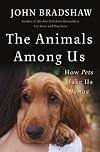
Readers expecting this to be one of those books that takes three hundred plus pages to basically tell us that pets make our lives better will be disappointed by this book. John Bradshaw, the foundation director of the Anthrozoology Institute at the University of Bristol, England, has spent decades studying the interrelationships between animals and humans and has read all of the claims about the magical properties of pet ownership and has discounted many of them. Anthrozoology, a term coined show more by Bradshaw and other members of the scientific community, is a field of study that brings together experts from a variety of fields “to study the personal relationships that people have with animals and, to a lesser extent, that animals have with people”. His strict scientific approach to the subject, while it doesn’t always tell pet owners what they want to hear, applies a level of critical analysis and skepticism that is sorely needed where scientific research is involved.
Bradshaw was not born into a pet-owning family but came into it as an adult due partially to his work and partially to his marriage to a pet person. As such he approaches the subject with a more impartial view that many authors of books about pets. He sees how many pet owners “become so fond of their animal companions that they seem willing to accept any ‘fact’ that will countermand the negative attitudes that surface in the media from time to time”. He debunks the widely held view that pet ownership makes us more empathetic by citing research that shows little evidence to show a link tying how sympathetic people are towards animals to the empathy shown to other humans. He also claims that there is insufficient evidence to support the commonly held belief about serial killers that cruelty to animals in childhood is an indicator of a progression to violence against humans later in life.
He is also reluctant to throw his endorsement behind the animal-assisted therapy movement advocates contend that “animals (especially dogs) have a magic touch with people with impaired health or well-being”. He begins the book with the story of a woman ejected from an airplane when the so-called therapy pig she smuggled onboard defecated in the aisle. He exhibited particular disdain for the use of dolphins as “cotherapists”, charging patients thousands of dollars to swim alongside the mammals:
“Dolphins supposedly do something “magical” to the water around them, lifting anyone who swims past into a euphoric state. Maybe it's the sonar they emit (the clicks dubbed into TV documentaries about cetaceans). Maybe it's their alleged ability to trigger in us a meditative state or to “synchronize” the left and right hemispheres of our brains. (Or maybe it's just fun to swim in an exotic location alongside a playful mammal.)"
He does not dispute that there are benefits to pet ownership. He acknowledges that some studies have shown that owning pets, particularly dogs, help to extend a person’s lifespan but posits that it could be the exercise of daily walks more than the presence of the animal that is making the person healthier. His main conclusion, though, appears to be that we, as social animals, crave the company of others and that we are happier when we have it even if it is just a furry lump sleeping in the couch next to you (I’m talking to you, Sheila!). While he is quick to contend that many studies lack sufficient data to support their published conclusions, he still believes in the benefits of the codependent relationship between humans and pets. One controversial question that he does believe that science has answered is the one that asks whether or not our pets actually love us. They do. According to Bradshaw, theirs is a simple sort of affection free from angst. I found this comforting, I no longer need to worry that Smudge will be traumatized when I tell Sheila that she’s my favorite dog.
Bottom line: While a bit drier than I expect, this book provided a scientific look at the relationships that exist between humans and pets dating back thousands of years to when early man first tossed a scrap of meat to a wolf lurking around the fire. I found there was a lot to learn from it.
*Quotations are cited from an advanced reading copy and may not be the same as appears in the final published edition. The review was based on an advanced reading copy obtained at no cost from the publisher in exchange for an unbiased review. While this does take any ‘not worth what I paid for it’ statements out of my review, it otherwise has no impact on the content of my review.
FYI: On a 5-point scale I assign stars based on my assessment of what the book needs in the way of improvements:
*5 Stars – Nothing at all. If it ain’t broke, don’t fix it.
*4 Stars – It could stand for a few tweaks here and there but it’s pretty good as it is.
*3 Stars – A solid C grade. Some serious rewriting would be needed in order for this book to be considered great or memorable.
*2 Stars – This book needs a lot of work. A good start would be to change the plot, the character development, the writing style and the ending.
*1 Star – The only thing that would improve this book is a good bonfire. show less
Bradshaw was not born into a pet-owning family but came into it as an adult due partially to his work and partially to his marriage to a pet person. As such he approaches the subject with a more impartial view that many authors of books about pets. He sees how many pet owners “become so fond of their animal companions that they seem willing to accept any ‘fact’ that will countermand the negative attitudes that surface in the media from time to time”. He debunks the widely held view that pet ownership makes us more empathetic by citing research that shows little evidence to show a link tying how sympathetic people are towards animals to the empathy shown to other humans. He also claims that there is insufficient evidence to support the commonly held belief about serial killers that cruelty to animals in childhood is an indicator of a progression to violence against humans later in life.
He is also reluctant to throw his endorsement behind the animal-assisted therapy movement advocates contend that “animals (especially dogs) have a magic touch with people with impaired health or well-being”. He begins the book with the story of a woman ejected from an airplane when the so-called therapy pig she smuggled onboard defecated in the aisle. He exhibited particular disdain for the use of dolphins as “cotherapists”, charging patients thousands of dollars to swim alongside the mammals:
“Dolphins supposedly do something “magical” to the water around them, lifting anyone who swims past into a euphoric state. Maybe it's the sonar they emit (the clicks dubbed into TV documentaries about cetaceans). Maybe it's their alleged ability to trigger in us a meditative state or to “synchronize” the left and right hemispheres of our brains. (Or maybe it's just fun to swim in an exotic location alongside a playful mammal.)"
He does not dispute that there are benefits to pet ownership. He acknowledges that some studies have shown that owning pets, particularly dogs, help to extend a person’s lifespan but posits that it could be the exercise of daily walks more than the presence of the animal that is making the person healthier. His main conclusion, though, appears to be that we, as social animals, crave the company of others and that we are happier when we have it even if it is just a furry lump sleeping in the couch next to you (I’m talking to you, Sheila!). While he is quick to contend that many studies lack sufficient data to support their published conclusions, he still believes in the benefits of the codependent relationship between humans and pets. One controversial question that he does believe that science has answered is the one that asks whether or not our pets actually love us. They do. According to Bradshaw, theirs is a simple sort of affection free from angst. I found this comforting, I no longer need to worry that Smudge will be traumatized when I tell Sheila that she’s my favorite dog.
Bottom line: While a bit drier than I expect, this book provided a scientific look at the relationships that exist between humans and pets dating back thousands of years to when early man first tossed a scrap of meat to a wolf lurking around the fire. I found there was a lot to learn from it.
*Quotations are cited from an advanced reading copy and may not be the same as appears in the final published edition. The review was based on an advanced reading copy obtained at no cost from the publisher in exchange for an unbiased review. While this does take any ‘not worth what I paid for it’ statements out of my review, it otherwise has no impact on the content of my review.
FYI: On a 5-point scale I assign stars based on my assessment of what the book needs in the way of improvements:
*5 Stars – Nothing at all. If it ain’t broke, don’t fix it.
*4 Stars – It could stand for a few tweaks here and there but it’s pretty good as it is.
*3 Stars – A solid C grade. Some serious rewriting would be needed in order for this book to be considered great or memorable.
*2 Stars – This book needs a lot of work. A good start would be to change the plot, the character development, the writing style and the ending.
*1 Star – The only thing that would improve this book is a good bonfire. show less
Dog Sense: How the New Science of Dog Behavior Can Make You A Better Friend to Your Pet by John Bradshaw

It was the best of books, it was--not the worst of books, not by a long shot, but incredibly annoying in places.
This is a serious effort at collecting in one place the current state of the science of dog behavior. Bradshaw discusses the evidence we have for how and when dogs evolved from wolves, as well as what dogs' close relationship to wolves does and doesn't mean for their behavior and needs in human households. For the last century or so, much training and dog management advice has been show more based on the idea that wolf packs are competitive, internally violent groups, dominated by the fiercest, most powerful male, or possibly the fiercest, most powerful male and female--the "alphas." Since, the reasoning goes, "dogs are wolves," dog owners need to establish themselves as "alpha" and dominate their dogs, lest the dogs seize control of the household and become problems and even threats.
Bradshaw explains in clear and understandable terms why every piece of this argument is wrong.
The studies that showed wolf packs as violent groupings dominated by the strongest were done with artificial, captive wolf packs--wolves who were not related to each other and had no way to leave the group if they weren't happy with. They had no choice but to work out Who's In Charge Here, by any means necessary. Natural wolf packs in the wild have since been studied extensively, and they are, in contrast, peaceful, mostly harmonious family groups. The "alpha pair" are in fact the parents of the younger wolves. Depending on local conditions, offspring from past litters may stick around for a year or three, helping to raise their younger siblings before eventually heading off to find mates and start their own packs. Where plentiful large game is available, a stable, long-lasting pack may include not only several years' worth of offspring, but siblings of one or both of the mated pair--aunts and uncles helping to hunt large game and feed and care for the pups.
So wolves aren't what we think they are. But then, neither are dogs what we're sometimes told to think they are--and we know this, from our own observations of our own dogs. Most dogs who have had reasonably normal puppy experiences are extremely friendly and social, both with humans and with other dogs. Wolves, as harmonious and cooperative as they are within their own family groups, do not share dogs' interest in being friendly and social with either humans, or other wolves. Contact with wolves outside the family pack doesn't always descend into violence, but it's always an occasion of conflict, with the resident group warning off the intruders. If our domestic pet dogs shared the behavioral traits of wolves to the extent that "dominance-based" training tells us they do, there would be no dog parks. We wouldn't have the idea of dog parks; it would engender not visions of happy dogs playing, but of conflict between dogs or groups of dogs of different households. Just the fact that dogs form close social bonds with humans is a clue they're not like wolves behaviorally; wolves are incredibly wary of humans, and even where an individual human has formed a relationship with an individual wolf, wolves don't have dogs' inclination to trust our judgment, regard us as sources of information, or respond to human body language.
Bradshaw goes further, and points out that today's wolves are the descendants of several hundred years of relentless human hunting and territorial encroachment; they've been effectively selected for distrust and wariness of humans in a way that wouldn't have been true of the original wolf protodogs who first started following humans to exploit our leftovers, and then gradually joined our human families and their skills for our skills to the greater prosperity of both species.
The wolves our dogs evolved from don't exist anymore.
The book further discusses how easy it is to get dogs to focus on humans. A dog who has no contact with humans as a puppy will normally be quite wary of people and is unlikely to be successful as a pet, but even minimal positive contact with humans at any point between the ages of three and eight weeks of age will set the puppy up to be ready to bond with humans and learn to be a good pet. How much contact, and at exactly what age, will affect how easy and smooth it is, but any positive contact with humans during that period will give the dog at least the minimal tools it needs to live with humans.
So, that's the good stuff. There's a lot of it, I've barely scratched the surface, and you really do want to read the book and get all of it, with Bradshaw's much fuller explanation, references to more sources, etc.
But.
You knew there was a "but" coming, right?
Bradshaw says dogs are becoming less common as pets in the cities, being pushed out to suburban and rural areas. Maybe in the UK, I don't know, but not here in the US, where instead there is a shift to smaller dogs and/or lower-energy dogs, more likely to be happy and successful in cities--while the larger and/or higher-energy dogs remain extremely popular with people who have either more room, or a lifestyle that enables them to give those dogs the exercise and stimulation they need, regardless of geographic location. He says cats have become more than dogs as pets in the US--this is completely wrong. There are more cats than dogs kept as pets in the US--but more households have dogs than cats. The discrepancy in numbers is due to most cat owners having at least two cats, and often more, while dog owners are far more likely to have only one at a time--and this is often true even in households that have both. There's no evidence that dogs are falling in popularity as pets--not with the huge increase in numbers of dogs, numbers of households with dogs, and percentage of households with dogs over the last thirty years.
He also has a great deal to say about purebred, or, as he terms it, "pedigree" dog breeding, and he says it over and over. He talks about excessive inbreeding, kennel club regulations that prevent out-crossing to deal with mistakes that have made genetic diseases common in some breeds, the loss of genetic diversity within each breed, and emphasis on extremes of type due to show standards, leading to what are in effect major deformities in some breeds that make them less than viable.
These are all real concerns, some of them more so in some breeds than others, and yet he makes a complete hash of his discussion of it. Bradshaw places all the responsibility for the current problems on show breeders (who are not without fault), and completely misses the degree to which all of these problems are worse in puppy mills (puppy farms, commercial puppy factories, pick your terminology.) Many (not all) show breeders study pedigrees and do genetic testing where tests are available, to minimize the chance of producing puppies affected by the known genetic problems of their breed. Puppy mills don't; as long as a female can whelp litters of commercially viable size, they'll breed her. Many (not all) show breeders think seriously about the Coefficient of Inbreeding (COI) and out-cross to different lines to the extent practical within their breeds. Puppy mills don't; they'll happily breed a bitch to her full brother if it happens to be convenient, and it often is. Many (not all) show breeders follow up on the pups they place in pet households as well as show and performance households, and include the long-term health of those puppies in their considerations of future breeding decisions. Puppy mills don't.
Cavalier King Charles Spaniels, a breed he specifically mentions as being descended from just six individuals and having serious genetic problems as a result (I think he's wrong; I believe it's four individuals), are a breed in deep trouble, no question. These sweet, loving, perfect pets are at severe risk of developing heart disease, syringomyelia, or both, even when they come from the best breeders. I honestly believe that this is a breed that's doomed unless planned, controlled out-crossing is introduced to fix their compromised genetic heritage.
But 100% of the breeders who care about this, and who are doing their best within the available rules and tools to save this wonderful breed, are the dread "show breeders." Backyard breeders, even the best, even the ones that love their dogs and really are breeding wonderful pets--an undertaking that gets too little respect in a world in which most dog owners desire dogs as pets and not as working companions--don't have the knowledge to do this. And the puppy millers, as well as most of the backyard breeders, simply don't care and aren't going to cut into their own profits by worrying about it.
Bradshaw doesn't state clearly enough what I believe the real problem is: between the late 1860s when much of dog breeding in the West became divorced from working considerations with the corresponding excellent empirical grasp of genetics, and the 1960s with the beginnings of a real scientific understanding of genetics, the combination of dogs shows judging by a written conformation standard and the insidious effects of "eugenics" leading to a belief that being "purebred" was a good thing in itself, caused many (not all, by any means) breeds to go seriously astray genetically. And once the problems are established, they are hard to undo--especially with the strong commitment to purebred breeding, now largely divorced from the pernicious philosophy that originally produced it, blocking planned out-crosses to other breeds or mixes to eliminate or dilute the genetic problem while preserving the essential character of the breed. And while Bradshaw rails against "pedigree breeding," at no point does he mention the most convincing proof that we don't have to lose our breeds in order to fix them, if we allow planned out-crosses: The Pointer/Dalmatian Backcross Project, which has produced dogs that look and act no different than AKC/KC registered Dalmatians--except that they lack the Dalmatians' extremely painful problem with improper metabolism of uric acid.
It's a complete mystery to me why someone who cares so much about the long-term health and welfare of dogs would waste time talking about Jemima Harrison's sensationalist "documentary," Pedigree Dogs Exposed, and not talk about the Pointer/Dal backcross project, which proves we can solve the problems without losing the breeds we love.
On balance, this really is a very good book, and I do recommend it. Read it, argue with it, come back here and tell me what you think about it!
No free galley on this one; I bought the ebook. show less
This is a serious effort at collecting in one place the current state of the science of dog behavior. Bradshaw discusses the evidence we have for how and when dogs evolved from wolves, as well as what dogs' close relationship to wolves does and doesn't mean for their behavior and needs in human households. For the last century or so, much training and dog management advice has been show more based on the idea that wolf packs are competitive, internally violent groups, dominated by the fiercest, most powerful male, or possibly the fiercest, most powerful male and female--the "alphas." Since, the reasoning goes, "dogs are wolves," dog owners need to establish themselves as "alpha" and dominate their dogs, lest the dogs seize control of the household and become problems and even threats.
Bradshaw explains in clear and understandable terms why every piece of this argument is wrong.
The studies that showed wolf packs as violent groupings dominated by the strongest were done with artificial, captive wolf packs--wolves who were not related to each other and had no way to leave the group if they weren't happy with. They had no choice but to work out Who's In Charge Here, by any means necessary. Natural wolf packs in the wild have since been studied extensively, and they are, in contrast, peaceful, mostly harmonious family groups. The "alpha pair" are in fact the parents of the younger wolves. Depending on local conditions, offspring from past litters may stick around for a year or three, helping to raise their younger siblings before eventually heading off to find mates and start their own packs. Where plentiful large game is available, a stable, long-lasting pack may include not only several years' worth of offspring, but siblings of one or both of the mated pair--aunts and uncles helping to hunt large game and feed and care for the pups.
So wolves aren't what we think they are. But then, neither are dogs what we're sometimes told to think they are--and we know this, from our own observations of our own dogs. Most dogs who have had reasonably normal puppy experiences are extremely friendly and social, both with humans and with other dogs. Wolves, as harmonious and cooperative as they are within their own family groups, do not share dogs' interest in being friendly and social with either humans, or other wolves. Contact with wolves outside the family pack doesn't always descend into violence, but it's always an occasion of conflict, with the resident group warning off the intruders. If our domestic pet dogs shared the behavioral traits of wolves to the extent that "dominance-based" training tells us they do, there would be no dog parks. We wouldn't have the idea of dog parks; it would engender not visions of happy dogs playing, but of conflict between dogs or groups of dogs of different households. Just the fact that dogs form close social bonds with humans is a clue they're not like wolves behaviorally; wolves are incredibly wary of humans, and even where an individual human has formed a relationship with an individual wolf, wolves don't have dogs' inclination to trust our judgment, regard us as sources of information, or respond to human body language.
Bradshaw goes further, and points out that today's wolves are the descendants of several hundred years of relentless human hunting and territorial encroachment; they've been effectively selected for distrust and wariness of humans in a way that wouldn't have been true of the original wolf protodogs who first started following humans to exploit our leftovers, and then gradually joined our human families and their skills for our skills to the greater prosperity of both species.
The wolves our dogs evolved from don't exist anymore.
The book further discusses how easy it is to get dogs to focus on humans. A dog who has no contact with humans as a puppy will normally be quite wary of people and is unlikely to be successful as a pet, but even minimal positive contact with humans at any point between the ages of three and eight weeks of age will set the puppy up to be ready to bond with humans and learn to be a good pet. How much contact, and at exactly what age, will affect how easy and smooth it is, but any positive contact with humans during that period will give the dog at least the minimal tools it needs to live with humans.
So, that's the good stuff. There's a lot of it, I've barely scratched the surface, and you really do want to read the book and get all of it, with Bradshaw's much fuller explanation, references to more sources, etc.
But.
You knew there was a "but" coming, right?
Bradshaw says dogs are becoming less common as pets in the cities, being pushed out to suburban and rural areas. Maybe in the UK, I don't know, but not here in the US, where instead there is a shift to smaller dogs and/or lower-energy dogs, more likely to be happy and successful in cities--while the larger and/or higher-energy dogs remain extremely popular with people who have either more room, or a lifestyle that enables them to give those dogs the exercise and stimulation they need, regardless of geographic location. He says cats have become more than dogs as pets in the US--this is completely wrong. There are more cats than dogs kept as pets in the US--but more households have dogs than cats. The discrepancy in numbers is due to most cat owners having at least two cats, and often more, while dog owners are far more likely to have only one at a time--and this is often true even in households that have both. There's no evidence that dogs are falling in popularity as pets--not with the huge increase in numbers of dogs, numbers of households with dogs, and percentage of households with dogs over the last thirty years.
He also has a great deal to say about purebred, or, as he terms it, "pedigree" dog breeding, and he says it over and over. He talks about excessive inbreeding, kennel club regulations that prevent out-crossing to deal with mistakes that have made genetic diseases common in some breeds, the loss of genetic diversity within each breed, and emphasis on extremes of type due to show standards, leading to what are in effect major deformities in some breeds that make them less than viable.
These are all real concerns, some of them more so in some breeds than others, and yet he makes a complete hash of his discussion of it. Bradshaw places all the responsibility for the current problems on show breeders (who are not without fault), and completely misses the degree to which all of these problems are worse in puppy mills (puppy farms, commercial puppy factories, pick your terminology.) Many (not all) show breeders study pedigrees and do genetic testing where tests are available, to minimize the chance of producing puppies affected by the known genetic problems of their breed. Puppy mills don't; as long as a female can whelp litters of commercially viable size, they'll breed her. Many (not all) show breeders think seriously about the Coefficient of Inbreeding (COI) and out-cross to different lines to the extent practical within their breeds. Puppy mills don't; they'll happily breed a bitch to her full brother if it happens to be convenient, and it often is. Many (not all) show breeders follow up on the pups they place in pet households as well as show and performance households, and include the long-term health of those puppies in their considerations of future breeding decisions. Puppy mills don't.
Cavalier King Charles Spaniels, a breed he specifically mentions as being descended from just six individuals and having serious genetic problems as a result (I think he's wrong; I believe it's four individuals), are a breed in deep trouble, no question. These sweet, loving, perfect pets are at severe risk of developing heart disease, syringomyelia, or both, even when they come from the best breeders. I honestly believe that this is a breed that's doomed unless planned, controlled out-crossing is introduced to fix their compromised genetic heritage.
But 100% of the breeders who care about this, and who are doing their best within the available rules and tools to save this wonderful breed, are the dread "show breeders." Backyard breeders, even the best, even the ones that love their dogs and really are breeding wonderful pets--an undertaking that gets too little respect in a world in which most dog owners desire dogs as pets and not as working companions--don't have the knowledge to do this. And the puppy millers, as well as most of the backyard breeders, simply don't care and aren't going to cut into their own profits by worrying about it.
Bradshaw doesn't state clearly enough what I believe the real problem is: between the late 1860s when much of dog breeding in the West became divorced from working considerations with the corresponding excellent empirical grasp of genetics, and the 1960s with the beginnings of a real scientific understanding of genetics, the combination of dogs shows judging by a written conformation standard and the insidious effects of "eugenics" leading to a belief that being "purebred" was a good thing in itself, caused many (not all, by any means) breeds to go seriously astray genetically. And once the problems are established, they are hard to undo--especially with the strong commitment to purebred breeding, now largely divorced from the pernicious philosophy that originally produced it, blocking planned out-crosses to other breeds or mixes to eliminate or dilute the genetic problem while preserving the essential character of the breed. And while Bradshaw rails against "pedigree breeding," at no point does he mention the most convincing proof that we don't have to lose our breeds in order to fix them, if we allow planned out-crosses: The Pointer/Dalmatian Backcross Project, which has produced dogs that look and act no different than AKC/KC registered Dalmatians--except that they lack the Dalmatians' extremely painful problem with improper metabolism of uric acid.
It's a complete mystery to me why someone who cares so much about the long-term health and welfare of dogs would waste time talking about Jemima Harrison's sensationalist "documentary," Pedigree Dogs Exposed, and not talk about the Pointer/Dal backcross project, which proves we can solve the problems without losing the breeds we love.
On balance, this really is a very good book, and I do recommend it. Read it, argue with it, come back here and tell me what you think about it!
No free galley on this one; I bought the ebook. show less
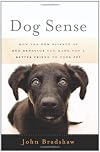
Very good scientific argument against dog as wolf pack animal. Genetics, breeding, behavior—very interesting and has changed my understanding of dog training books and the history of that genre.
Lists
Awards


You May Also Like


Associated Authors
Statistics
- Works
- 6
- Members
- 1,500
- Popularity
- #17,133
- Rating
- 3.6
- Reviews
- 49
- ISBNs
- 73
- Languages
- 7