

Donald R. Hickey
Author of The War of 1812: A Forgotten Conflict
About the Author
Donald R. Hickey is a professor of history at Wayne State College in Wayne, Nebraska. He is the author of seven books, including Don't Give Up the Ship! Myths of the War of 1812, and numerous articles.
Image credit: Wayne State College
Works by Donald R. Hickey
The War of 1812: Writings from America's Second War of Independence: (Library of America #232) (2013) — Editor — 127 copies, 1 review
Glorious Victory: Andrew Jackson and the Battle of New Orleans (Witness to History) (2015) 10 copies
The war of 1812 1 copy
Tagged
Common Knowledge
- Birthdate
- 1944
- Gender
- male
- Education
- University of Illinois, Urbana-Champaign (BA)
University of Illinois, Urbana-Champaign (MA)
University of Illinois, Urbana-Champaign (PhD) - Occupations
- historian
college professor - Organizations
- Wayne State College
- Nationality
- USA
- Places of residence
- Nebraska, USA
Illinois, USA
Colorado, USA
California, USA
Texas, USA - Associated Place (for map)
- USA
Members
Reviews
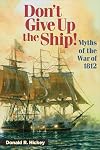
Many histories are arranged chronologically or focus on a particular individual or event. “Don’t Give Up The Ship” is arranged into six topics: The Causes of the War; Battles and Campaigns; The Maritime War; Soldiers, Sailors and Civilians; The Mechanics of Waging War; and The End of the War. Each topic is divided into several subtopics. The subtitle, “Myths of the War of 1812” tells much about the author’s approach. He begins with the generally accepted and examines how much is show more true or not. The text is supplemented with maps, drawings and portraits. I knew a fair amount about the War of 1812 when I first picked up this work, and found the author’s format to be a very effective method to learn more. I chose to read this book straight through, with many interruptions, but it could be kept on your shelf for reverence when a question pops up, as I plan to do.
For a taste of the analysis presented in this book, let us consider the oft-offered British Impressment of American seamen as a cause of the War. Why did the British adopt impressment? Who were impressed? How many? Why was it a casus belli?
Why? The French Revolutionary and Napoleonic Wars raised the need for Royal Navy seamen from 36,000 in 1793 to 114,000 in 1812, during which 100,000 perished either from accident or disease. Merchant vessels paid better. Being chronically short of enlistments, impressment, a form of loosely structured draft, to use modern terminology, was employed in seaports and merchant vessels of Britain or those of neutrals while in British ports or on the high seas.
Who? British law held that no one could renounce the status of British subject, a position accepted by the United States until 1848, hence even those naturalized as American citizens were, in the British view, liable for impressment.
How many? Estimates vary, but 10,000 is a reasonable figure, few of whom were either naturalized American citizens or mistakenly identified American natives.
Casus belli? Although maritime issues were frequently mentioned at the time, impressment was likely a minor portion of that.
That gives you an idea of the breath of analysis in one of the dozens of subjects examined.
Those possessing an interest in the early American Republic in general or the War of 1812 in particular, owe much to Professor Hickey for his scholarship and authorship. Read “Don’t Give Up The Ship”, savor it and, whenever you have a question about the War of 1812, pick it up and read again. show less
For a taste of the analysis presented in this book, let us consider the oft-offered British Impressment of American seamen as a cause of the War. Why did the British adopt impressment? Who were impressed? How many? Why was it a casus belli?
Why? The French Revolutionary and Napoleonic Wars raised the need for Royal Navy seamen from 36,000 in 1793 to 114,000 in 1812, during which 100,000 perished either from accident or disease. Merchant vessels paid better. Being chronically short of enlistments, impressment, a form of loosely structured draft, to use modern terminology, was employed in seaports and merchant vessels of Britain or those of neutrals while in British ports or on the high seas.
Who? British law held that no one could renounce the status of British subject, a position accepted by the United States until 1848, hence even those naturalized as American citizens were, in the British view, liable for impressment.
How many? Estimates vary, but 10,000 is a reasonable figure, few of whom were either naturalized American citizens or mistakenly identified American natives.
Casus belli? Although maritime issues were frequently mentioned at the time, impressment was likely a minor portion of that.
That gives you an idea of the breath of analysis in one of the dozens of subjects examined.
Those possessing an interest in the early American Republic in general or the War of 1812 in particular, owe much to Professor Hickey for his scholarship and authorship. Read “Don’t Give Up The Ship”, savor it and, whenever you have a question about the War of 1812, pick it up and read again. show less

This book presented me with far more information about the War of 1812 than I'd previously known, but in spite of its depth, I felt there was more that could have been told regarding actual battles. The author does a fairly good job portraying the division between the Federalists and Republicans over the war. He does a pretty good job telling of outcomes of the war, but the part that seems to be lacking is the involvement of regular people in the conflict and how it influenced them. For show more example, I have an ancestor who lived in southwestern Ohio who is said to have died in 1814 in Detroit during the War. (Incidentally he'd had a son born earlier in that year.) I'd hoped to gain more information about the skirmish or battle in which he lost his life. Instead I was presented with statistical counts of injury and loss of life in various skirmishes, but not necessarily that one. The topical arrangement of the book tended to make it difficult to put together a timeline of what was happening at the same time on the different fronts or political scene. A timeline or chronology would have been helpful. In spite of its weaknesses, the author does a good job of enlightening his readers about this last (and hopefully final) conflict with Great Britain. show less
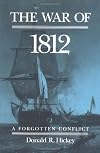
This book was filled with more information about the War of 1812 than I knew, but, I still believe that could have been related about actual battles. The fight between the Federalists and Republicans about the war was very well portrayed. What seems to be lacking is the involvement of regular people in the conflict and how it influenced them. Instead the statistical counts of injury and loss of life in various skirmishes is enumerated. The book doesn't seem to run chronologically but jumps show more from topic to topic. In spite of this drawback, it is enlightening about this last conflict with Great Britain. show less
The War of 1812: Writings from America's Second War of Independence: (Library of America #232) by Donald R. Hickey
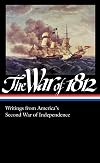
Terrific first-hand accounts of our second war of independence. I have also been reading the LOA Civil War series, and the difference in writing styles that took place in the fifty years or so is startling - a real American voice emerged by the time the Civil War came.
Lists
Awards

You May Also Like


Statistics
- Works
- 13
- Members
- 754
- Popularity
- #33,728
- Rating
- 3.8
- Reviews
- 6
- ISBNs
- 38